Nassau Grouper
Spawning Aggregation Specialist
Epinephelus striatus
Meet the ocean's spawning aggregation specialists—Caribbean reef predators reaching 1.2 meters whose lunar-synchronized migrations travel 250 kilometers to traditional sites. Their spectacular gatherings reach up to 100,000 individuals creating massive underwater reproductive events. Rapid color transformations coordinate spawning while 30-year site fidelity ensures multi-generational return to identical locations.
Meet the Aggregation SpecialistWhat Makes Them Special
Lunar Synchronization
Time spawning migrations to winter full moons traveling 250 kilometers reaching traditional aggregation sites annually
Massive Aggregations
Create gatherings of 30,000-100,000 individuals at peak spawning events lasting 5-7 days
Color Communication
Transform coloration rapidly conveying reproductive status territorial intentions and social rank through chromatic signaling
30-Year Site Fidelity
Return to identical spawning locations annually with genetic studies confirming multi-generational 30-year site loyalty
Acoustic Calls
Produce distinct aggregation calls traveling up to 15 kilometers underwater announcing spawning events attracting distant participants
Recovery Success
Demonstrate 300% population increases in protected areas with Bermuda recovering 3,000 to 15,000 individuals
First Encounter
1.2-Meter Reef Predators with 25-Kilogram Mass
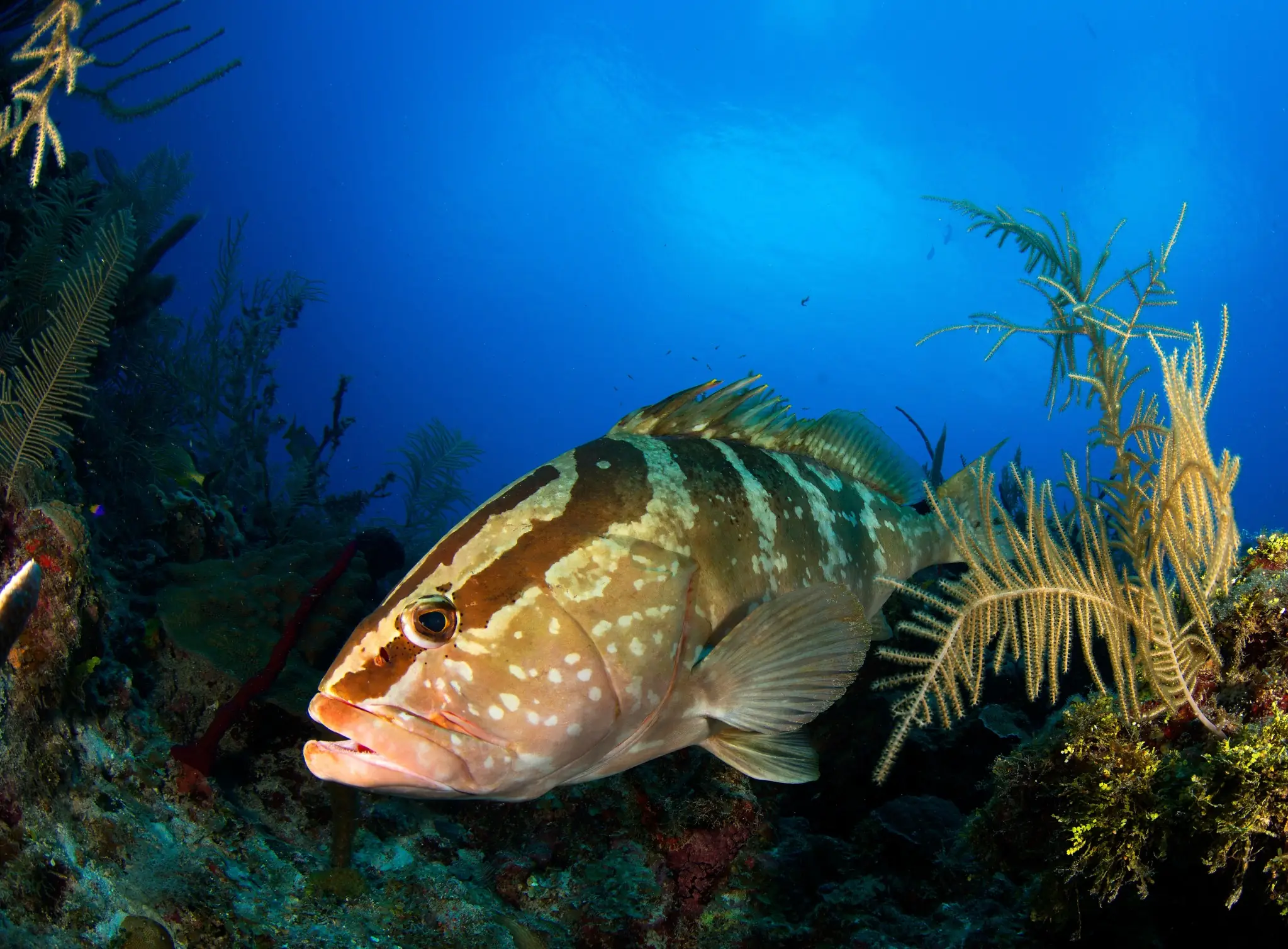
Nassau groupers reach 1.2 meters in length and 25 kilograms displaying distinctive brown vertical bars and white-spotted patterns. Their robust bodies patrol reef territories with remarkable color-change abilities.
These Caribbean reef predators organize spectacular reproductive phenomena through lunar-timed migrations creating underwater gatherings of thousands for synchronized spawning events. Photo: RLS Photo.
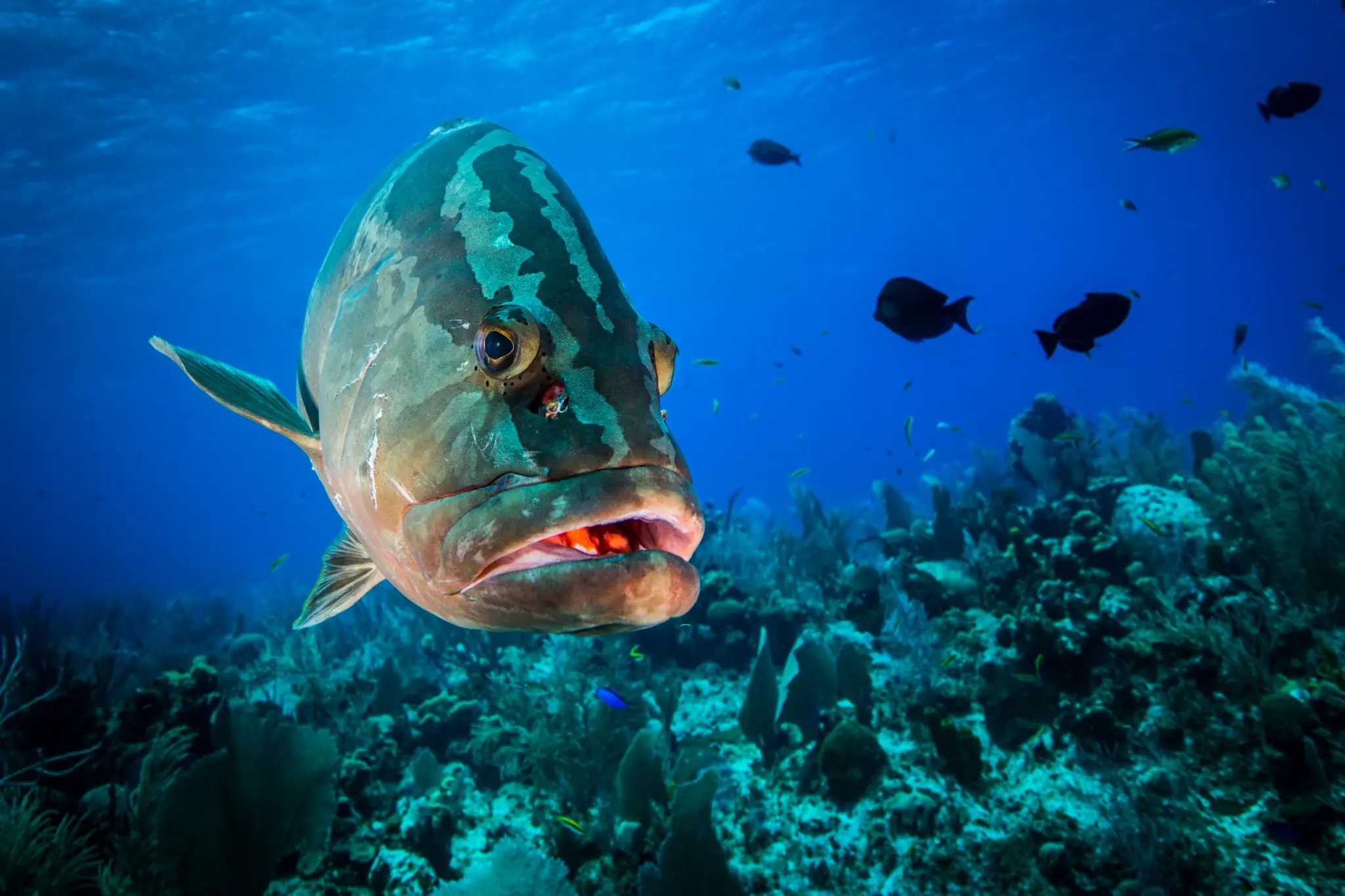
"Nassau grouper aggregations reach up to 100,000 individuals at single sites—creating massive underwater reproductive events lasting only 5-7 days during peak winter spawning periods."
— Dr. Brice Semmens, Scripps Institution Aggregation Research
Lunar-Synchronized Migrations
250-Kilometer Journeys Timed to Winter Full Moons
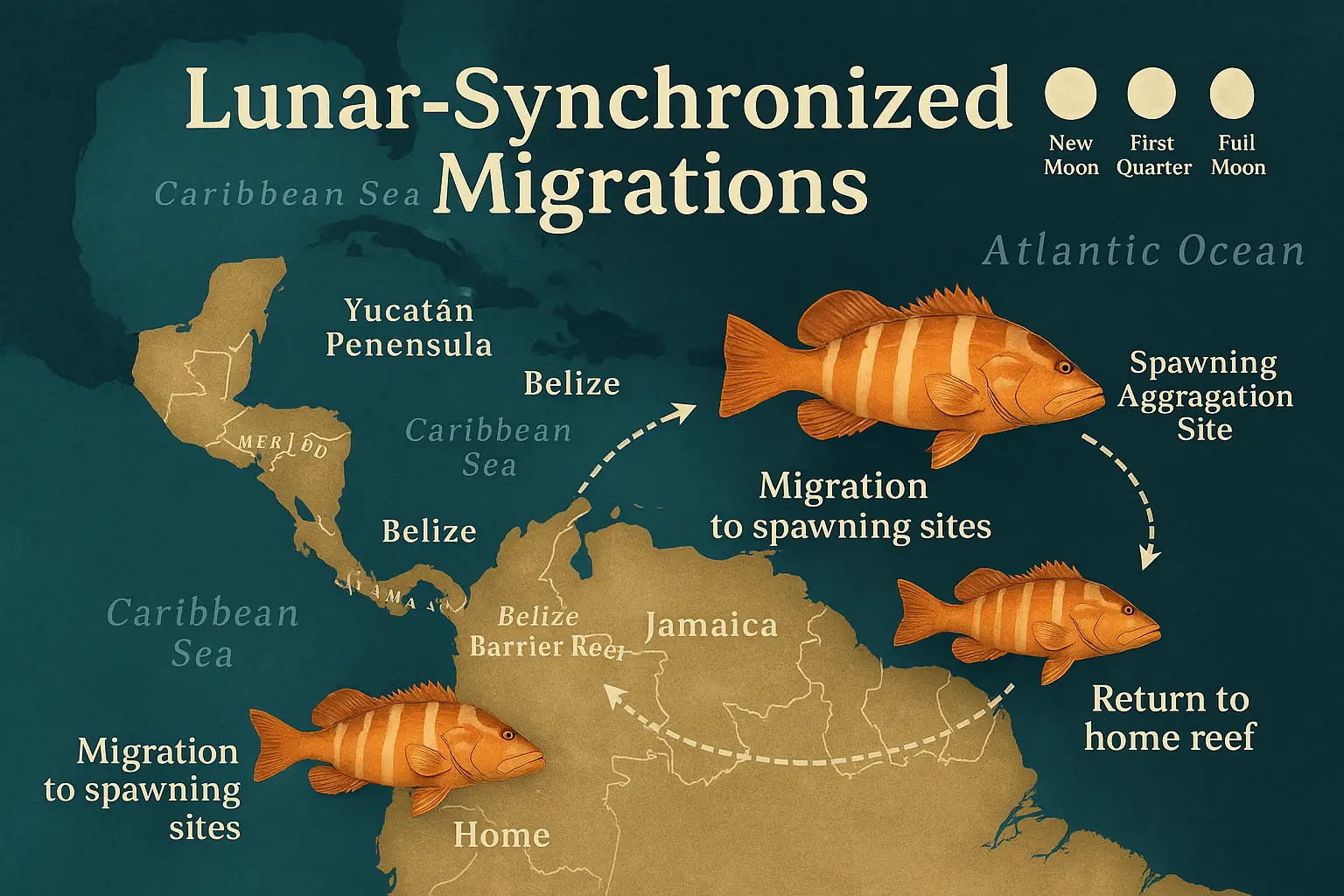
Annual migrations triggered by winter full moons bring individuals from 250-kilometer ranges to traditional spawning sites. Precise lunar timing ensures synchronized reproductive events across entire populations.
Satellite telemetry reveals migration corridors followed consistently year after year with individuals navigating complex reef systems reaching specific aggregation sites. This remarkable synchronization maximizes fertilization success while creating vulnerable concentrations. Photo: Illustration.
Massive Spawning Aggregations
100,000-Fish Reproductive Events During Dusk Ascensions
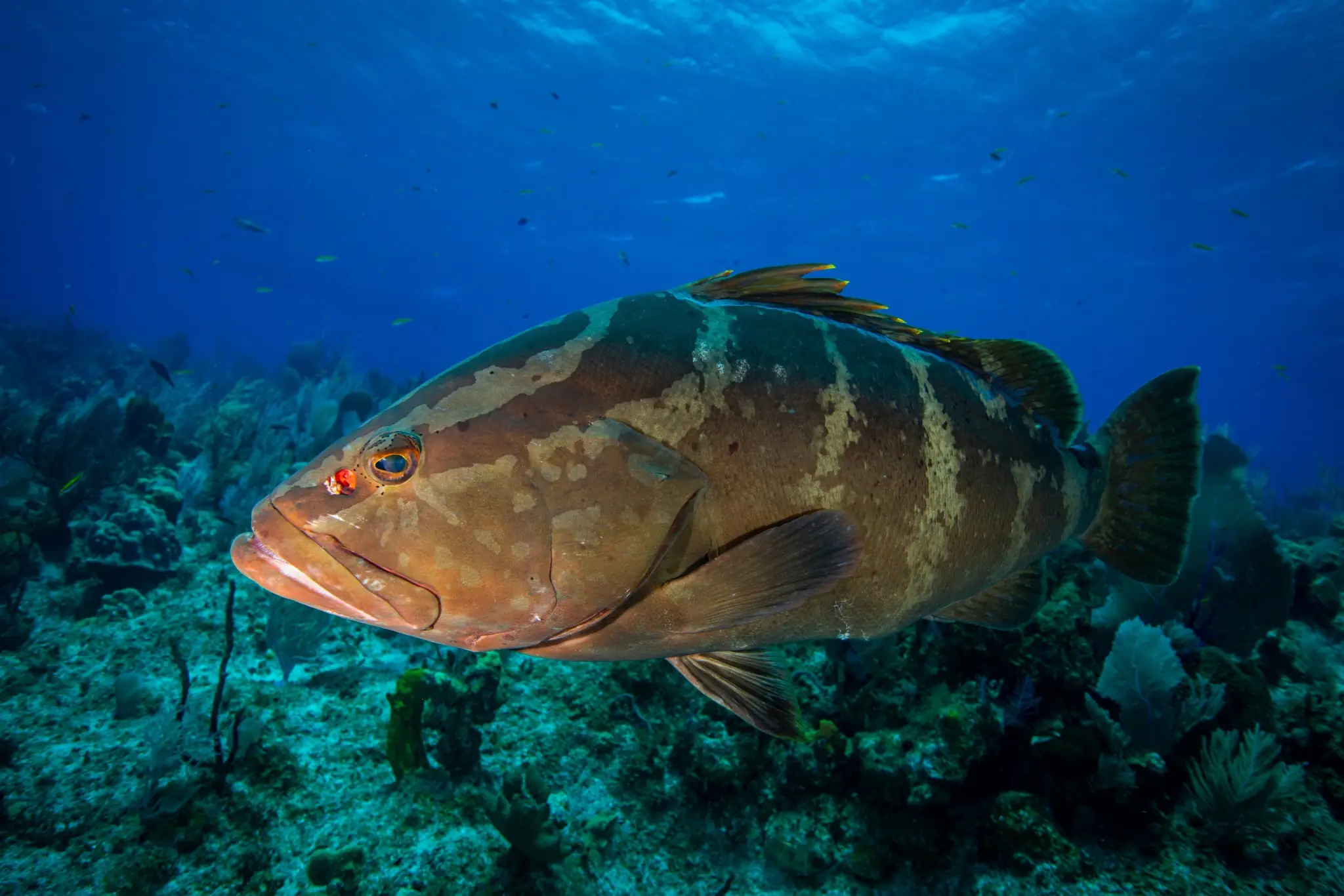
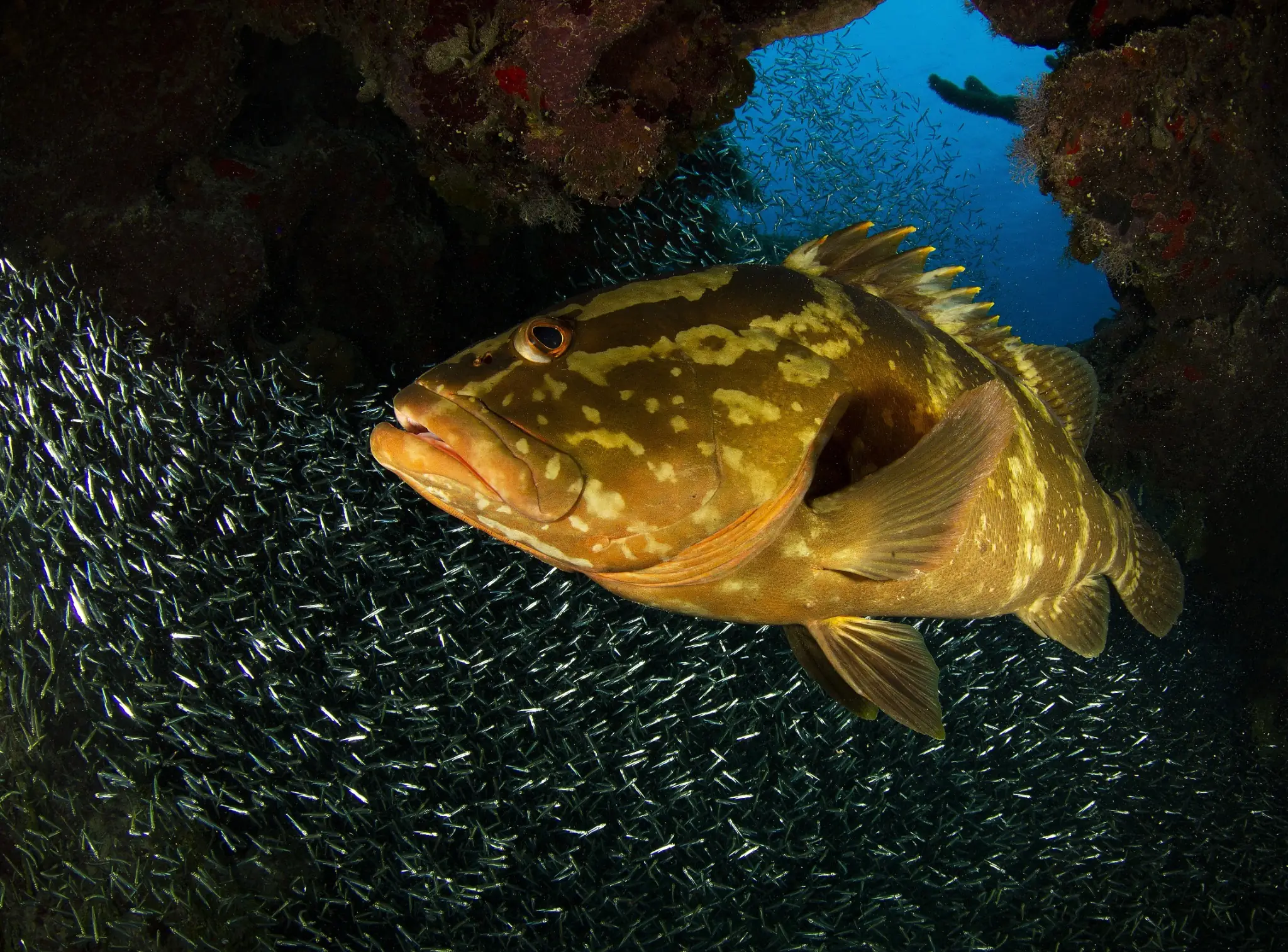
Peak historical aggregations assembled 30,000-100,000 individuals concentrated in small reef areas during 5-7 day spawning windows though many sites today host smaller gatherings due to overfishing. These gatherings represent among nature's most spectacular mass reproductive events visible as dense underwater clouds of spawning fish.
Females release millions of eggs while males simultaneously fertilize them creating massive gamete clouds. The aggregation strategy ensures high fertilization rates while individual anonymity reduces predation risk during vulnerable spawning moments. Photo: RLS Photo.
"2024 acoustic studies reveal Nassau groupers produce distinct 'aggregation calls' traveling 15 kilometers underwater—essentially announcing spawning events to attract distant participants."
— Dr. Michelle Schärer, Fish Bioacoustics Research
Color-Change Communication
Chromatic Signaling for Reproductive Coordination
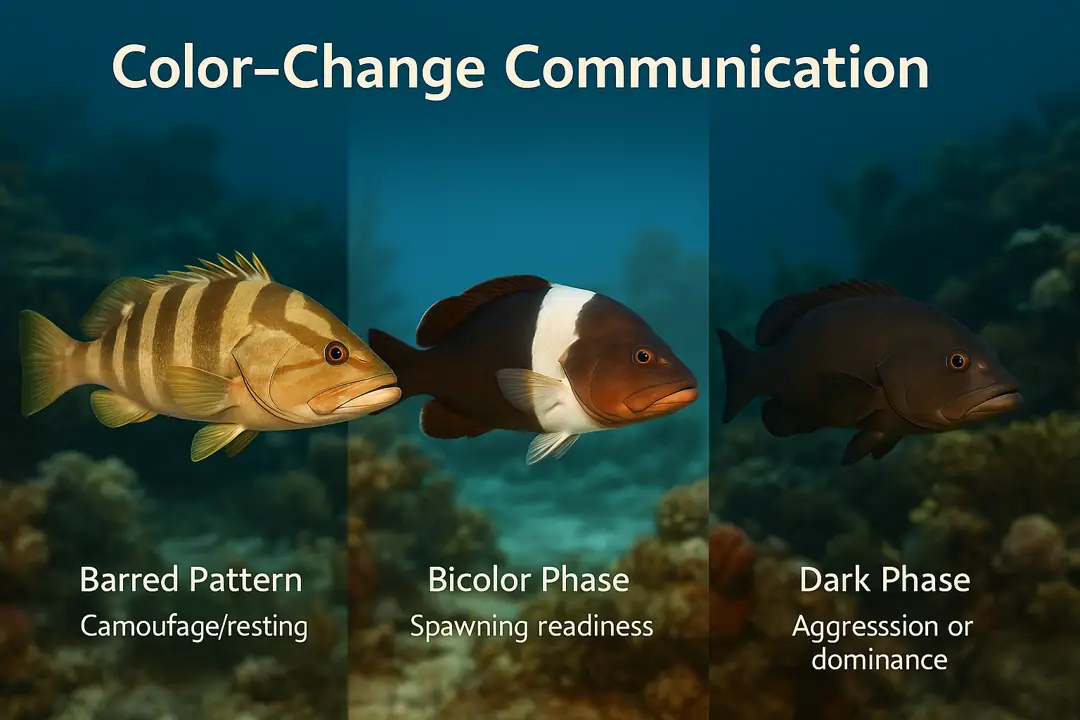
Rapid chromatophore control enables instant pattern shifts conveying reproductive readiness territorial claims and social hierarchy. Distinctive bicolor patterns signal spawning intentions while dark barred patterns indicate territorial defense.
Color communication coordinates spawning timing across thousands of individuals ensuring synchronized gamete release. This chromatic language proves essential for coordinating reproductive events among fish lacking vocal communication in dense aggregations. Photo: Illustration.
Site Fidelity Behavior
30-Year Multi-Generational Spawning Location Returns
Genetic analyses reveal Nassau groupers return to natal spawning sites across 30-year lifespans with offspring learning locations from spawning adults. This suspected cultural transmission creates multi-generational site fidelity patterns unique among reef fish.
Historical aggregation sites documented in 1970s continue hosting modern spawnings demonstrating remarkable site persistence. This generational knowledge transfer proves critical for maintaining population-level reproductive coordination across Caribbean reef systems. Photo: Maydel.
Conservation Success
300% Population Recovery Through Spawning Site Protection
IUCN lists Nassau groupers as Critically Endangered following 60% population decline from aggregation-site fishing during vulnerable spawning periods. Their predictable gathering behavior makes populations exceptionally susceptible to overfishing.
Cayman Islands and Bahamas spawning closures resulted in 300% population increases over 15 years. Bermuda's seasonal protection restored aggregations from 3,000 to 15,000 individuals demonstrating rapid recovery potential when fishing pressure is removed. Photo: Maydel.
Science & Discovery
Scripps Institution 2023 satellite telemetry revealed Nassau groupers navigate 250-kilometer migration corridors with remarkable precision to specific spawning sites using magnetic field detection and bathymetric memory refined across multi-year spawning participation.
University of Puerto Rico recent bioacoustics research documented aggregation calls traveling up to 15 kilometers underwater through reef systems with sound frequencies optimized for long-distance transmission enabling population-wide spawning coordination.
Marine Conservation Institute genetic analyses confirmed 30-year site fidelity patterns with offspring returning to natal aggregation locations suggesting possible cultural transmission of spawning site knowledge across multiple grouper generations.
In our delightful oceans, Nassau groupers create aggregations reaching up to 100,000 individuals through 250-kilometer migrations with remarkable navigational precision. Multi-generational 30-year site fidelity suggests cultural transmission of spawning locations. Spawning closures in Cayman Islands and Bahamas produced 300% population increases in protected areas demonstrating recovery potential.