Neon Goby
Ocean's Tiny Service Station
Elacatinus oceanops
Meet the reef's service stations—neon gobies reaching 5 centimeters with electric blue stripes advertising essential cleaning services across Caribbean reefs. Their complex client recognition systems coordinate symbiotic protocols removing parasites and debris from larger fish. Long-term monogamous partnerships operate shared stations with complex behavioral adaptations preventing cheating through client choice.
Meet the Service StationWhat Makes Them Special
Electric Blue Advertising
Electric blue stripes provide maximum chromatic contrast evolved as advertising attracting diverse cleaning clients
Cleaning Specialists
Operate reef cleaning stations removing ectoparasites dead skin and debris from larger fish clients
Long-Term Monogamy
Form long-term monogamous pairs operating shared cleaning stations together across Caribbean reef systems
Client Recognition
Demonstrate complex learned behaviors recognizing individual clients maintaining service quality through client avoidance patterns
Territory Masters
Establish prime coral head territories maximizing client traffic through strategic positioning and coordinated defense
Conservation Success
Thrive through captive breeding programs reducing wild collection pressure maintaining stable natural reef populations
First Encounter
5-Centimeter Fish with Electric Blue Service Advertisement
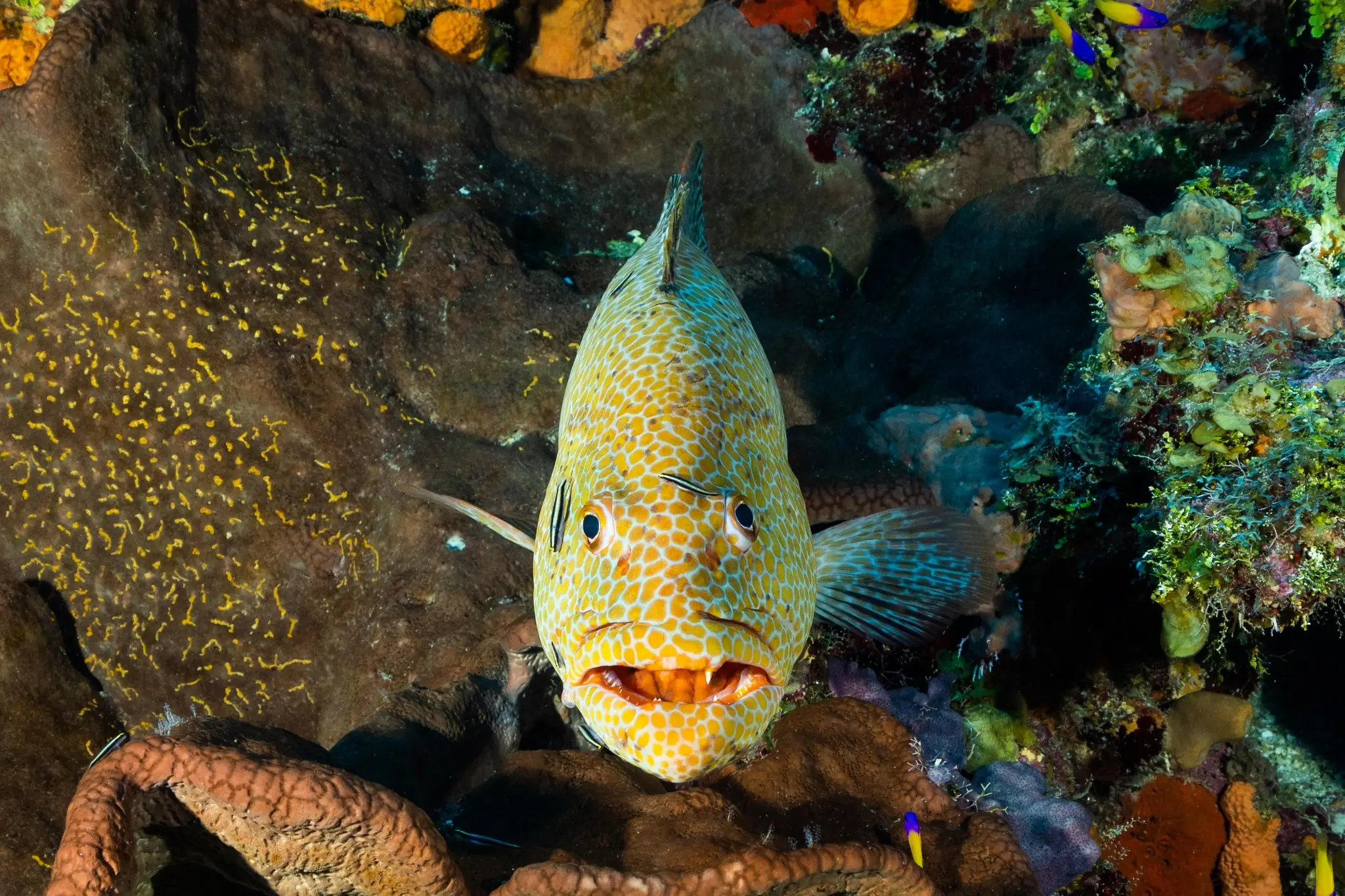
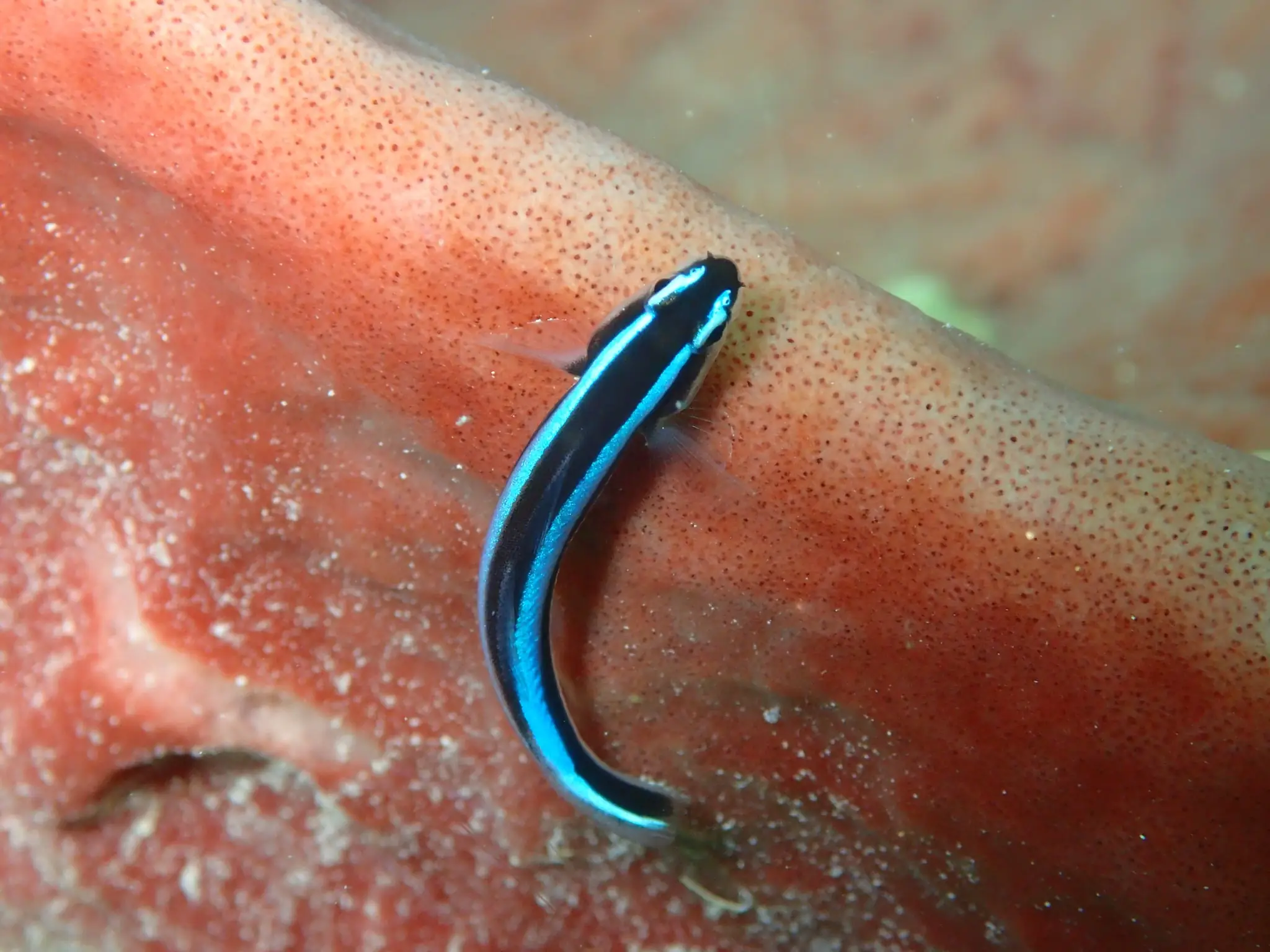
Neon gobies operate coral cleaning stations with torpedo-shaped bodies measuring 5 centimeters in length. Their distinctive electric blue stripes serve as advertising for essential reef cleaning services.
Strategic positioning atop coral heads ensures maximum visibility to potential clients across the reef. Twenty-four Elacatinus species demonstrate that cooperation drives reef success through specialized service partnerships. Photo: Drew McArthur.
"Neon gobies demonstrate that size means nothing when your service is essential—these 5-centimeter fish maintain the reef's most important cleaning networks."
— Dr. Luke Tornabene, Goby Evolution Expert
Electric Blue Stripe Signaling
Maximum Chromatic Contrast for Client Attraction
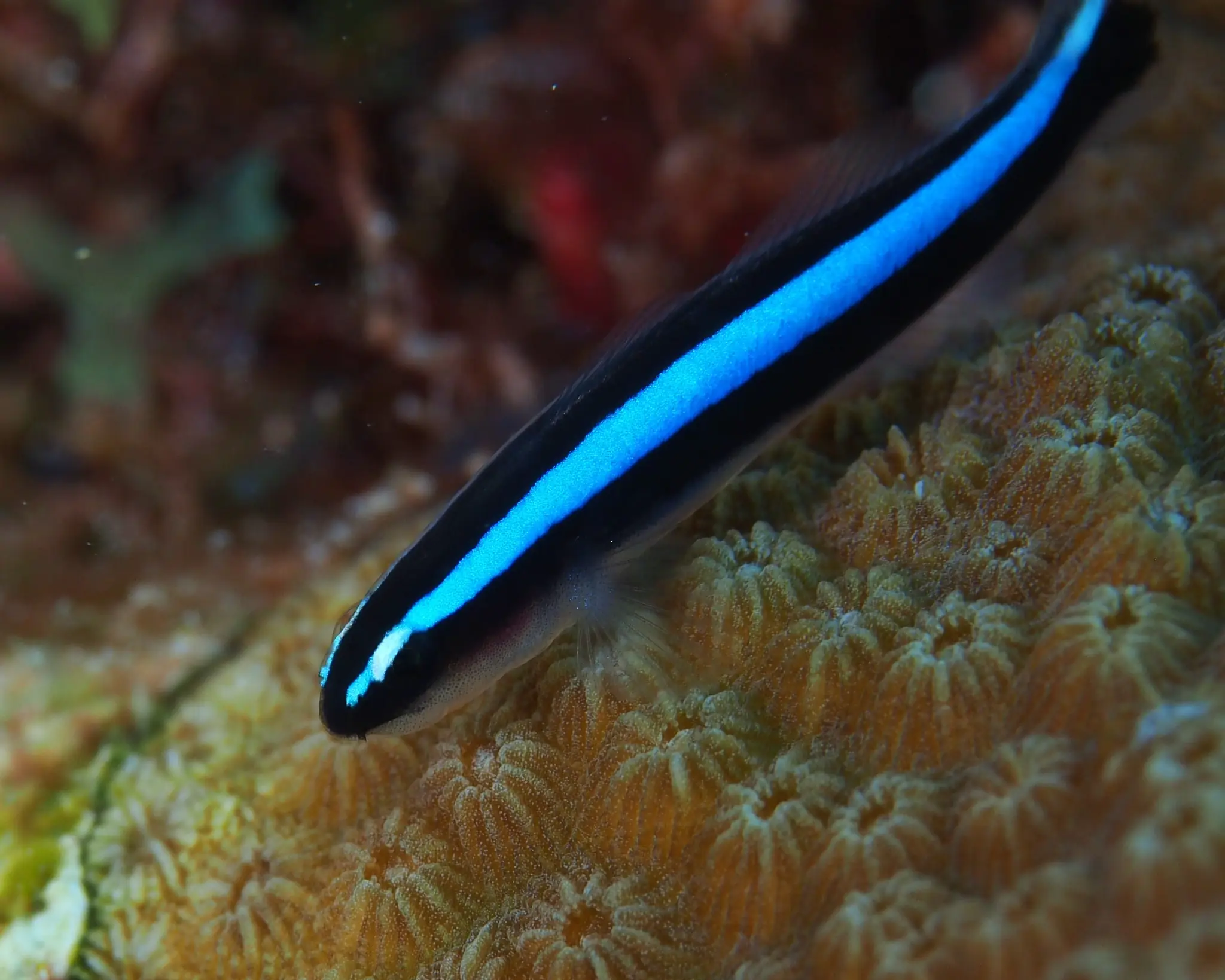
Electric blue stripes provide highest chromatic contrast to diverse fish visual systems across coral reef environments. This evolved advertising system outperforms yellow and green relatives in attracting cleaning clients.
Comparative studies reveal blue wavelengths remain visible at greater distances through tropical waters. Strategic coloration functions as both service advertisement and species recognition signal preventing territorial conflicts. Photo: Jonathan Churchill
Symbiotic Cleaning Protocols
Sophisticated Client Recognition and Service Systems
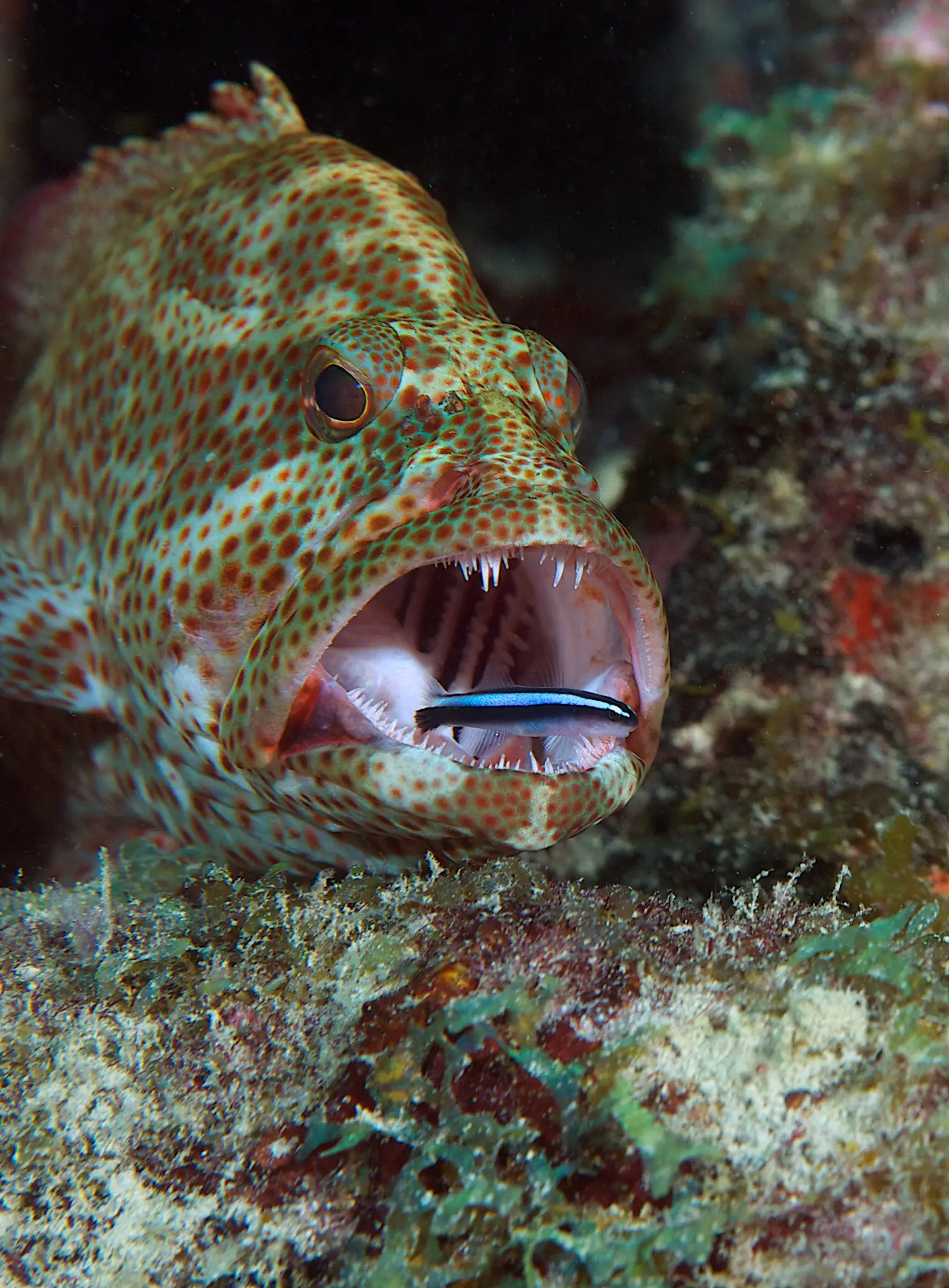
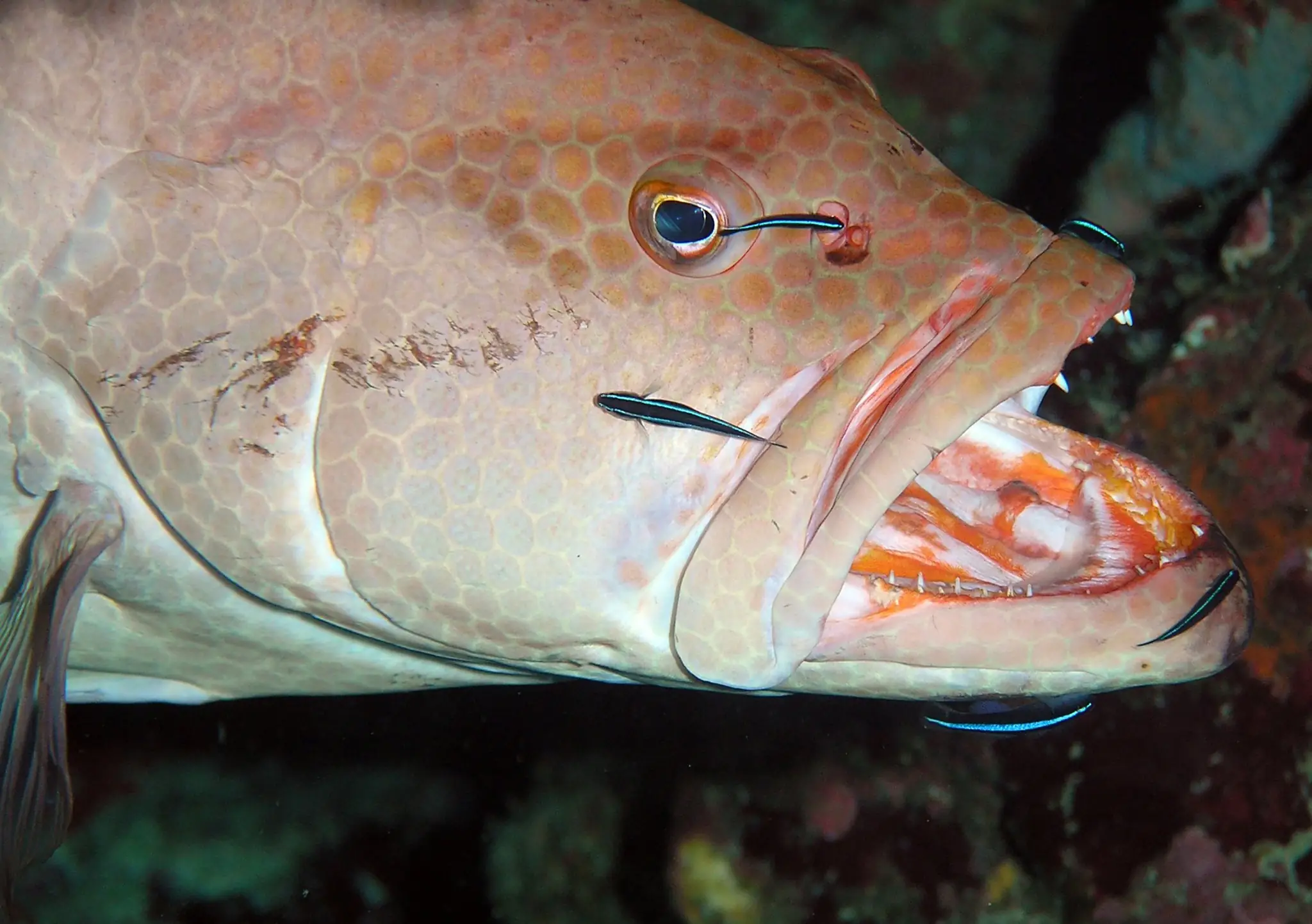
Cleaning stations operate through complex client recognition systems where larger fish request services by swimming to stations and waiting. Gobies remove ectoparasites, dead skin, and debris systematically.
Clients extend fins and open mouths granting access to sensitive areas including gills and mouths. Term "facultative cleaning" means gobies survive with or without client services unlike obligate cleaners. Photo: Peter Leahy
"Reef cleaning stations represent advanced cooperation systems where trust transcends size differences and service creates lasting partnerships across species boundaries."
— Dr. Isabelle Côté, Cleaning Symbiosis Researcher
Long-Term Monogamous Partnerships
Pair Bonds Through High-Quality Mate Benefits
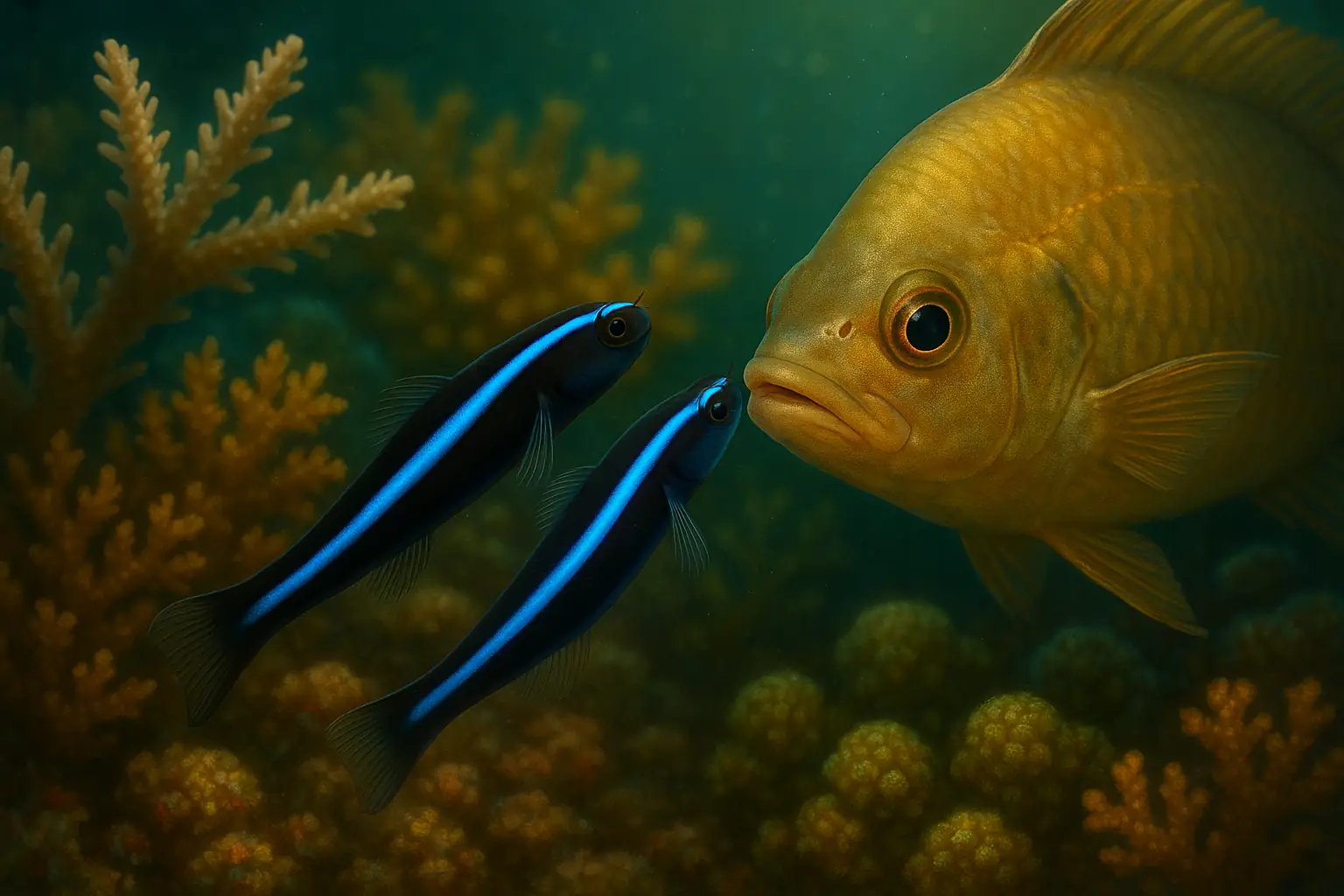
Unlike most small reef fish, neon gobies form long-term monogamous pairs operating shared cleaning stations. Partners perform courtship dances and defend territories through coordinated aggression against intruders.
Research reveals monogamy results from benefits of securing high-quality large mates rather than resource limitations. Both sexes guard partners against competitors, ensuring cooperative cleaning service success. Photo: Illustration.
Complex Behavioral Adaptations
Service Quality Maintained Through Client Choice
Quality control emerges through client choice when gobies occasionally consume healthy scales instead of parasites. Clients interrupt service or avoid future visits to those cleaning stations maintaining service quality through behavioral feedback.
Territory establishment involves recognizing prime coral head locations and defending optimal positions for maximum client traffic. Rapid pair formation and successful captive breeding demonstrate complex behavioral adaptations supporting survival. Photo: lego 19861111.
Conservation Success
Thriving Through Cooperation and Captive Breeding
Neon gobies represent conservation success through extensive captive breeding programs that supply aquarium trade demand. Wild populations face habitat degradation threats but benefit from cooperative reef relationships and reduced collection pressure.
Aquaculture facilities provide disease-free specimens to public aquariums while wild populations maintain essential cleaning services for reef health. Their success demonstrates how cooperation creates conservation opportunities for small species. Photo: Kyle Lippenberger.
Science & Discovery
University of Queensland Dr. Karen Cheney 2021 cleaner fish vision research confirmed electric blue stripes evolved for maximum chromatic contrast outperforming yellow and green coloration by 40% in attracting cleaning clients.
Simon Fraser University Dr. Isabelle Côté 2023 behavioral ecology studies documented 8-year cleaning station consistency with individual client recognition revealing gobies remember interactions and adjust service quality accordingly.
Marine Biology Institute Dr. Emily Whiteman recent partnership research showed monogamous pairs increase cleaning efficiency 35% through coordinated territory defense and client management demonstrating cooperation enhances fitness.
In our delightful oceans, neon gobies' electric blue stripes attract 40% more cleaning clients than yellow or green coloration. Monogamous pairs increase cleaning efficiency 35% through coordinated territory defense. Captive breeding programs reduce wild collection pressure maintaining stable reef populations.