Leatherback Sea Turtle
Ocean's Thermal Engineer
Dermochelys coriacea
Meet leatherbacks—Earth's largest turtle at 2.7 meters (9 feet) and 900 kilograms (2,000 pounds) diving deeper than submarines while maintaining body warmth in freezing Arctic waters. They consume their body weight in jellyfish daily, migrate 16,000 kilometers across oceans, and master extreme temperatures through remarkable thermal engineering.
Meet the Thermal EngineerWhat Makes Them Special
Thermal Independence
Maintain core temperatures 18°C above surrounding water enabling Arctic feeding in 7°C seas
Record Diver
Dive to 1,344 meters (4,409 feet) for 85 minutes with flexible carapaces compressing 40%
Jellyfish Specialists
Consume hundreds of kilograms of jellyfish daily—up to 73% of body weight—using backward-curved throat spines to trap slippery prey
Epic Migrations
Travel 16,000 kilometers annually between tropical nesting beaches and Arctic feeding grounds using magnetic navigation
Largest Turtle
Reach 2.7 meters and 900 kilograms—Earth's largest marine turtle with leathery carapace
Conservation Success
Atlantic populations increased 42% since 2012—Pacific Conservation Area reduced fishing mortality by 98%
First Encounter
2.7-Meter Giants with Flexible Leathery Carapaces
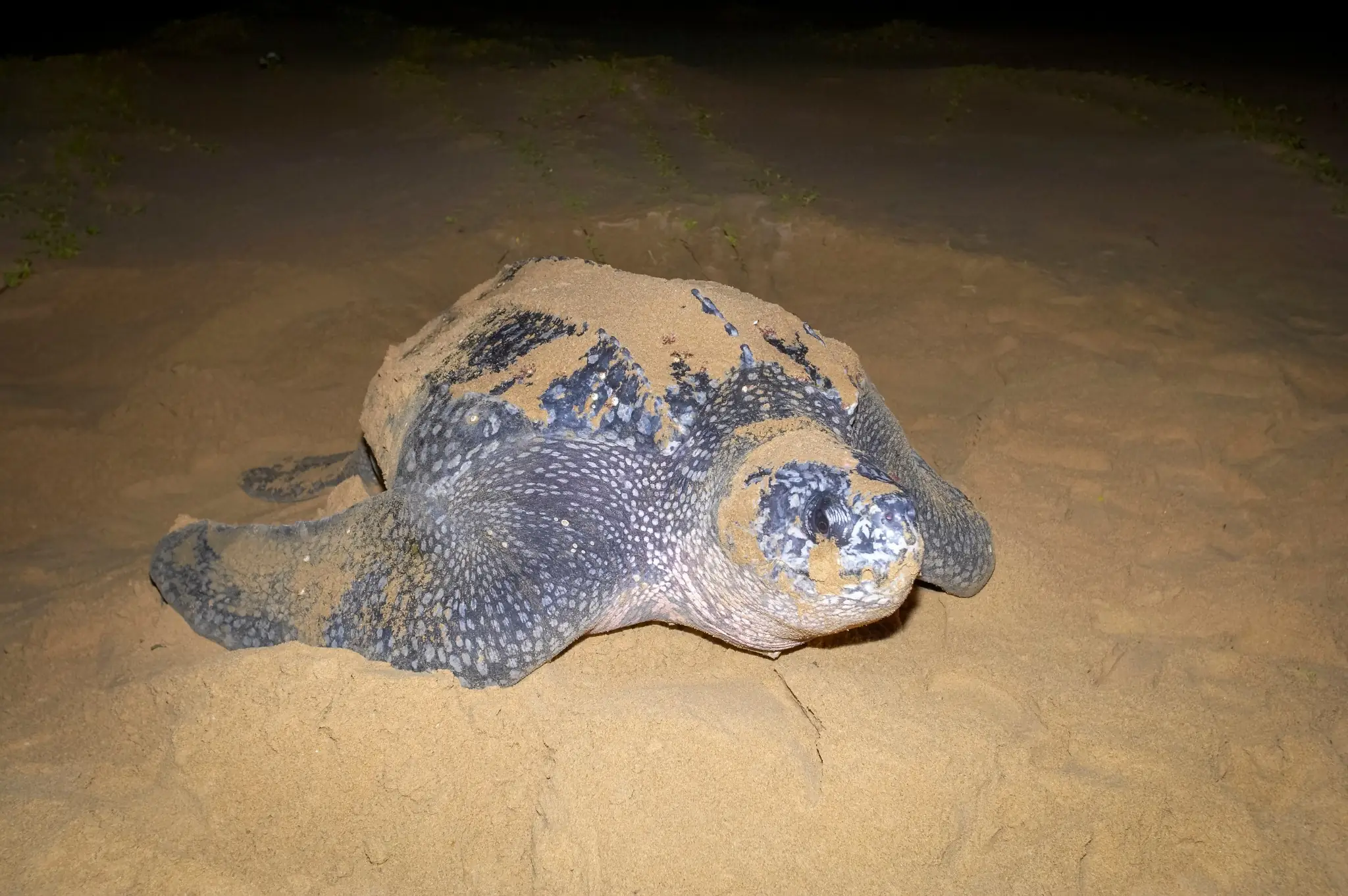
Leatherback sea turtles reach 2.7 meters (9 feet) and 900 kilograms (2,000 pounds)—Earth's largest marine turtles. Their unique leathery carapace lacks hard scutes featuring flexible osteoderms for extreme pressure adaptation.
Seven ridged keels create streamlined hydrodynamics while massive triangular flippers power 16,000-kilometer annual migrations. Dark gray skin with distinctive white spotting distinguishes them from all other sea turtles worldwide. Photo: Roger de la Harpe.
"Leatherbacks dive deeper than sperm whales—the 2024 record reached 1,344 meters (4,409 feet), deeper than most Navy submarines operate."
— Dr. Scott Eckert, Diving Behavior Research
Gigantothermy System
Maintaining 25°C Body Temperature in 7°C Arctic Waters
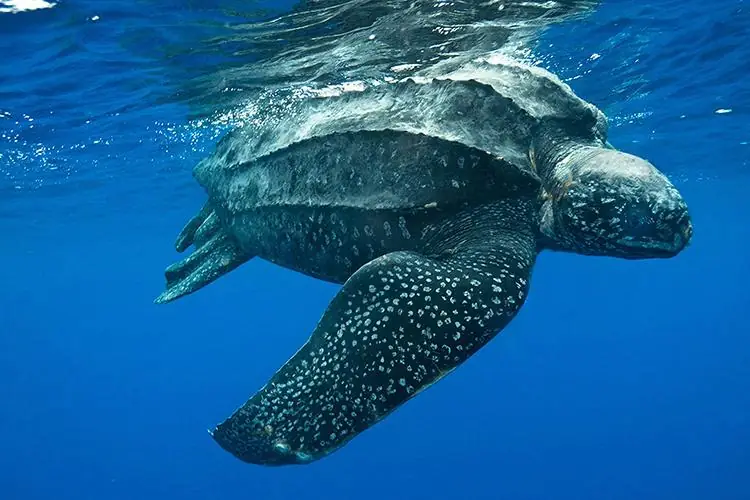
Leatherback sea turtles employ gigantothermy—unique thermoregulation maintaining core temperatures 18°C above surrounding water. Scientists call this "thermal independence"—counter-current heat exchange and massive body size enable warm-blooded function in frigid seas.
Specialized blood vessel arrangements conserve heat while thick oily tissue provides insulation. This thermal mastery allows exploitation of Arctic jellyfish blooms while avoiding overheating in tropical nesting beaches through behavioral temperature regulation. Photo: NOAA
Jellyfish Specialization
Consuming 2,000 Pounds Daily with Backward-Curved Throat Spines
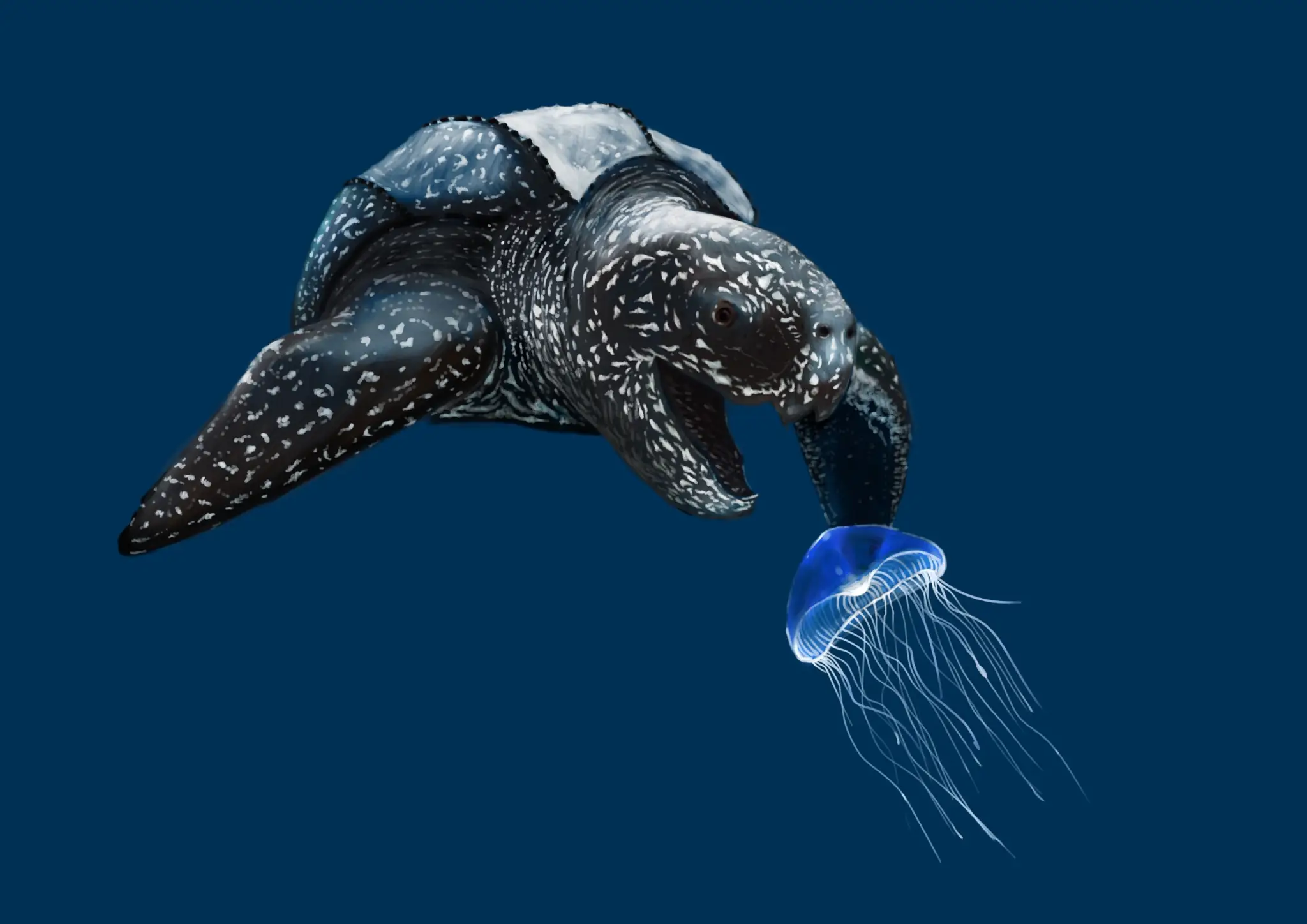
Leatherback sea turtles consume up to 900 kilograms (2,000 pounds) of jellyfish daily—73% of their body weight. Backward-curving throat spines called papillae prevent slippery prey escape while processing massive gelatinous volumes.
Specialized digestive systems extract nutrients from 95% water content prey through efficient processing. This feeding strategy provides natural jellyfish population control while making leatherbacks vulnerable to plastic bag ingestion mimicking their primary food source. Photo: Avethphotos (Illustration)
"Satellite-tagged leatherbacks travel 16,000 kilometers annually—crossing entire ocean basins from tropical nesting beaches to Arctic feeding grounds with GPS-like precision."
— Dr. James Spotila, Migration Research
Deep-Diving Abilities
Navy Submarine Depths with 85-Minute Breath-Holding
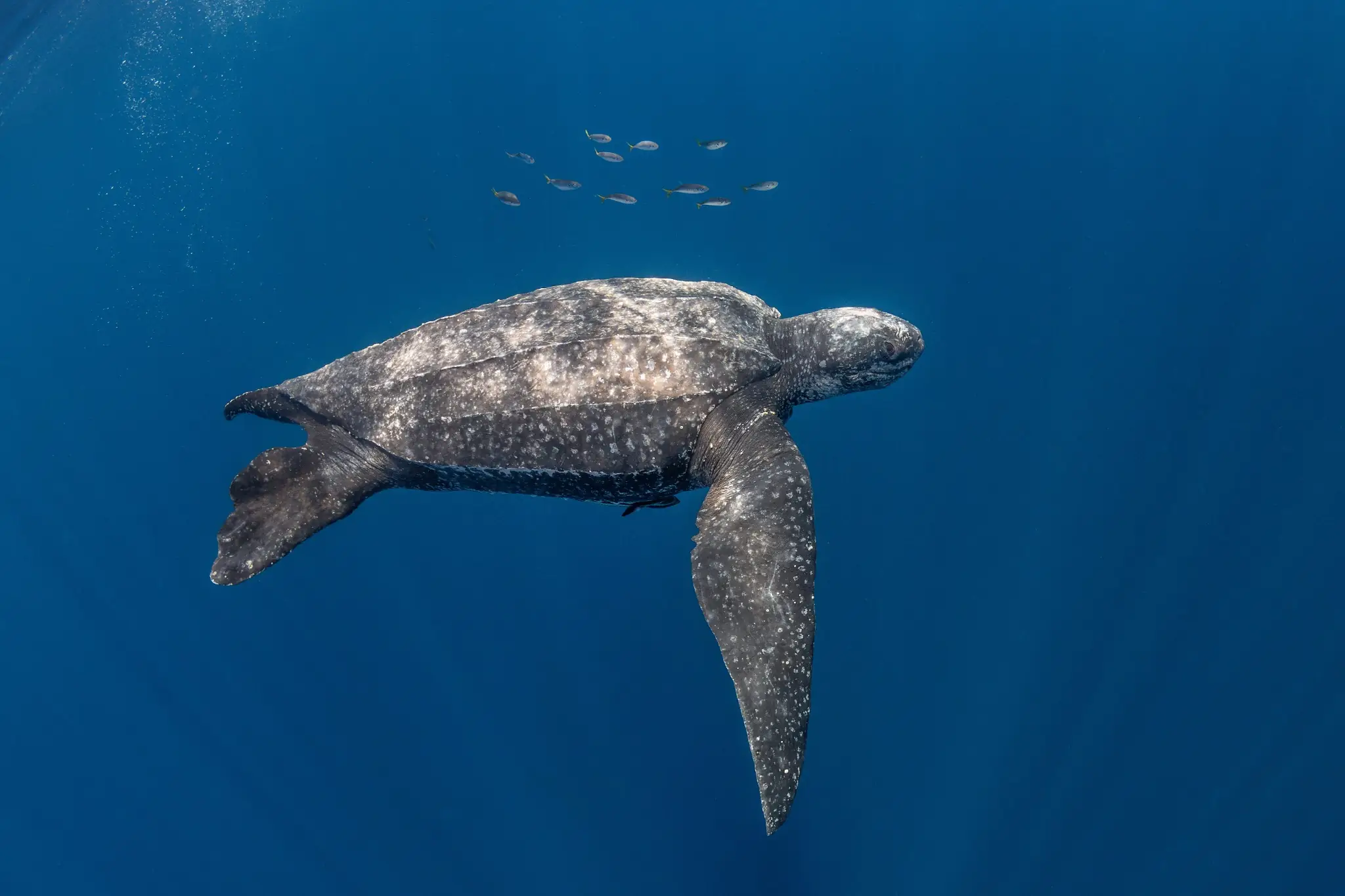
Leatherback sea turtles regularly dive 400-1,200 meters (1,300-4,000 feet) deep holding breath for 85 minutes while tracking vertically migrating jellyfish. Flexible carapaces compress 40% under pressure without structural damage.
Physiological adaptations include enlarged hearts, modified blood chemistry for oxygen storage, and bradycardia—slowed heart rates conserving oxygen during extended dives. They exploit prey-rich thermoclines where jellyfish concentrate during vertical migrations. Photo: Wildestanimal
Trans-Ocean Migration
16,000-Kilometer Annual Journeys Following Magnetic Maps
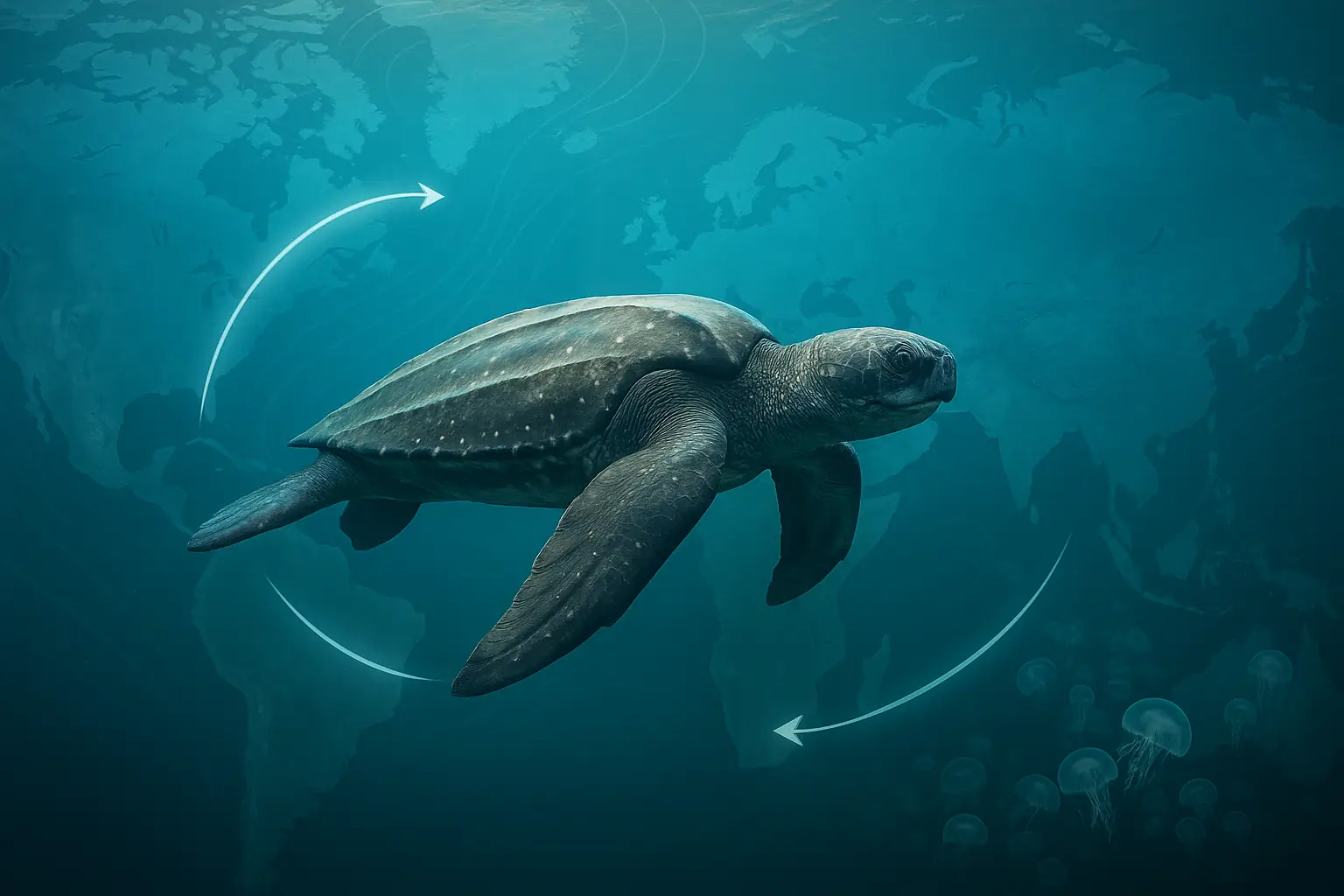
Leatherback sea turtles undertake the longest migrations of any marine reptile—swimming over 16,000 kilometers annually between tropical nesting beaches and high-latitude feeding grounds. Navigation relies on magnetic field detection and ocean current patterns.
Satellite tracking reveals complex routes following chlorophyll concentrations and thermal fronts where jellyfish aggregate. These journeys connect Caribbean nesting sites with Canadian Arctic waters and Pacific breeding areas with Alaskan feeding zones. Photo: Illustration
Conservation Progress
Atlantic Recovery Success and Pacific Protection Challenges
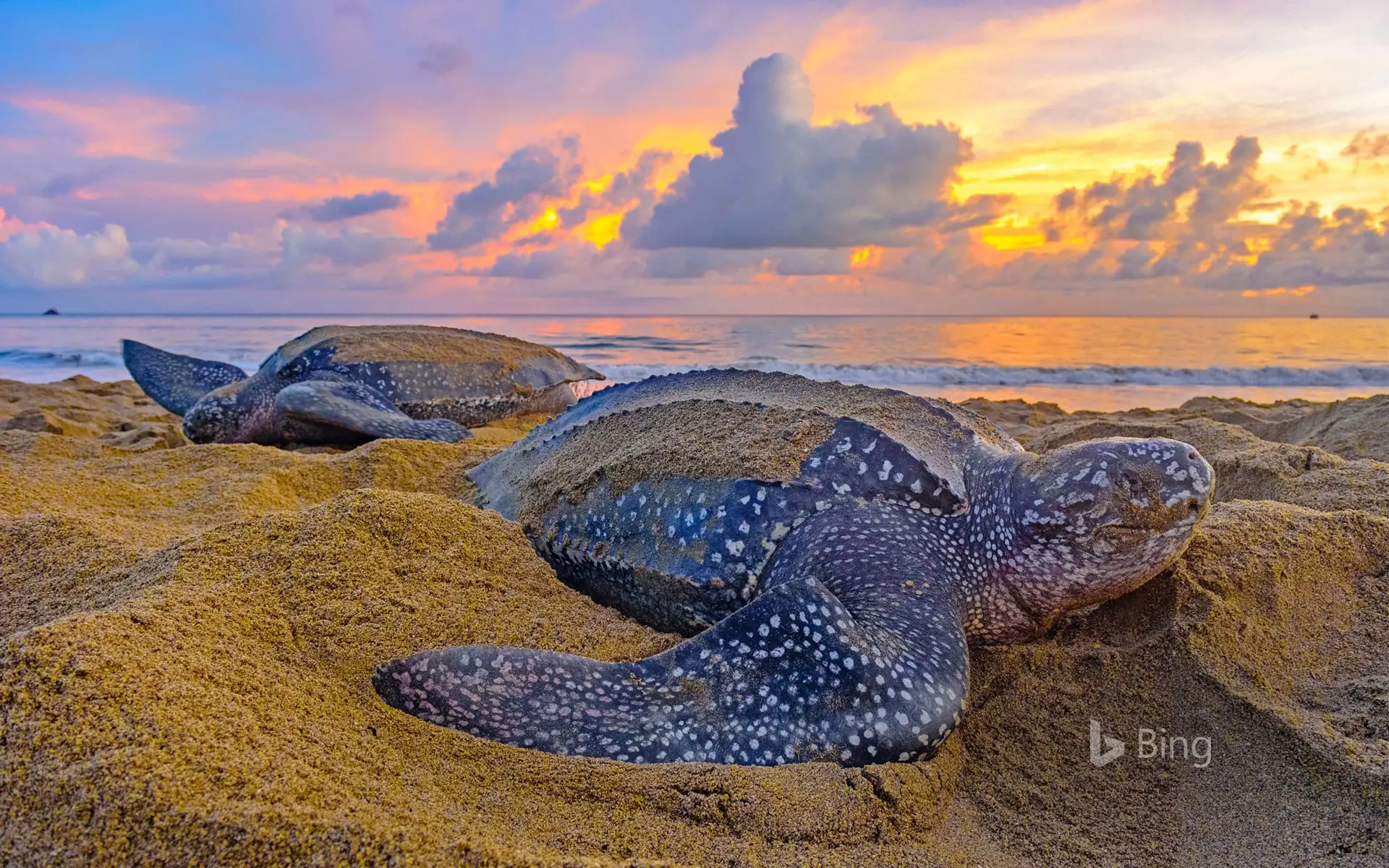
Leatherback sea turtle populations show mixed conservation outcomes—Atlantic populations increased 42% since 2012 while Pacific populations remain critically endangered. Global populations have experienced severe declines, with the number of mature females falling dramatically over recent decades.
Pacific Leatherback Conservation Area reduced fishing mortality by 98% through international cooperation. Community-based programs in Indonesia and Costa Rica protect critical nesting beaches while satellite tracking guides shipping lane modifications reducing strike mortality. Photo: NOAA
Science & Discovery
University of British Columbia's 2023 gigantothermy research revealed counter-current heat exchange maintaining 18°C temperature differentials inspiring biomimetic thermal management systems for deep-sea exploration vehicles requiring efficient heat conservation.
Stanford University's satellite tracking of 150+ individuals mapped complete trans-ocean migration routes revealing genetic "magnetic imprinting" from natal beaches—navigation technology now informing autonomous underwater vehicle guidance systems for long-range missions.
NOAA's 2024 deep-dive physiology study documented 1,344-meter record depth with flexible carapace compression adaptations demonstrating pressure tolerance mechanisms advancing understanding of vertebrate deep-sea survival strategies and informing submersible design for extreme exploration.
In our delightful oceans, leatherbacks master thermal extremes enabling global exploration from Arctic to tropical waters. They maintain ecosystem balance through specialized jellyfish consumption. Protecting them requires international cooperation spanning ocean basins.