Loggerhead Sea Turtle
Ocean's Magnetic Navigator
Caretta caretta
Meet magnetic navigators reaching 1.2 meters (4 feet) whose magnetoreceptors detect Earth's geomagnetic field. Their powerfully built jaws crush hard-shelled prey while navigating 10,000-kilometer transoceanic circuits, returning to their natal region after decades guided by magnetic maps refined throughout their lives.
Discover Their Magnetic MasteryWhat Makes Them Special
Ancient Mariners
Reach 1.2 meters (4 feet) and 180 kilograms with distinctive large heads
Magnetic Navigation
Detect Earth's magnetic field creating lifelong navigational maps imprinted at birth
Crushing Power
Powerful jaws generate immense force for consuming hard-shelled prey like conchs and horseshoe crabs
Epic Migrations
Complete 10,000-kilometer circuits through Atlantic gyres spending 15-30 years at sea
Remarkable Longevity
Live 50+ years taking 20-30 years to mature before returning to natal beaches
Conservation Success
North Atlantic populations increased from 30,000 to 50,000+ nesting females through protection efforts
First Encounter
Massive Heads and Powerful Jaws
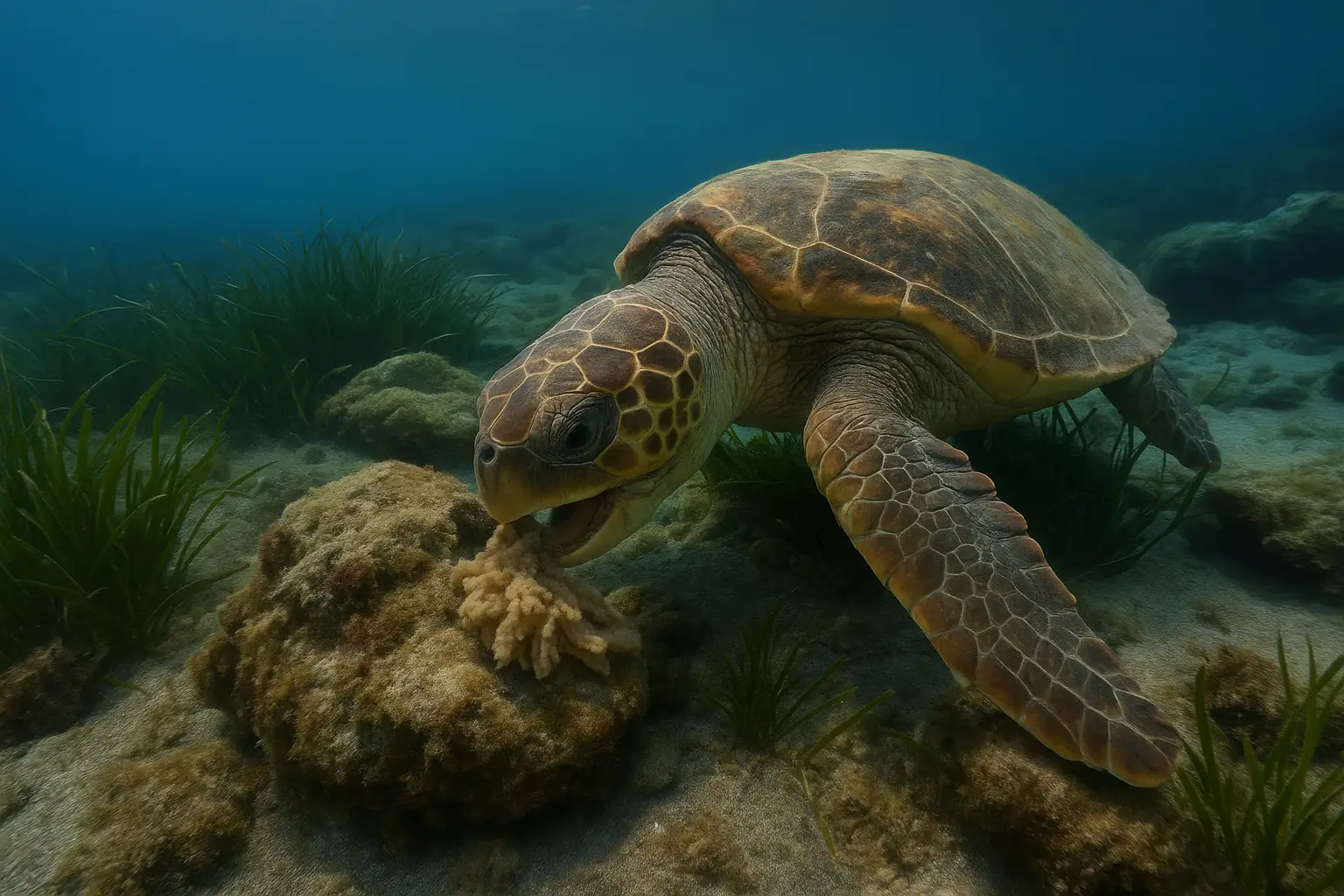
Loggerhead sea turtles reach 1.2 meters (4 feet) and 180 kilograms (400 pounds) with distinctive reddish-brown carapaces and disproportionately large heads. Their powerful jaws deliver tremendous crushing force—cracking hard-shelled prey other sea turtles cannot consume.
These robust omnivores feed on crabs, conchs, jellyfish, and sponges. Scientists call this "dietary plasticity"—flexible feeding strategies enabling survival across variable oceanic conditions throughout their 50-year lifespans. Photo: NOAA
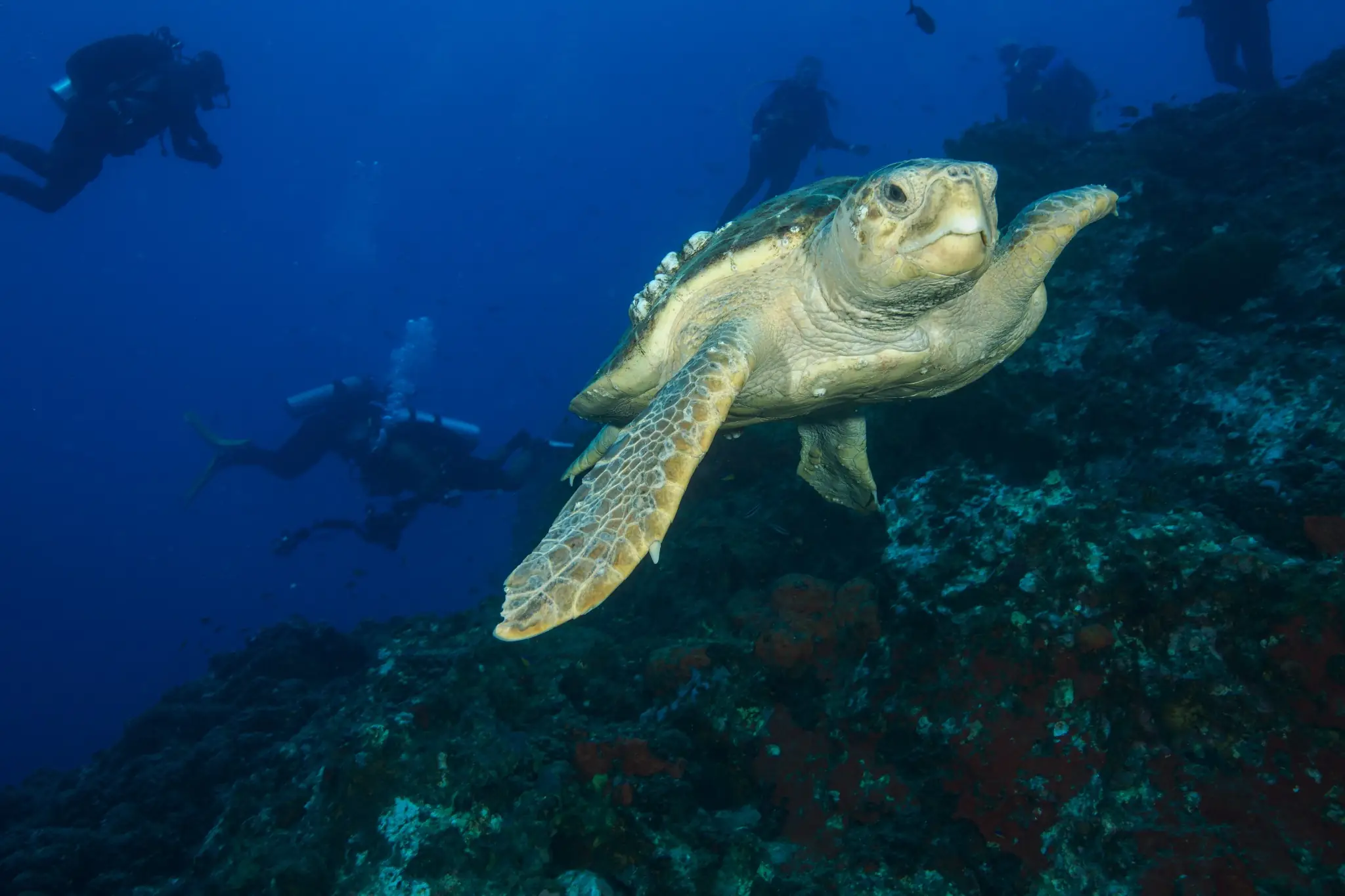
"Loggerheads possess what amounts to a biological GPS—they can detect both the inclination and intensity of Earth's magnetic field, creating a navigational map that guides them across thousands of kilometers with remarkable accuracy."
— Dr. Kenneth Lohmann, University of North Carolina
Magnetic Map Navigation
Nature's GPS Through Geomagnetic Field Detection
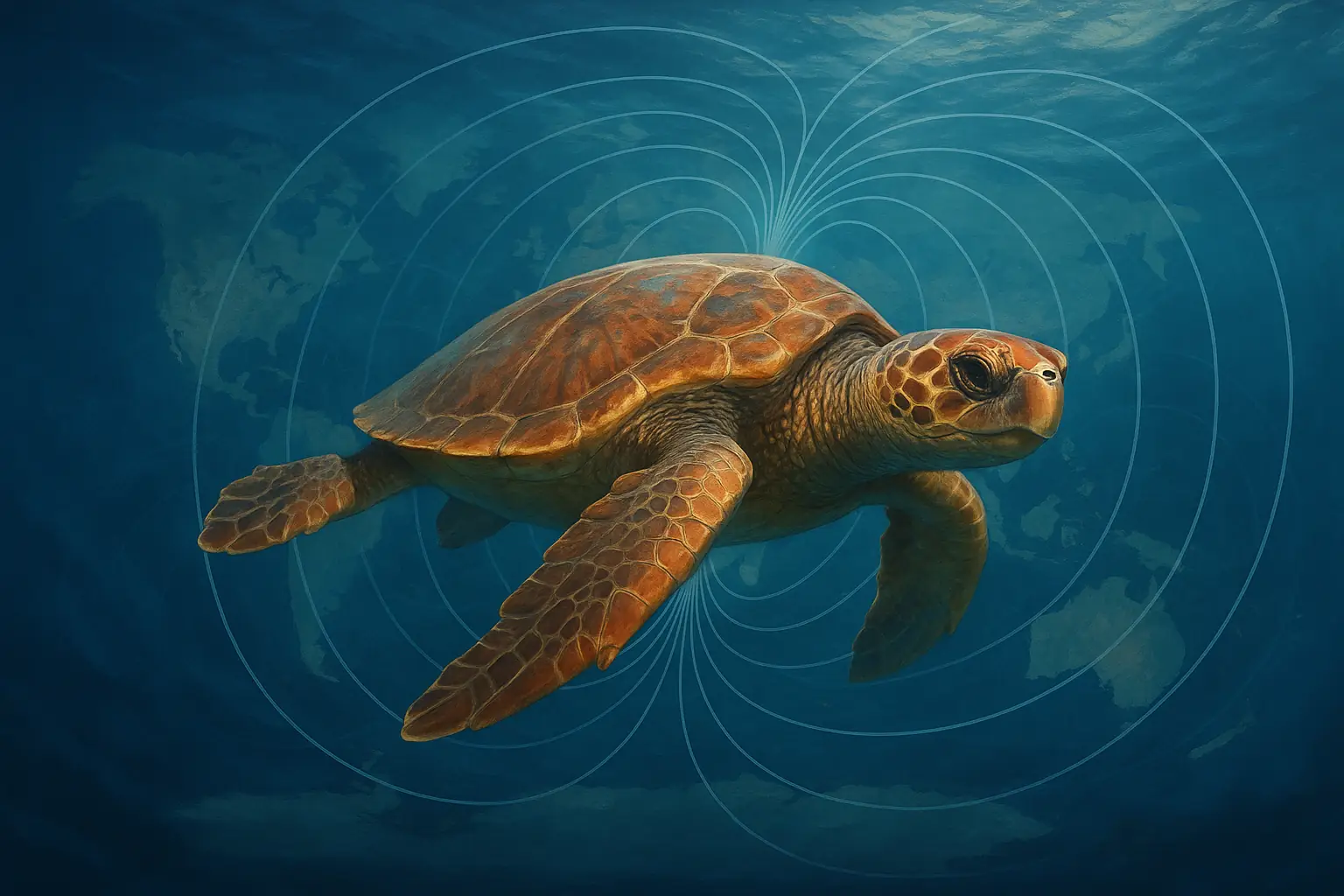
Magnetic navigation detects Earth's magnetic field intensity and inclination through magnetoreceptor cells near the brain. Hatchlings begin learning unique magnetic signatures during initial ocean entry, creating a navigational map that is continuously refined throughout their lives, functioning like a biological GPS.
Scientists call this "geomagnetic imprinting"—compass calibration enabling navigation across 10,000-kilometer circuits. Loggerheads recognize magnetic declination patterns allowing course corrections while maintaining precise heading toward specific targets decades later. Photo: Illustration.
Transoceanic Migrations
10,000-Kilometer Circuits Through Ocean Gyres
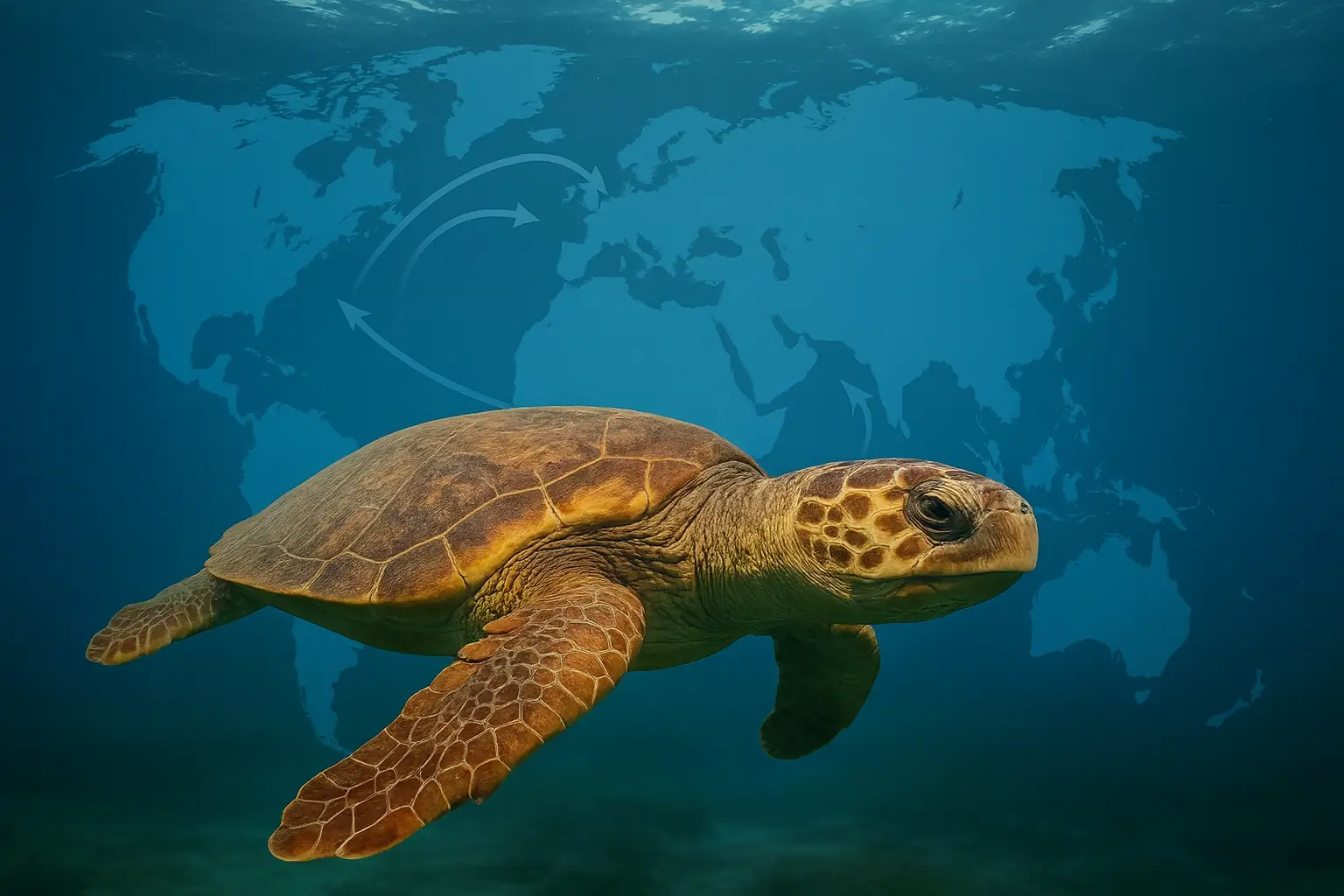
Transoceanic migrations follow 10,000-kilometer (6,200-mile) circuits through Atlantic gyre systems using oceanic currents as highways. Juvenile loggerheads spend 15-30 years in open ocean before returning to coastal feeding areas.
Satellite tracking reveals remarkable fidelity to specific migration routes crossing entire oceans multiple times. Scientists call this "natal homing"—precision return navigation to birth regions after decades guided by magnetic field recognition. Photo: Illustration.
"Individual loggerheads demonstrate remarkable site fidelity—tracked specimens have returned to the exact same nesting beaches after traveling 14,500 kilometers across open ocean, establishing the longest recorded sea turtle migrations. "
— Dr. Wallace J. Nichols, Sea Turtle Conservation Network
Powerful Jaw Mechanics
1,000-Pound Crushing Force
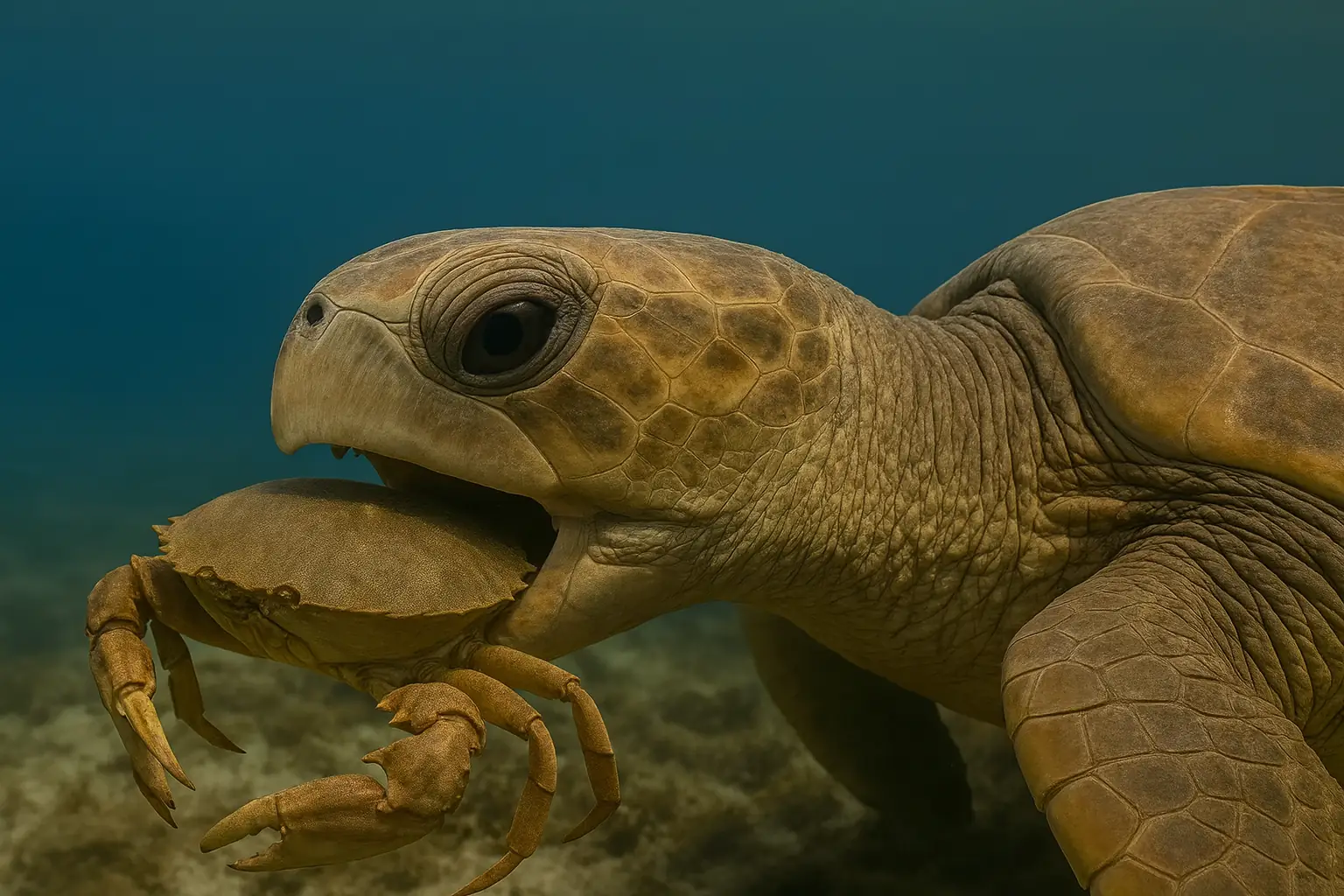
Powerful jaw mechanics deliver tremendous crushing force through enlarged adductor muscles and reinforced skull architecture. This enables consumption of hard-shelled prey including horseshoe crabs, conchs, and whelks unavailable to other sea turtles.
Scientists call this "durophagous feeding"—specialized consumption of hard-bodied prey. Beak morphology varies regionally, with Atlantic populations developing broader crushing surfaces than Pacific populations reflecting evolutionary adaptation. Photo: Illustration.
Coastal Foraging Strategies
Deep Diving and Opportunistic Feeding
Coastal foraging involves benthic diving to 200-meter (650-foot) depths targeting bottom-dwelling invertebrates combined with opportunistic surface feeding. Dive durations extend up to 4 hours enabling extensive seafloor exploration.
Regional specialization creates distinct foraging cultures—Mediterranean populations focus on benthic mollusks while Atlantic populations emphasize pelagic jellyfish. Scientists call this "foraging plasticity"—adaptive feeding strategies maximizing resource exploitation. Photo: Illustration.
Conservation Coordination
Global Collaboration Creating Population Recovery
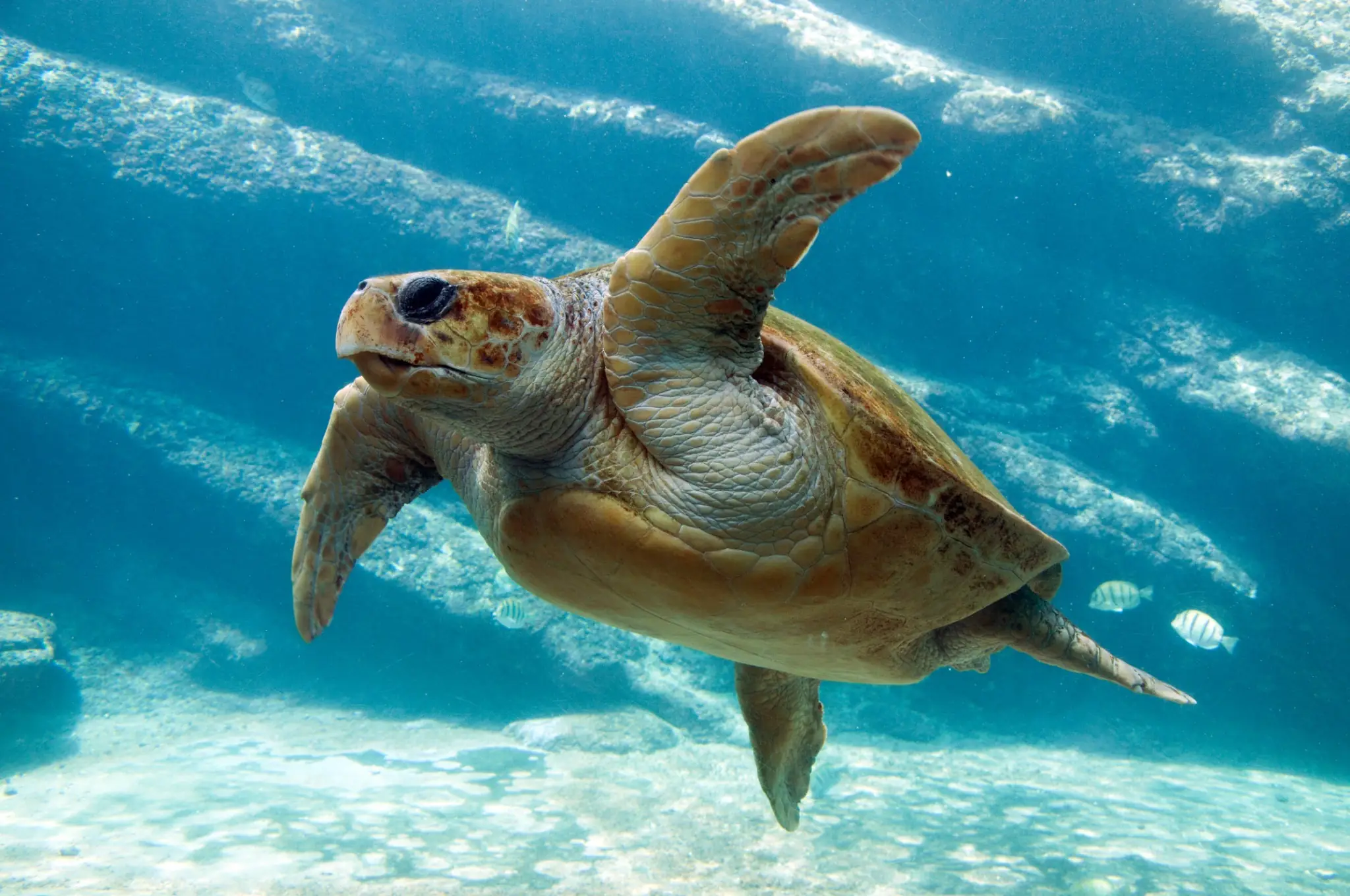
International conservation increased North Atlantic populations from 30,000 to 50,000+ nesting females through multinational protection. Turtle-excluder devices reduced fisheries bycatch mortality by 97% while nest protection enhanced hatchling survival.
Pacific populations remain critically endangered with fewer than 1,000 nesting females requiring continued cooperation. Satellite telemetry enables real-time fishing fleet notifications when loggerheads enter high-risk areas demonstrating technology-assisted conservation success. Photo: Jurie Maree
Science & Discovery
University of North Carolina 2023 research revealed magnetoreceptor cells containing iron oxide crystals functioning as natural compass needles detecting Earth's geomagnetic field variations.
NASA satellite telemetry showed loggerheads use thermal fronts and chlorophyll gradients as secondary navigation cues creating multi-sensory navigation systems rivaling GPS technology.
Florida State University 2024 genetic analysis revealed distinct Atlantic and Pacific populations separated 3 million years with Mediterranean populations showing unique salinity adaptations.
In our delightful oceans, loggerhead sea turtles demonstrate magnetic navigation transcending human technology. These ancient lineages preserve Earth's memory across geological time. International conservation transforms declining populations into recovery success stories.