Immortal Jellyfish
The Jellyfish That Ages Backward
Turritopsis dohrnii
Meet the animal that ages in reverse—the immortal jellyfish, a translucent speck barely 4.5 millimeters wide with a glowing red stomach. When starving, injured, or old, it doesn't die but collapses into a blob and regrows as a young polyp. Through this reversal it can, in theory, begin life again and again.
Discover Reverse AgingWhat Makes Them Special
Living Speck
A translucent speck barely 4.5 millimeters wide, smaller than a little fingernail
Reverse Aging
When stressed or aging, it reverts to a juvenile polyp instead of dying
Cellular Rewrite
Transdifferentiation lets mature cells transform into new types, rebuilding its whole body
Blob to Polyp
A dying medusa becomes a blob-like cyst, then a new polyp within days
Global Drifter
Once Mediterranean, it now drifts through temperate and tropical seas worldwide
Immortality’s Limits
Still eaten by predators, most wild jellyfish die before ever reverting
First Encounter
A Speck That Defies Death
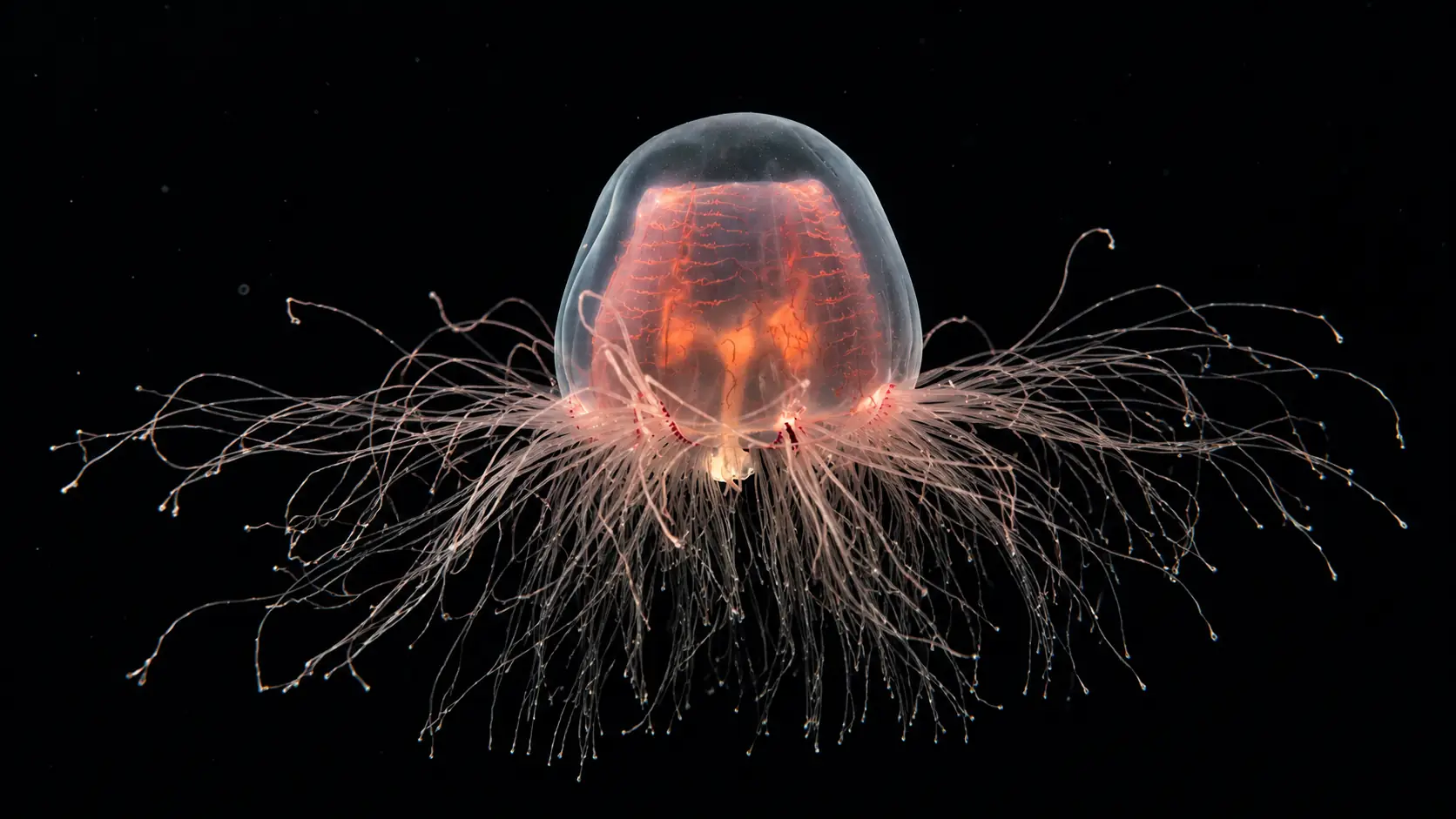
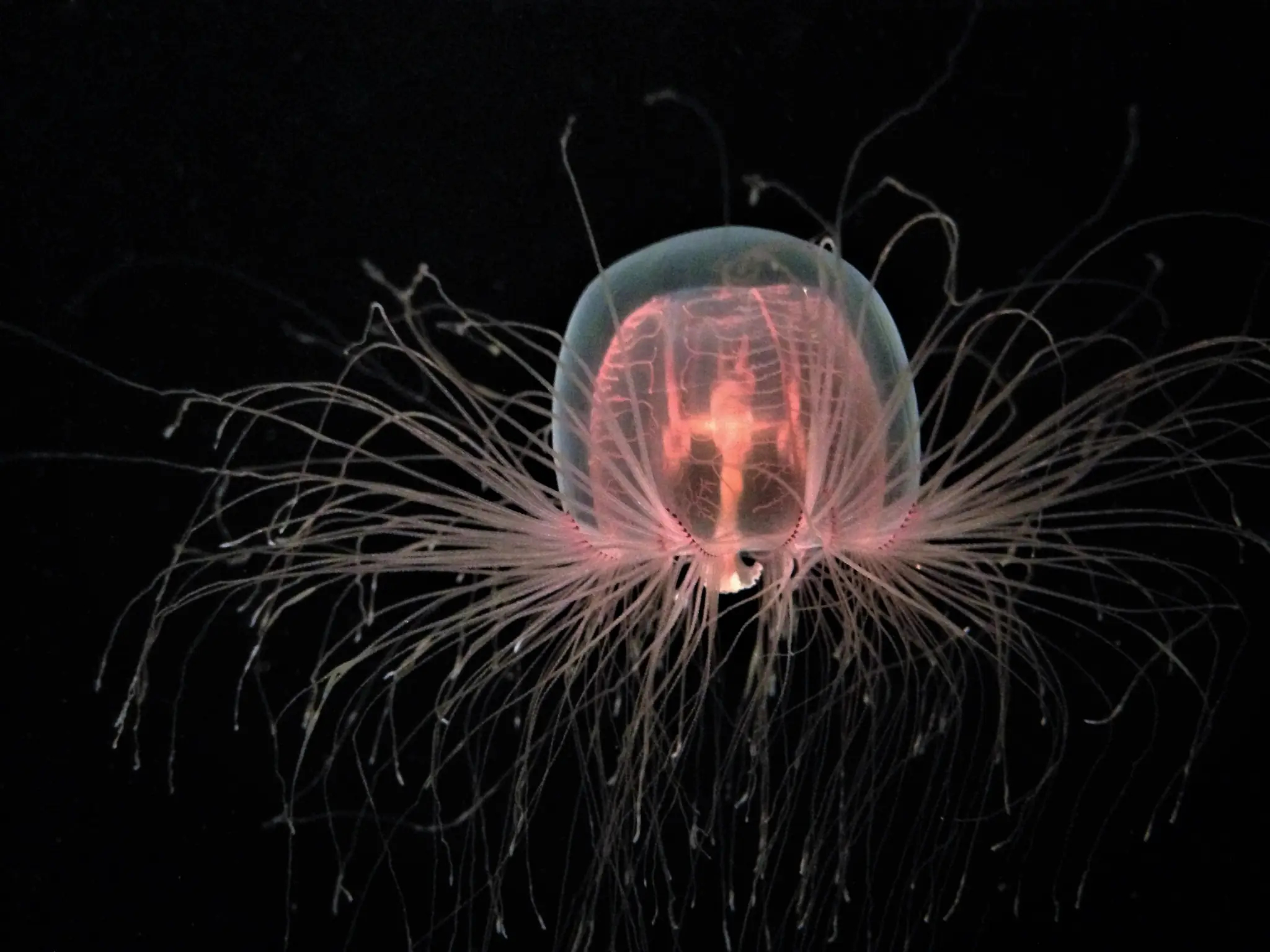
Barely 4.5 millimeters across, the immortal jellyfish is smaller than a little fingernail—a transparent bell fringed with fine tentacles and lit by a bright red stomach glowing at its core.
First described in 1883, its stunning secret went unnoticed until the 1980s, when biologists off Italy watched adult jellyfish transform back into polyps—overturning the belief that aging runs one way. Photo: Rebecca Schreiner.
"It is easy to overlook—a fleck of living glass smaller than a fingernail, pulsing in a harbour no one notices. Yet inside this speck may hide the oldest question humans have asked: whether death is truly inevitable."
— Reflecting on the immortal jellyfish's place in modern aging research
The Great Reversal
How a Jellyfish Escapes Dying
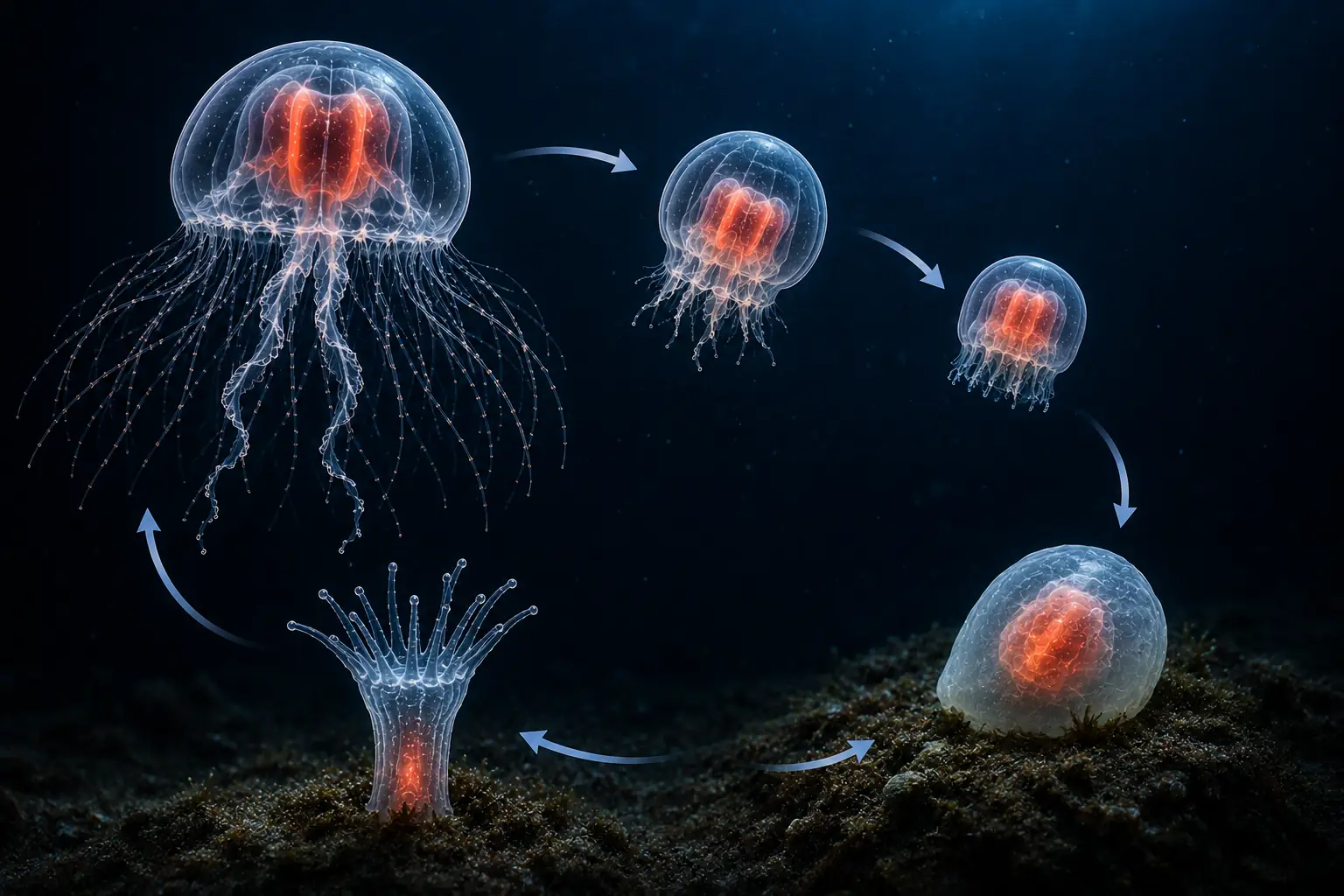
Most jellyfish drift, spawn, and die. But when the immortal jellyfish is starved, injured, or simply old, it does something no other animal can: it reverses course instead of dying.
The medusa shrinks, reabsorbs its tentacles, and sinks to the seafloor as a blob-like cyst. Within one to three days, that cyst grows into a polyp—the jellyfish's own earlier life stage. Photo: Illustration.
Cells Reborn
Rewriting the Cells' Identity
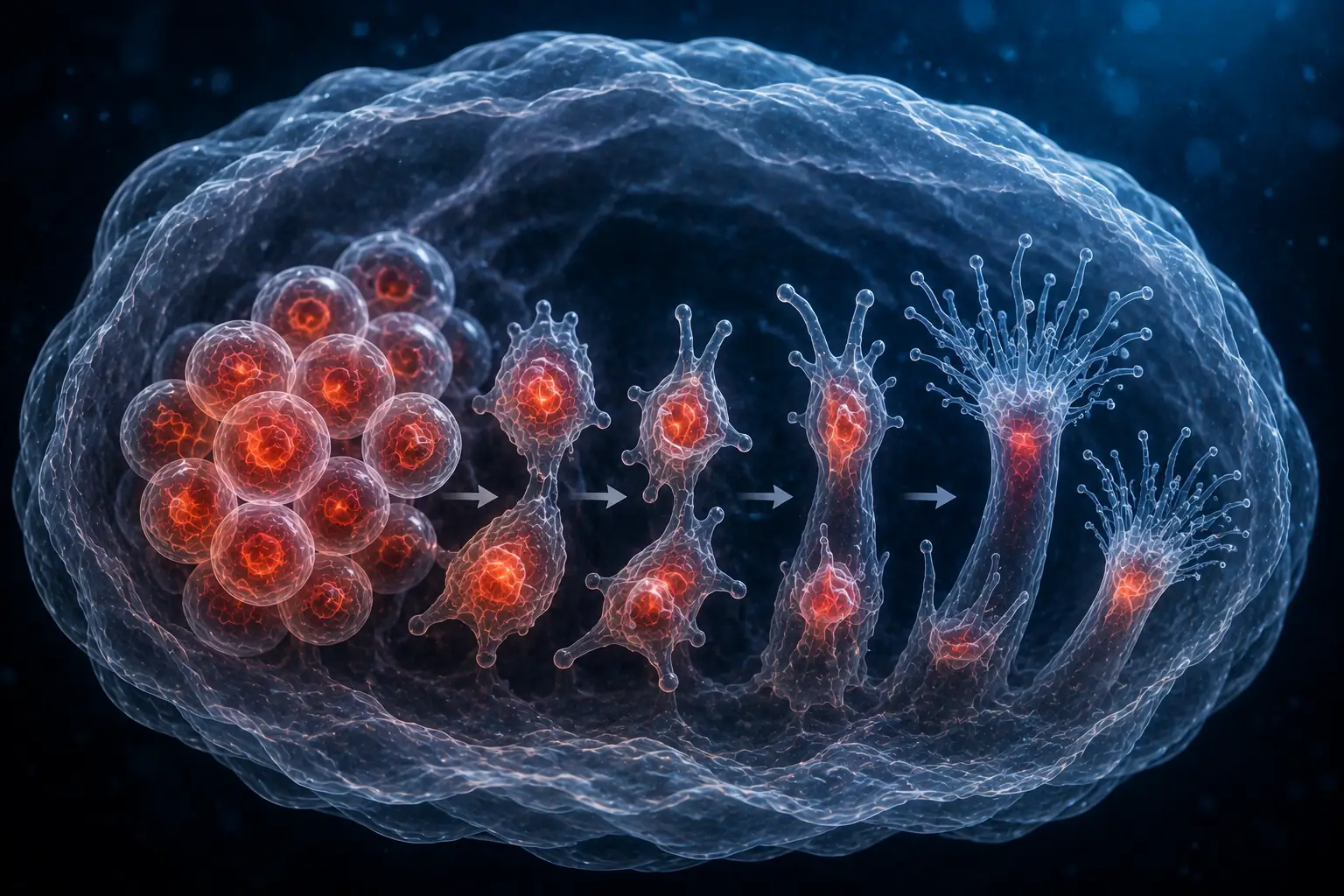
How can an adult body become young again? Inside the cyst, the jellyfish performs a cellular magic trick called transdifferentiation—mature, specialized cells rewrite their identity and become entirely different cell types.
It is as if a butterfly could melt back into a caterpillar. Muscle and nerve cells reprogram into whatever the new polyp needs, resetting the body's biological clock almost from scratch. Photo: Illustration.
"Growing old, then becoming young again—not merely healed, but genuinely rebuilt from your own cells. The immortal jellyfish does exactly this, turning the one-way road of a lifetime into a loop it can travel again and again"
— Grounded in studies of transdifferentiation and life-cycle reversal
The Limits of Immortality
What Immortality Cannot Do
In theory this loop never ends, making the jellyfish biologically immortal. In practice, immortality has limits: it can still be eaten, infected by parasites, or killed by sudden physical damage.
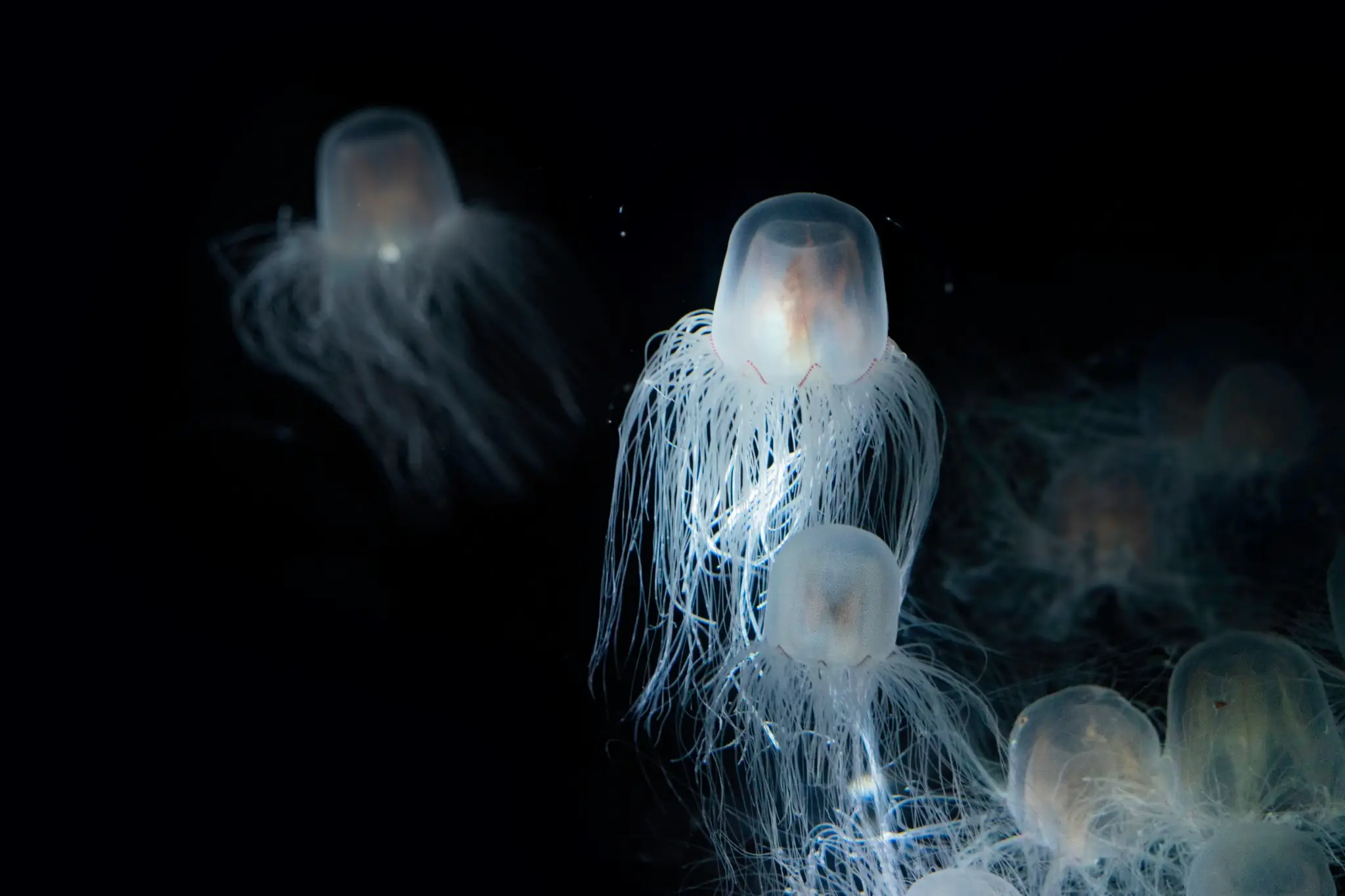
Most wild medusae never get the chance to reset, dying young in the plankton. Their rejuvenation is seen clearly only in the safety of the laboratory, under a careful scientist's watch. Photo: Real Seal.
A Key to Human Aging
Clues to Human Aging
If a jellyfish rebuilds an old body, could its secrets help us? Its cells appear to rework the telomere and DNA-repair systems that limit ours, making it a living model for aging.
Genome studies show the immortal jellyfish carries expanded genes for DNA repair and cell renewal. Scientists hope such insights may one day inform treatments for cancer, tissue damage, and age-related disease. Photo: Rebecca Schreiner.
Conservation & Legacy
Legacy of the Immortal Jellyfish
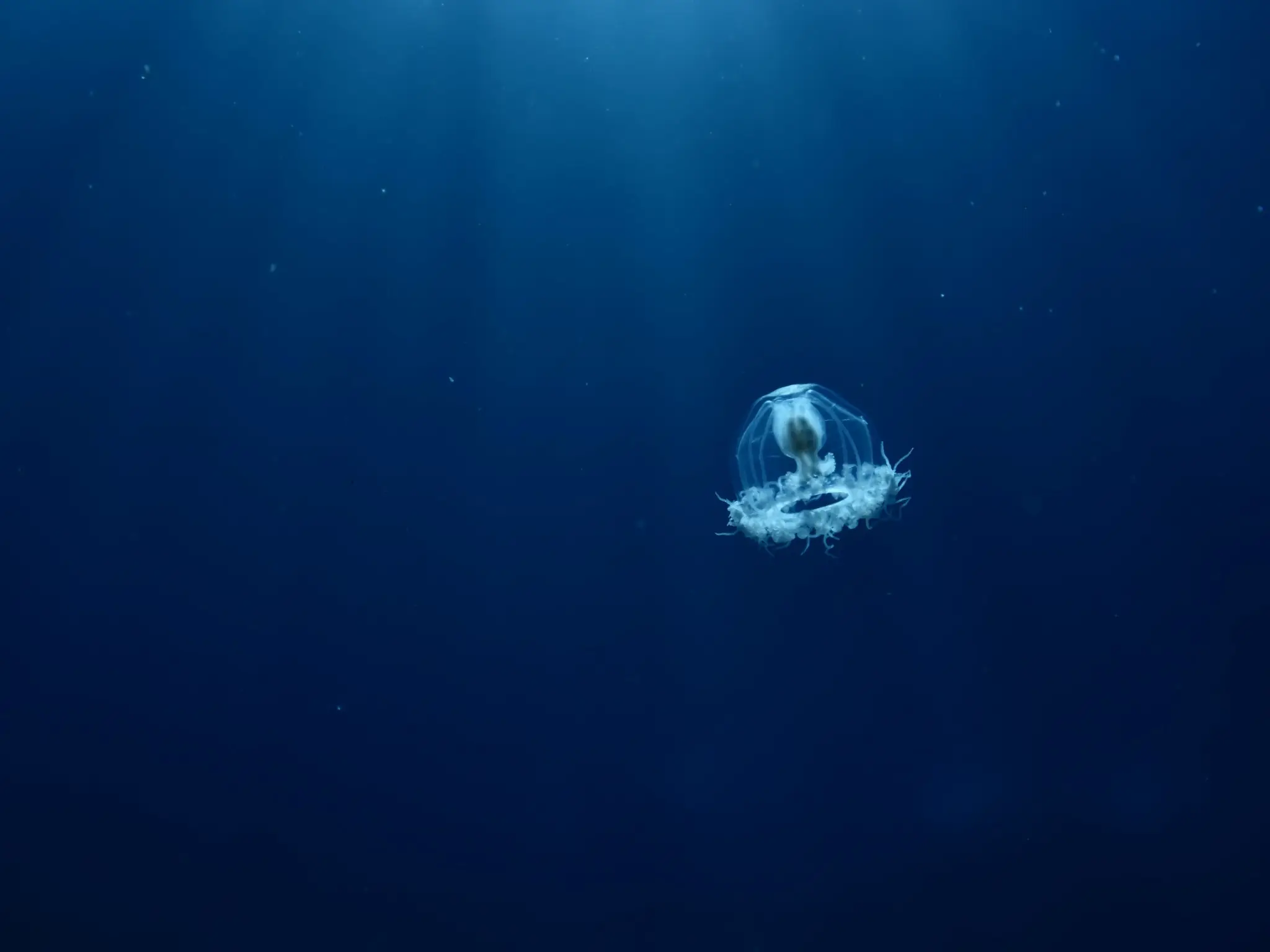
Unlike most marine marvels, this jellyfish faces no extinction risk—it is quietly thriving. Carried in ships' ballast water, it has spread from the Mediterranean to temperate and tropical seas worldwide.
Its real value is knowledge. By guarding clean oceans and the funding to study this fragile creature, we protect a living key to biology's deepest questions about life and death. Photo: Scubadesign.
Science & Discovery
Kyoto University's Shin Kubota, after decades of careful culturing, documented a colony rejuvenating about ten times in two years, proving the reversal repeats rather than happening once.
Texas A&M University in 2021 mapped gene activity across the jellyfish's life stages, showing the transforming cyst switches on genes for DNA repair and rejuvenation during its reversal.
The University of Oviedo sequenced the jellyfish's genome in 2022, finding expanded families of DNA-repair, telomere, and stem-cell genes that offer clues to how its cells reset.
In our delightful oceans, the immortal jellyfish escapes aging by reverting from adult to polyp through transdifferentiation. This tiny animal resets its biological clock using expanded DNA-repair and telomere genes. Studying it may unlock new answers to human aging.