Cone Snail
The Venom Pharmacist
Conus spp.
Meet the ocean's deadliest pharmacist—the cone snail, a slow reef mollusk whose shells range from a few centimeters to 23 centimeters (9 inches). It fires a harpoon-like tooth in one of nature's fastest strikes, injecting hundreds of toxins. From that same venom comes a painkiller far stronger than morphine.
Explore the Venom ArsenalWhat Makes Them Special
Patterned Shell
Shells span a few centimeters to 23 centimeters, patterned in intricate browns and whites
Harpoon Strike
Fires a harpoon tooth at 90 kilometers per hour, among nature's fastest strikes
Venom Hunters
Prey on worms, fish, or mollusks, each species armed with a unique venom
Chemical Arsenal
Each venom blends dozens to hundreds of conotoxins targeting nerves, muscles, and pain pathways
Deadly Sting
The geography cone's sting can kill a human, with no antivenom yet available
Venom to Medicine
Cone venom yields ziconotide, an FDA-approved painkiller far stronger than morphine
First Encounter
Beauty That Hides a Weapon
At first glance, a cone snail looks harmless—a smooth, cone-shaped shell wrapped in intricate browns, oranges, and whites, prized by collectors and washing up on tropical beaches around the world.
Inside lives a slow predatory mollusk found across Indo-Pacific reefs. Shells range from a few centimeters to 23 centimeters (9 inches), yet the largest species can kill a careless human. Photo: RobJ808.
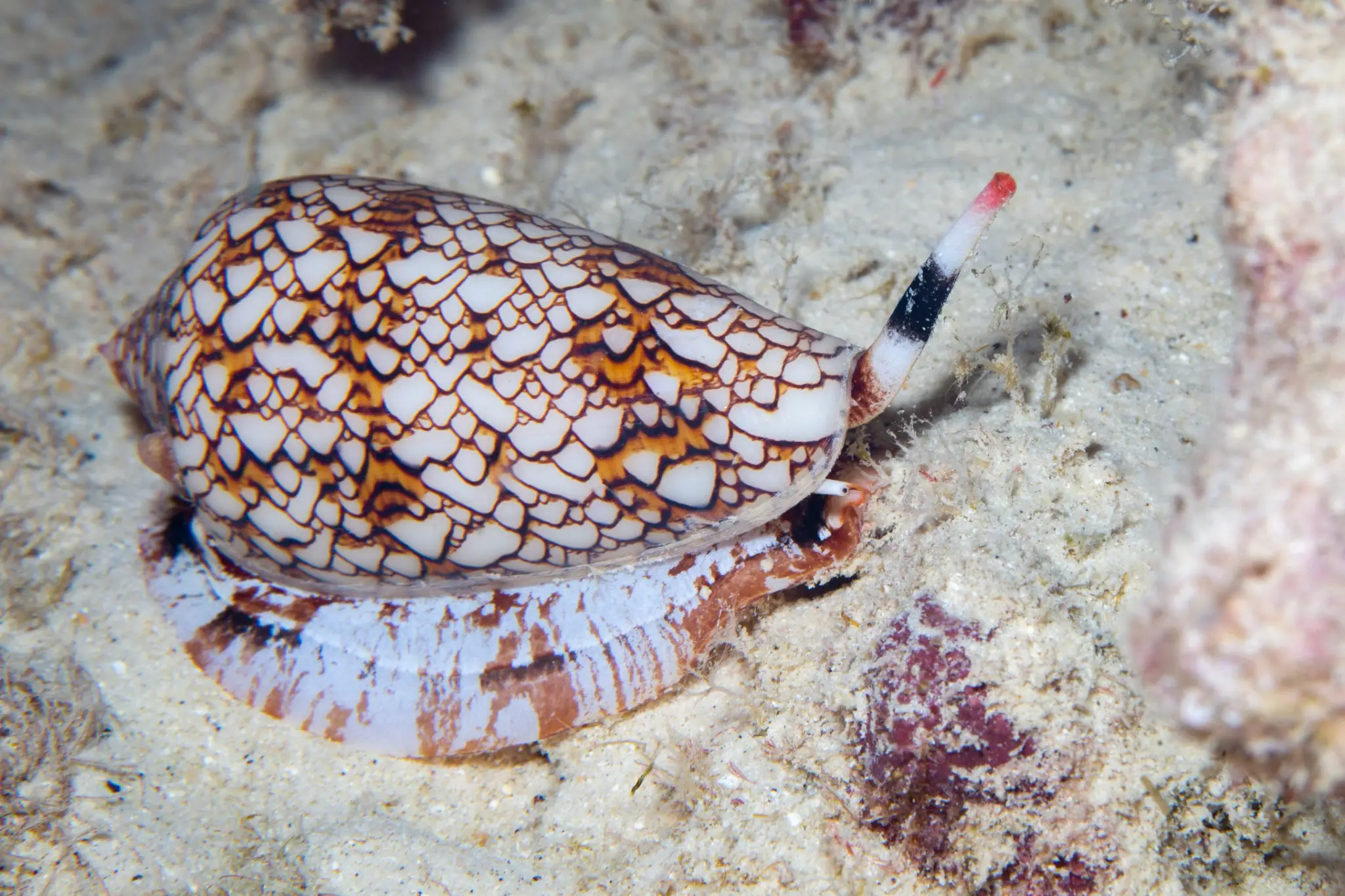
"You could hold a cone snail in your palm, admiring its intricately patterned shell, and never guess that the deadliest of its kind carries venom enough to kill a person. The ocean's loveliest shells sometimes hide its most sophisticated chemistry."
— Grounded in medical case reports of cone snail envenomation
The Venom Arsenal
A Cocktail of Hundreds of Toxins
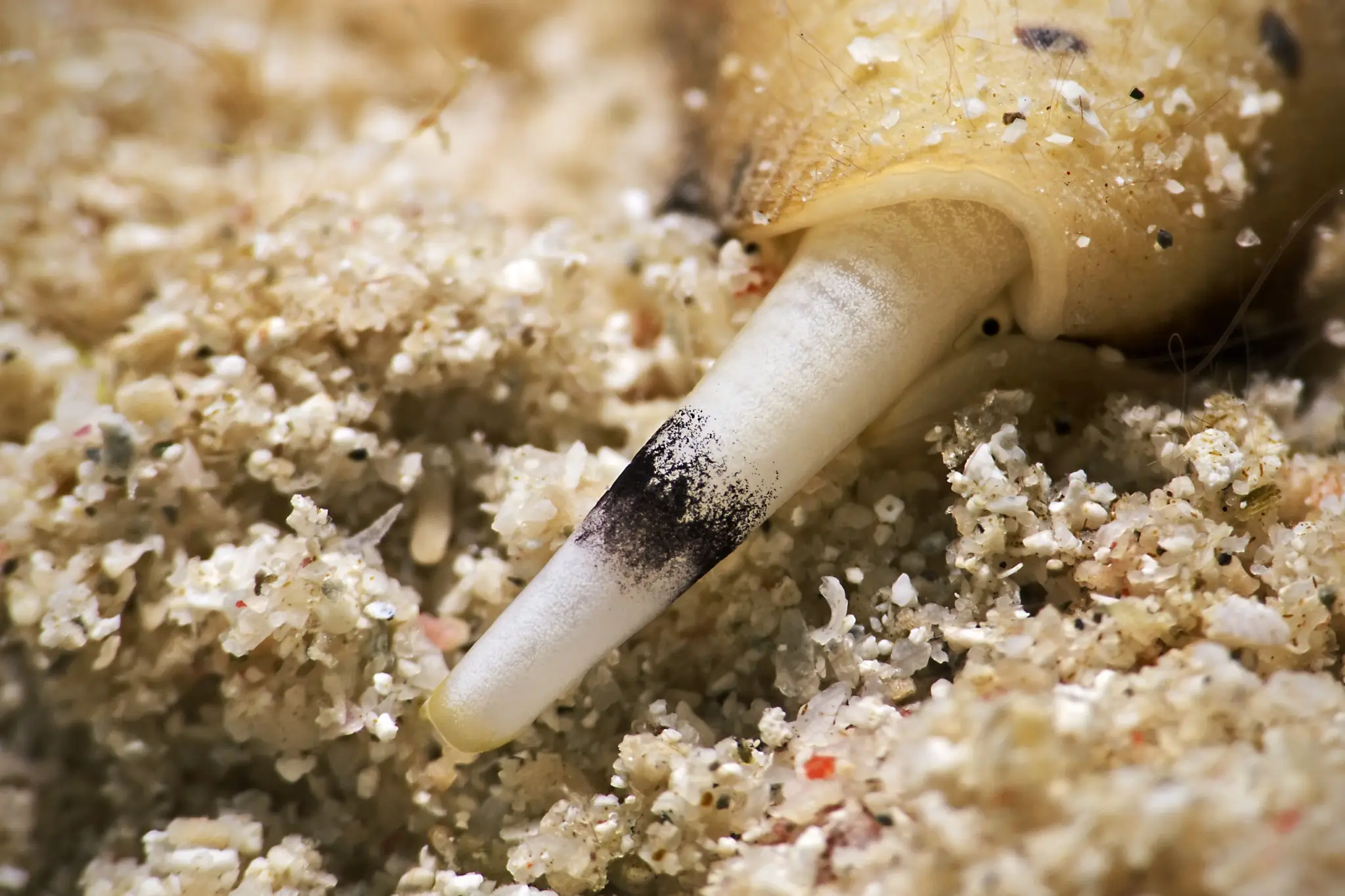
Every cone snail brews its own venom—a cocktail of dozens to hundreds of small peptides called conotoxins. Across roughly 850 species, this represents a vast chemical library still barely explored.
Each conotoxin targets a single precise molecular switch—nerve receptors, ion channels, or muscle signals—shutting down prey within seconds. This surgical precision is exactly what makes them so valuable to medicine. Photo: Scubaluna
The Harpoon Strike
One of Nature's Fastest Movements
Most cone snails hunt by harpoon. Detecting prey with a chemical-sensing siphon, the snail extends a fleshy tube and fires a hollow, venom-filled tooth—a modified radular barb launched like a spear.
The strike is ferociously fast. In Conus catus, the harpoon accelerates to 90 kilometers per hour, among the quickest movements known in nature, then breaks off, discarded after a single use. Photo: Illustration.
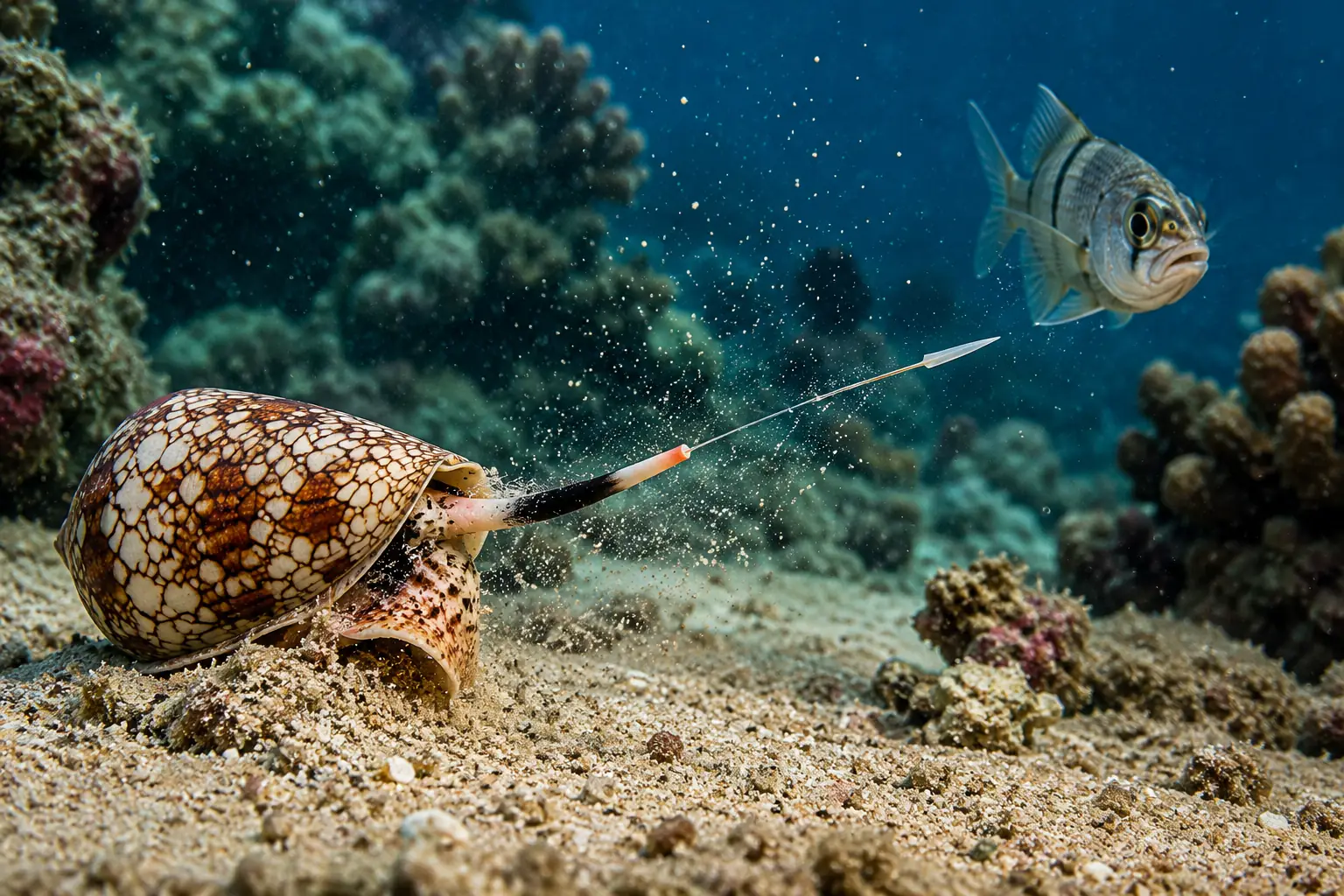
"The cone snail's harpoon fires faster than almost anything in the animal kingdom, yet the creature wielding it may take a full minute to crawl a single body length. Nature hid a lightning bolt inside one of the sea's slowest hunters."
— Reflecting high-speed studies of cone snail harpoon strikes
Chemical Warfare
Sedating a Whole School of Fish
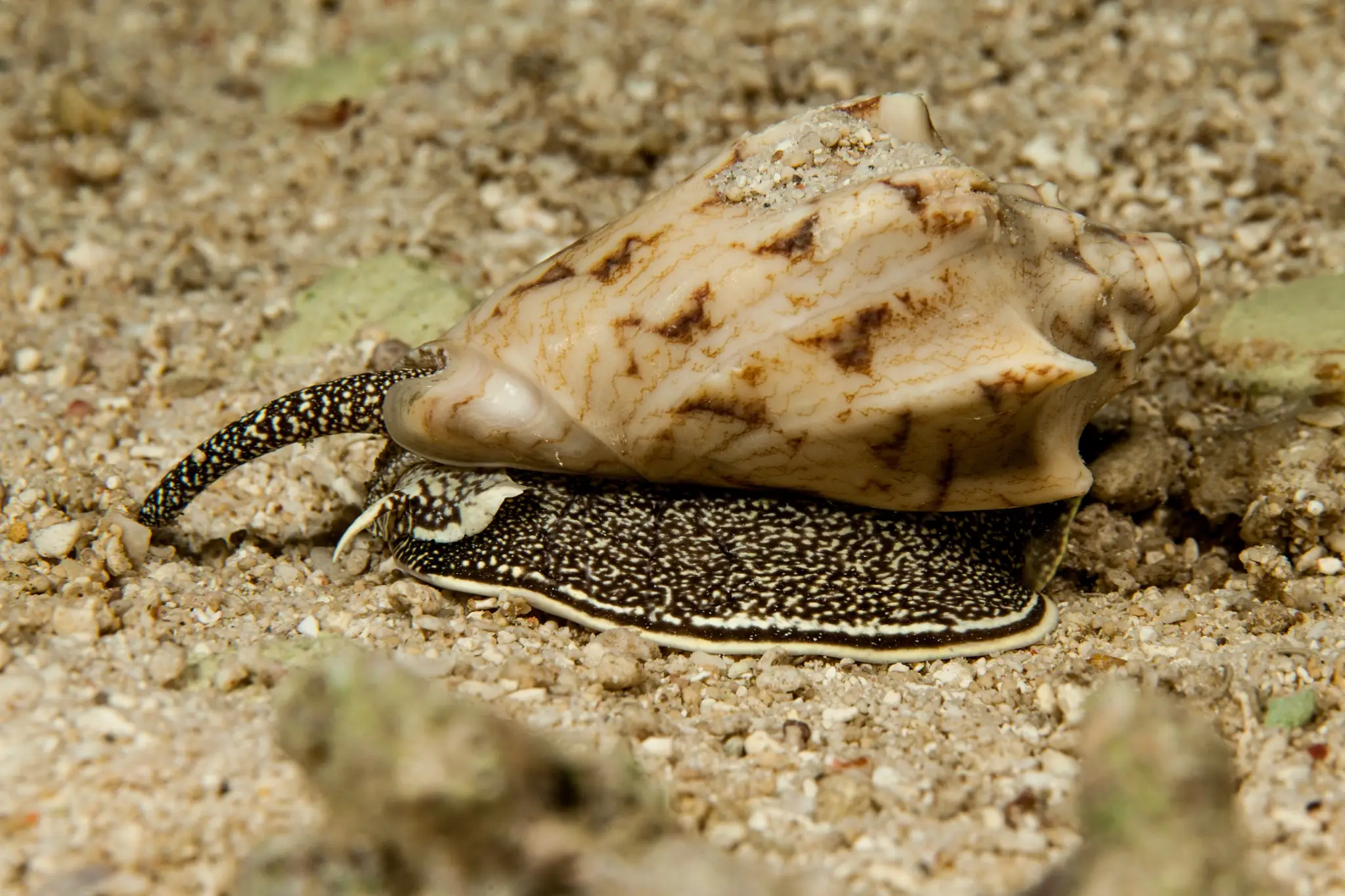
A few fish-hunters take a stranger approach. Species like the geography cone release a shimmering cloud of toxins into the water—a nirvana cabal that sedates entire schools of small fish.
The venomous mix includes weaponized insulin, which crashes the fishes' blood sugar into hypoglycemic shock. Dazed and barely moving, they are engulfed whole by the snail's enormous, distended false mouth. Photo: Gerald Robert Fischer.
From Venom to Medicine
Turning Poison into Painkillers
The same toxins that kill can also heal. In 2004, the FDA approved ziconotide, a painkiller derived from the magician cone's venom, for severe chronic pain that resists other drugs.
Ziconotide blocks nerve channels that transmit pain, working where morphine fails and without addiction. Researchers now screen thousands of conotoxins as leads for new painkillers, epilepsy drugs, and diabetes treatments. Photo: Joe Belanger.
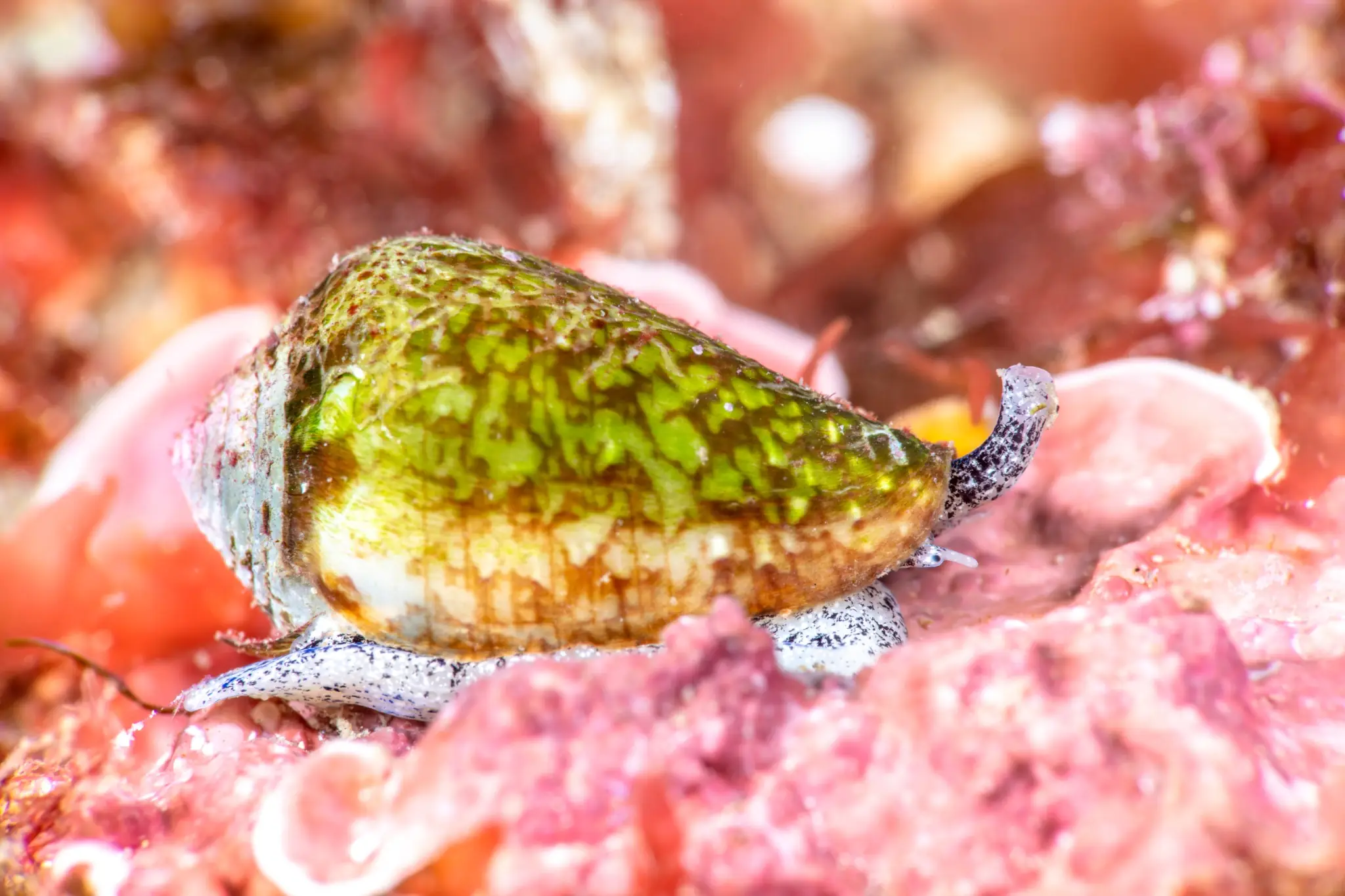
Conservation & Legacy
Protecting the Reef Pharmacy
Most cone snails remain widespread, but they are not untouchable. A landmark global assessment found that restricted-range species—especially Cape Verde and Senegal endemics—face a real extinction risk from coastal development.
Protecting reef habitat safeguards not just the snails but the living pharmacy inside them. Each species lost erases a unique venom—and potential medicines that took millions of years to evolve. Photo: Laura Dts.
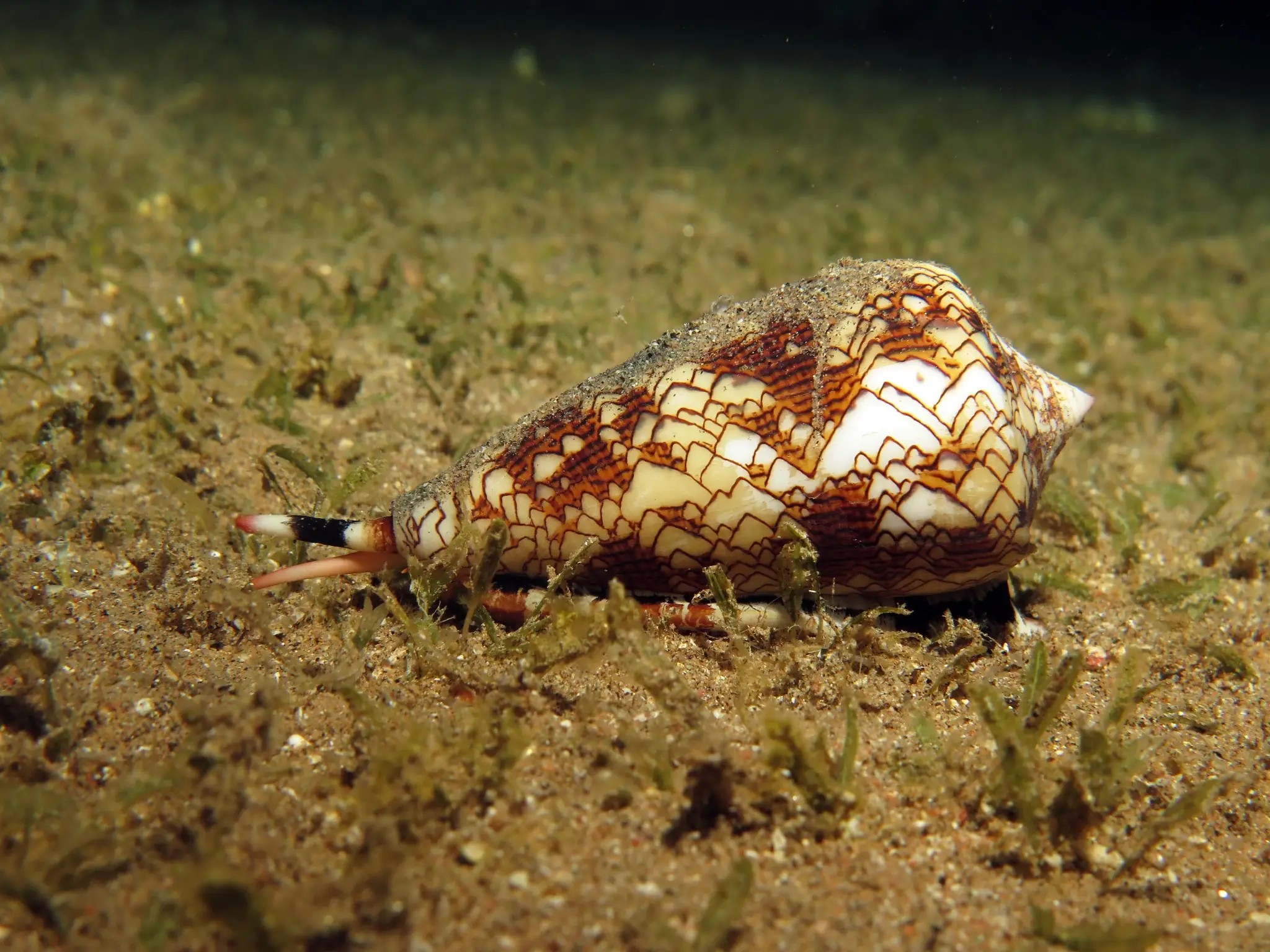
Science & Discovery
University of Utah researchers showed in 2015 that fish-hunting cone snails weaponize insulin, crashing prey blood sugar into hypoglycemic shock—a discovery now informing diabetes and blood-sugar research.
The University of Queensland in 2023 reared cone snails from eggs, revealing that juveniles hunt worms before switching to fish as adults, each stage deploying a different venom.
A 2024 University of Utah study of 850 species linked prey shifts to venom diversity, cataloguing thousands of conotoxins that form a vast, untapped library for drug discovery.
In our delightful oceans, cone snails kill prey in seconds with venoms of hundreds of toxins. That same venom gave us ziconotide, a painkiller stronger than morphine. Protecting reefs preserves both these hunters and the medicines hidden in their venom.