Arctic Tern
The Pole-to-Pole Voyager
Sterna paradisaea
Meet Earth's greatest migrant—the Arctic tern, a slender seabird weighing barely 100 grams with a wingspan near 80 centimeters. Each year it flies pole to pole and back—up to 90,000 kilometers (56,000 miles)—the longest migration on Earth. Chasing endless summer between the poles, it sees more daylight than any animal alive.
Follow the Endless SummerWhat Makes Them Special
Longest Migration
Flies pole to pole yearly—up to 90,000 kilometers (56,000 miles), the longest migration on Earth
Three Moon Trips
A lifetime's travel reaches 2.4 million kilometers (1.5 million miles)—three round trips to the Moon
Featherweight Flier
A slender seabird barely 100 grams, with long wings and a deeply forked tail
Surface Hunter
Plunge-dives for small fish like sandeels, plus krill, snatched from the sea surface
Endless Summer
Chases summer to both poles, seeing more daylight than any animal on Earth
Fragile Future
Listed Least Concern, but warming seas and sandeel declines threaten its future
First Encounter
Meeting the Pole-to-Pole Voyager
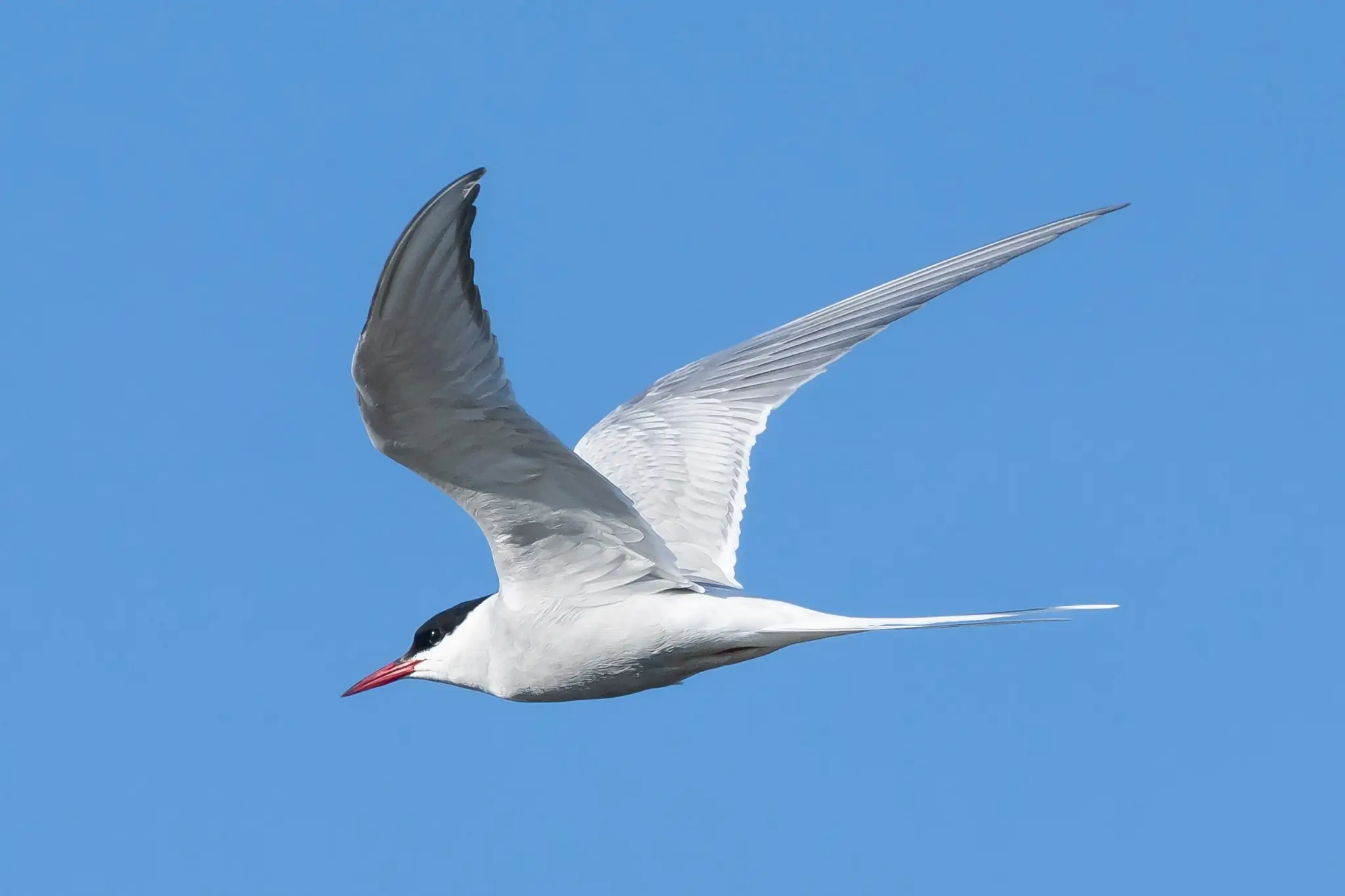
Slender and silver-white, the Arctic tern is built for endless flight. Barely 100 grams with a wingspan near 80 centimeters (31 inches), it wears a black cap, blood-red bill, and red legs.
Its long, narrow wings and deeply forked tail give it buoyant, graceful flight. Adults are pale grey above and white below, flashing a white leading edge as they wheel over the waves. Photo: Piotr Poznan.
"Hold an Arctic tern and you hold barely a handful of feathers—a hundred grams of bird that will, across a thirty-year lifetime, fly the distance of three round trips to the Moon. "
— Reflecting tracking and ringing data on Arctic tern lifetime distances
The Great Migration
The Longest Journey on Earth
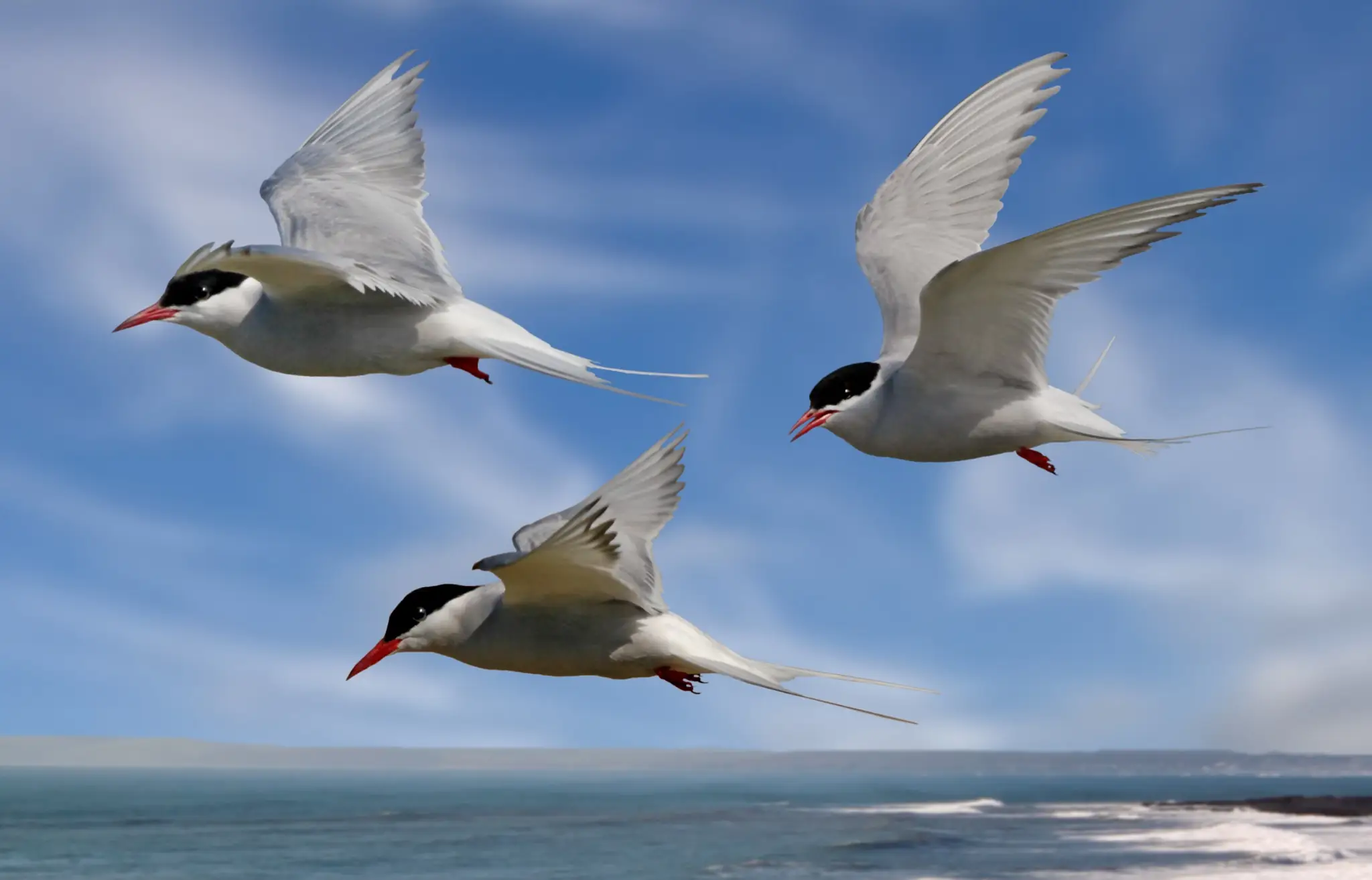
No animal travels farther. Arctic terns fly from Arctic breeding grounds to Antarctic waters and back—around 70,000 kilometers (43,000 miles) on average, up to 90,000 (56,000 miles) on wind-assisted routes.
They do not fly straight, but trace giant looping paths to ride prevailing winds and rich feeding zones. One tracked bird crossed 8,000 kilometers (5,000 miles) of the Indian Ocean nonstop in 24 days. Photo: Tony Brindley.
Endless Summer
A Life of Two Summers
By chasing summer to both ends of the Earth, the Arctic tern lives in near-perpetual daylight. It experiences two summers each year and sees more sunlight than any other animal.
It breeds under the midnight sun of the Arctic, then winters on the Antarctic pack ice, spending about a third of its life there. Few creatures know the polar world so completely. Photo: nordiclensescapes.

"Following the sun from pole to pole, the Arctic tern spends more of its life in daylight than any other animal—a life of almost unbroken summer. "
— Grounded in geolocator studies of the tern's pole-to-pole migration
Wings and Hunting
Built for Flight and the Sea
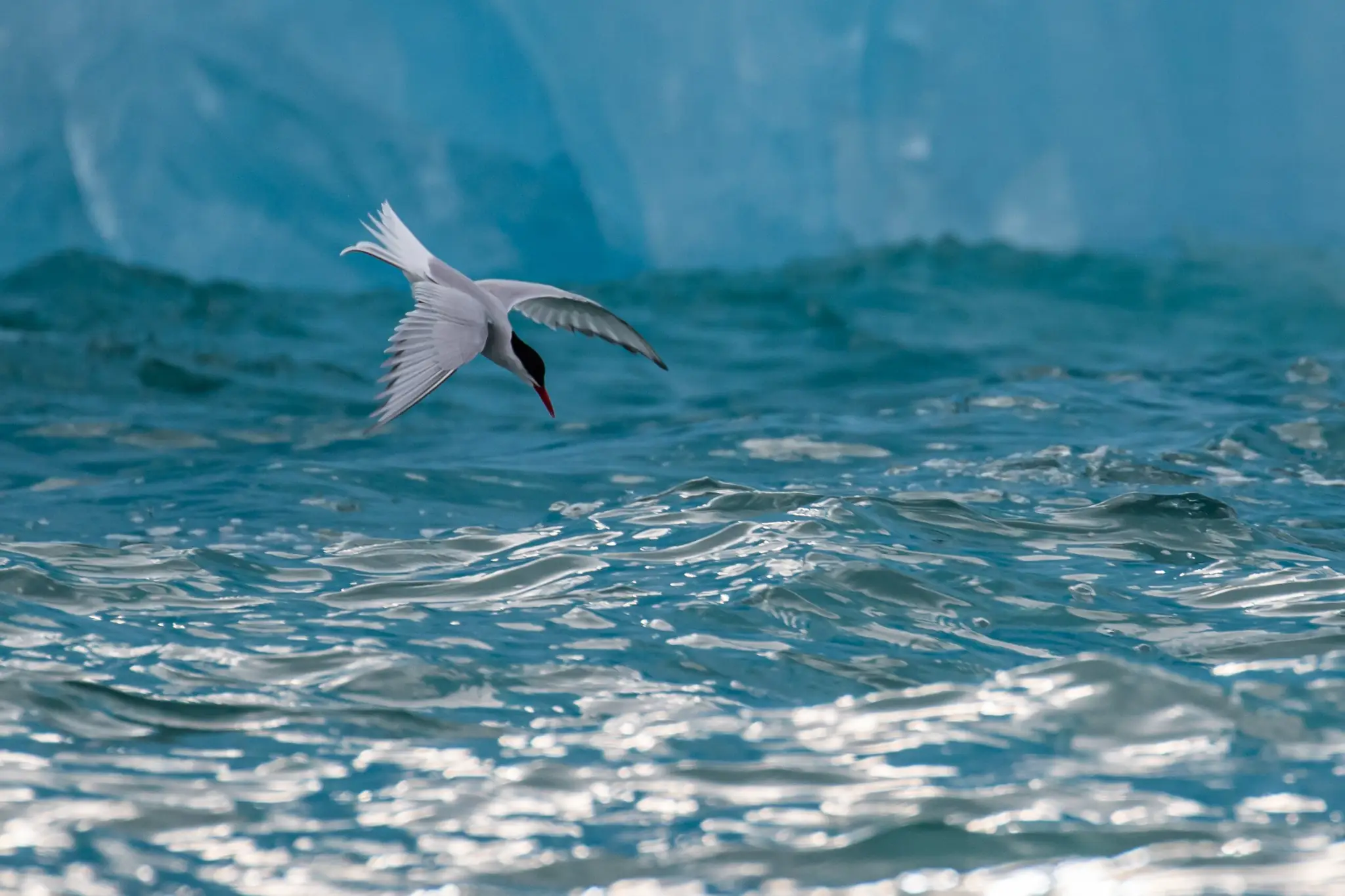
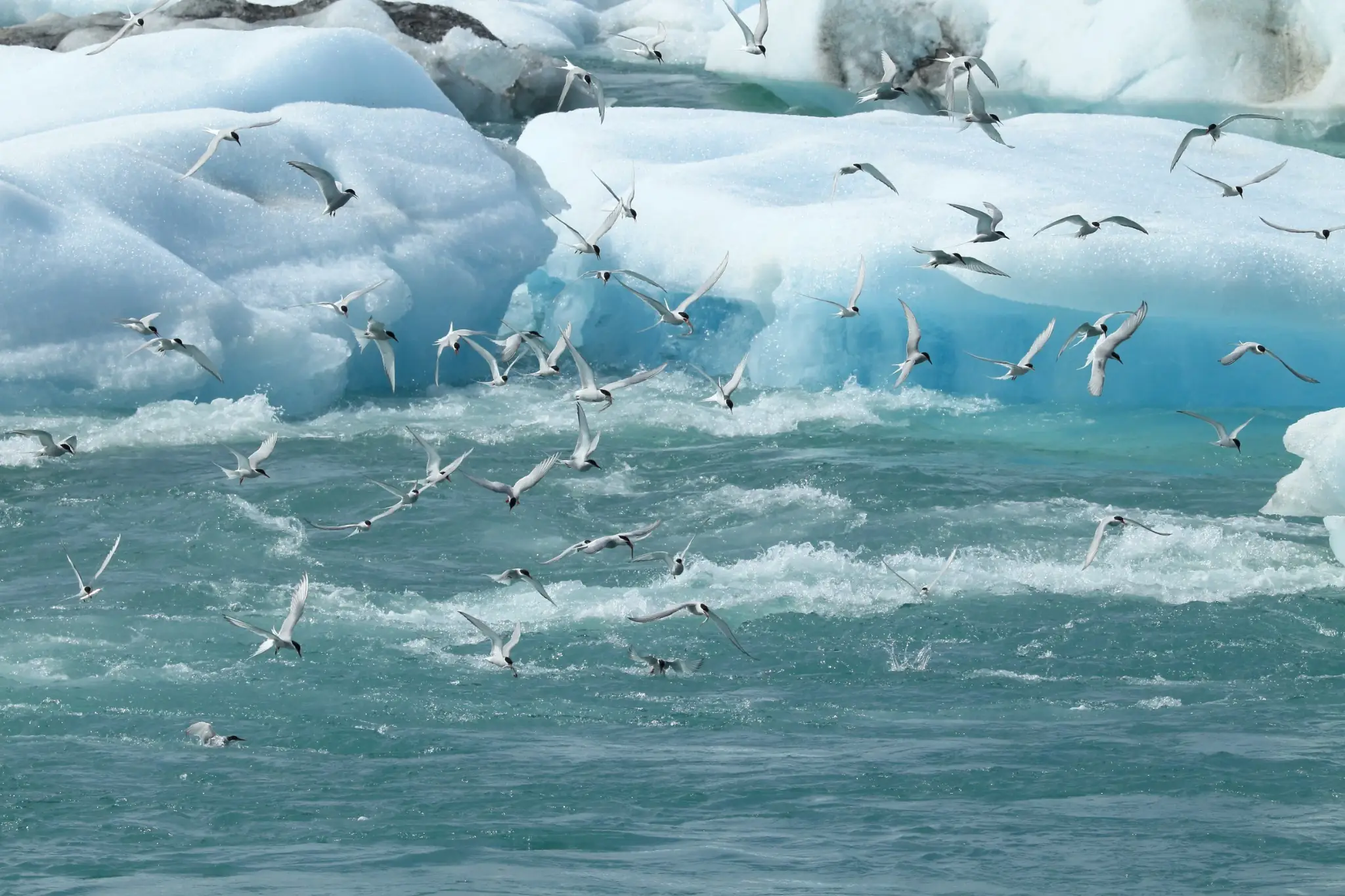
Long, slender wings let Arctic terns glide for hours on ocean winds, saving precious energy across their vast journeys. Over the sea, they hover, then plunge-dive to snatch prey near the surface.
Their diet is mostly small fish like sandeels and herring, plus krill and crustaceans. They often hunt alongside seabird flocks and predatory fish that drive prey up toward the surface. Photo: nordiclensescapes.
Colonies and Courage
Fierce Defenders of the Nest
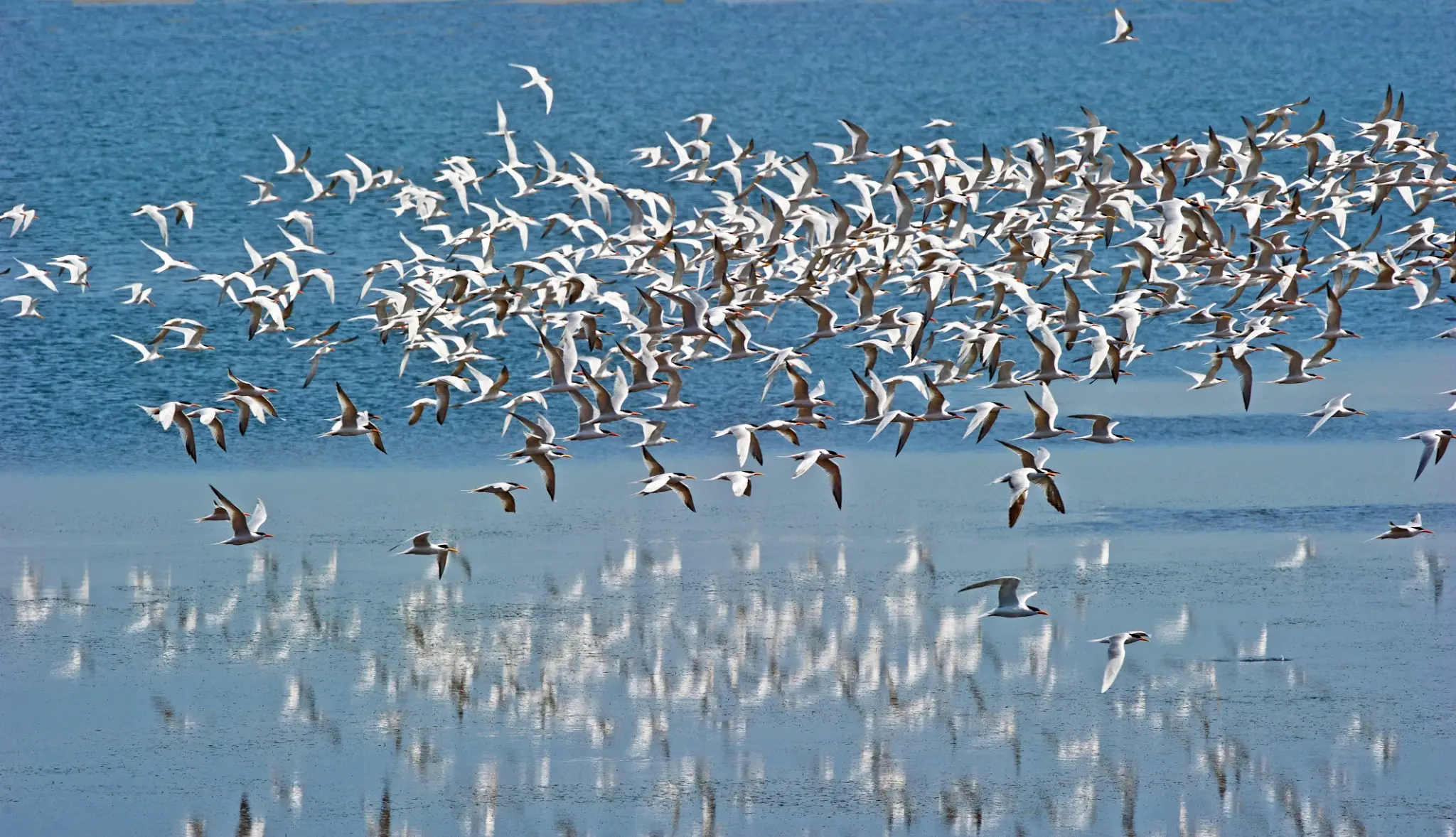
Arctic terns nest in colonies on open ground, laying one to three eggs in a simple scrape. Small as they are, they defend their nests with astonishing ferocity against any intruder.
They dive-bomb foxes, gulls, and even passing humans, striking their heads with sharp bills until blood is drawn. Other birds deliberately nest nearby to shelter under this fierce aerial protection. Photo: Philip Pilosian.
Conservation & Legacy
Protecting Earth's Greatest Migrant
With about two million birds, the Arctic tern is listed Least Concern, yet many colonies are declining. Warming seas and overfishing are shrinking the sandeel stocks it depends on to breed.
Melting polar ice also threatens the feeding grounds at both ends of its world. Protected colonies, sandeel-fishing limits, and satellite tracking now help safeguard Earth's greatest traveler for the future. Photo: Frank Fichtmueller.
Science & Discovery
The Greenland Institute of Natural Resources used geolocators in 2010 to reveal the tern's pole-to-pole journey—around 71,000 kilometers (44,000 miles) yearly, the longest migration of any animal.
Newcastle University's 2019 tracking of Farne Islands terns mapped their 90,000-kilometer (56,000-mile) route in unprecedented detail, including an astonishing 8,000-kilometer (5,000-mile) nonstop flight across the open Indian Ocean.
A 2014 British Trust for Ornithology study linked intensive North Sea sandeel fishing to higher seabird breeding failure, among them the Arctic tern, underscoring their prey threats.
In our delightful oceans, the Arctic tern flies up to 90,000 kilometers (56,000 miles) pole to pole. Chasing endless summer, this 100-gram seabird sees more daylight than any animal. As warming thins its prey, protected colonies and fishing limits guard its journey.