Greenland Shark
Earth's Oldest Vertebrate
Somniosus microcephalus
Meet Earth's longest-lived vertebrate—the Greenland shark, a slate-gray Arctic giant reaching up to 6.4 meters (21 feet). Radiocarbon dating places the oldest individuals near 392 years—some alive today predate Newton. They drift at barely 1 kilometer per hour through near-freezing water, their flesh laced with natural antifreeze that makes it toxic.
Journey Into Deep TimeWhat Makes Them Special
Oldest Vertebrate
Radiocarbon dating reveals lifespans reaching 392 years—Earth's longest-lived vertebrate by far
Arctic Giant
Reach up to 6.4 meters yet grow under 1 centimeter per year
Slowest Shark
Cruise at barely 1.2 kilometers per hour—the slowest shark relative to size
Polar Endurance
Patrol near-freezing Arctic depths to 2,200 meters, the only shark enduring polar cold
Blind Hunters
Copepod parasites dangle from their corneas, leaving most individuals partially blind hunters
Slow to Recover
Listed Vulnerable, maturing at 150 years leaves them dangerously slow to recover
First Encounter
Meeting the Arctic Methuselah
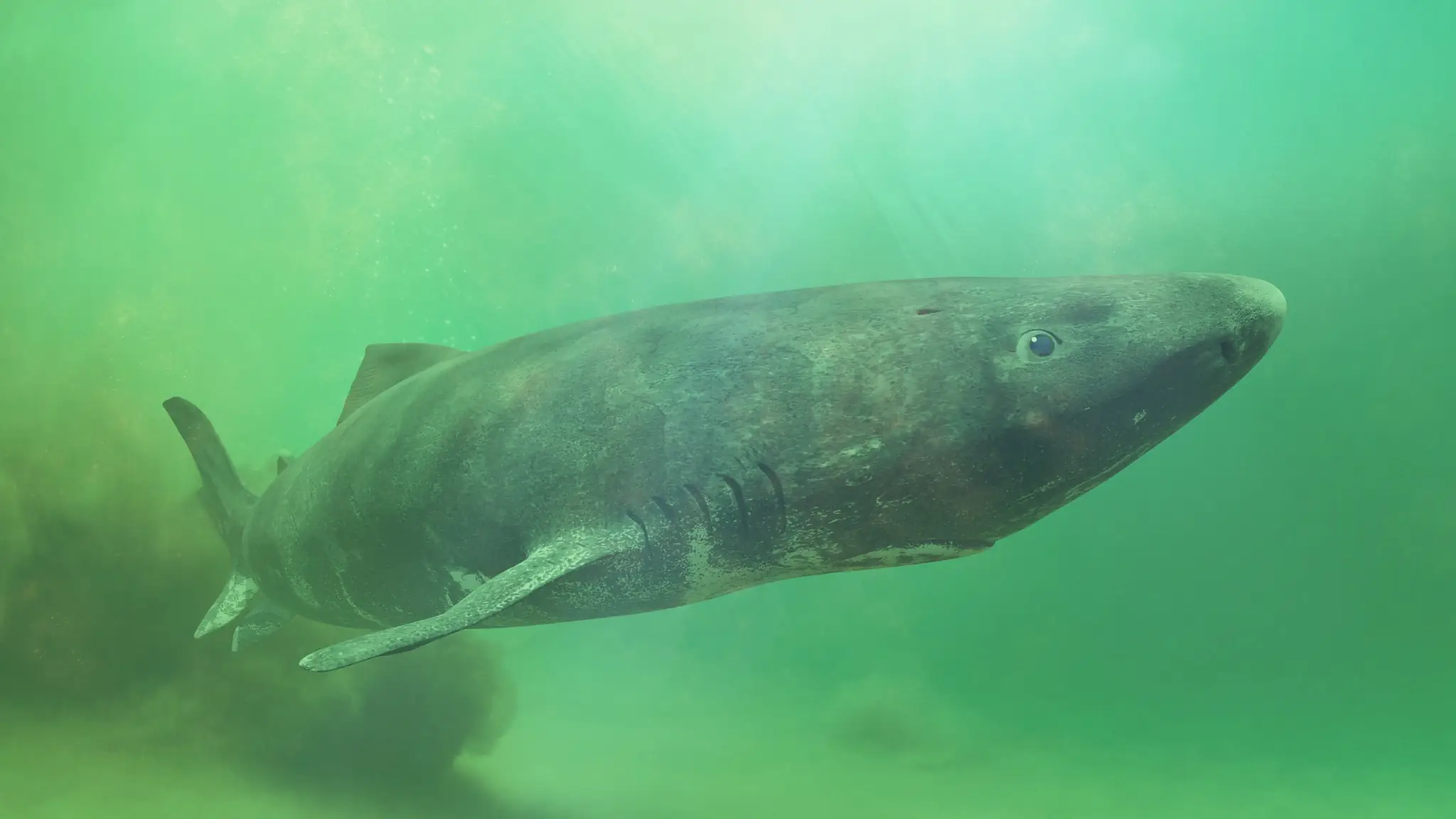
In the lightless Arctic deep glides a slate-gray giant. Greenland sharks reach up to 6.4 meters (21 feet) and 1,000 kilograms, with stout cylindrical bodies, blunt rounded snouts, and small clouded eyes.
They inhabit the coldest oceans on Earth, from the surface in frigid bays down to depths beyond 2,000 meters, where water hovers near 0°C. No other shark endures such polar cold year-round. Photo: Dotted Yeti
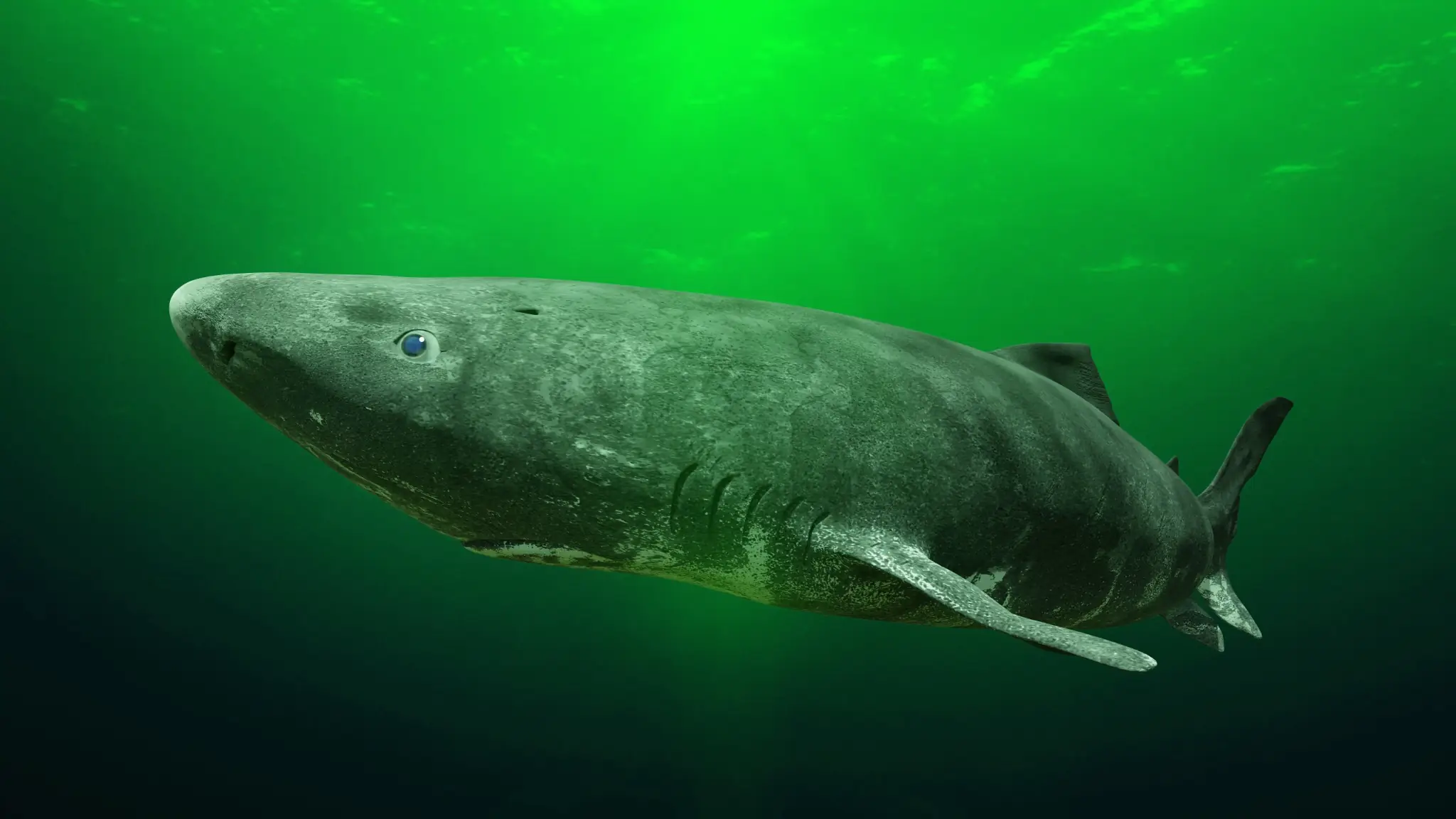
"A Greenland shark hauled from the deep today may have been a pup when Galileo first turned his telescope skyward—drifting through four centuries of human history in cold and darkness."
— Grounded in radiocarbon findings — Nielsen et al., University of Copenhagen, 2016
Centuries of Life
The Longest-Lived Vertebrate
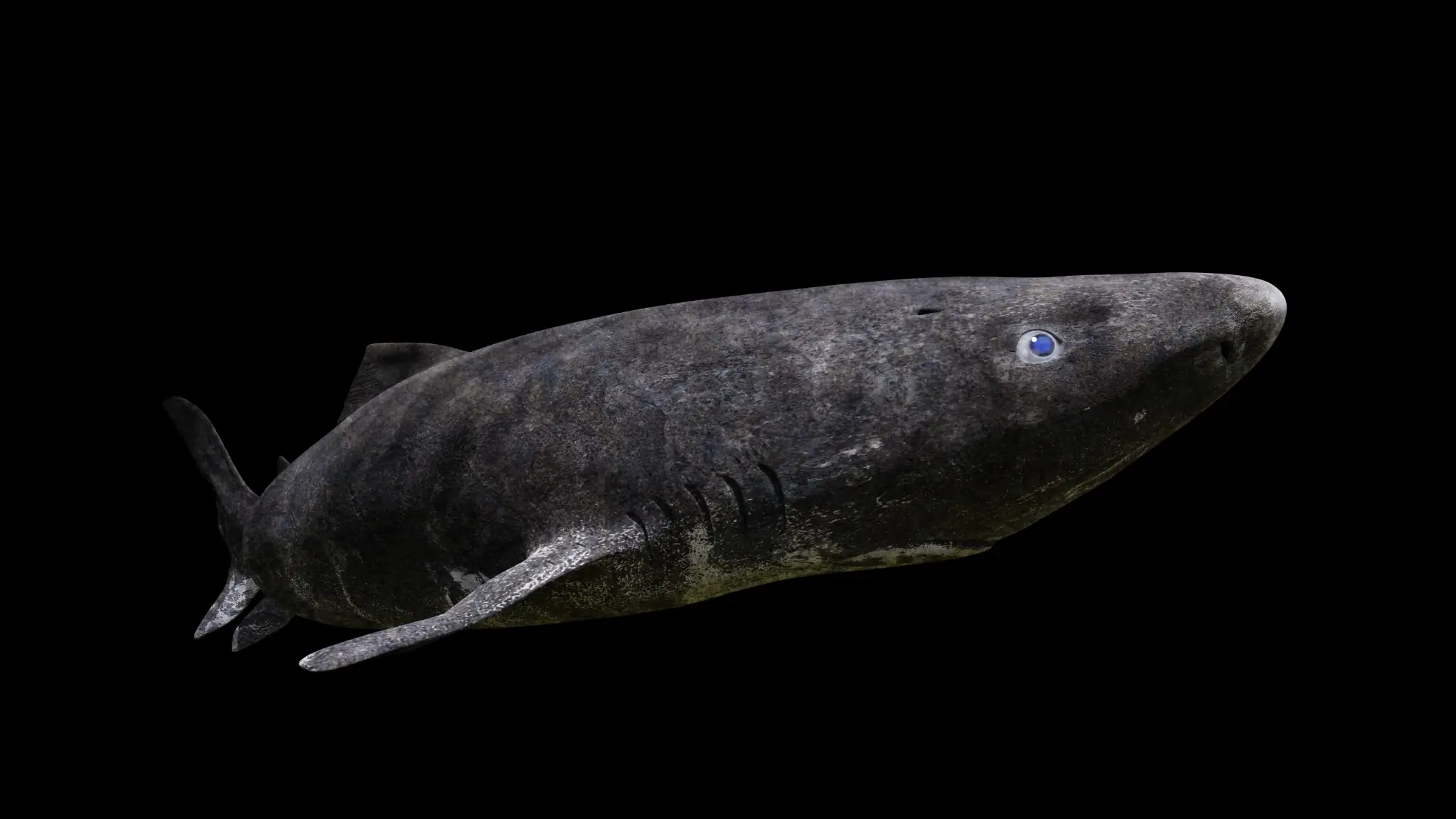
Greenland sharks are the longest-lived vertebrates known. Radiocarbon dating of eye-lens proteins estimated the largest individual at 392 years old, with the species living at least 272 years, possibly longer.
Their eye lenses grow lifelong, preserving a chemical record datable like tree rings. This extreme longevity pairs with the slowest known maturation—females may not even reproduce until 150 years old. Photo: Dotted Yeti
The Slow Sleeper
Cruising in the Slow Lane
True to their 'sleeper shark' name, Greenland sharks cruise at just 0.3 meters per second—roughly 1.2 kilometers per hour, the slowest swimming speed of any fish relative to body size.
Near-freezing water slows their metabolism to a near standstill, demanding remarkably little food. This sluggish physiology underlies their centuries-long lifespans, trading speed and growth for endurance in a frozen world. Photo: Dotted Yeti.
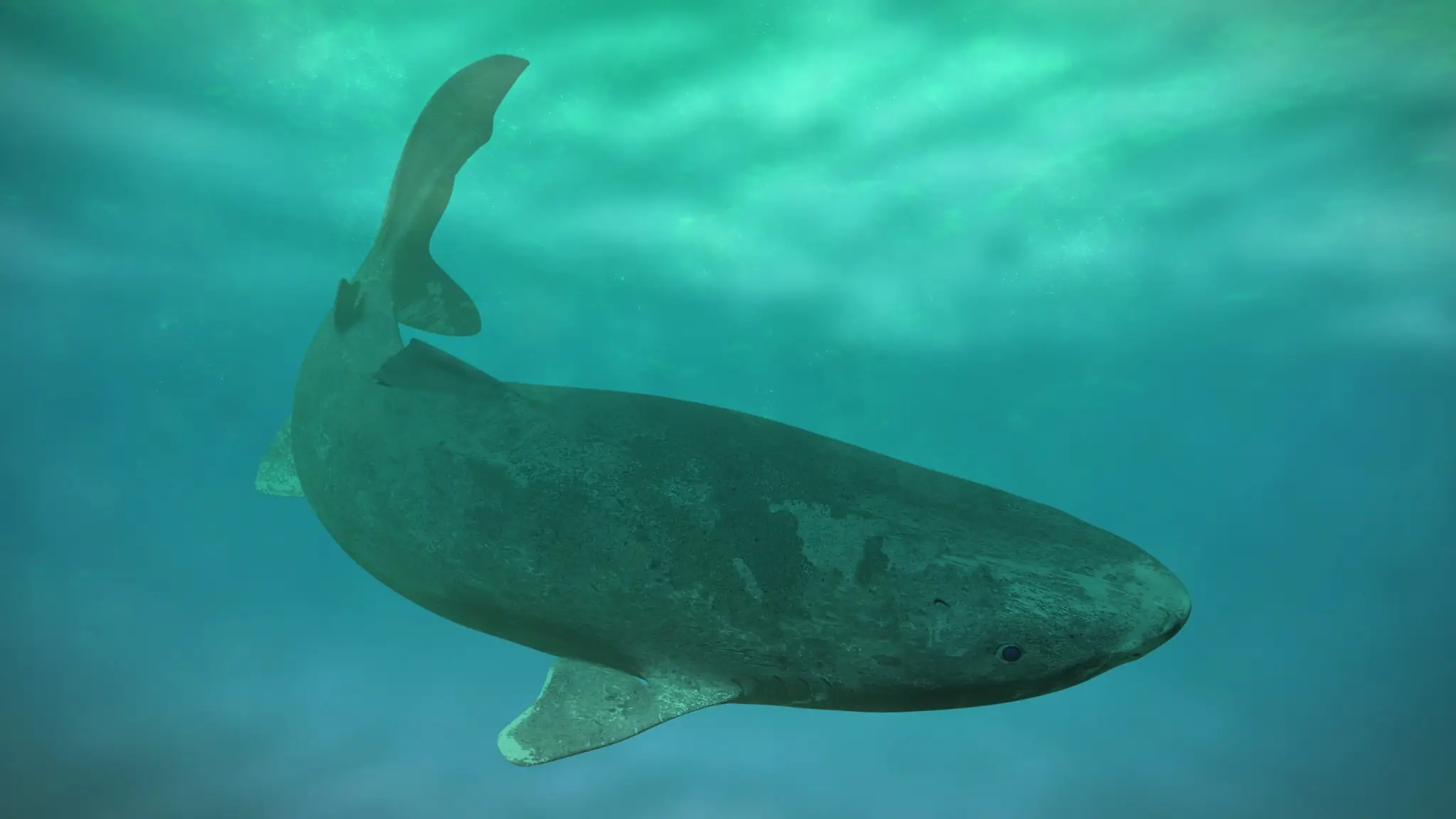
"Data-logging tags revealed a strange truth: a fish too slow to outswim almost anything still catches seals—by stealing upon them as they sleep, turning patience into a predator's weapon."
— From swim-speed research — Watanabe et al., 2012
Antifreeze and Toxin
Chemistry of the Cold Deep
Greenland shark flesh is toxic to eat fresh, causing a drunkenness-like state known as being 'shark drunk'. Their tissues are saturated with urea and trimethylamine N-oxide (TMAO), compounds acting as biological antifreeze.
These molecules stabilise proteins and prevent ice crystals from forming even in their sub-zero world. Icelanders neutralise the toxins through months of fermentation and air-drying, producing the traditional dish hakarl. Photo: Dotted Yeti.
Hunting Blind
Feeding Without Sight
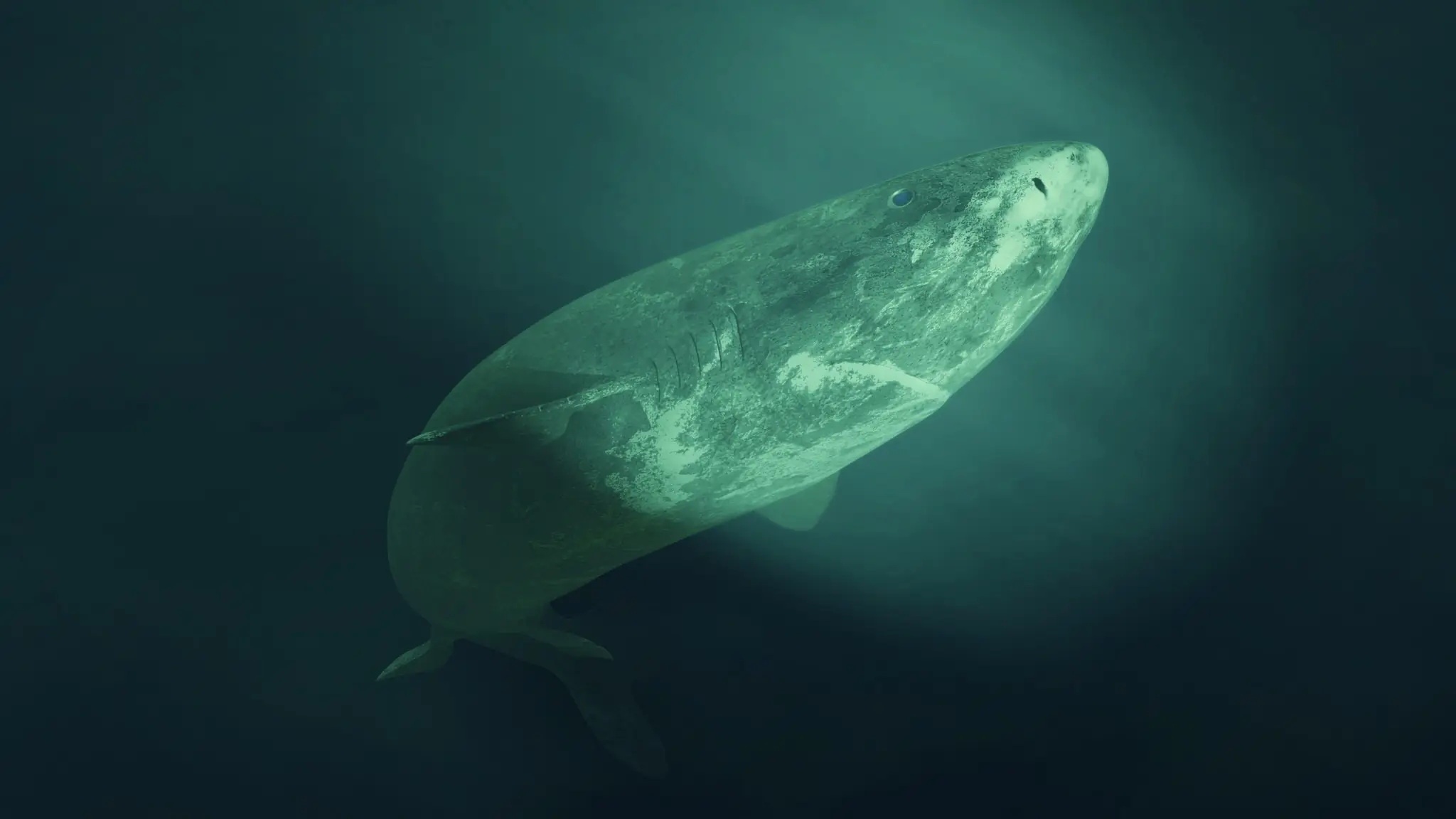
Most Greenland sharks are partially blind. A copepod parasite, Ommatokoita elongata, attaches to the cornea and dangles visibly from one eye, yet these sharks remain remarkably effective hunters and patient scavengers.
In dark frigid water, they rely on smell and sensing vibrations rather than sight. They ambush sleeping seals, scavenge carcasses, and have been found with reindeer and polar bears inside. Photo: Dotted Yeti
Conservation & Legacy
Protecting an Ancient Survivor
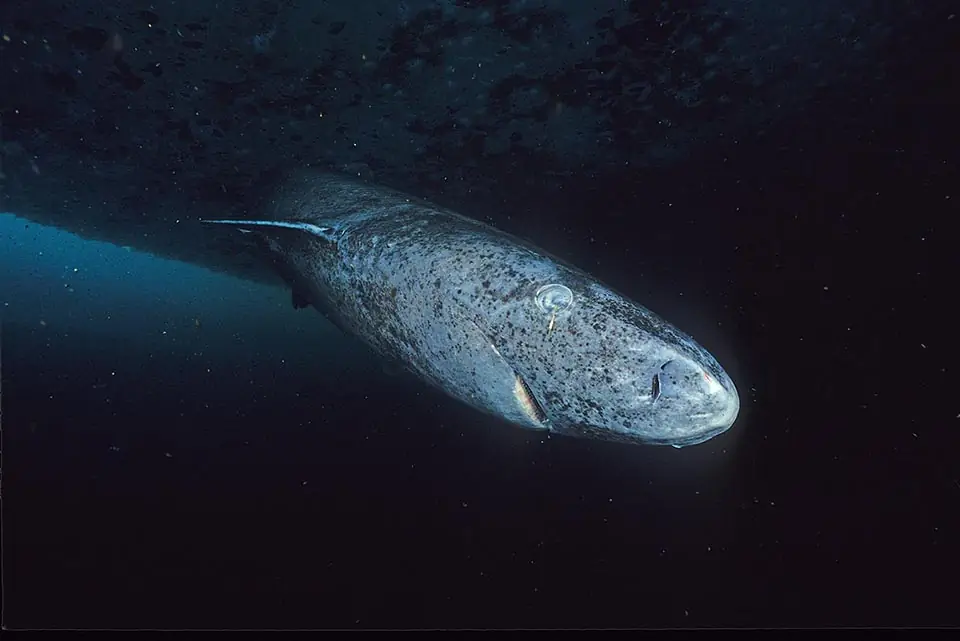
The IUCN lists Greenland sharks as Vulnerable. Maturing near 150 years and bearing perhaps ten live young, they recover extraordinarily slowly, leaving them exposed to fisheries bycatch and a warming Arctic.
Once hunted for liver oil, they now gain protection as bycatch-reduction measures spread. Genetic and tagging research is decoding their longevity, offering clues that may inform human aging and longevity science. Photo: NOAA.
Science & Discovery
The University of Copenhagen's 2016 radiocarbon study of eye-lens proteins dated the largest Greenland shark to nearly 392 years, and at least 272, confirming Earth's longest-lived vertebrate.
The University of Tokyo's 2025 genome assembly revealed extra copies of DNA-repair and immune genes, plus cancer-resistance traits—findings that may inform research into human aging and longevity.
Japan's National Institute of Polar Research documented in 2012 that Greenland sharks swim slower than any fish their size, ambushing sleeping seals to feed despite their sluggish pace.
In our delightful oceans, Greenland sharks reign as Earth's longest-lived vertebrates, the oldest nearing 392 years. Near-freezing water and a glacial pace stretch their lives across centuries. As bycatch protections expand, genomic research decodes their longevity for human aging science.