Banded Sea Krait
Dual-Life Venom Master
Laticauda colubrina
Meet dual-life amphibious serpents reaching 1.5 meters (5 feet) with distinctive black-white warning bands signaling potent neurotoxins. They possess venom ten times more potent than cobras delivering rapid prey paralysis. Paddle-shaped tails enable 80-meter dives while belly scales provide terrestrial traction. These remarkable hunters coordinate with bluefin trevally in complex cooperative hunting strategies.
Meet the Venom MasterWhat Makes Them Special
Extremely Potent Neurotoxins
Among the most powerful snake venoms known, causing rapid neuromuscular paralysis in prey
Amphibious Lifestyle
True dual-life capability between marine hunting and terrestrial resting
Warning Coloration
Distinctive black and white bands signal potent venom to predators
80-Meter Dives
Deep-diving ability to hunt eels in coral reef crevices
Cooperative Hunting
Coordinate with other kraits to flush prey from reef hiding spots
Docile Temperament
Despite extreme venom potency, rarely bite humans and prefer escape
First Encounter
Marine Serpents with Distinctive Black and White Bands
Banded sea kraits reach 1.5 meters with distinctive black-white banded patterns warning of potent venom. Paddle-shaped tails enable efficient swimming while enlarged belly scales provide terrestrial traction.
Males average 87 centimeters while females reach full 1.5-meter size. Specialized salt glands behind eyes remove excess ocean salt enabling true amphibious survival between marine and terrestrial environments. Photo: Rich Carey.
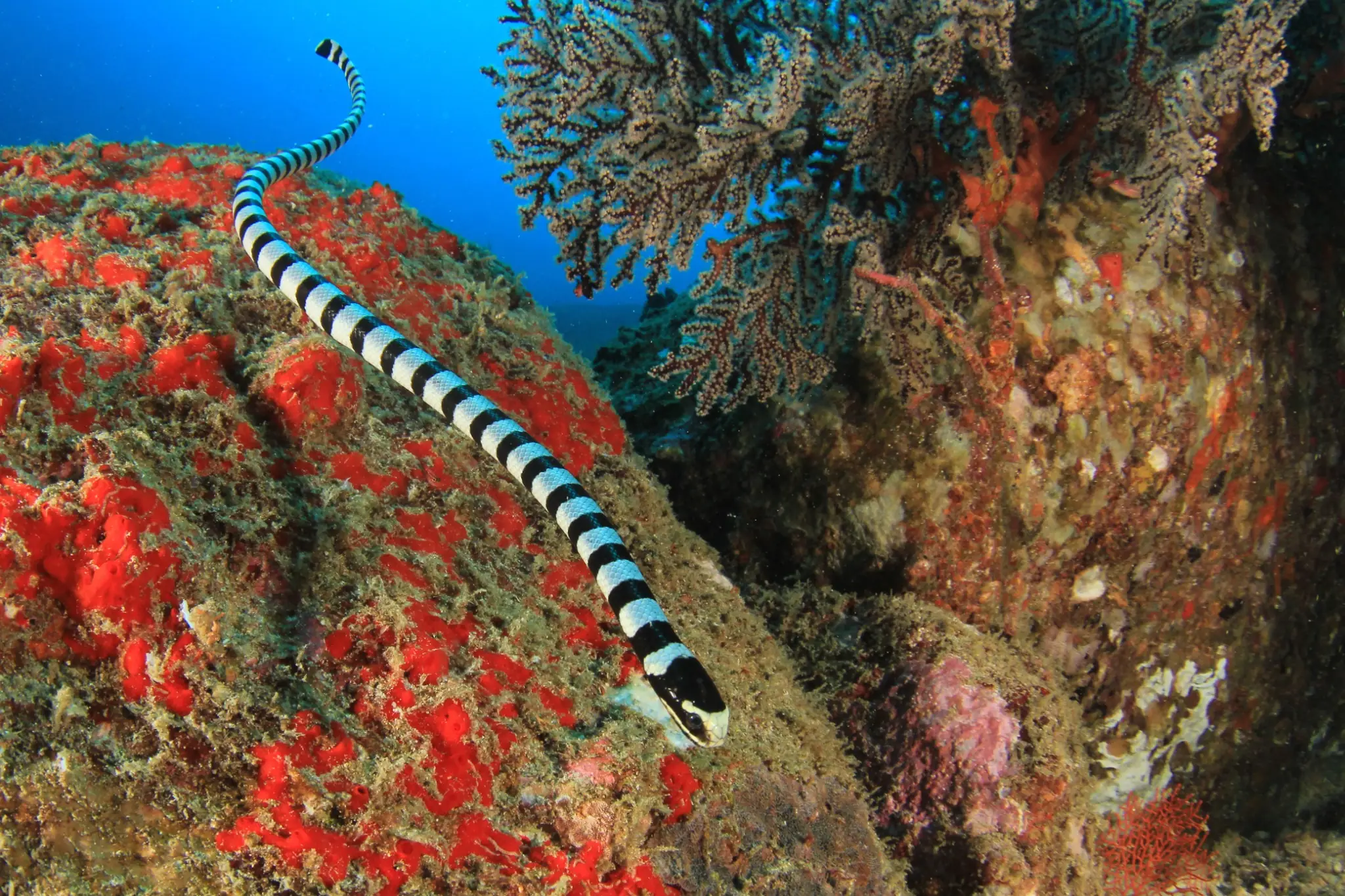
"Sea krait venom contains neurotoxins ten times more potent than cobra venom—yet these gentle serpents rarely bite humans, preferring to escape rather than attack."
— Dr. Bryan Fry, Venom Evolution Research
Venom System
Extremely Potent Neurotoxin System
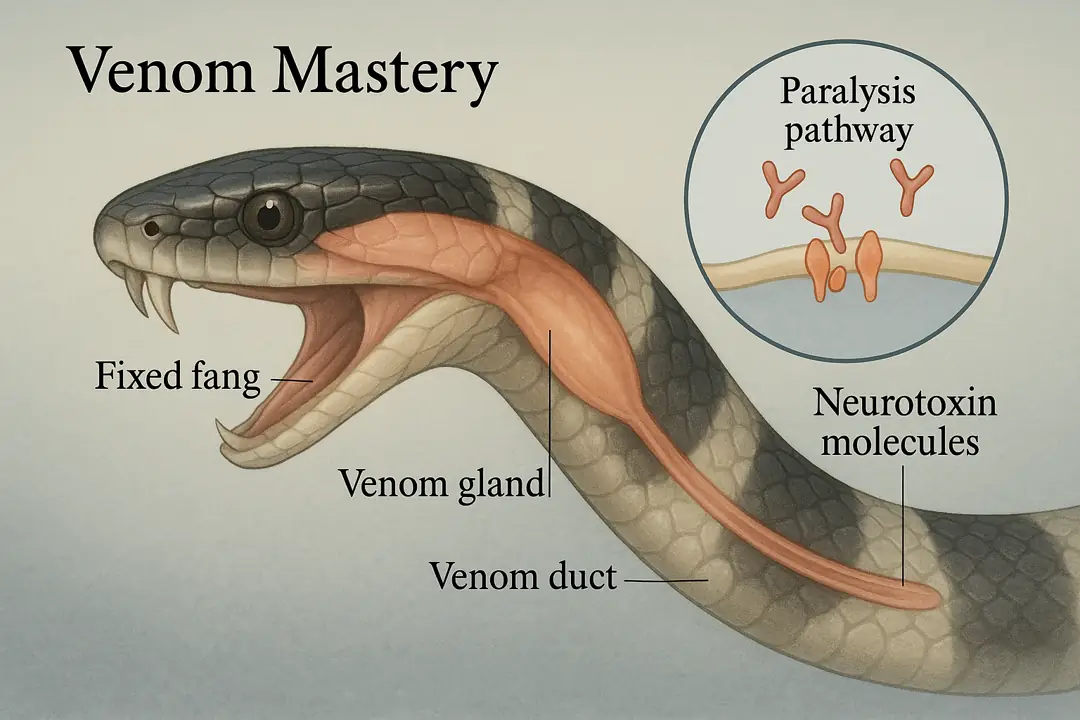
Sea krait venom contains powerful neurotoxins that are among the most potent of any snake species. This powerful cocktail paralyzes eels within minutes through nervous system shutdown making them highly effective predators.
Despite extreme venom potency sea kraits display docile temperaments toward humans. Short fangs and reluctance to bite make dangerous encounters extremely rare with most bites occurring during handling attempts. Photo: Illustration.
Amphibious Lifestyle
Dual-Habitat Mastery with 50-50 Time Distribution
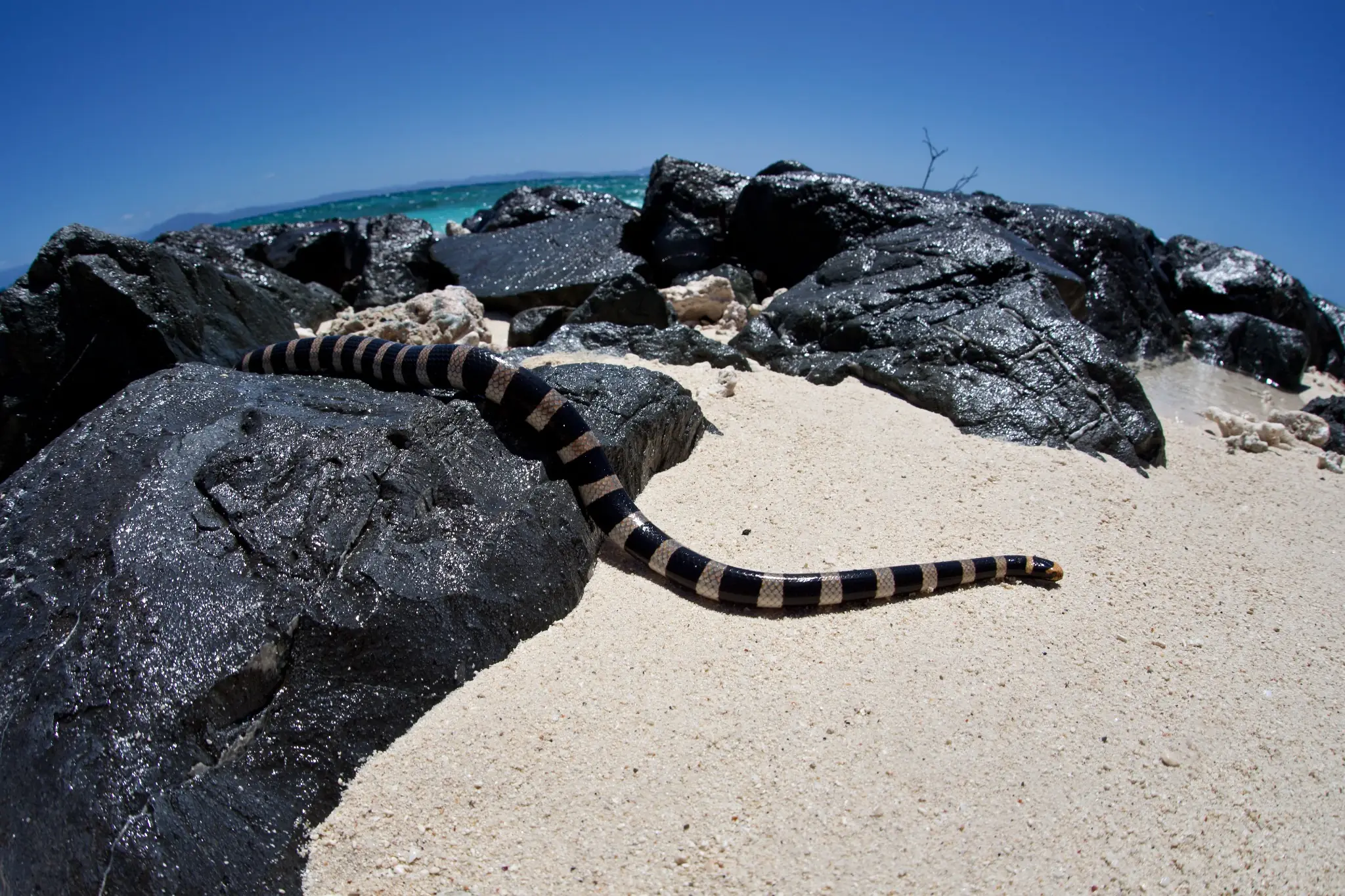
Sea kraits split time equally between ocean and land habitats. They hunt underwater for eels then return to shore for digestion, mating, and skin shedding in a remarkable dual-life strategy.
Unlike fully marine sea snakes kraits retain belly scales for land movement and functional lungs. This amphibious lifestyle maximizes resource exploitation from both marine and terrestrial environments. Photo: Ethan Daniels.
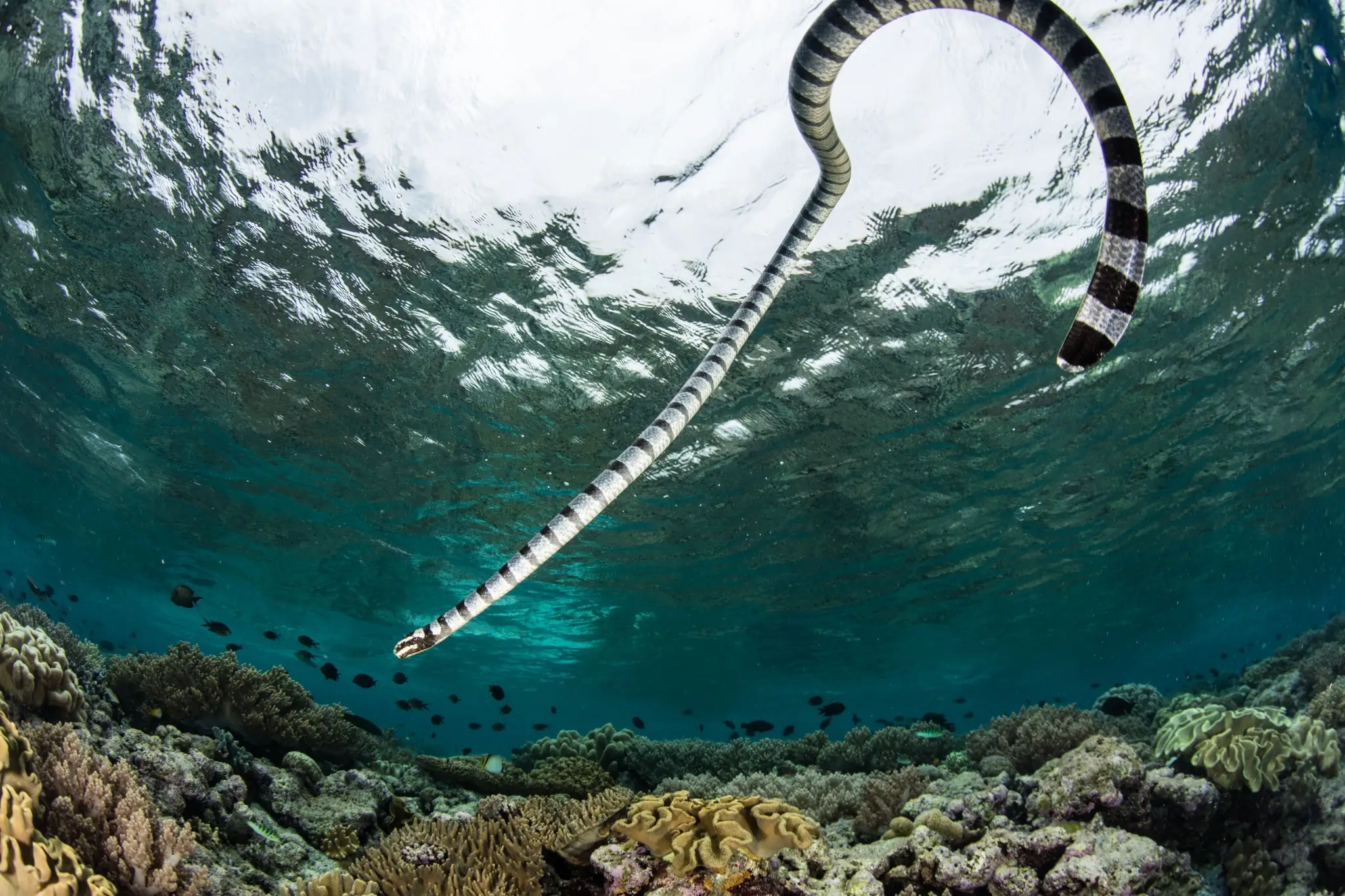
"Sea kraits demonstrate remarkable diving abilities—descending 80 meters underwater while holding breath for 30 minutes during eel hunting expeditions."
— Pacific Marine Research Institute
Diving Capabilities
80-Meter Depths with 30-Minute Breath Hold
Sea kraits dive to 80-meter depths while holding breath for 30 minutes. Large lung capacity stores oxygen while specialized blood chemistry maximizes underwater endurance during hunting expeditions.
Scientists call this cutaneous respiration—skin oxygen absorption underwater. These adaptations allow access to deep reef hunting grounds where moray eels hide in coral crevices inaccessible to other predators. Photo: Ethan Daniels.
Cooperative Hunting
Interspecies Fish Partnerships for Coordinated Prey Capture
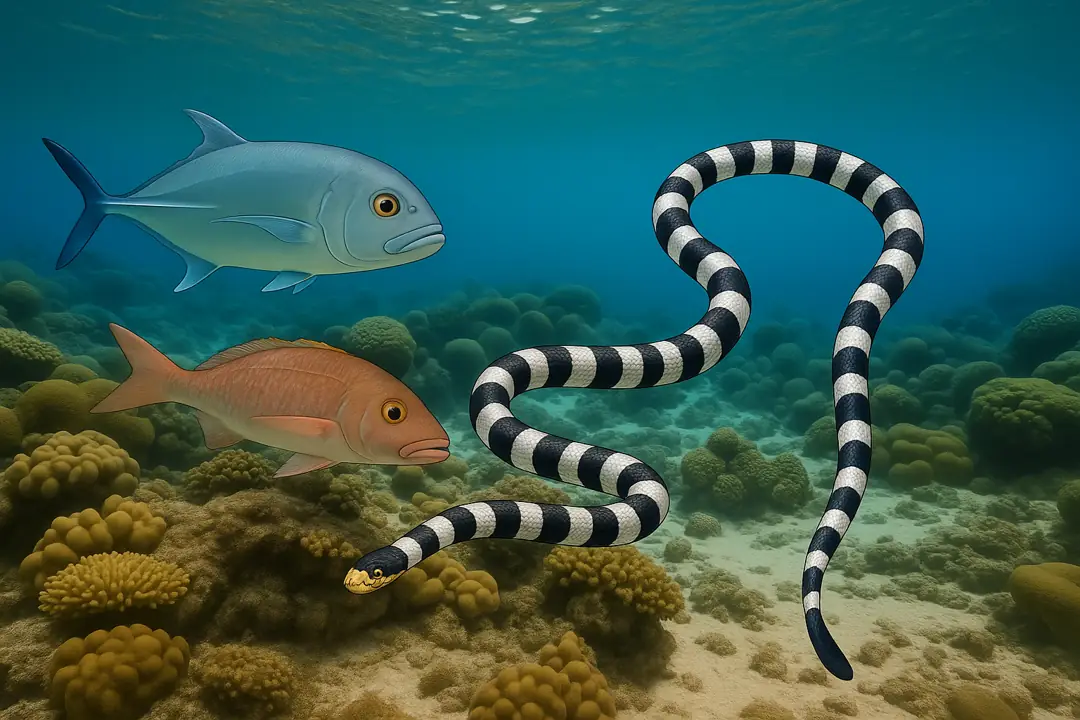
Recent research reveals cooperative hunting between sea kraits and fish species. Kraits flush eels from hiding spots while trevally and goatfish assist with capture in coordinated hunting partnerships.
This interspecies cooperation increases hunting success rates for all participants. Fish benefit from krait ability to search coral crevices inaccessible to larger predators creating mutually beneficial hunting alliances. Photo: Illustration.
Conservation Status
Dual-Habitat Protection Requirements
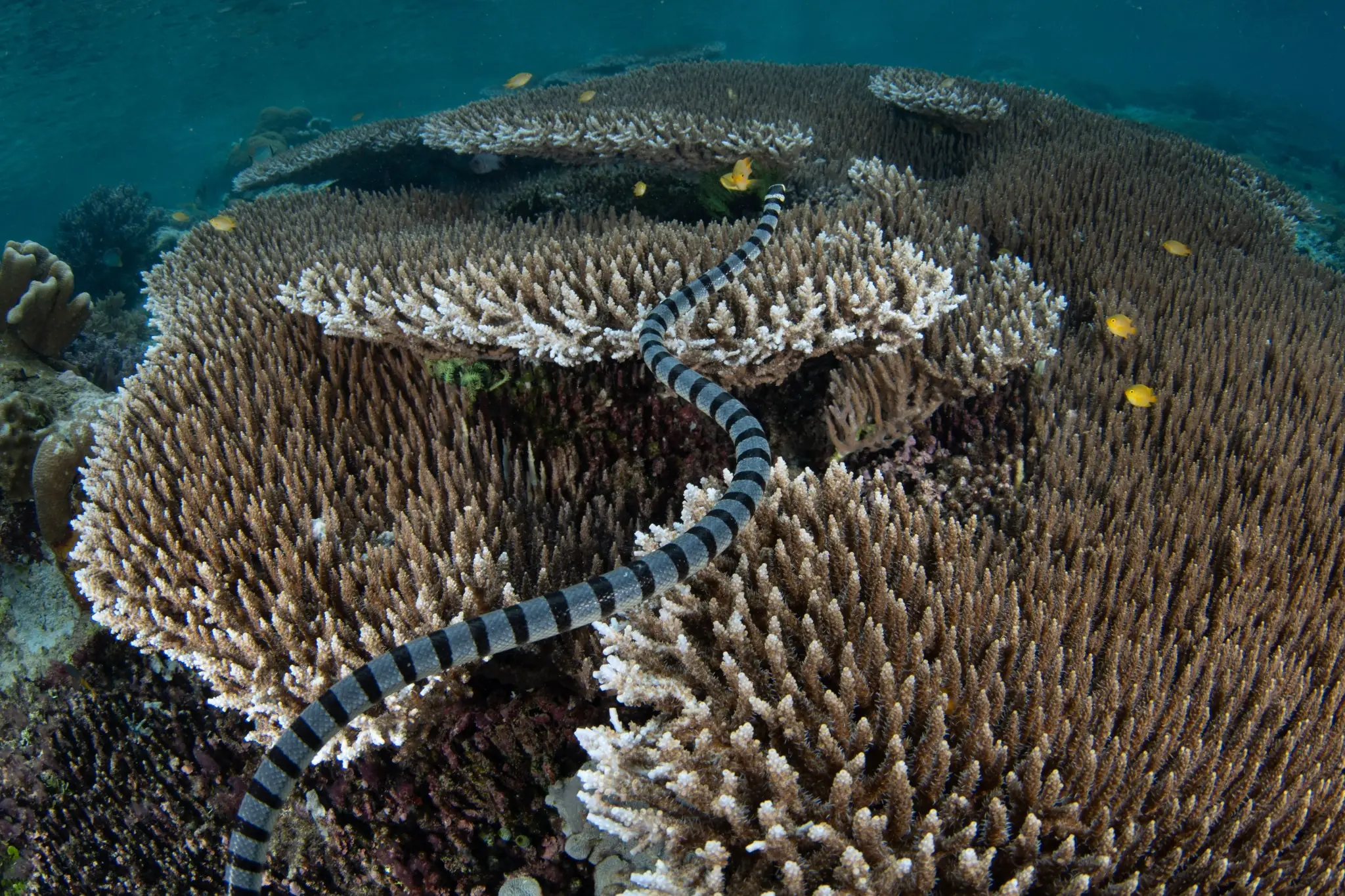
Sea kraits face unique conservation challenges requiring protection of both marine and terrestrial habitats. Coral reef degradation eliminates hunting grounds while coastal development destroys essential nesting sites.
Climate change threatens reef systems while plastic pollution affects ocean prey species. Successful conservation demands integrated land-sea management protecting complete amphibious lifestyle requirements across both environments. Photo: Ethan Daniels.
Science & Discovery
Research has documented cooperative hunting behavior where sea kraits coordinate with fish species to flush prey from coral crevices, demonstrating complex interspecies interactions in reef ecosystems.
Venom composition studies reveal sea kraits produce complex neurotoxin mixtures adapted for hunting eels, with geographic variations suggesting evolutionary adaptation to different prey species across their range.
Habitat studies confirm sea kraits require proximity between coastal terrestrial areas and marine environments, making them important flagship species for integrated land-sea conservation approaches.
In our delightful oceans, banded sea kraits demonstrate remarkable cooperative hunting behaviors with fish species demonstrating reptilian cognitive complexity. Specialized cutaneous respiration enables 30-minute breath holds during 80-meter dives accessing deep reef hunting grounds. Integrated land-sea management protects both coral reefs and coastal forests essential for amphibious survival.