Hammerhead Shark
Ocean's Magnetic Navigator
Sphyrna mokarran & Family Sphyrnidae
Meet ocean's magnetic navigators—apex predators with distinctive 1-meter-wide (3.3-foot) hammer-shaped heads, with great hammerheads reaching over 4 meters (13 feet) and 450+ kilograms. Their 1,500 electroreceptors—significantly more than most sharks—detect electrical fields as weak as 5 billionths of a volt. Eyes positioned at head ends provide 360-degree vision while GPS-like magnetic sensing guides thousand-kilometer migrations. Scalloped hammerheads form massive schools of 700 individuals demonstrating social complexity unique among apex predators.
Meet the magnetic NavigatorWhat Makes Them Special
Extreme Electroreception
House 1,500 ampullae of Lorenzini—the most of any shark—detecting electrical fields as weak as 5 billionths of a volt
360-Degree Vision
Eyes positioned at head ends provide complete visual coverage with minimal blind spots during hunting
GPS-Like Navigation
Use Earth's magnetic field as natural GPS for thousand-kilometer migrations with pinpoint accuracy
Social Schooling
Form daytime schools of 700 individuals around seamounts before dispersing nightly for solitary hunting
Massive Size
Great hammerheads reach over 4 meters and 450 kilograms with 1-meter-wide heads providing enhanced sensory coverage
Conservation Recovery
2024 research shows returning schooling behavior in protected Caribbean areas after decades of absence
First Encounter
Flattened Heads Spanning One Meter Wide
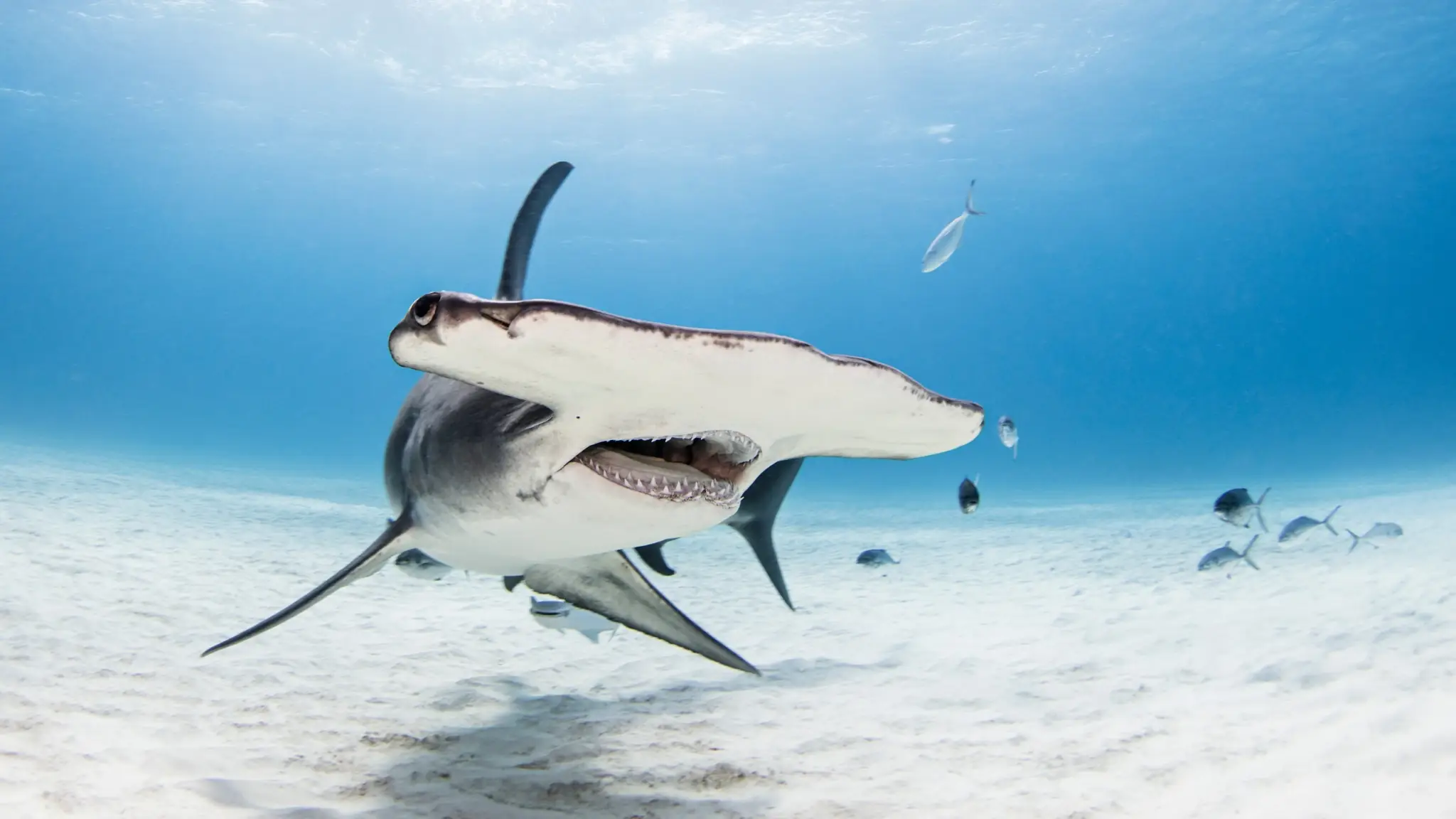
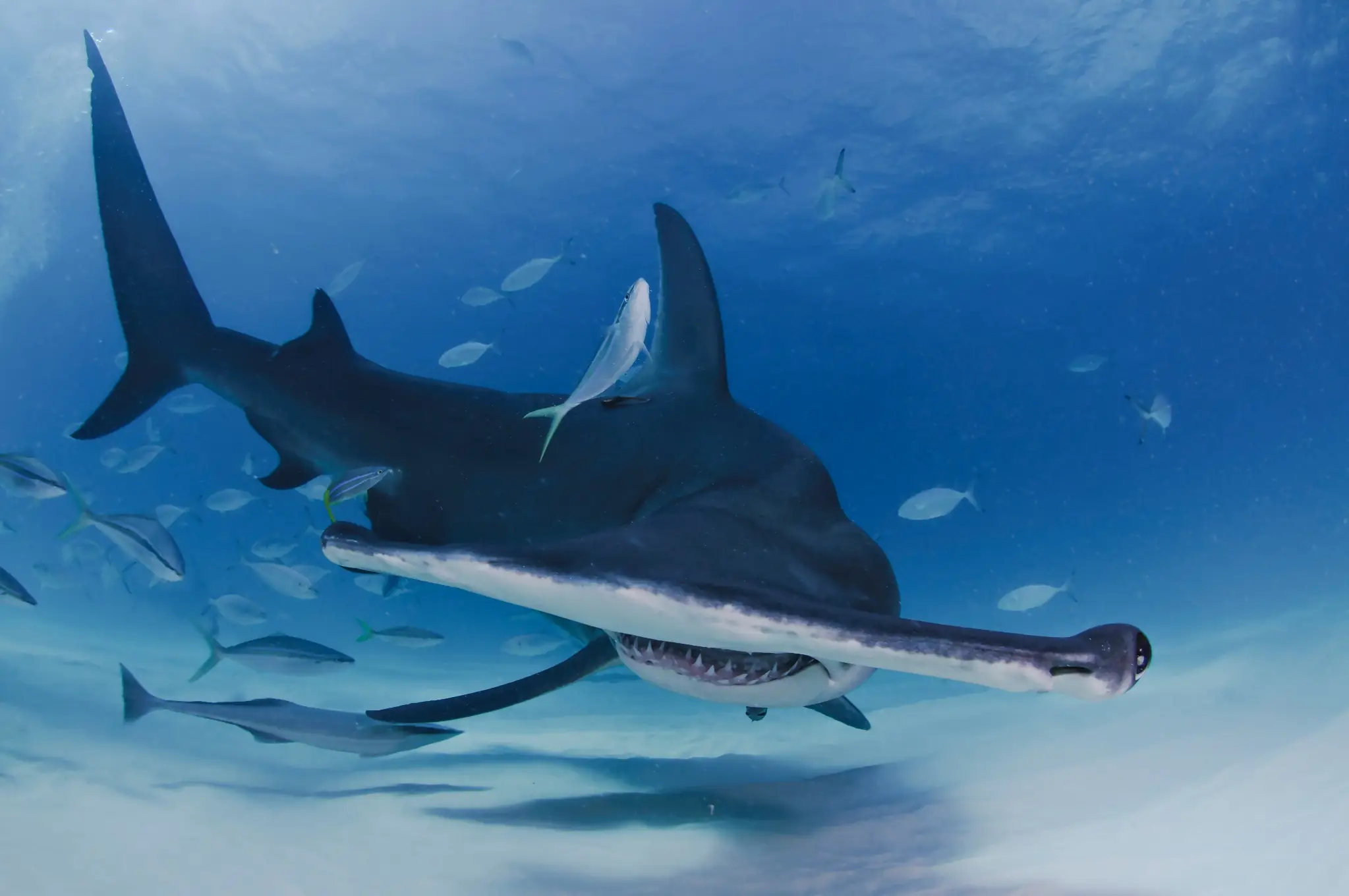
Hammerhead sharks display the ocean's most distinctive head design—flattened cephalic lobes spanning 1 meter (3.3 feet) wide in great hammerheads. Eyes positioned at each head end provide 360-degree vision coverage with minimal blind spots.
These apex predators can reach over 4 meters in length, combining impressive size with precise sensory capabilities. Their unique head shape represents one of evolution's most successful innovations for underwater navigation and hunting efficiency. Photo: Ken Kiefer.
"Hammerheads possess 1,500 electroreceptors—five times more than pointed-nose sharks—turning their heads into biological metal detectors that sense heartbeats through sand."
— Dr. Stephen Kajiura, Electroreception Research
Enhanced Electroreception
Five Times More Electroreceptors Than Other Sharks
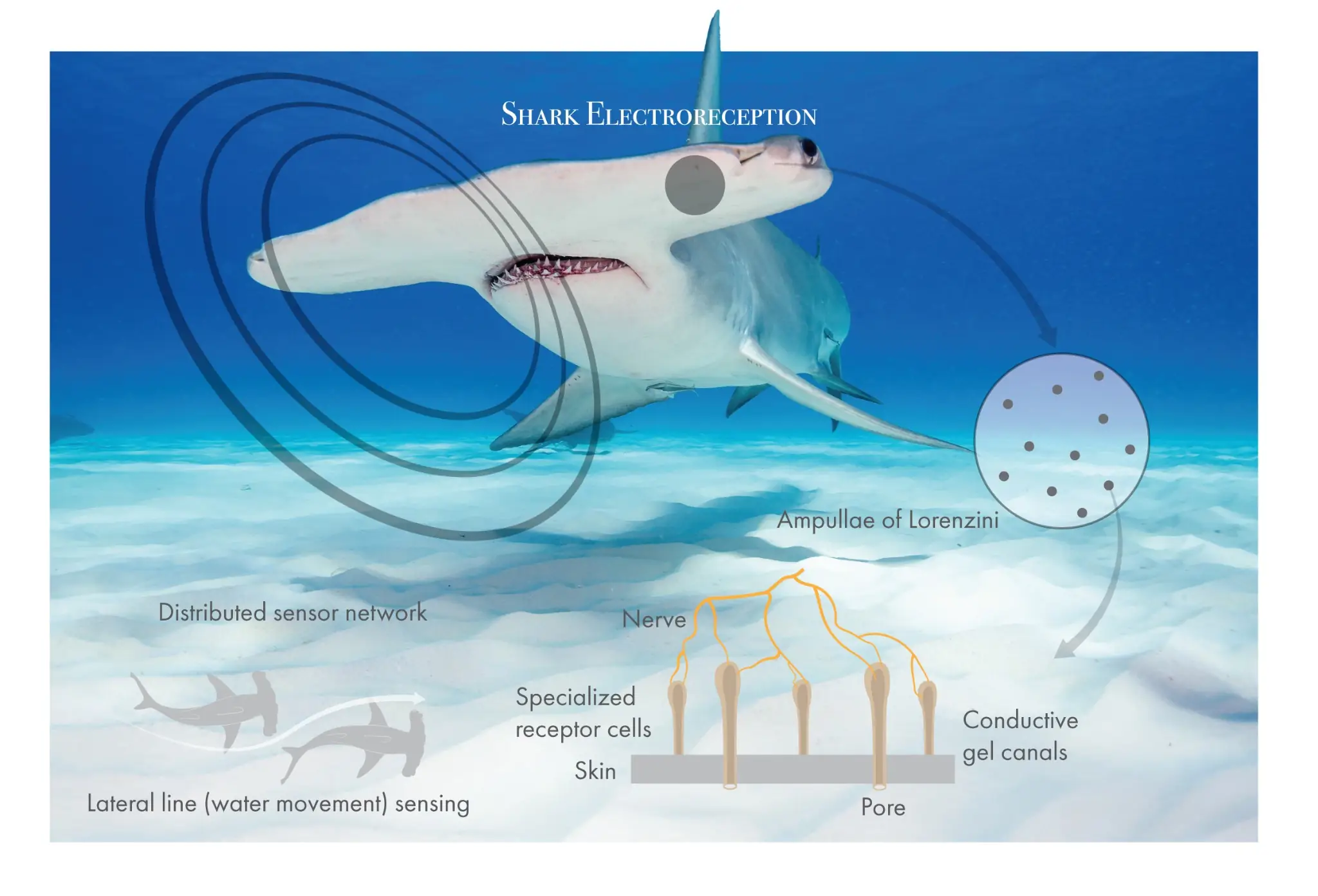
Hammerhead heads house approximately 1,500 electroreceptors called ampullae of Lorenzini—distributed across their wide head for maximum coverage, giving them the most sensitive electroreception of any shark. Scientists call these "biological voltmeters"—they detect electrical fields as weak as 5 billionths of a volt.
Great hammerheads sweep their heads like underwater metal detectors locating buried stingrays through electrical signatures from gills and heartbeats. No prey can hide when life processes generate detectable electrical fields. Photo: Scientific Illustrated.
Social Schooling
700-Shark Gatherings Defying Apex Predator Nature
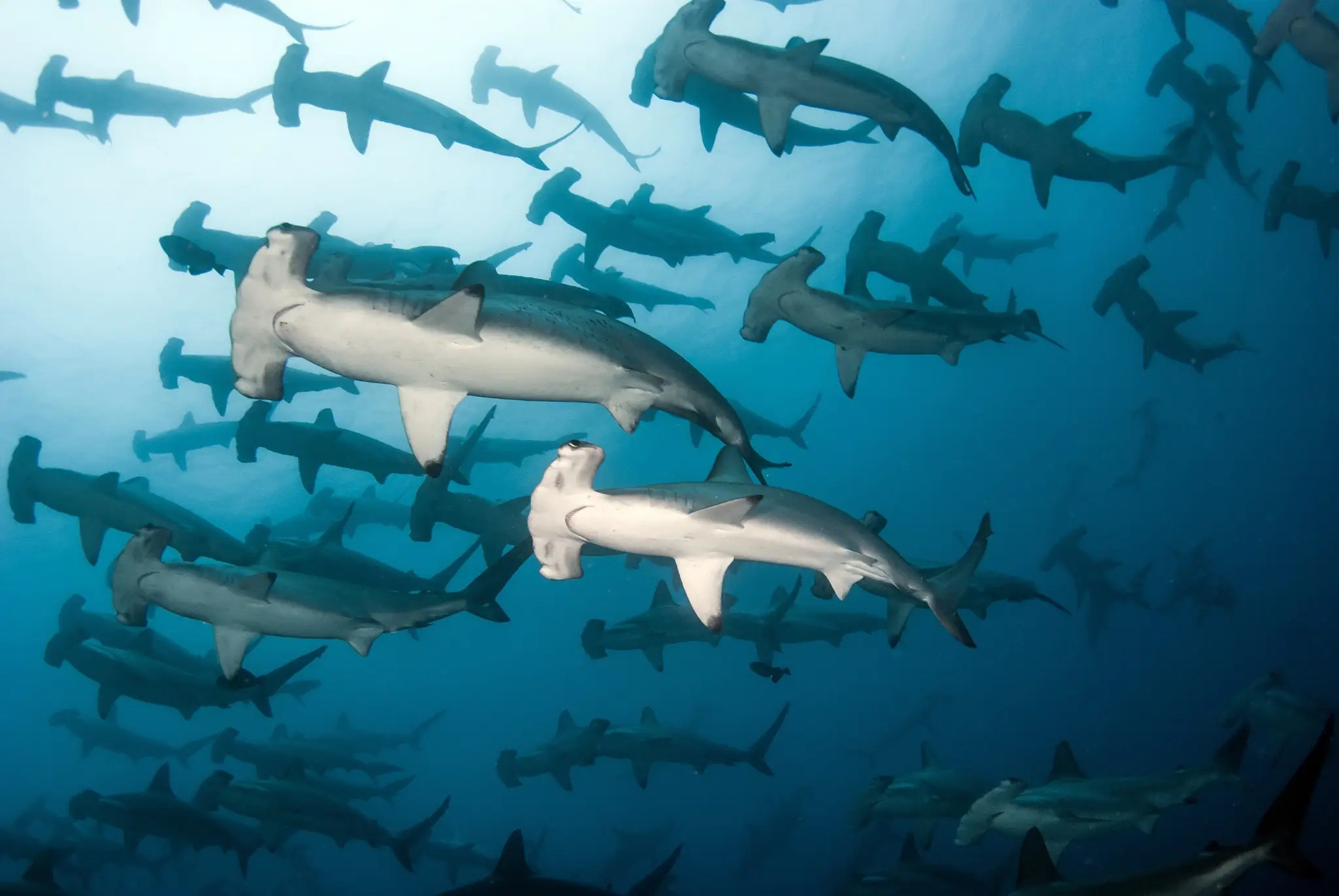
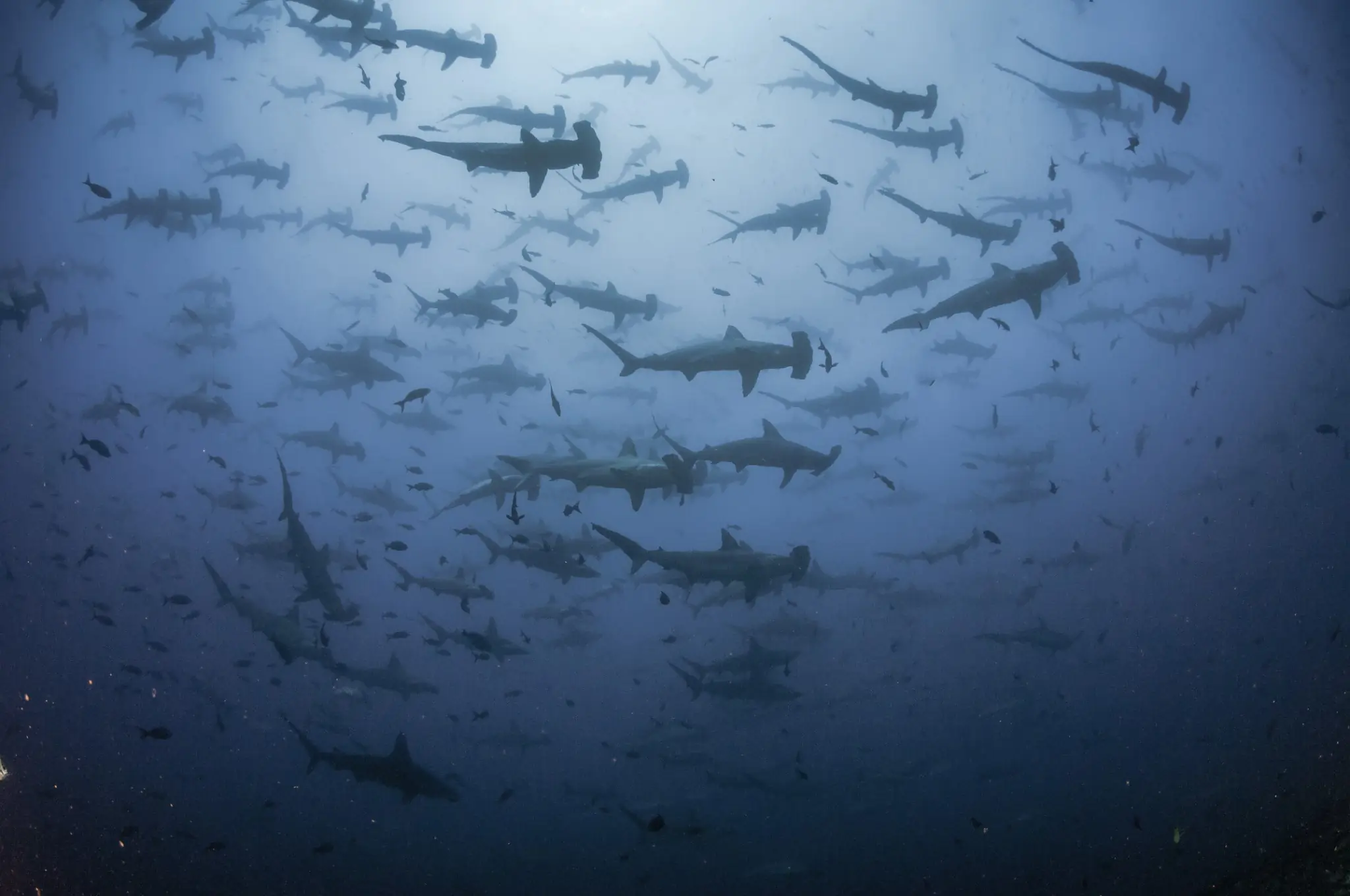
Scalloped hammerheads form massive schools of 700 individuals during daylight hours—unique behavior among large apex predators. They gather around seamounts and underwater volcanic peaks in specific locations worldwide.
At night these social groups dissolve as individuals spread for solitary hunting. Females occupy central school positions while males perform courtship displays at edges creating complex social hierarchies rarely seen in sharks. Photo: Tomas Kotouc.
"Hammerheads navigate using Earth's magnetic field like a GPS system—each ocean location has its own magnetic signature they read with remarkable precision."
— Dr. Bryan Keller, NOAA Shark Research
Magnetic Navigation
GPS-Level Precision Using Earth's Magnetic Field
Hammerheads use Earth's magnetic field variations as natural GPS coordinates—each location possesses unique magnetic signatures. Laboratory studies demonstrate bonnethead sharks can orient using magnetic maps with remarkable accuracy.
They follow "magnetic highways" along the seafloor between feeding and breeding sites across vast distances. This biological compass system guides thousand-kilometer migrations with pinpoint precision across seemingly featureless ocean basins. Photo: Nicolas-SB.
Intelligence and Sensory Integration
Advanced Brain Processing Multiple Sensory Inputs
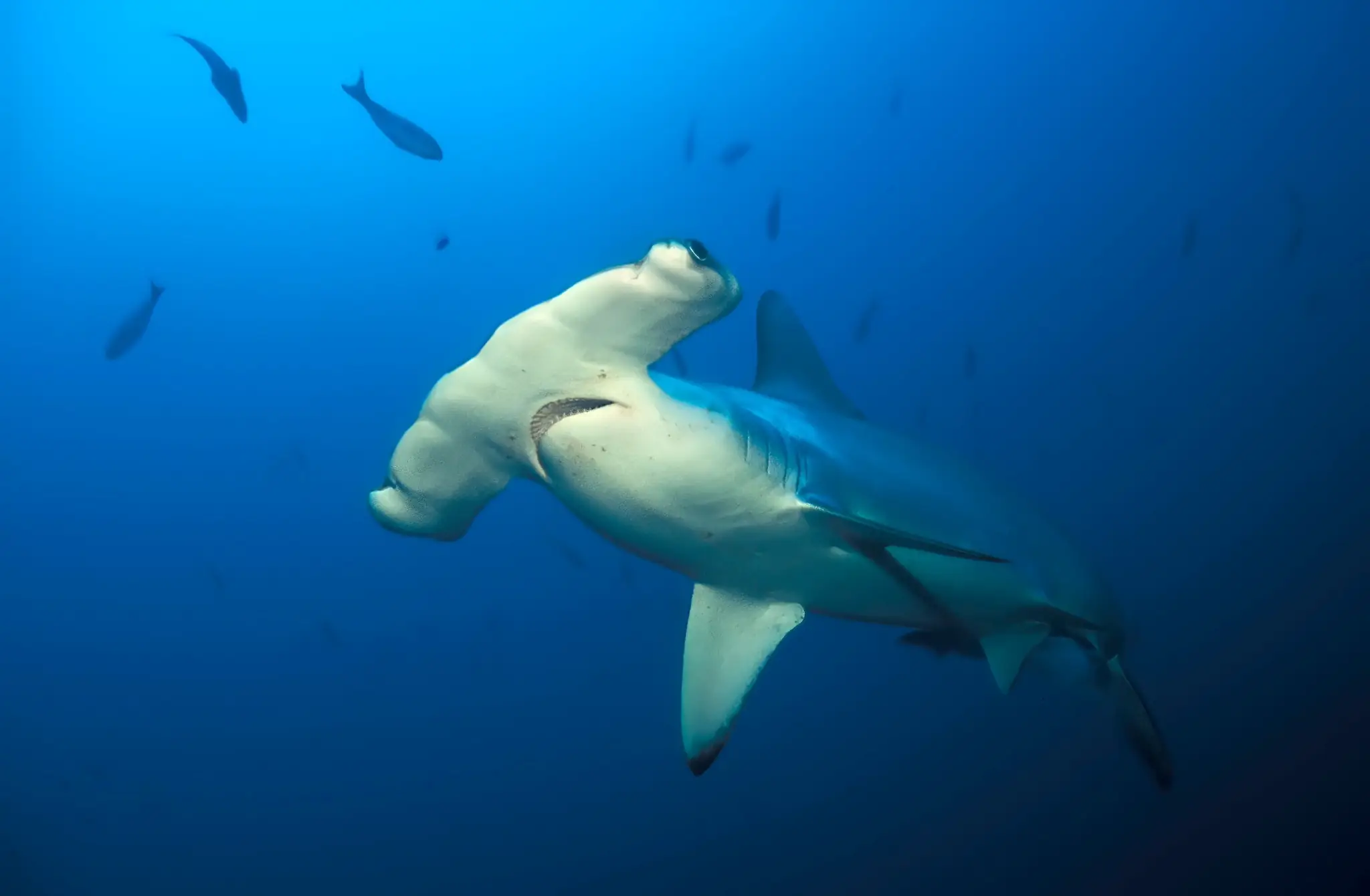
Hammerheads possess enlarged brain regions for processing complex sensory information from electrical magnetic and visual systems simultaneously. Their head-sweeping behaviors maximize sensory coverage during hunting and navigation.
This advanced sensory integration enables precise seamount navigation and coordinated schooling behaviors. This is a form of "multimodal sensory integration"—combining multiple sensory inputs for enhanced spatial awareness and hunting efficiency. Photo: Martin Voeller.
Conservation Progress
Marine Protected Areas Showing Promise for Recovery
Great and scalloped hammerheads face significant population declines from overfishing but targeted marine protected areas demonstrate recovery potential. Small no-take zones effectively protect resident populations of scalloped hammerheads.
Recent CITES protections regulate international trade while innovative fishing gear modifications reduce accidental capture. 2024 research shows returning schooling behavior in areas with strong protection measures indicating these magnetic navigators can recover when given refuge. Photo: wildestanimal.
Science & Discovery
Florida State University 2021 research confirmed bonnethead sharks use Earth's magnetic field as GPS demonstrating map-like navigation when exposed to simulated magnetic conditions 600 kilometers from capture sites inspiring autonomous underwater vehicle guidance systems.
University of Western Australia electroreception studies revealed hammerhead head morphology provides significantly greater spatial distribution of electroreceptors than conventional shark designs informing development of biomimetic underwater sensor arrays for detection and mine-sweeping operations.
Heriot-Watt University 2024 Caribbean research documented first scalloped hammerhead schooling since 1970s in Cayman Islands marine protected areas demonstrating recovery potential when overfishing pressures are removed through effective conservation management.
In our delightful oceans, hammerheads navigate thousand-kilometer migrations using innate magnetic sensing—a biological GPS confirmed by 2021 laboratory studies. Their 1,500 electroreceptors detect 5 billionths of a volt enabling precise buried prey location. CITES Appendix II protections and 2024 Caribbean schooling observations demonstrate recovery potential with strong marine sanctuary enforcement.