Sperm Whale
Ocean's Deep-Sea Giant
Physeter macrocephalus
Meet the ocean's largest toothed predators whose 235-decibel biosonar, 2,250-meter dives, 90-minute breath holds, and complex combinatorial communication demonstrate extraordinary intelligence in Earth's deepest realms.
Meet the Deep-Sea GiantWhat Makes Them Special
Largest Toothed Predators
Reach 18 meters (59 feet) and 57,000 kilograms—Earth's largest toothed predators
Powerful Biosonar
Generate 235-decibel echolocation clicks detecting prey at 300-meter ranges
Extreme Divers
Dive to 2,250 meters (7,400 feet) holding breath for 90 minutes
Massive Brains
Possess Earth's largest brains at 8 kilograms demonstrating complex social intelligence
Complex Communication
Use codas—patterned click sequences with combinatorial structures for clan identity and social bonding
Global Distribution
Inhabit all major oceans in matriarchal family groups across vast ranges
Massive Architecture
18-Meter Bodies with Specialized Deep-Sea Design
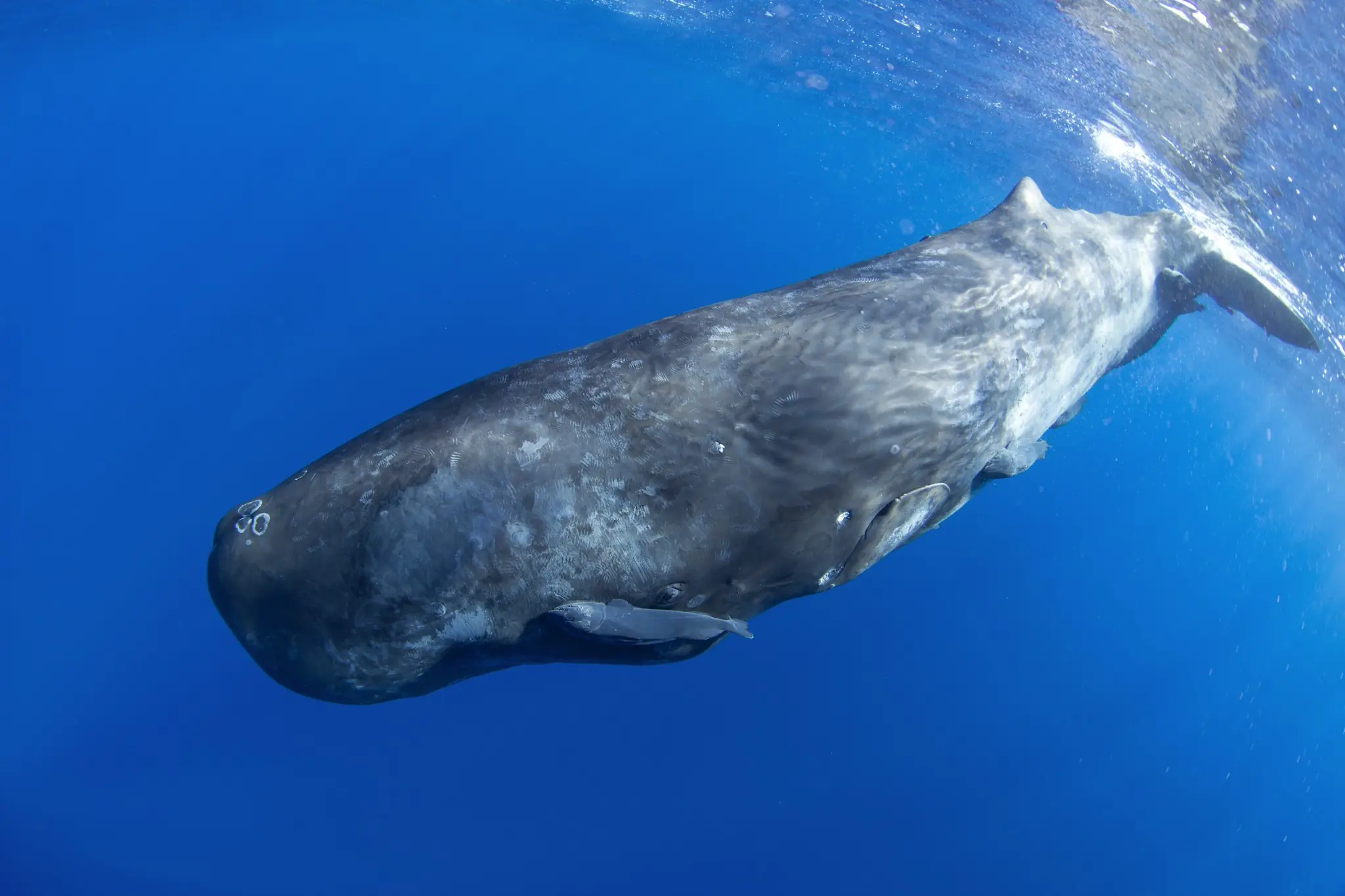
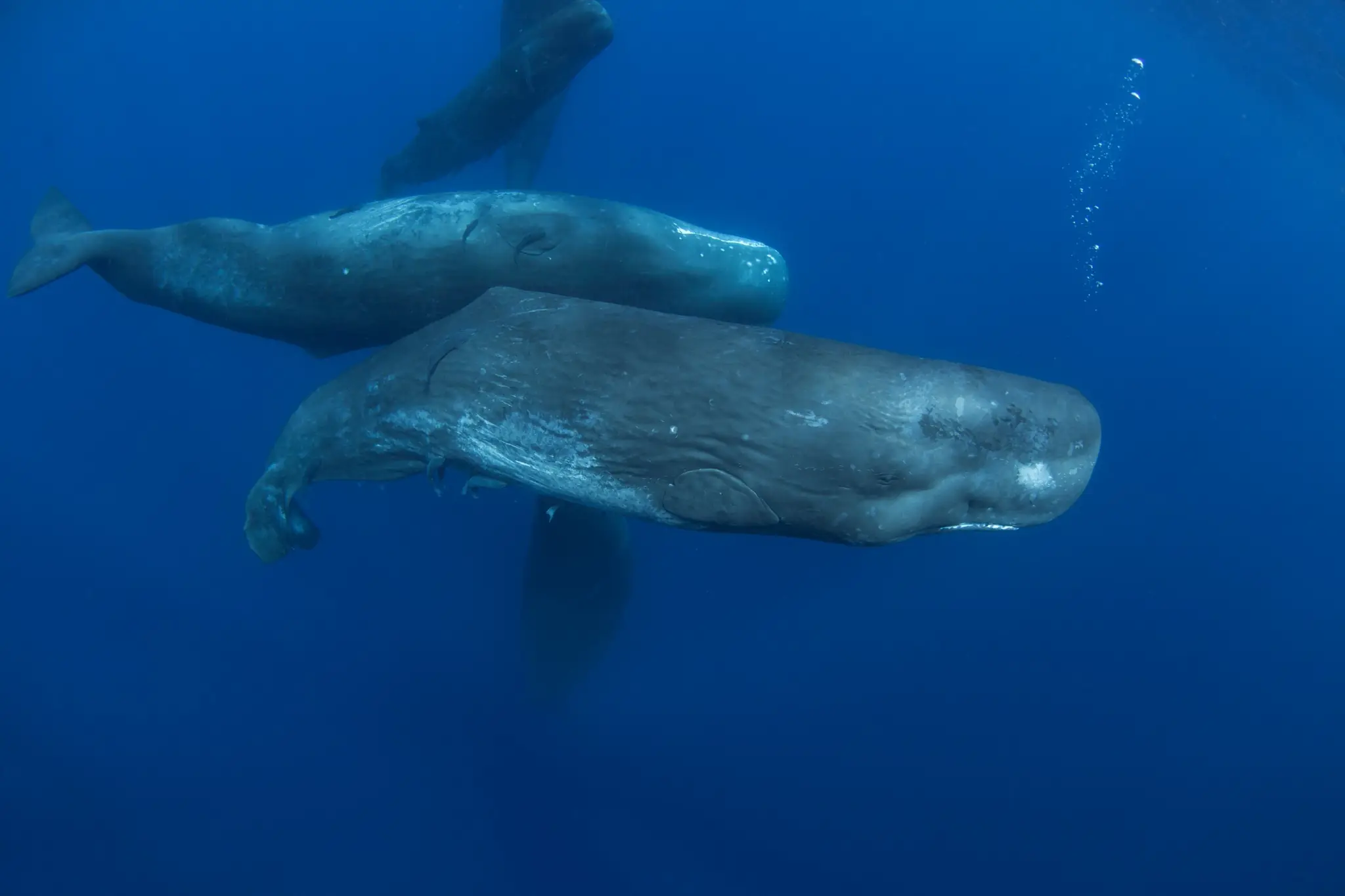
Sperm whales reach 18 meters (59 feet)—Earth's largest toothed predators. Distinctive square heads comprise one-third of body length, housing massive spermaceti organs essential for deep-sea hunting.
Robust bodies survive crushing depths while flexible ribcages compress under extreme pressure. Scientists call this anatomy "perfectly adapted"—millions of years optimizing deep-sea predation. Photo: Martin Prochazkacz.
"At 235 decibels, sperm whale clicks are the loudest biological sounds on Earth—so powerful they could theoretically be detected across entire ocean basins, revolutionizing our understanding of deep-sea navigation."
— Marine Bioacoustics Journal
Biosonar Mastery
235-Decibel Echolocation Detecting Prey at 300-Meter Range
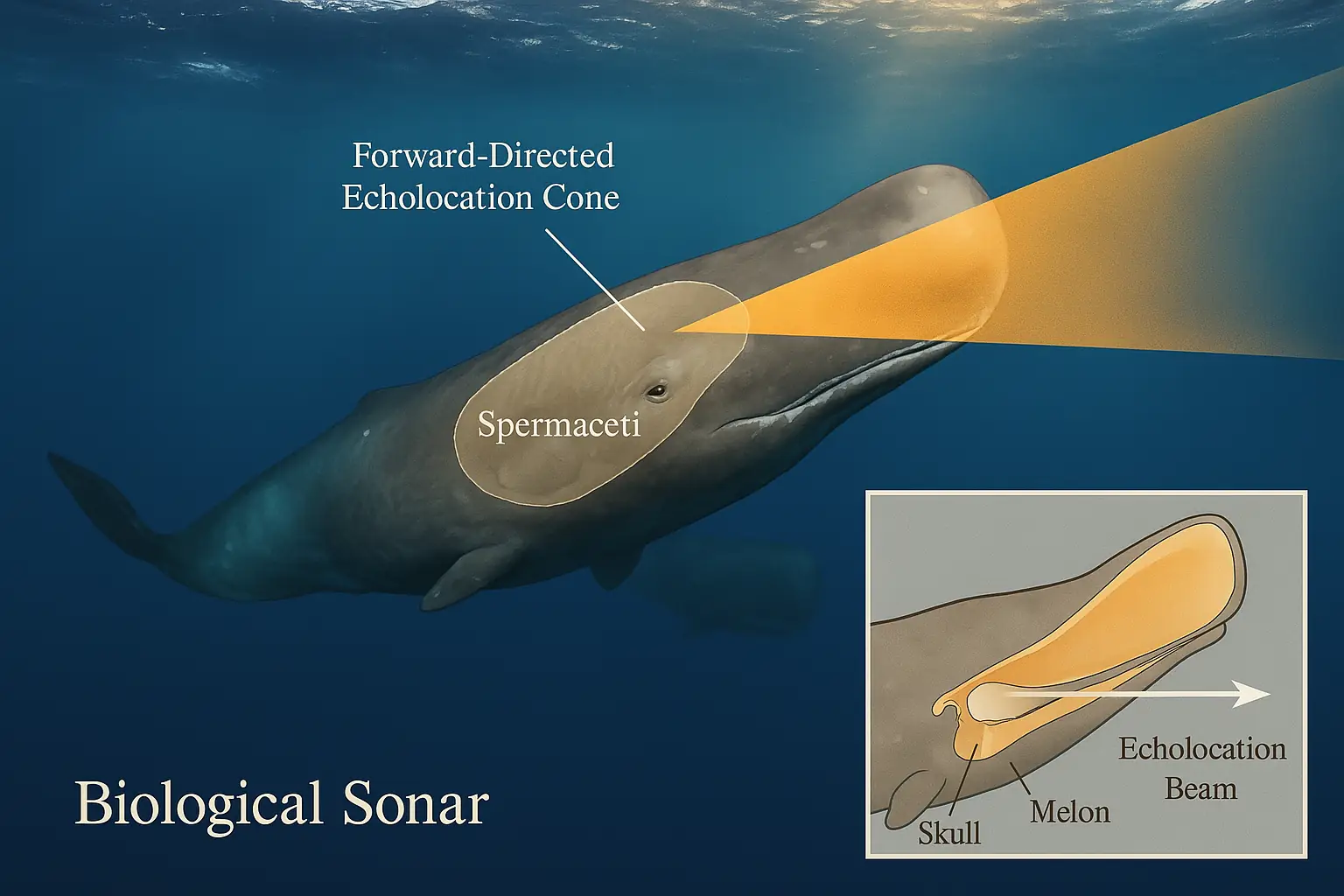
Sperm whales possess Earth's most powerful biosonar, generating 235-decibel clicks through specialized spermaceti organs. These acoustic beams detect giant squid at 300-meter (980-foot) ranges with surgical precision.
Sound production involves spermaceti organ, distal sac, and monkey lips structures. This biological sonar surpasses human technology in power and resolution for deep-sea navigation. Photo: Illustration.
Deep-Sea Diving
2,250-Meter Dives with Spermaceti Buoyancy Control
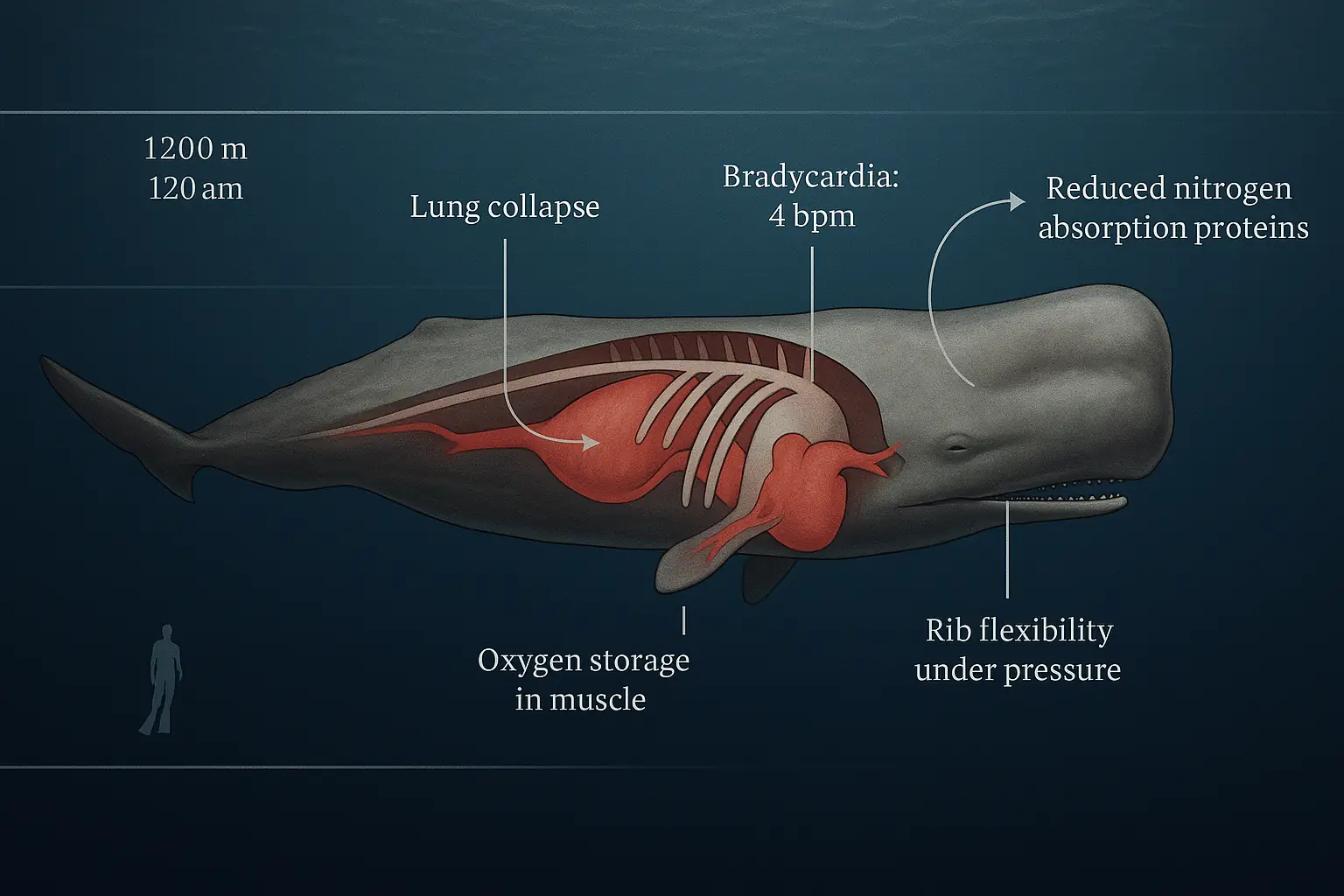
Sperm whales dive to 2,250 meters (7,400 feet) through revolutionary spermaceti oil systems. Temperature-dependent density changes enable effortless descent and ascent through extreme pressure, allowing energy-efficient navigation across vast vertical distances.
Specialized physiology includes collapsible ribcages compressing lungs and oxygen storage in myoglobin-rich muscles. These adaptations enable 90-minute breath holds hunting giant squid where pressure reaches 225 atmospheres. Photo: Illustration.
"Sperm whales manage physiological feats unmatched in nature—collapsing lungs, storing oxygen in muscle myoglobin, and controlling buoyancy with temperature-sensitive oils to hunt at depths where pressure exceeds 200 atmospheres."
— Dr. Andreas Fahlman, Comparative Physiology of Marine Mammals
Social Intelligence
Complex Clan Structures with Distinct Vocal Dialects
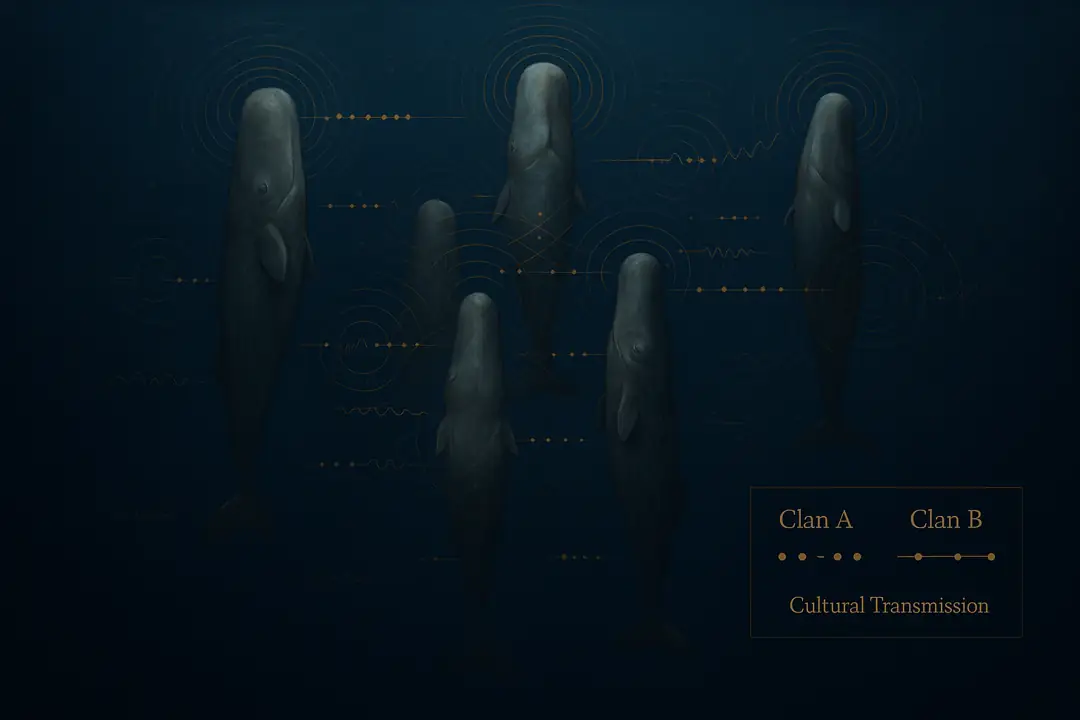
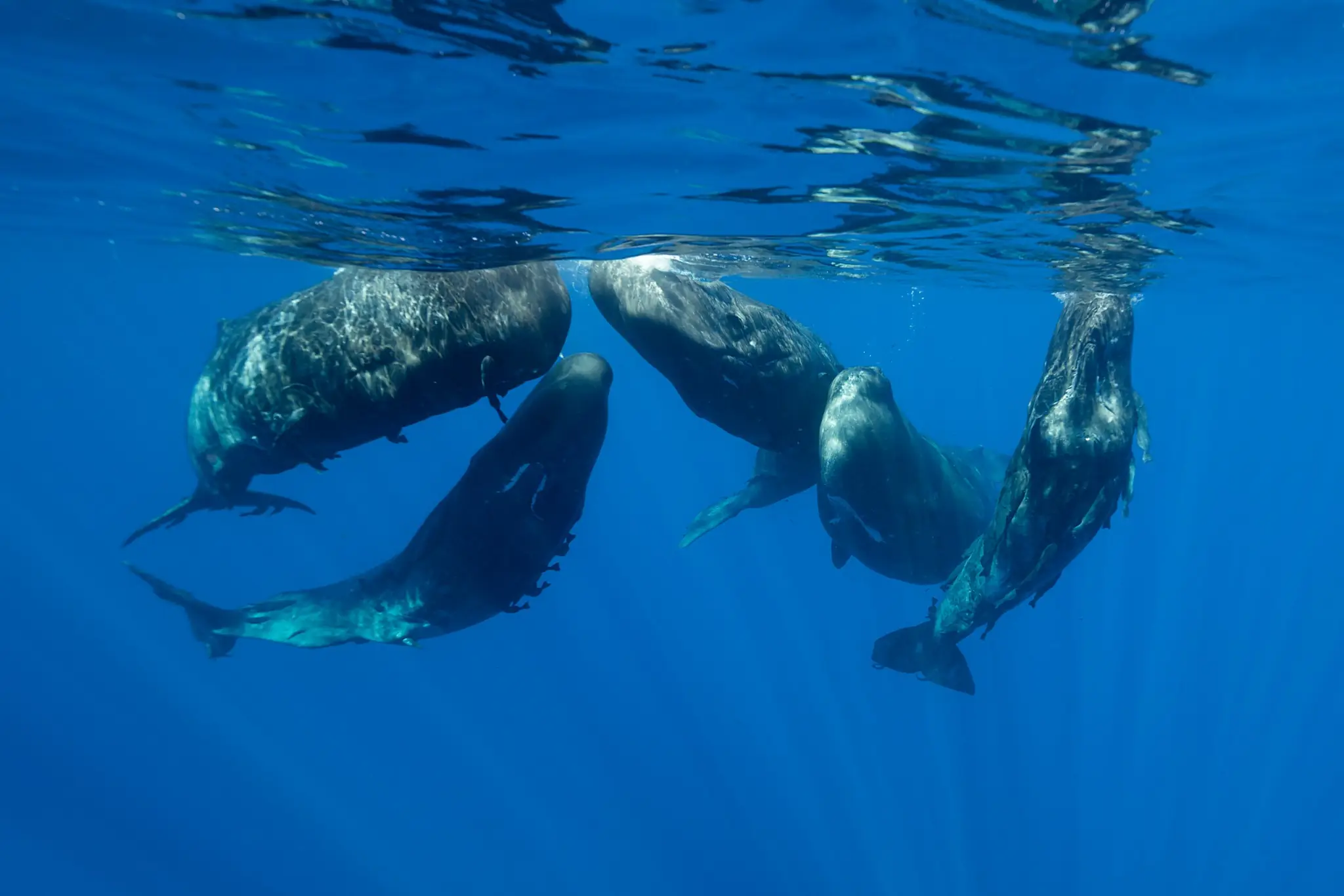
Sperm whales organize into matrilineal family units that form clans spanning ocean basins. Multiple clans maintain unique vocal dialects that vary by ocean basin—cultural markers passed through generations demonstrating sophisticated social learning and cultural transmission.
Artificial intelligence analysis revealed "phonetic alphabets"—combinatorial click structures suggesting complex conversational ability. These discoveries revolutionize understanding of marine intelligence and communication evolution in non-human species. Photo: Illustration.
Advanced Communication
Combinatorial Click Patterns with Cultural Transmission
Sperm whale communication involves "codas"—rhythmic patterns specific to clan identity. Machine learning identifies 156 distinct coda types with combinatorial structures analogous to phonetic building blocks.
Cultural transmission maintains clan dialects through maternal teaching while signature codas enable complex social relationships spanning decades. This communication system rivals primate societies in sophistication and cultural complexity. Photo: Martin Prochazkacz.
Conservation Recovery
Population Recovery from Near-Extinction to Global Protection
Global populations declined from an estimated 1-1.5 million pre-whaling to approximately 300,000 by the 1980s, before International Whaling Commission moratoriums enabled gradual recovery through coordinated global cooperation.
Current populations are stable, monitored through satellite tracking and acoustic surveys. Despite protection from commercial whaling, sperm whales still face threats from ship strikes, deep-sea noise pollution, and plastic ingestion. The Mediterranean subpopulation remains Endangered with only about 200 mature individuals. Marine protected areas and ongoing research continue to support their conservation. Photo: wildestanimal.
Science & Discovery
Ongoing Project CETI research (2024) using AI has identified complex combinatorial patterns in sperm whale codas. These patterned click sequences suggest sophisticated communication systems with cultural transmission between whale clans.
Research on sperm whale neuroanatomy has identified specialized spindle neurons associated with social cognition. These brain structures may support the advanced empathy and complex social relationships observed in their matriarchal societies.
Research at Woods Hole Oceanographic Institution has documented sperm whale clicks reaching 235 decibels—the loudest biological sounds recorded. Biomimetic applications study these acoustic principles for underwater communication and deep-sea exploration technology.
In our delightful oceans, sperm whales demonstrate intelligence through sophisticated combinatorial communication and complex social structures, master crushing depths with specialized adaptations, and preserve cultural knowledge across generations—safeguarding Earth's most cognitively advanced marine species.