Mobula Ray
Ocean's Synchronized Acrobats
Mobula spp.
Meet the ocean's synchronized acrobats—nine species ranging from 90-centimeter pygmies to 5.2-meter (17-foot) giants whose coordinated breaching displays involve thousands launching 2 meters above the surface. Their cranial heating systems maintain brain function during 2,000-meter dives. They create massive vortex formations through synchronized spiral swimming demonstrating marine life's most sophisticated group coordination.
Witness Their CoordinationWhat Makes Them Special
Mass Breaching
Coordinate aerial displays with thousands launching 2 meters above surface in synchronized patterns
Massive Aggregations
Form groups exceeding 10,000 individuals creating some of the largest coordinated behaviors in marine vertebrates
Brain Heating
Maintain brain temperature through specialized networks during dives to depths exceeding 1,000 meters, with some recorded beyond 2,000 meters
Vortex Feeding
Create coordinated spiral formations concentrating zooplankton through synchronized group swimming
Chain Reactions
Individual breaches trigger cascading responses demonstrating sophisticated communication systems
Nine Species
Range from 90-centimeter pygmy devils to 5.2-meter giants across tropical and temperate oceans
First Encounter
Nine Species from 90-Centimeter Pygmies to 5.2-Meter Giants
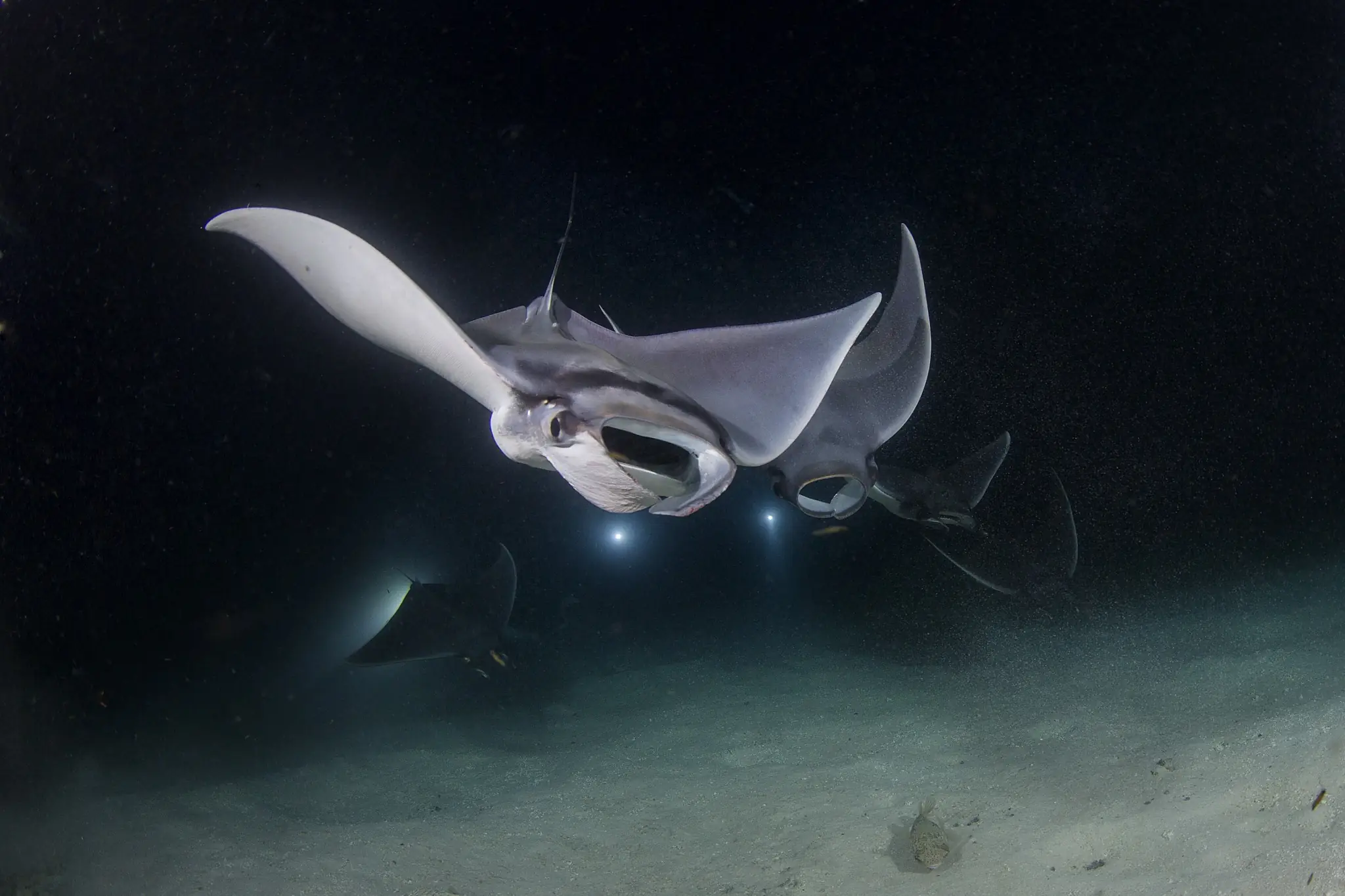
Nine mobula species range from 90-centimeter (3-foot) pygmy devil rays to 5.2-meter (17-foot) giants. Diamond-shaped bodies feature distinctive horn-like cephalic fins creating unmistakable silhouettes gliding through tropical waters.
Wing-like pectoral fins enable graceful underwater flight and spectacular aerial breaching—capabilities shared by no other rays. These elusive relatives create the ocean's most coordinated mass displays through precise group movements. Photo: J.S. Lamy
"What mobula rays achieve through synchronized breaching and vortex feeding represents one of the most complex group behaviors in marine vertebrates—a spectacular demonstration of social coordination on a massive scale."
— Dr. Guy Stevens, Manta Trust Research Director
Mass Breaching Behavior
Synchronized Aerial Displays
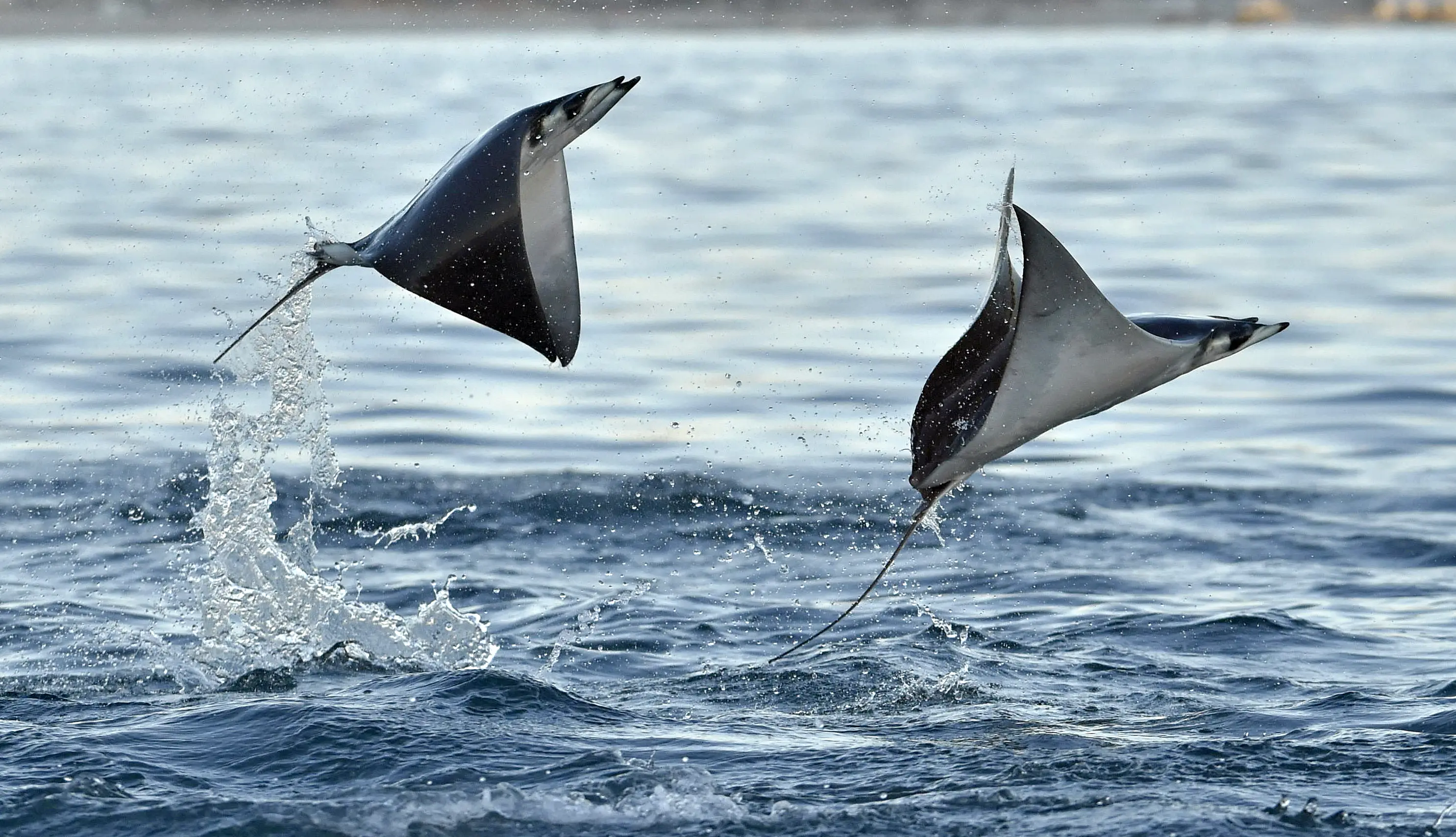
Massive aggregations breach simultaneously launching up to 2 meters above the surface in coordinated displays visible from kilometers away. Scientists observe chain reactions where individual breaches trigger cascading responses demonstrating sophisticated communication systems.
Research suggests breaching removes parasites through impact force, enables long-distance communication through underwater sound transmission, or signals reproductive readiness during courtship. These synchronized mass breaching behaviors are most spectacular in mobula species, though other rays like mantas also breach occasionally. Photo: Sergey Uryadnikov.
Cranial Heating System
Deep Diving Through Thermal Regulation
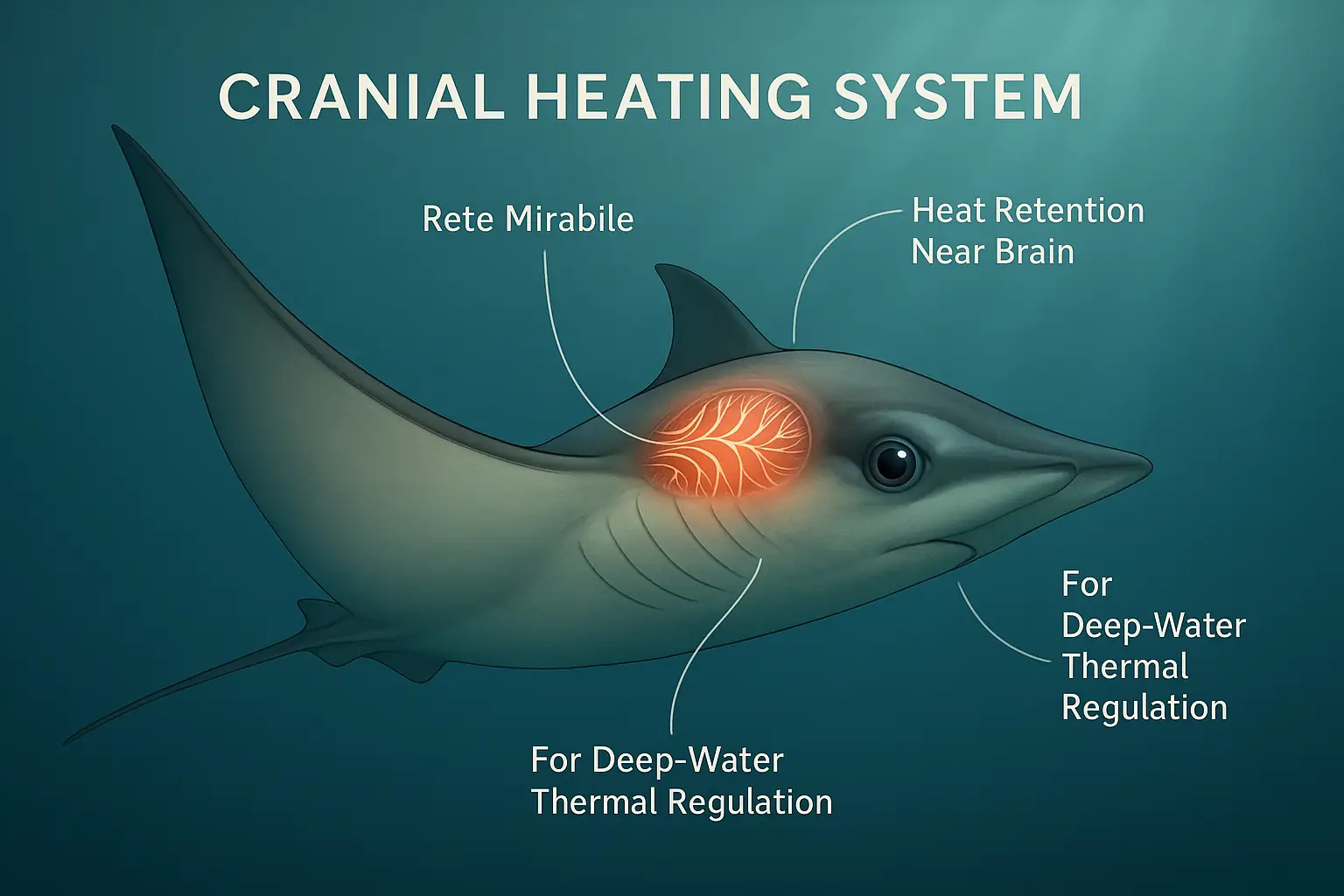
Cranial rete mirabile—blood vessel networks—maintain brain temperature during dives to 2,000 meters. Counter-current heat exchange preserves neural function in 4°C deep waters where most fish experience severe metabolic slowdown.
This physiological adaptation enables deeper foraging accessing rich deep-sea zooplankton resources unavailable to surface feeders. Scientists call this "regional endothermy"—selective brain heating demonstrating convergent evolution with billfish, tuna, and some sharks like great whites. Photo: Illustration.
"Satellite tagging revealed 122 mobulas circling continuously for five hours in 'courtship vortex' behavior—unprecedented social coordination among rays."
— Dr. Marta Palacios, Elasmobranch Research Specialist
Vortex Feeding Aggregations
Coordinated Spiral Formations
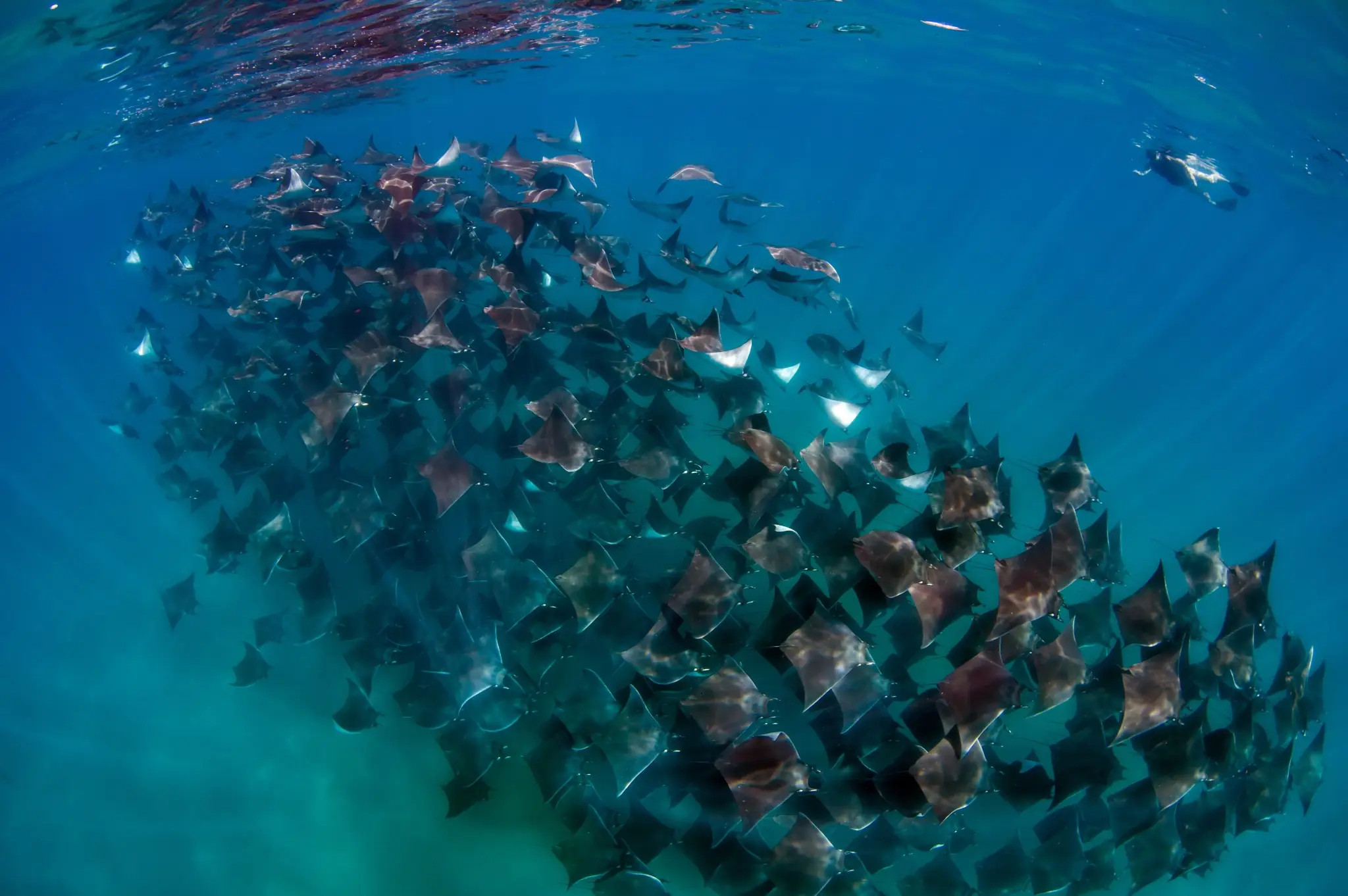
Unlike solitary manta feeding, mobulas create massive vortex formations where coordinated spiral swimming concentrates zooplankton for group exploitation. These cooperative hunting strategies maximize prey capture through synchronized movements creating hydrodynamic currents.
Recent satellite tagging documented "courtship vortex" behavior where 122 individuals circled continuously for five hours. These feeding aggregations demonstrate the most sophisticated ray social organization ever recorded rivaling dolphin pod coordination. Photo: Tomas Kotouc
Filter Feeding Mechanics
Specialized Cephalic Fins and Gill Rakers
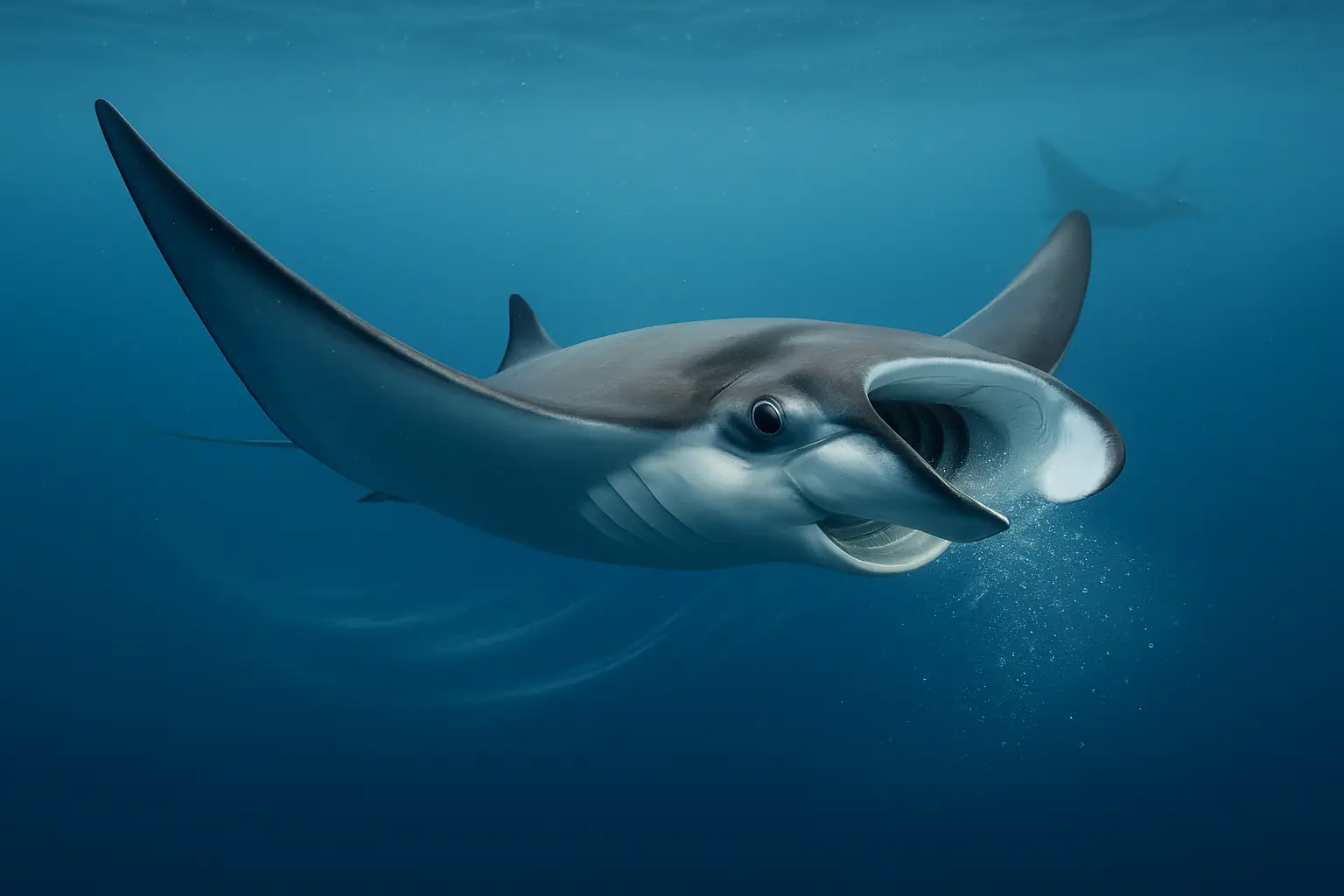
Cephalic fins unfurl to funnel prey into undercut mouths designed for maximum filtration efficiency. Unlike manta rays' aligned structures, mobulas' specialized architecture targets smaller zooplankton through tighter gill raker spacing.
Multiple feeding strategies include surface feeding on planktonic patches, bottom feeding targeting benthic organisms, and lunge feeding through dense prey clouds. Specialized gill rakers filter organisms larger than 2 millimetres. Photo: Illustration.
Conservation Challenges
International Protection Efforts
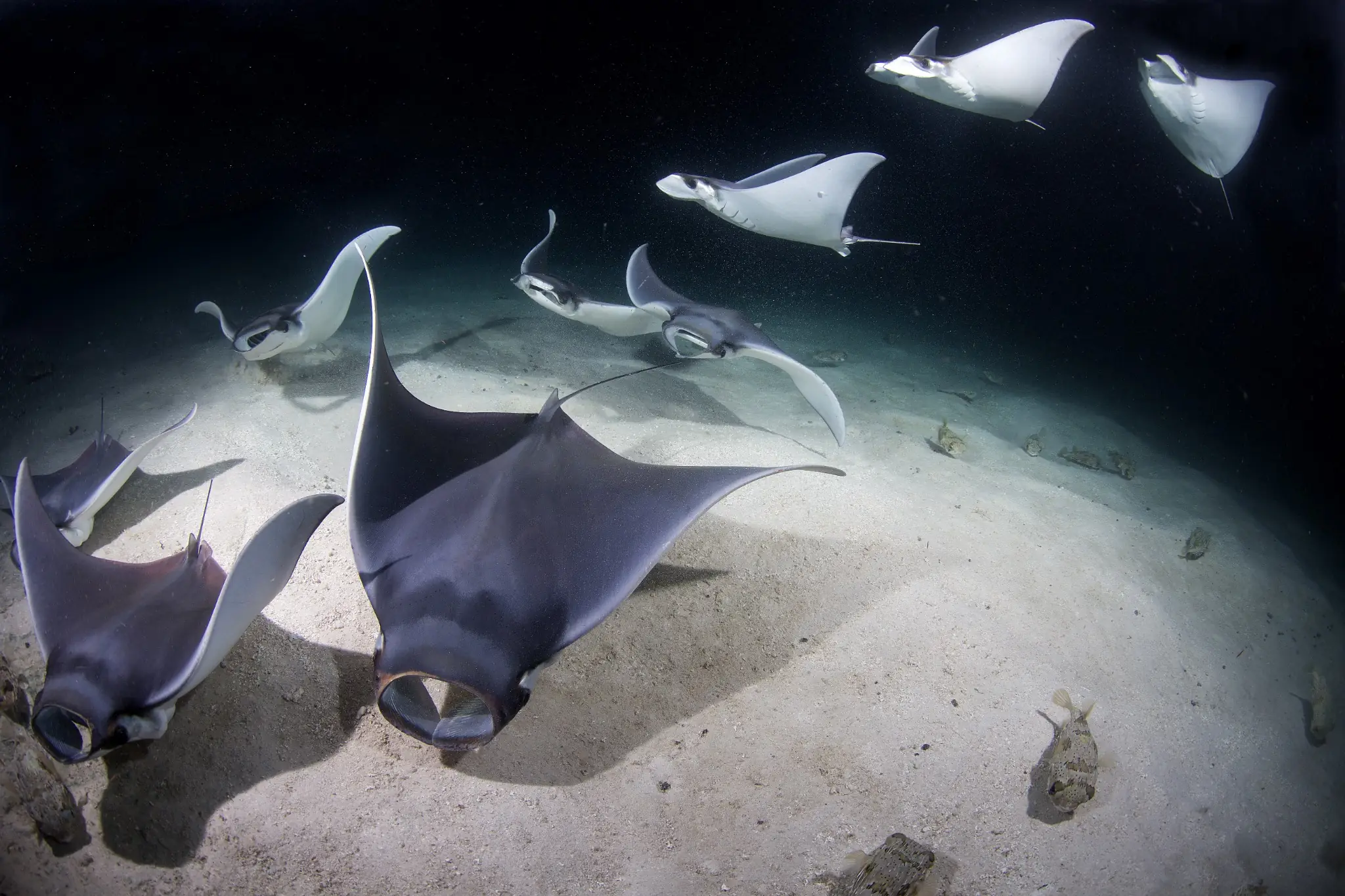
All nine mobula species gained CITES Appendix II protection in 2017 regulating international trade in gill plates. Marine protected areas now safeguard critical aggregation sites in Mexico's Sea of Cortez and Costa Rica's waters.
Mobula rays are slow to reproduce, giving birth to only one pup after a gestation of about one year. This low reproductive rate makes them especially vulnerable to population declines from overfishing and bycatch. Photo: J.S. Lamy
Science & Discovery
Monterey Bay Aquarium Research Institute 2024 satellite tagging revealed mobulas perform coordinated migrations spanning 3,000 kilometers demonstrating navigation precision and social cohesion previously unknown in ray species.
University of Queensland 2023 research documented cranial rete mirabile maintaining brain temperatures 10°C above ambient during deep dives revealing convergent evolution of regional endothermy with billfishes.
Scripps Institution of Oceanography 2024 acoustic analysis detected low-frequency vocalizations during breaching suggesting sound-based communication systems coordinating behaviors across kilometer-scale aggregations.
In our delightful oceans, mobula rays demonstrate coordinated behavior creating survival advantages beyond individual capabilities through spectacular synchronized displays. Their thermal adaptation enables access to deep-sea resources unavailable to cold-bodied species. Protecting aggregation sites preserves marine life's most sophisticated group coordination.