Dugong
The Gentle Sea Cow
Dugong dugon
Meet the ocean's only vegetarian mammal—the dugong, a 3-meter (10-foot) sea cow that grazes seagrass meadows across the warm Indo-Pacific. A close cousin of elephants, it uproots whole plants with a bristled, downturned snout, leaving winding trails on the seafloor. Its mermaid-like grace gave the order Sirenia its name.
Graze the Seagrass MeadowsWhat Makes Them Special
Elephant Cousin
The dugong is more closely related to elephants than to any whale or seal
Seagrass Grazer
The only marine mammal living on plants alone, grazing seagrass all day
Feeding Trails
Uproots whole seagrass plants, leaving long winding cleared feeding trails across the seafloor
Mermaid Origin
Its name comes from the Malay duyung, meaning mermaid or lady of the sea
Tusks and Whiskers
Males grow tusks, and stiff facial bristles help them feel out food
Vulnerable Icon
Listed as vulnerable worldwide, and some regional populations are already critically endangered or gone
First Encounter
The Sea Cow and Its Land Kin
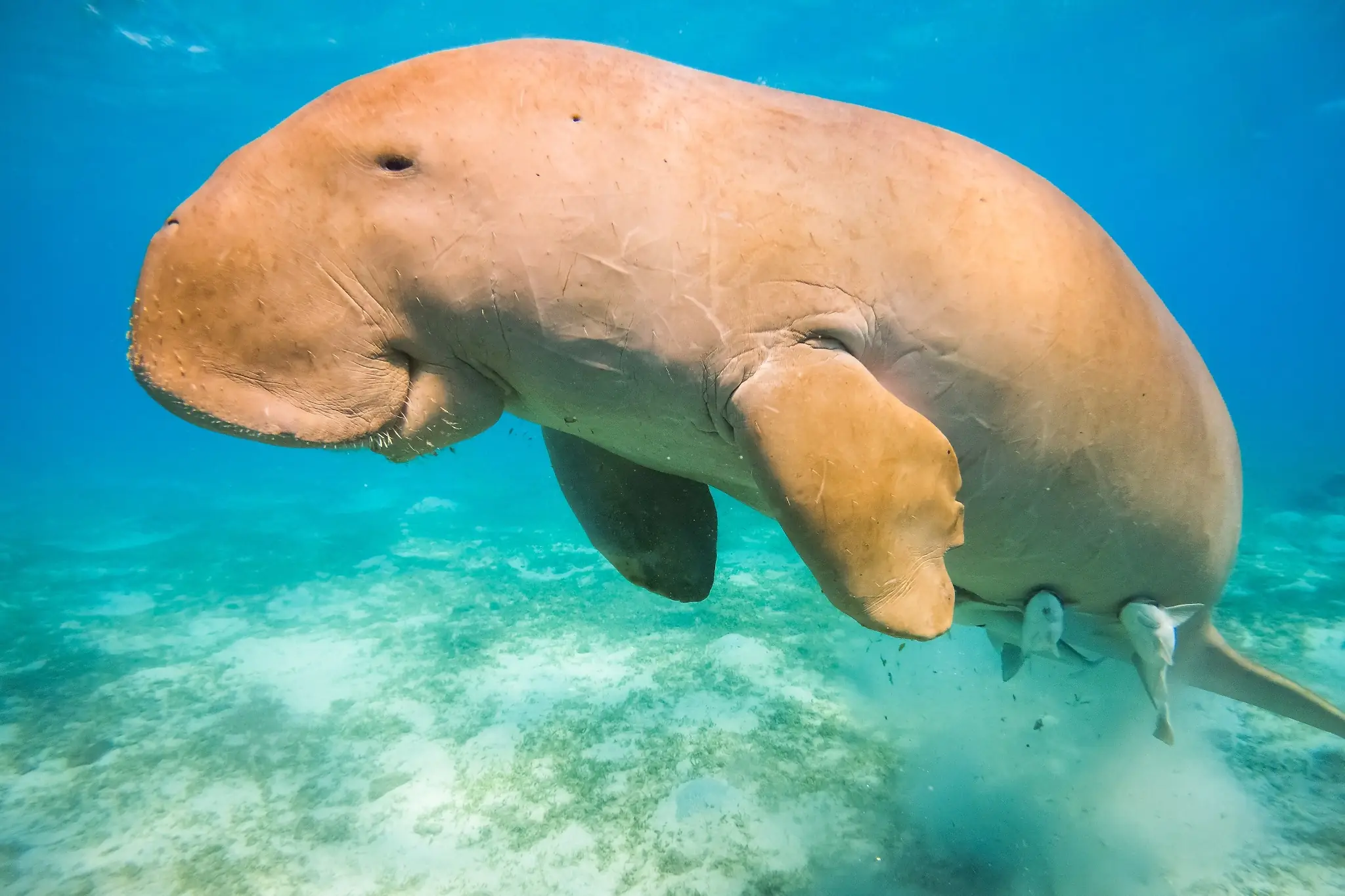
The dugong is no fish but a mammal—a rotund, slate-grey grazer reaching 3 meters (10 feet) and around 400 kilograms, breathing air and nursing its young in warm, shallow coastal seas.
Its nearest relative on land is the elephant, not the whale. Hints of that kinship remain: tough grey skin, sparse body bristles, and even the tusks that erupt in adult males. Photo: Vkilikov
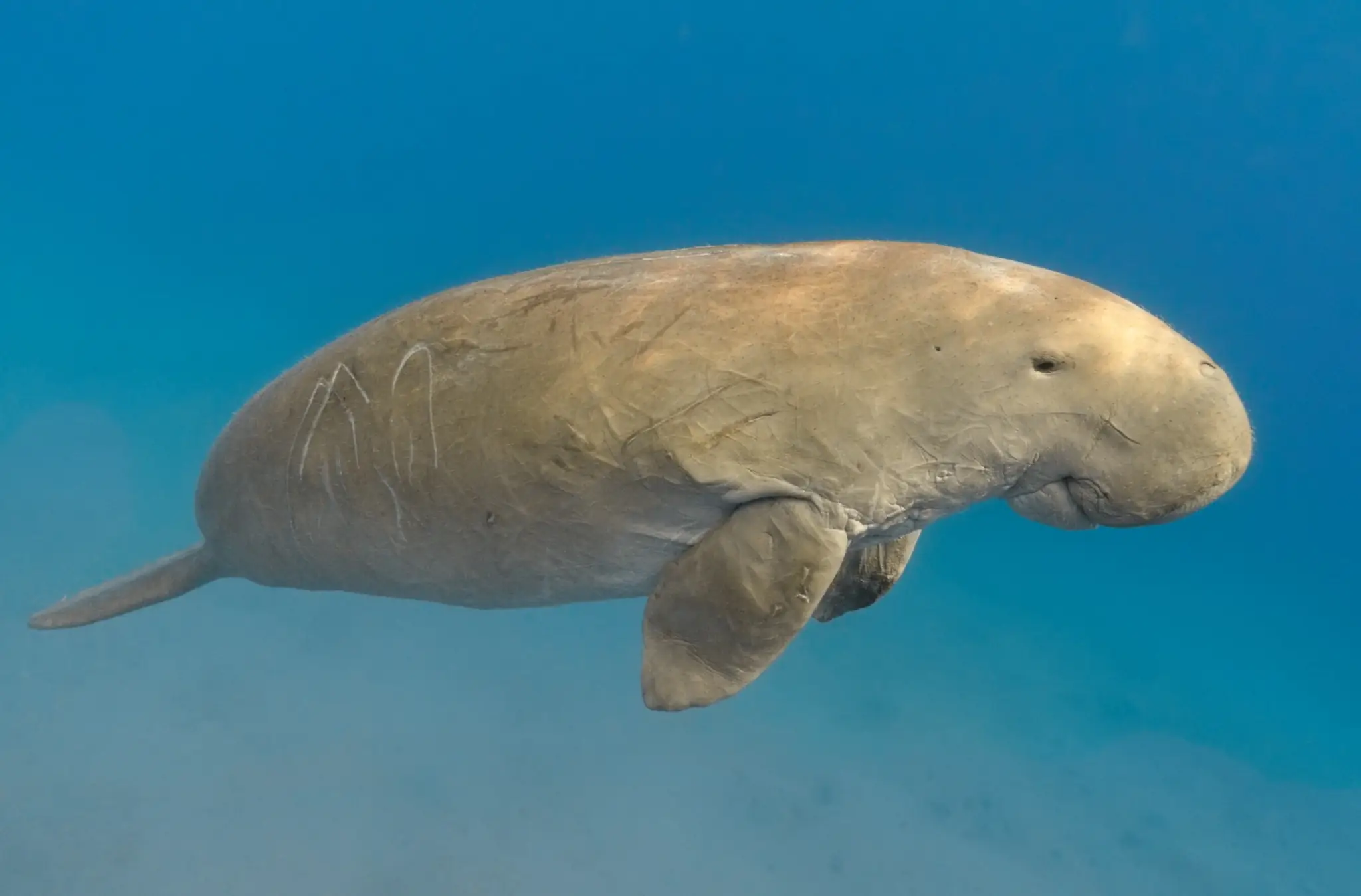
"A dugong grazing a seagrass meadow is a gardener that improves its own garden. By cropping the tough, slow seagrasses again and again, it clears the way for tender, fast-growing species—so the very act of eating keeps the pasture lush for the herd that follows. "
— Reflecting on studies of dugong cultivation grazing in seagrass meadows
A Cousin of Elephants
Gardener of the Seagrass Meadows
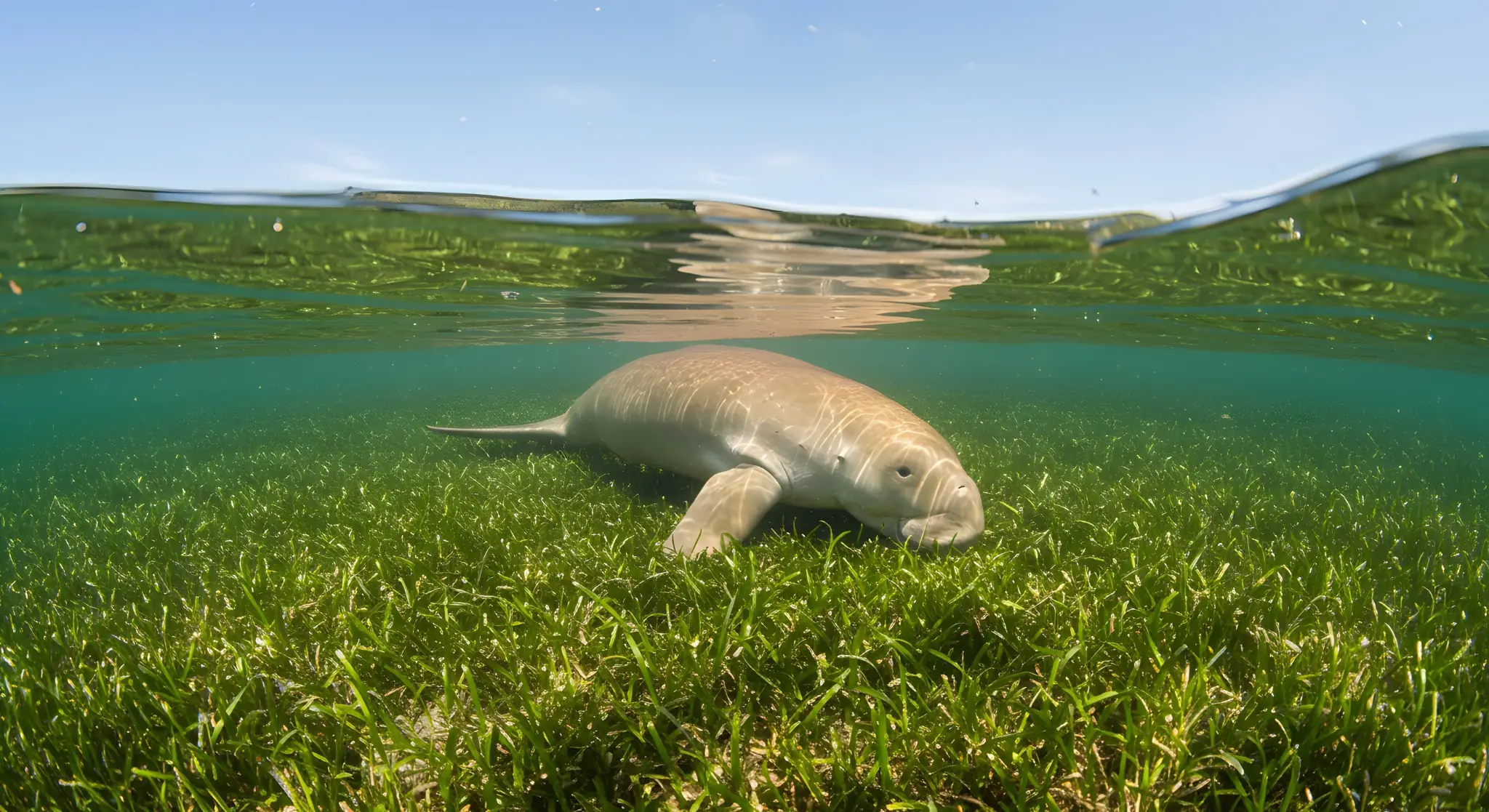
Dugongs are the ocean's only fully vegetarian mammal, grazing seagrass meadows all day long. A single adult can crop and swallow up to 40 kilograms of seagrass in a single day.
A downturned, bristly snout roots plants from the seabed, whole rhizomes and all. This heavy grazing leaves winding cleared trails and, over time, reshapes the meadow itself into faster-growing seagrass. Photo: Agami Photo Agency.
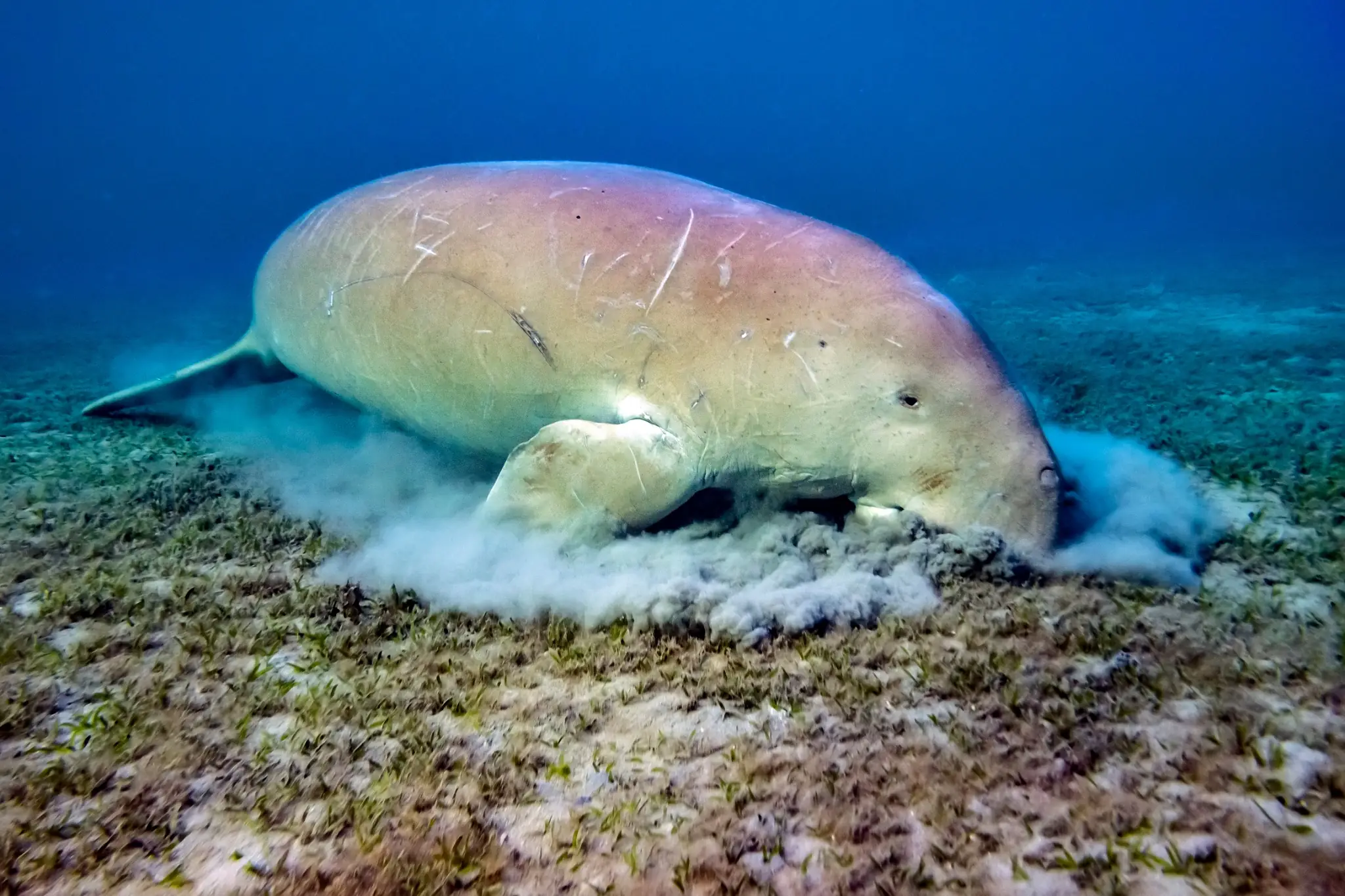
The Seagrass Grazer
The Animal Behind the Legend
For centuries, lonely sailors glimpsed dugongs surfacing to breathe, cradling calves against their bodies, and told of mermaids. The order Sirenia takes its name from the sirens of Greek myth.
The resemblance is loose at best—a rotund grey grazer is no sea-maiden. Yet the dugong's name comes from the Malay word duyung, meaning mermaid, a legend written into its very name. Photo: Janik Rybicka.
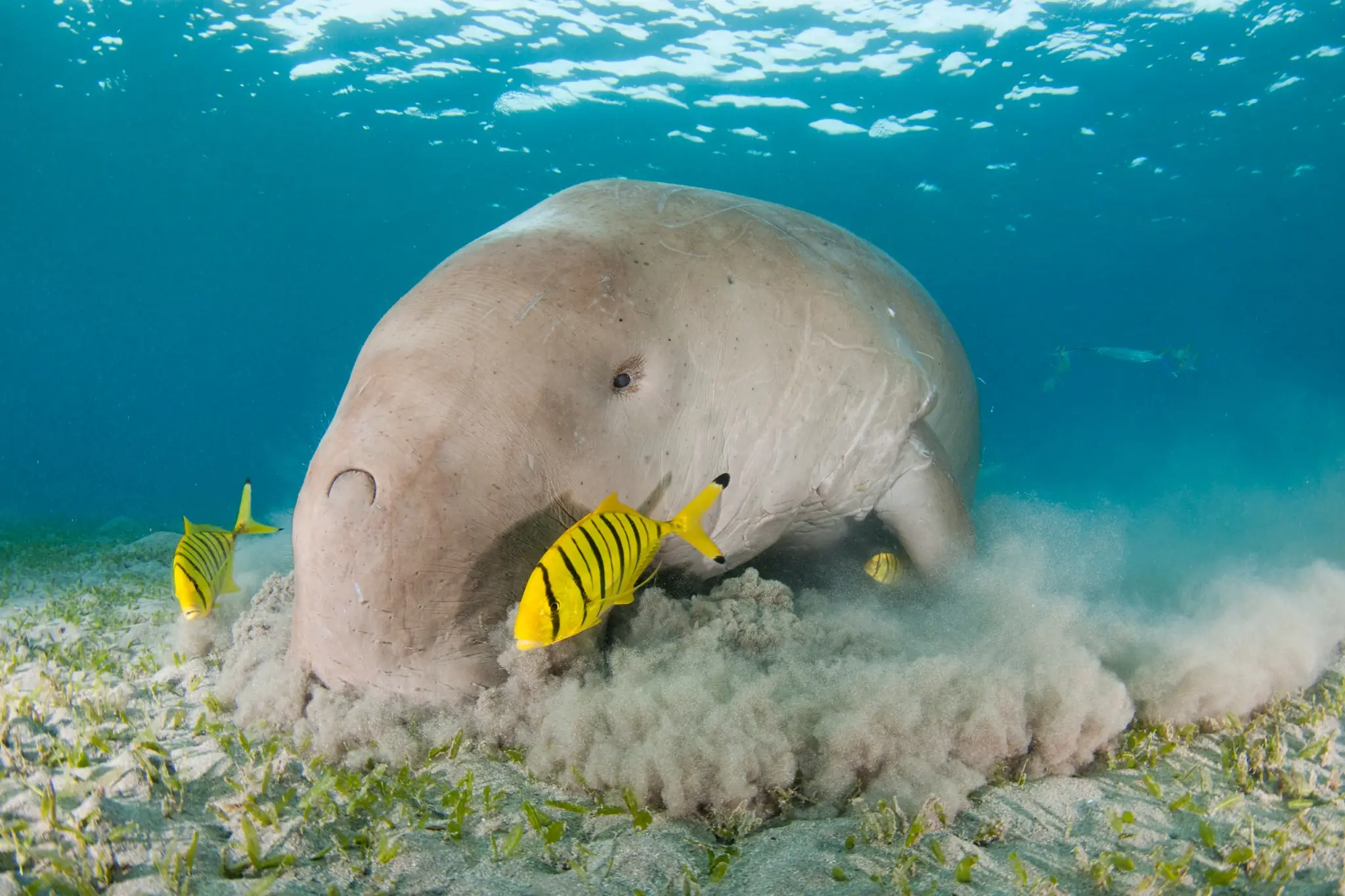
"Every mermaid legend may hold a dugong at its heart. A weary sailor, half-glimpsing a grey shape rise to breathe and hold a calf to its chest, saw a woman of the sea—and an animal that grazes grass and never sings became, in story, the siren who lured ships to shore. "
— Grounded in the maritime folklore that named the order Sirenia
Mermaids and Myths
Long Lives and Slow Births
Everything about a dugong is slow and gentle. It cruises seagrass beds at walking pace, surfacing every few minutes to breathe, and can live more than 70 years in undisturbed waters.
Reproduction is slower still. A female bears a single calf after a 13-month pregnancy and may wait years before the next, so lost populations recover painfully slowly, if at all. Photo: Vkilikov.
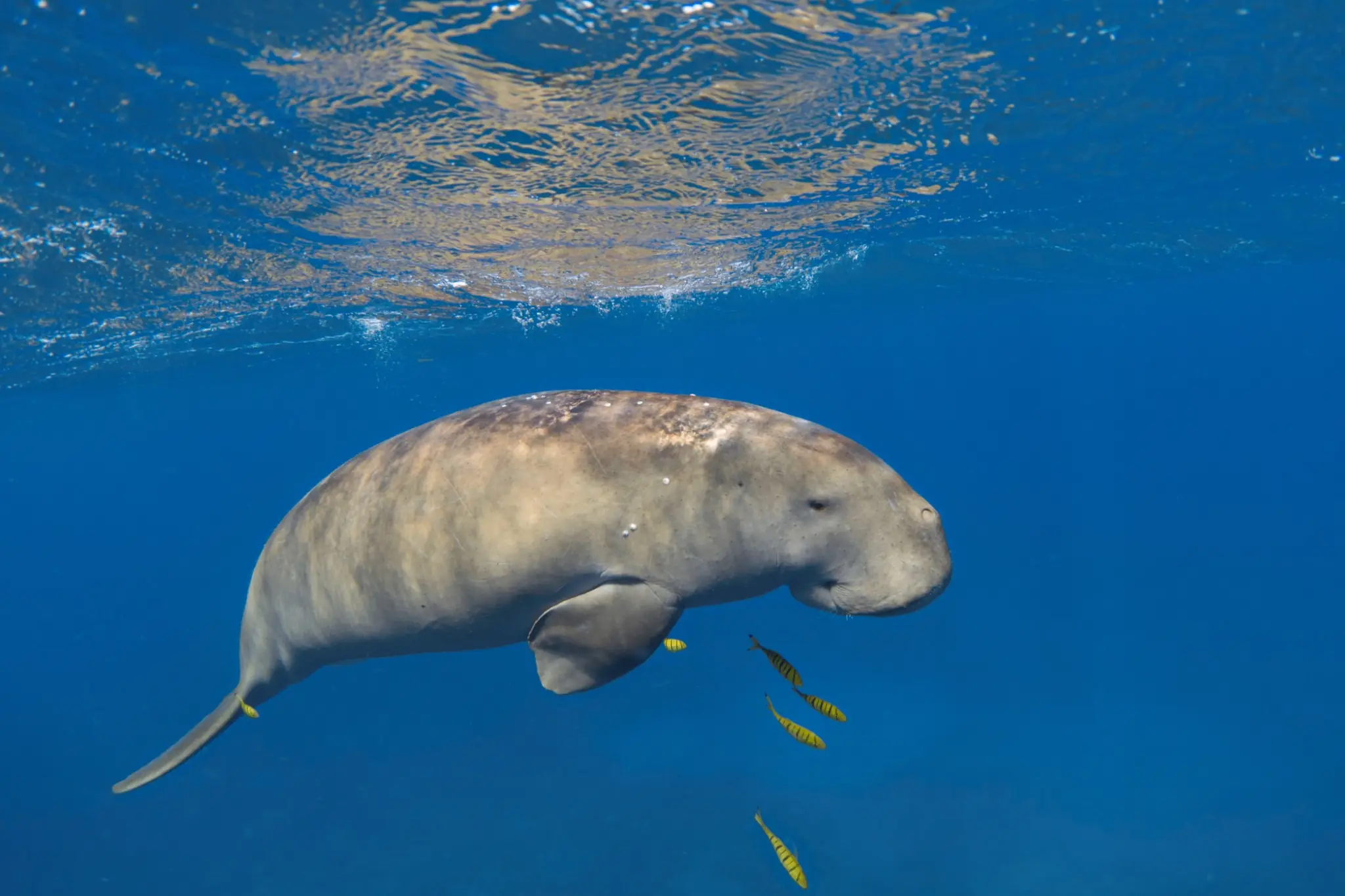
A Slow, Gentle Life
Tusks, Whiskers, and Bristles
Both males and females carry tusks, though usually only the male's erupt through the lip. Thick, stiff bristles across the muzzle let a dugong feel out seagrass in dark, cloudy water.
It navigates and forages largely by touch and taste, and chirps and squeaks to keep in contact with others, especially between a mother and her calf across the murky shallows. Photo: Andreas Wolochow.
Conservation & Legacy
Guarding the Last Sea Cows
Dugongs are listed as Vulnerable worldwide, and the picture is worse regionally. They are functionally extinct in China and gone from several countries, felled by gillnet bycatch, boat strikes, and vanishing seagrass.
Their fate is bound to seagrass, so protecting the meadows protects the dugongs. Marine reserves, gillnet limits, and community-led conservation across the Indo-Pacific now offer these gentle grazers their best hope. Photo: Jafarsodik.
Science & Discovery
The Zoological Society of London and Chinese Academy of Sciences concluded in 2022 that dugongs are functionally extinct in Chinese waters, with no confirmed sightings since 2008.
James Cook University fieldwork in Australia showed that repeated dugong grazing shifts seagrass meadows toward faster-growing pioneer species—a self-sustaining pattern that researchers named cultivation grazing.
The IUCN reassessed dugong subpopulations in 2022, listing East Africa as Critically Endangered with fewer than 250 mature animals left, and New Caledonia as Endangered with under 900.
In our delightful oceans, the dugong grazes seagrass as the only fully vegetarian marine mammal, an elephant cousin that inspired the mermaid legend. Its cultivation grazing keeps meadows healthy for the herd. Protecting seagrass now safeguards these vulnerable sea cows.