Angelfish
Reef Territory Specialist
Pomacanthidae family
Meet reef territory specialists—90 species of compressed disc-shaped fish reaching 40 centimeters (16 inches) with vibrant patterns signaling ownership across coral complexes. They maintain territories for up to 40 years exceeding coral colony lifespans. Monogamous pairs defend spawning sites through coordinated behaviors while grab-and-tearing feeding apparatus processes diverse diets from sponges to algae.
Meet the Territory SpecialistWhat Makes Them Special
Compressed Body Design
Laterally compressed bodies provide significant drag reduction enabling navigation through narrow coral passages
Vibrant Territory Markers
Bold stripes and intricate patterns signal ownership of prime reef real estate
Grab-and-Tearing Feeding
Specialized jaw apparatus tears attached food items from substrate at high velocity
Size-Based Dominance
Hierarchical structures with larger individuals controlling prime territories and spawning access
40-Year Territory Maintenance
Maintain territories longer than most coral colonies creating multigenerational reef stewardship
Monogamous Breeding Pairs
Pairs defend spawning sites across seasons with males guarding eggs for 4-6 days
First Encounter
Disc-Shaped Reef Guardians with Vibrant Patterns
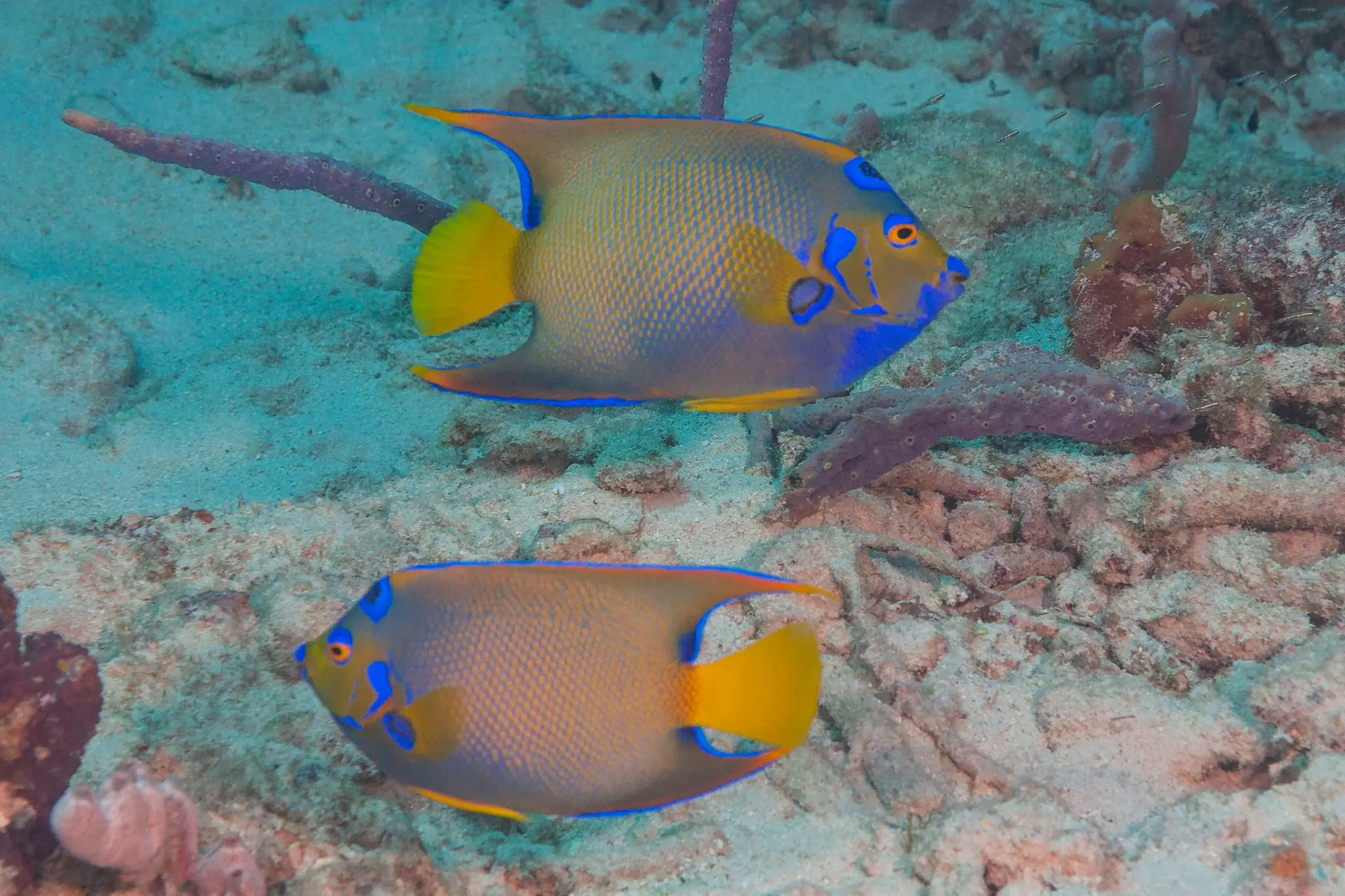
Angelfish display disc-shaped forms with laterally compressed bodies reaching 40 centimeters (16 inches) and weighing up to 1.5 kilograms. Vibrant stripes and intricate patterns create distinctive territorial markers across 90 species.
These dedicated territory holders patrol specific reef sections with remarkable spatial awareness. Bold coloration and confident behavior signal ownership of prime coral real estate defended against intruders. Photo: Jesus Cobaleda.
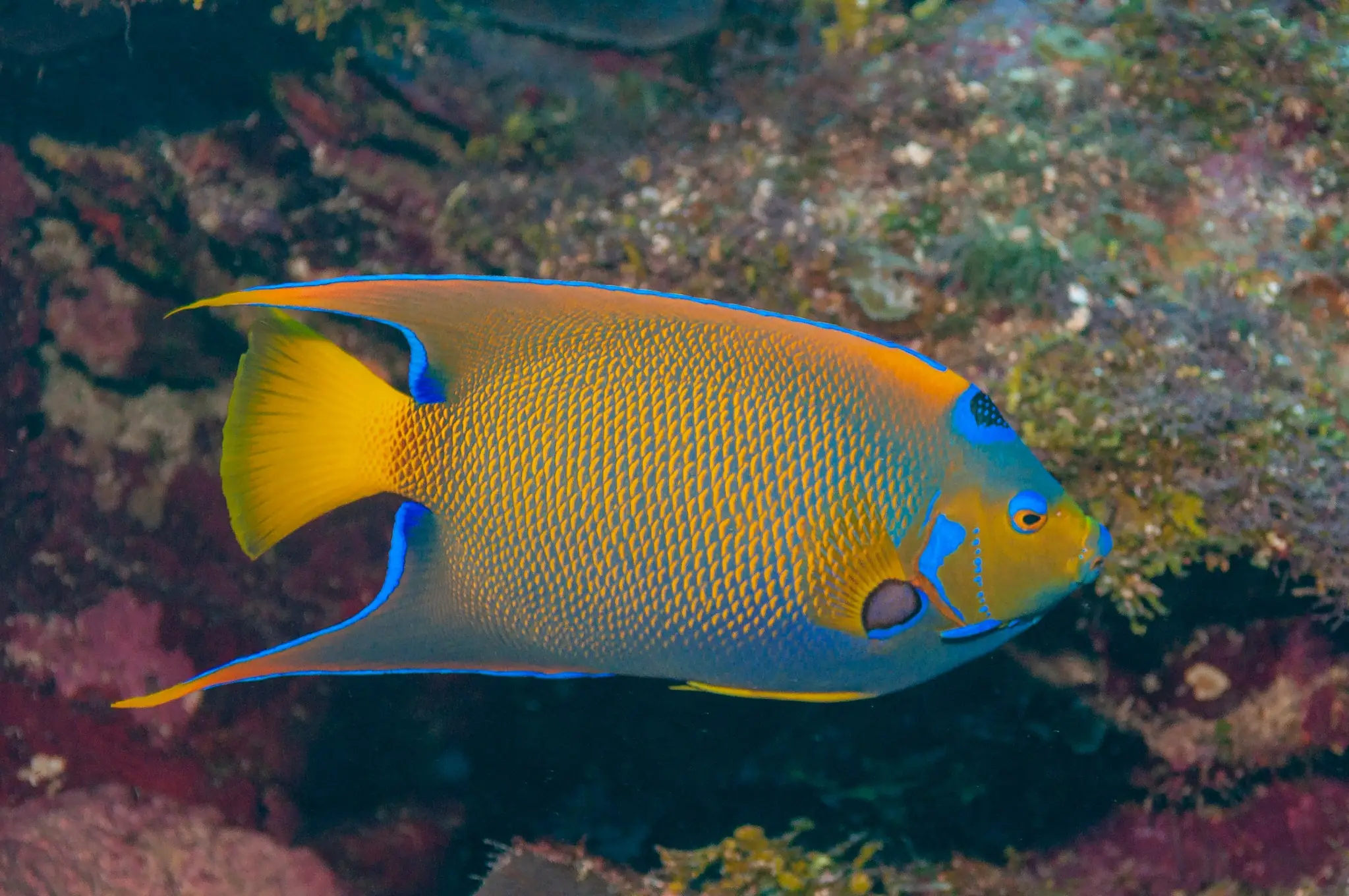
"Angelfish maintain territories for up to 40 years—longer than most coral colonies they defend, creating multigenerational stewardship of reef microhabitats."
— Dr. Redouan Bshary, Territorial Behavior Research
Compressed Body Design
Substantial Drag Reduction in Confined Spaces
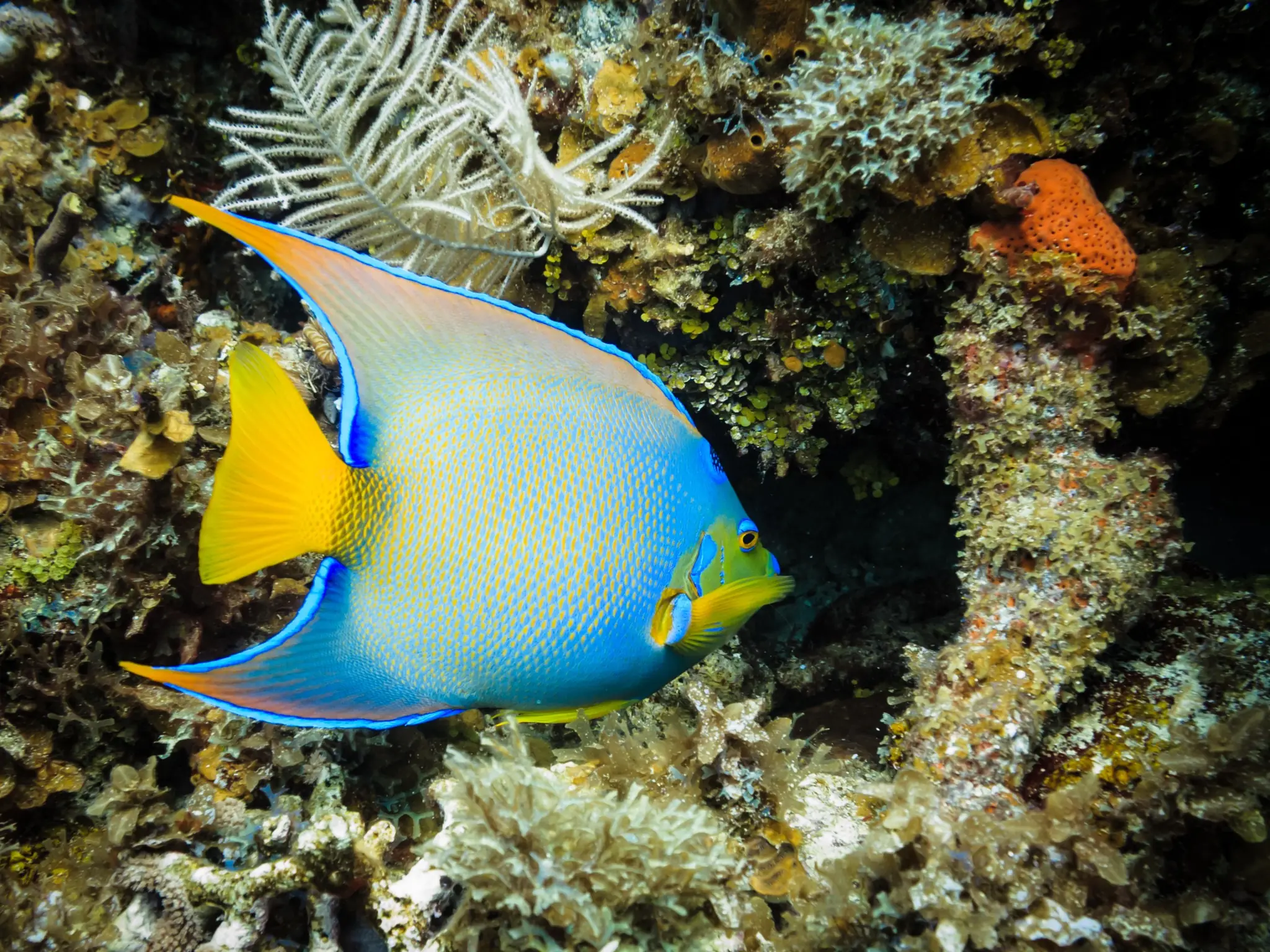
Laterally compressed bodies enable navigation through narrow coral passages while maintaining stability in turbulent reef currents. Extended dorsal and anal fins provide precise maneuvering control.
Hydrodynamic studies demonstrate body compression provides substantial drag reduction in confined spaces. Dorsal spine systems deter predator attacks while streamlined design provides exclusive access to protected feeding areas. Photo: Pete Niesen.
Grab-and-Tearing Feeding
Specialized Apparatus for Attached Food
Angelfish employ grab-and-tearing feeding using jaw protrusion, closure in protruded state, and high-velocity tearing. This specialized apparatus enables processing sponges, algae, invertebrates, and coral polyps.
Some species consume substantial sponge biomass within their territories, making them important ecological controllers in reef ecosystems. Photo: buddy jenssen.
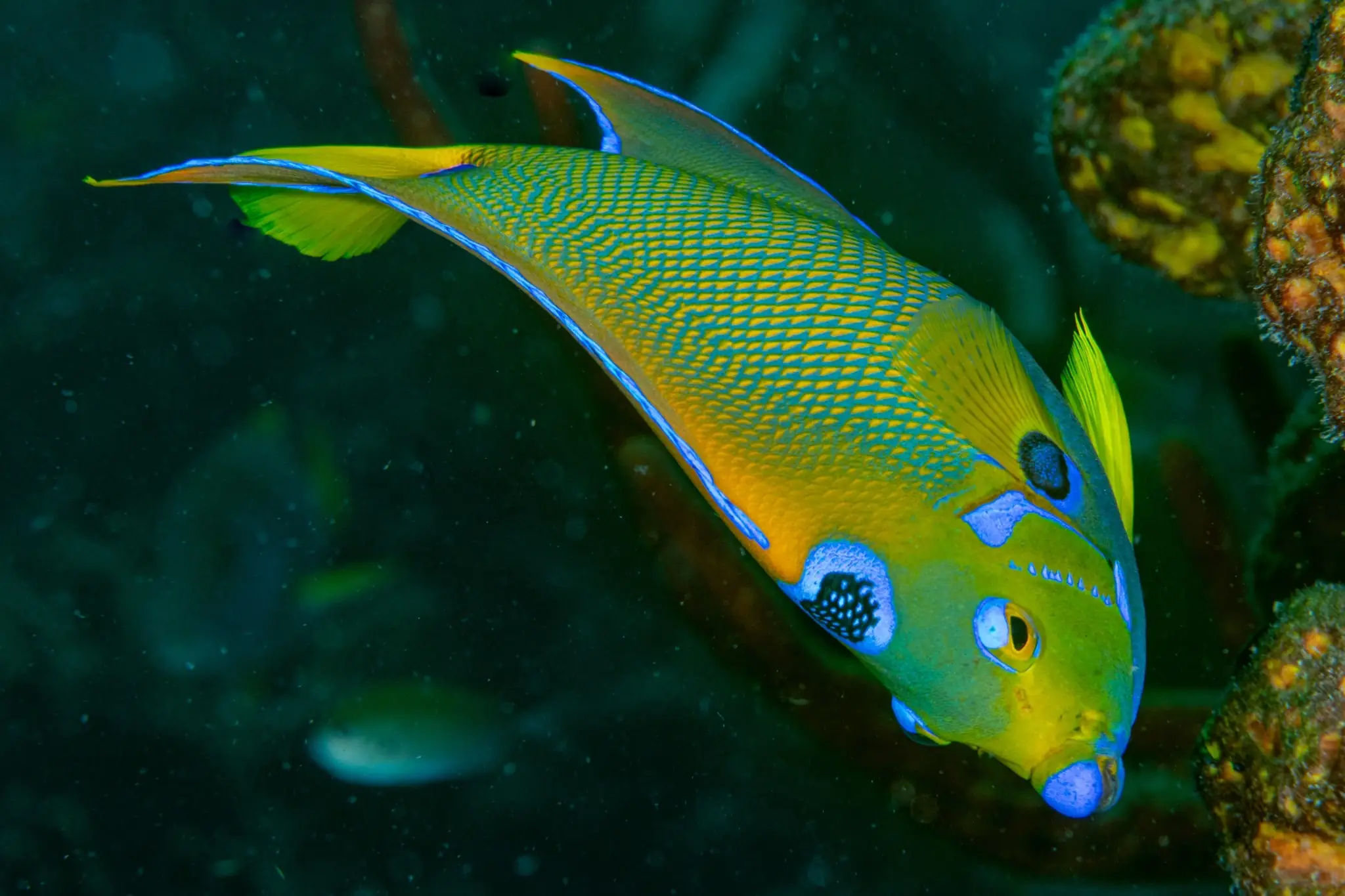
"Angelfish are the gardeners of the reef—their selective feeding on sponges and algae shapes the entire coral community structure."
— Dr. David Bellwood, Coral Reef Functional Ecology
Hierarchical Social Systems
Size-Based Dominance Determining Territory Quality
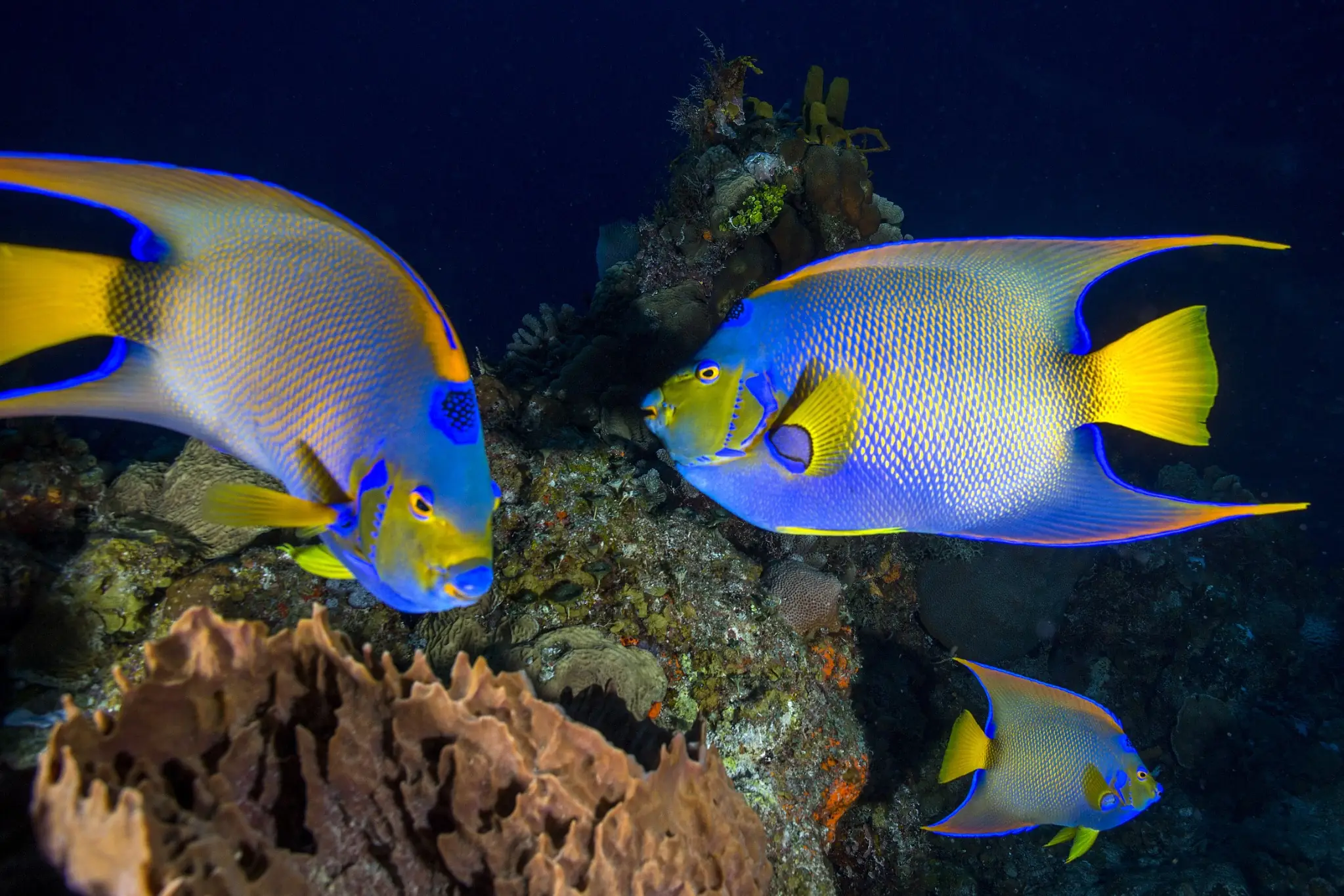
Size-based dominance hierarchies determine territory quality and spawning access. Larger individuals occupy prime reef locations while smaller fish maintain peripheral territories with reduced resources.
Aggressive displays include fin spreading, lateral presentations, and chase sequences establishing social boundaries. Territory inheritance occurs through gradual expansion rather than violent takeovers maintaining reef stability. Photo: J.S. Lamy.
Spawning Site Defense
Monogamous Pairs Creating Reproductive Landmarks
Monogamous pairs establish and defend specific spawning sites within territories across multiple breeding seasons. Males guard eggs for 4-6 days while maintaining aggressive patrols against intruders.
Site selection prioritizes current flow patterns and substrate quality for optimal egg development. Successful breeding sites receive continuous use across multiple generations creating reproductive landmarks within reef communities. Photo: Jesus Cobaleda.
Conservation Status
Protected Areas Showing Territory Recovery
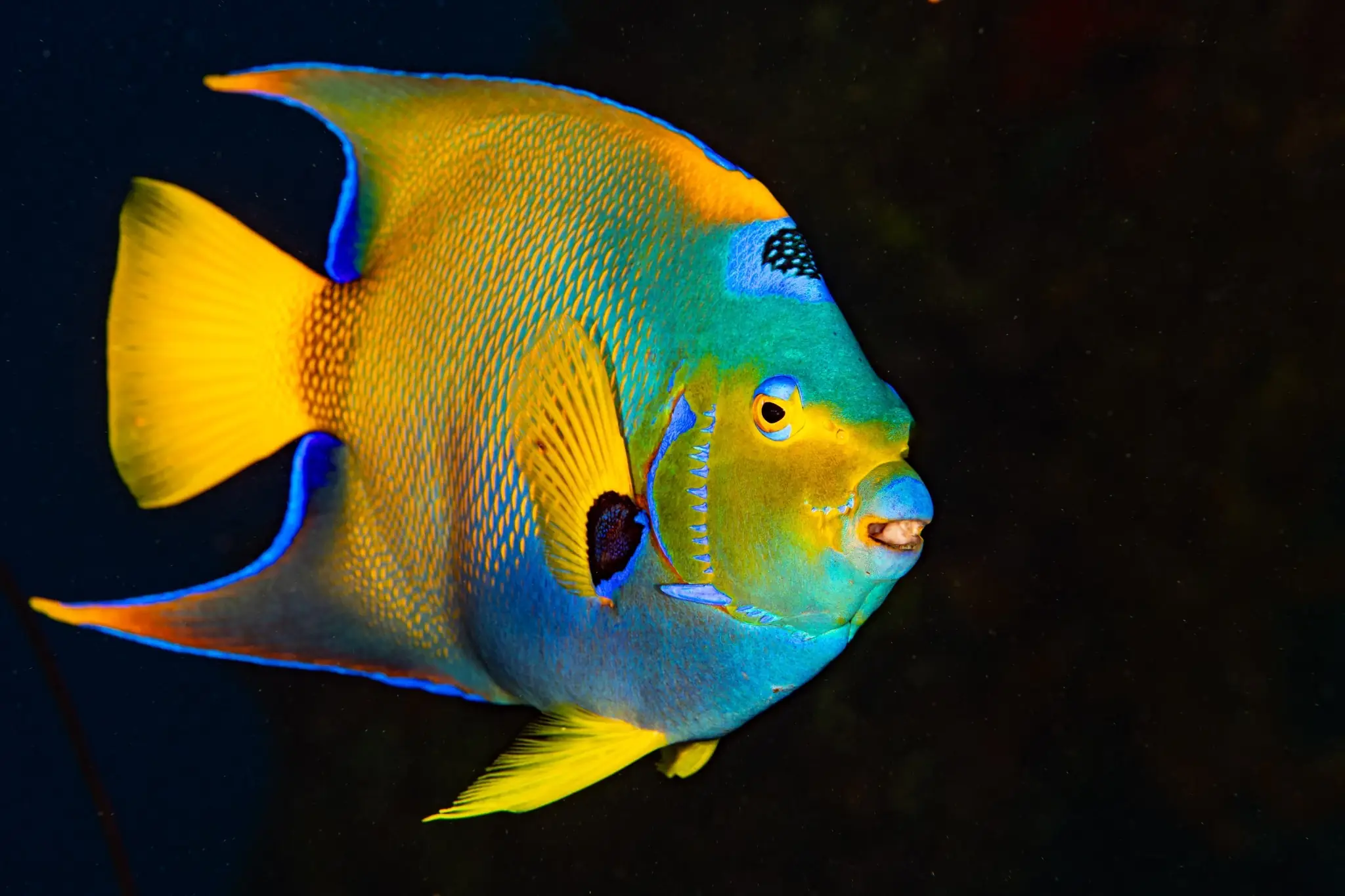
Most angelfish species maintain stable populations though several face pressure from aquarium trade collection. Long-term territory maintenance makes them vulnerable to habitat disruption and climate-related coral loss.
Marine protected areas show improvements in territory density following fishing restrictions. Aquarium trade regulations limit collection quotas while captive breeding programs reduce pressure on wild populations. Photo: buddy jenssen.
Science & Discovery
Genetic studies of pomacanthid species have revealed complex evolutionary relationships and hybridization patterns, helping scientists understand how these colorful reef specialists diversified across ocean basins.
Advances in marine aquaculture have improved captive breeding techniques for ornamental angelfish, reducing collection pressure on wild populations while supporting sustainable aquarium trade practices.
Research on angelfish feeding mechanics and territorial behavior provides insights into reef ecosystem dynamics and inspires biomimetic applications for navigation in complex environments.
In our delightful oceans, angelfish maintain territories for up to 40 years creating multigenerational stewardship exceeding coral colony lifespans. Their grab-and-tearing feeding apparatus enables consuming substantial sponge biomass within their territories, influencing reef ecology. Marine protected areas combined with captive breeding programs now reduce aquarium trade pressure protecting these reef guardians.