Tiger Shark
Ocean's Versatile Apex Predator
Galeocerdo cuvier
Meet the ocean's most versatile apex predator—tiger sharks reaching 5.5 meters (18 feet) and 900 kilograms with distinctive dark vertical stripes fading with age. Their dietary breadth surpasses all shark species consuming over 130 documented prey items from sea turtles to seabirds. Uniquely curved serrated teeth generate 40% more cutting force than straight-edged designs.
Meet the Versatile Apex PredatorWhat Makes Them Special
Massive Apex Size
Reach 5.5 meters and 900 kilograms making them among the largest predatory shark species globally
Enhanced Cutting Force
Serrated teeth generate 40% more cutting force than straight teeth enabling hard-shelled prey processing
Dietary Versatility
Consume over 130 documented prey species from fish to marine mammals across habitats
Large Litters
Produce 10-80 pups per litter after 14-16 month ovoviviparous gestation ensuring species survival
Trans-Ocean Migrations
Travel up to 7,500 kilometers between islands following seasonal prey abundance across basins
Conservation Progress
Hawaii programs reduced human-shark conflicts by 60% while maintaining stable populations through science
Massive Architecture
5.5-Meter Bodies with Distinctive Tiger Markings
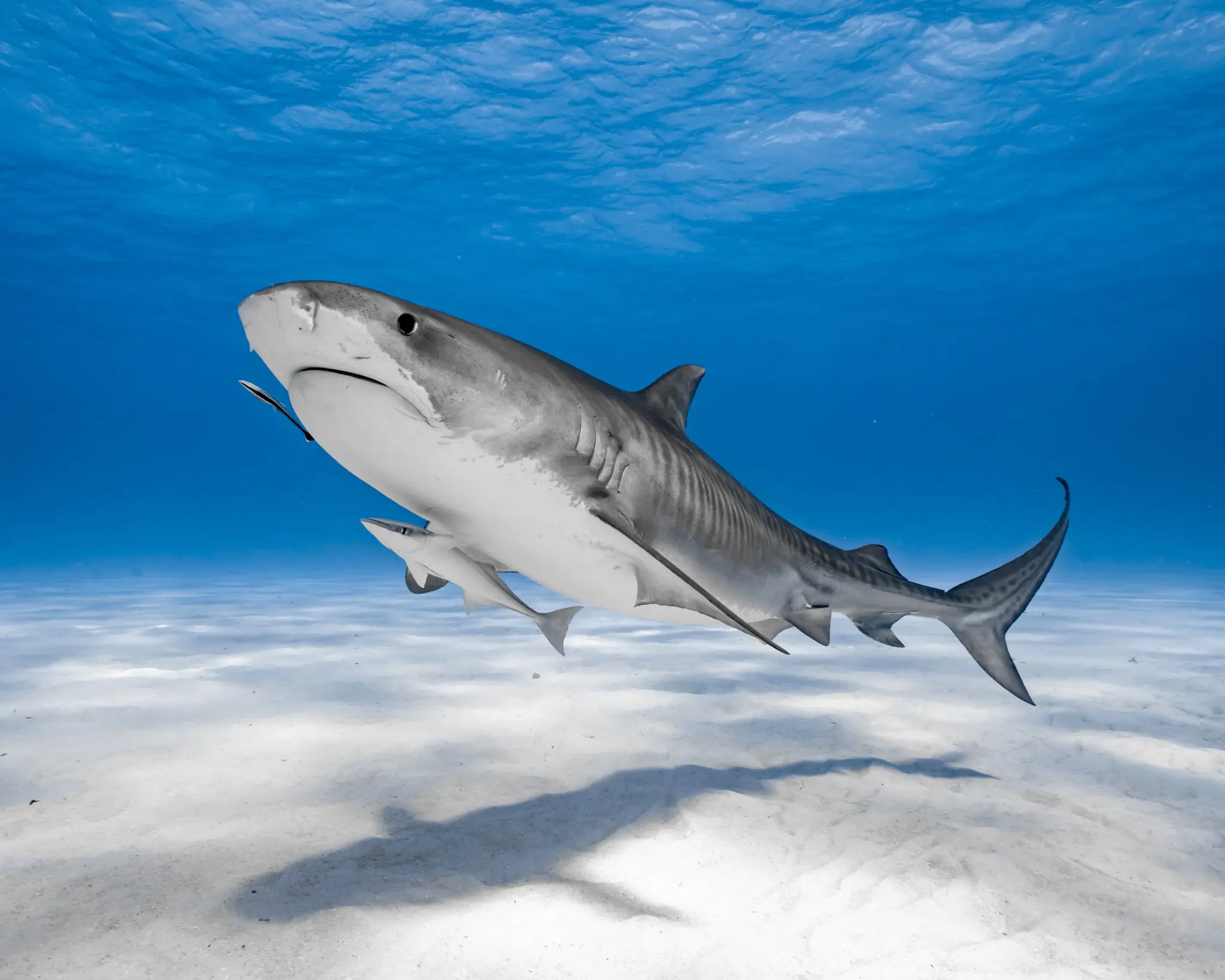
Tiger sharks achieve maximum lengths of 5.5 meters (18 feet) with robust bodies reaching 900 kilograms. Distinctive dark vertical stripes provide camouflage fading with age as hunting strategies shift to deeper environments.
Broad heads accommodate powerful jaw muscles while streamlined bodies enable sustained cruising across vast ocean distances. Their design optimizes both ambush and pursuit hunting across diverse marine habitats. Photo: Tomas Kotouc.
"Tiger sharks consume more diverse prey than any shark species—over 130 documented food items from turtles and dolphins to metal objects, making them oceanic ecosystem indicators."
— Dr. Carl Meyer, Hawaii Institute of Marine Biology
Serrated Cutting System
Multi-Purpose Teeth with 40% Enhanced Cutting Force
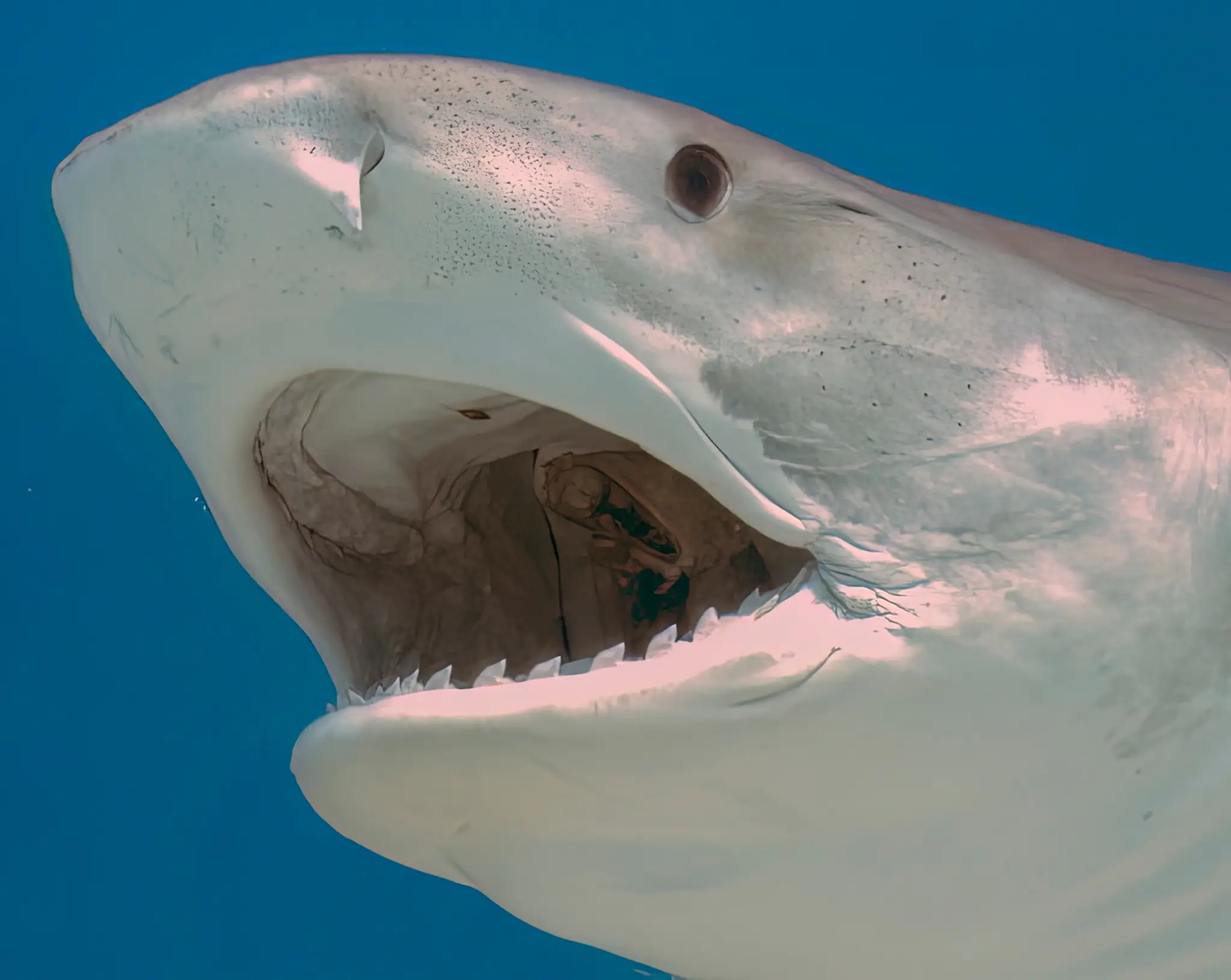
Uniquely curved teeth with serrated edges slice through diverse materials from fish flesh to turtle shells with remarkable efficiency. Biomechanical studies reveal tooth curvature generates 40% more cutting force than straight-edged designs.
Multiple tooth rows ensure continuous replacement throughout 40-year lifespans while specialized curvature enables processing of unusually large prey. This dental adaptation allows exploitation of prey unavailable to other sharks. Photo: Rob Atherton.
Dietary Versatility
130 Documented Prey Species with Opportunistic Strategies
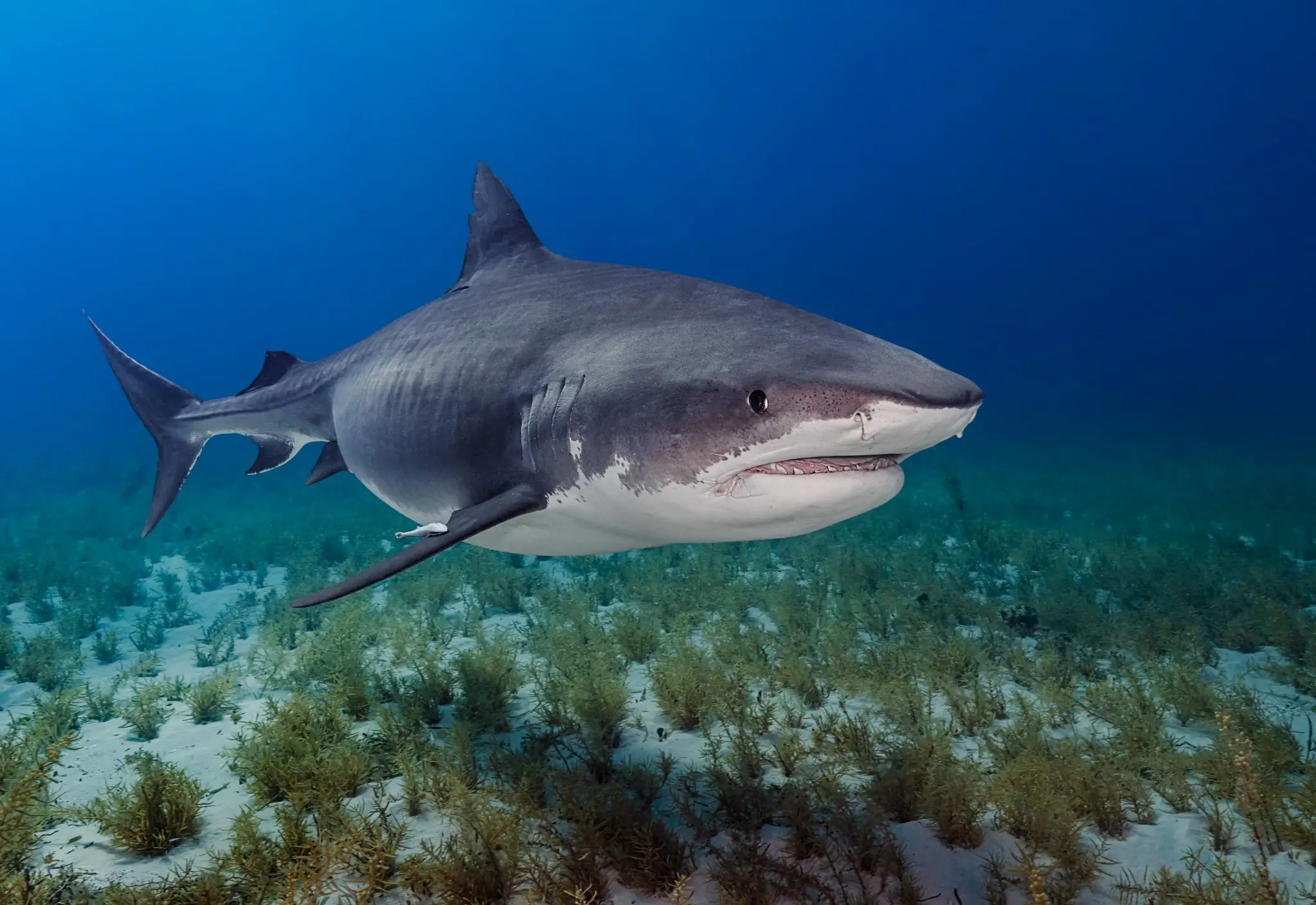
Tiger shark diets include over 130 documented prey species from fish and squid to seabirds and marine reptiles. Stomach content analysis reveals consumption of non-organic materials including plastic debris and metal objects.
Seasonal feeding patterns follow prey abundance at turtle nesting beaches seabird colonies and whale migration routes. This adaptability enables survival across varied oceanic conditions while making them valuable ecosystem health indicators. Photo: lego 19861111.

"Satellite tracking reveals tiger sharks maintain the largest home ranges of any shark species—individuals traveling 7,500 kilometers between islands following seasonal prey abundance patterns."
— Dr. Yannis Papastamatiou, Behavioral Ecology Researcher
Reproductive Efficiency
Large Litter Ovoviviparous Development
Female tiger sharks produce 10-80 pups per litter through ovoviviparous development with embryos developing within egg cases for 14-16 months. This extended gestation ensures pups reach 70-centimeter birth lengths.
Large litter sizes compensate for high juvenile mortality rates in competitive marine environments. Born as fully functional predators pups possess adult hunting capabilities immediately upon birth maximizing survival potential. Photo: David Keep.
Global Distribution
Tropical Waters with Trans-Pacific Movements
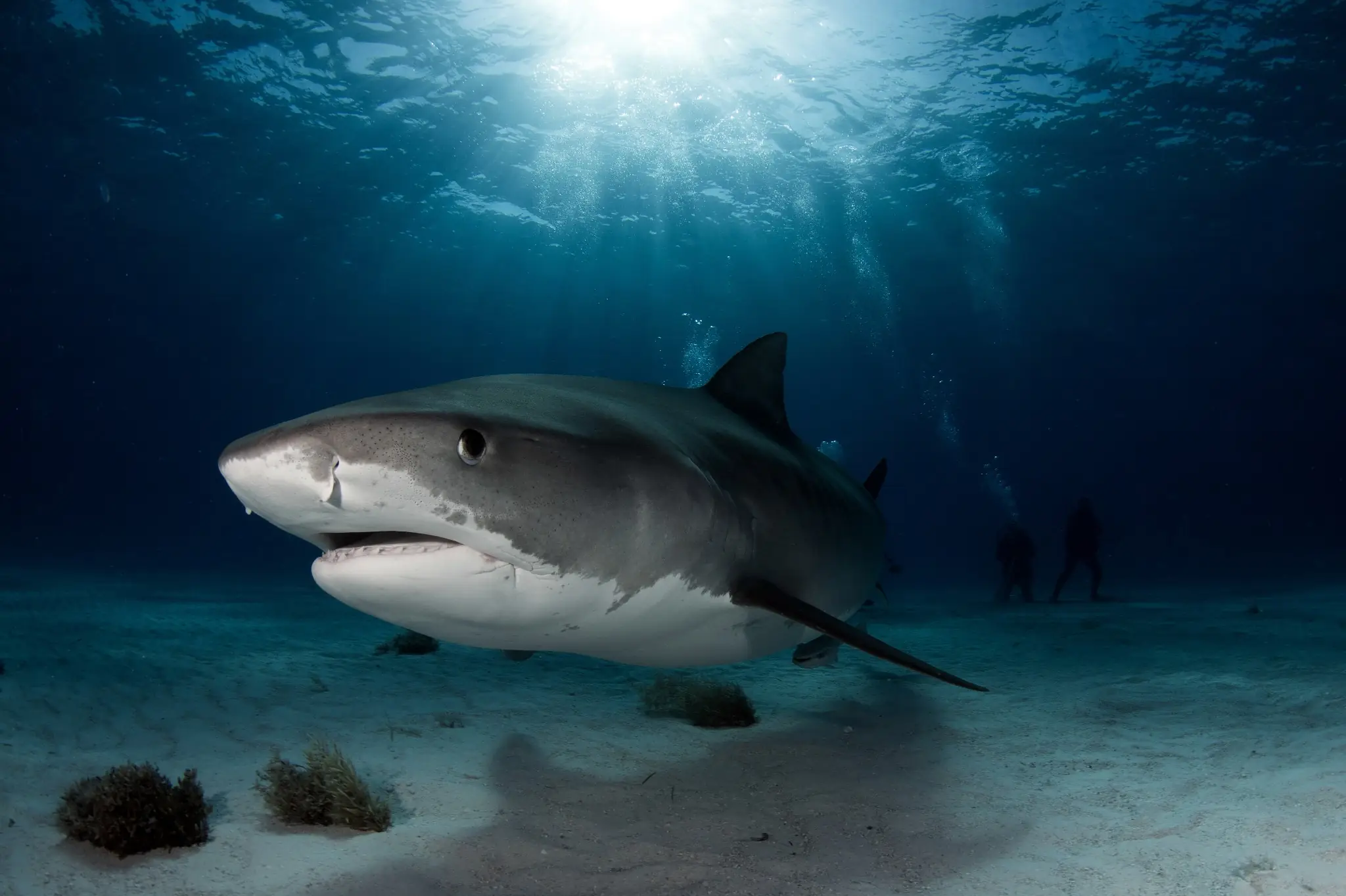
Tiger sharks inhabit tropical and subtropical waters worldwide from surface waters to 900-meter depths. Satellite tracking reveals individual movements spanning entire ocean basins following thermal corridors between 16-31°C.
Recent genetic studies document population connectivity across Pacific islands while temperature preferences guide seasonal distribution patterns. Their global presence makes them critical indicators of ocean-wide ecosystem health. Photo: Tomas Kotouc.
Conservation Management
Near Threatened Status with Research-Based Protection
Tiger sharks face Near Threatened conservation status with declining populations in several regions due to fishing pressure and habitat degradation. Annual global catch estimates exceed 100,000 individuals across commercial and recreational fisheries.
Hawaii's research-based management program reduced human-shark conflicts by 60% while maintaining stable populations through science-informed policies. Marine protected areas and fishing quotas help stabilize numbers in critical habitats. Photo: Jsegalexplore.

Science & Discovery
University of Miami 2023 genomic analysis revealed tiger shark population connectivity across entire Pacific Ocean demonstrating gene flow spanning 7,500 kilometers inspiring marine connectivity conservation planning.
NOAA 2024 satellite telemetry documented individual tiger sharks traveling entire ocean basins tracking thermal corridors advancing understanding of apex predator movement ecology and climate responses.
Hawaii Institute of Marine Biology demonstrated stomach content analysis reveals plastic pollution bioaccumulation patterns making tiger sharks living sensors for monitoring ocean contamination levels globally.
In our delightful oceans, tiger sharks regulate marine ecosystems consuming 130 prey species making them critical health indicators. Serrated teeth generate 40% more cutting force enabling diverse prey exploitation. Hawaii programs reduced human-shark conflicts by 60% demonstrating successful science-based coexistence.