Sailfish
Ocean's Speed Champion
Istiophorus platypterus
Meet ocean's speed champions—streamlined predators reaching 3 meters (10 feet) and 90 kilograms capable of explosive 110 km/h (68 mph) bursts making them Earth's fastest fish. Their distinctive 2-meter sail serves as cooling radiator, hunting tool, and communication device. They hunt cooperatively in packs slashing prey with elongated bills during coordinated attacks.
Witness Their SpeedWhat Makes Them Special
Fastest Fish
Reaching 110 km/h in short bursts making sailfish undisputed speed champions of marine environments
Magnificent Sail
Dorsal fin spanning 2 meters tall when extended serving thermoregulation, intimidation, and hunting coordination
Precision Hunters
Using elongated bills exceeding 30 centimeters to slash through baitfish schools with rapid strikes
Pack Coordination
Hunting cooperatively in groups up to 70 individuals herding prey using coordinated attacks
Muscle Heating
Generating internal heat raising muscle temperature 10°C above ambient water enabling explosive power
Conservation Balance
Population stability depends on responsible catch-and-release practices and commercial bycatch reduction
First Encounter
Masters of Explosive Speed
A dark blue torpedo materializes from open ocean—3 meters (10 feet) of hydrodynamic perfection weighing 90 kilograms. The sailfish's streamlined body tapers to a sharp bill exceeding 30 centimeters with brilliant cobalt-blue dorsally fading to silver-white ventrally.
When extended, the dorsal fin towers 2 meters tall, striped blue and black with spotted patterns unique to each individual. These predators inhabit tropical and subtropical waters worldwide, patrolling where baitfish congregate with bodies built for velocity. Photo: Ftlaud.
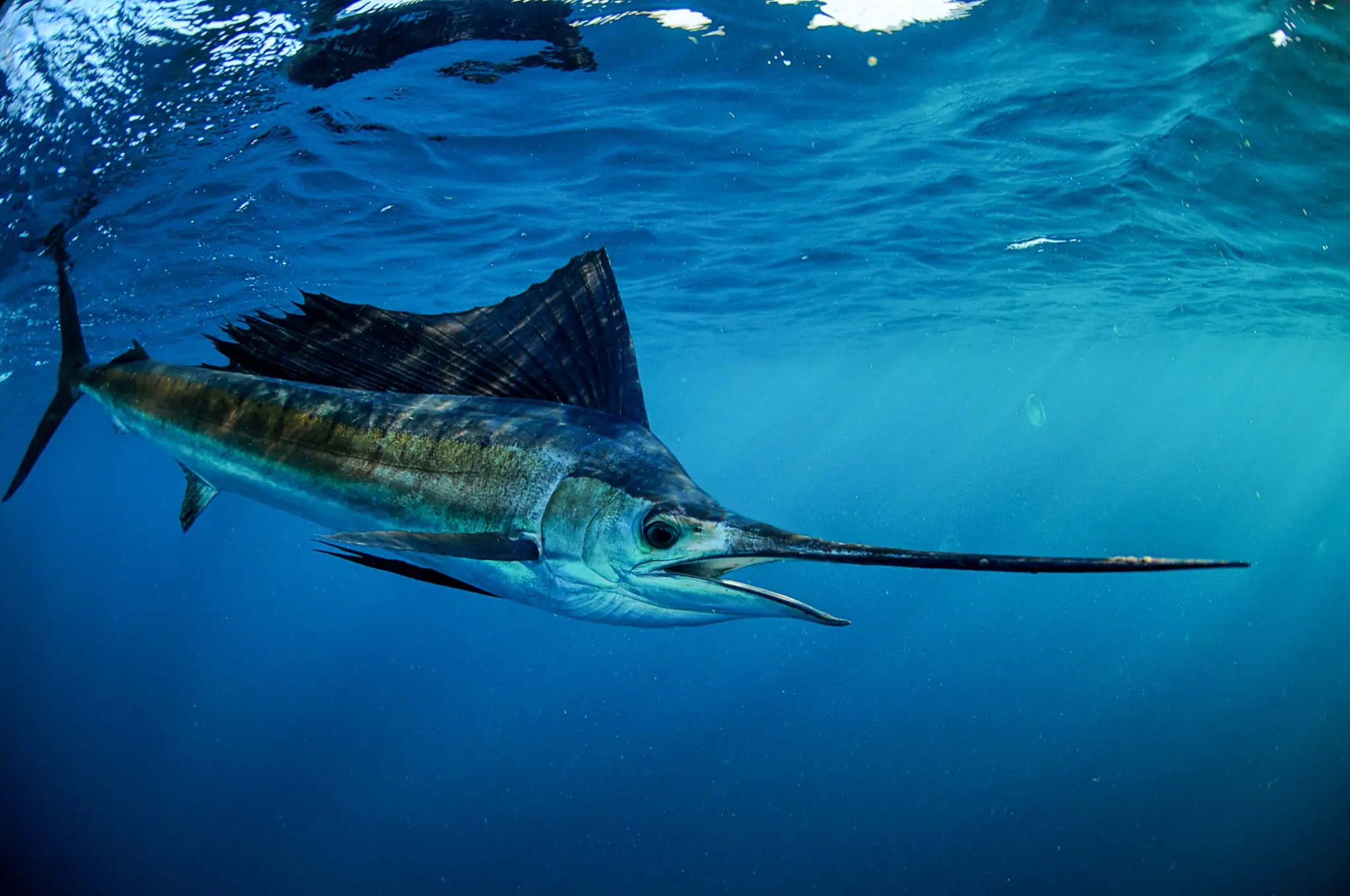
"Witnessing a sailfish at full speed stops you cold. One moment, the water seems empty. The next, a blue streak explodes past faster than your eyes can track—110 km/h of living hydrodynamic perfection demonstrating what 50 million years of predator evolution achieves."
— Dr. Mahmood Shivji, Marine Biologist & Billfish Researcher
Speed Mechanics
Hydrodynamic Engineering
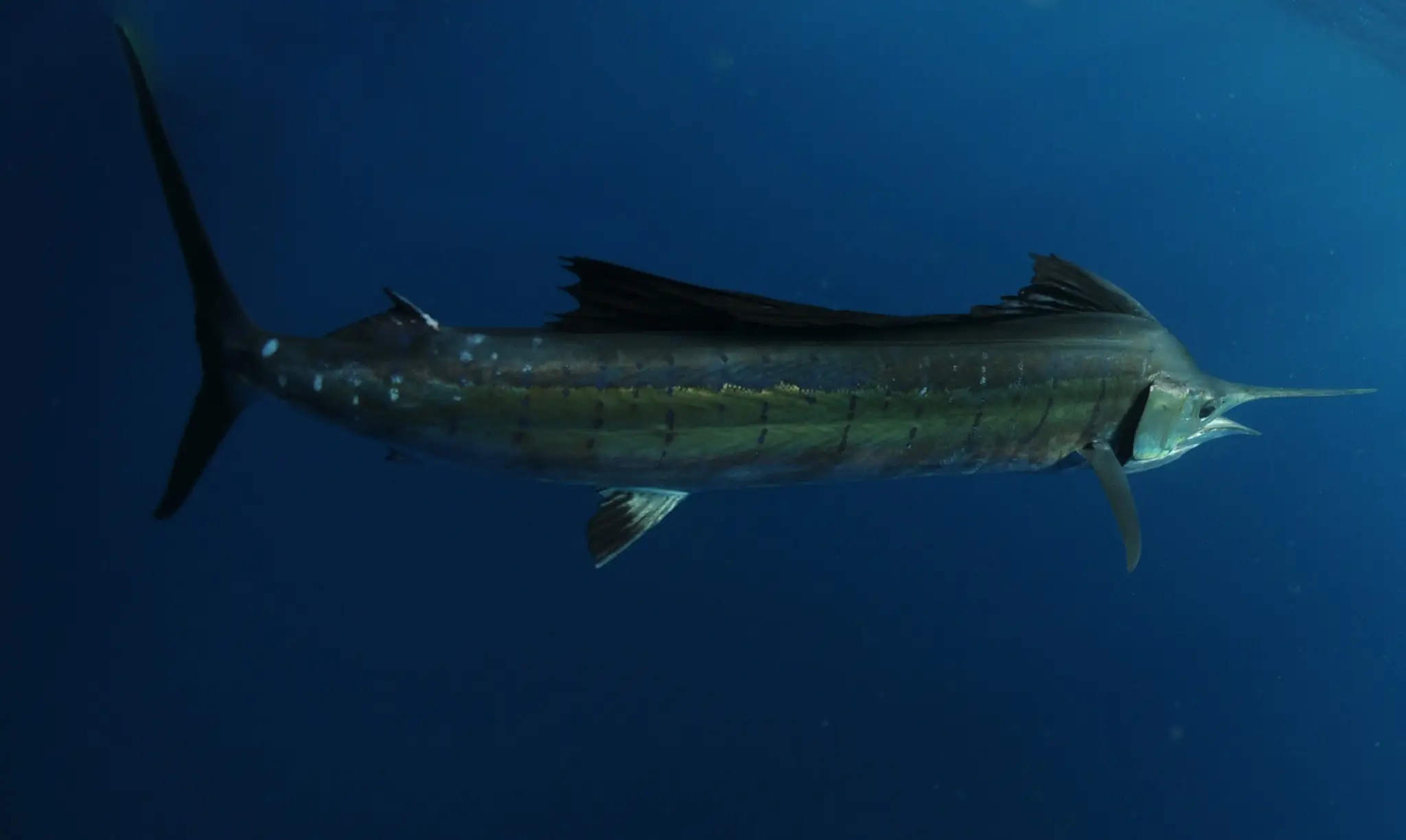
Sailfish achieve 110 km/h through streamlined bodies minimizing drag with every surface optimized for laminar flow. The crescent-shaped tail generates tremendous thrust while retractable fins fold into grooves eliminating turbulence during acceleration.
Specialized muscle tissue generates heat raising internal temperature 10°C above ambient water providing explosive power output. Recent studies reveal sailfish reach top velocity in under 2 seconds—acceleration rivaling sports cars. Photo: FtLaud.
Cooperative Hunting
Pack Strategies
Sailfish hunt cooperatively in groups reaching 70 individuals, coordinating attacks with remarkable precision. They work together herding prey into tight formations, taking turns slashing through concentrated fish with extended bills.
Studies show individual sailfish feed more successfully in groups than alone, gaining 4-5 times more prey through cooperation. This strategy transforms isolated hunters into coordinated predatory units maximizing capture efficiency. Photo: Wildestanimal.
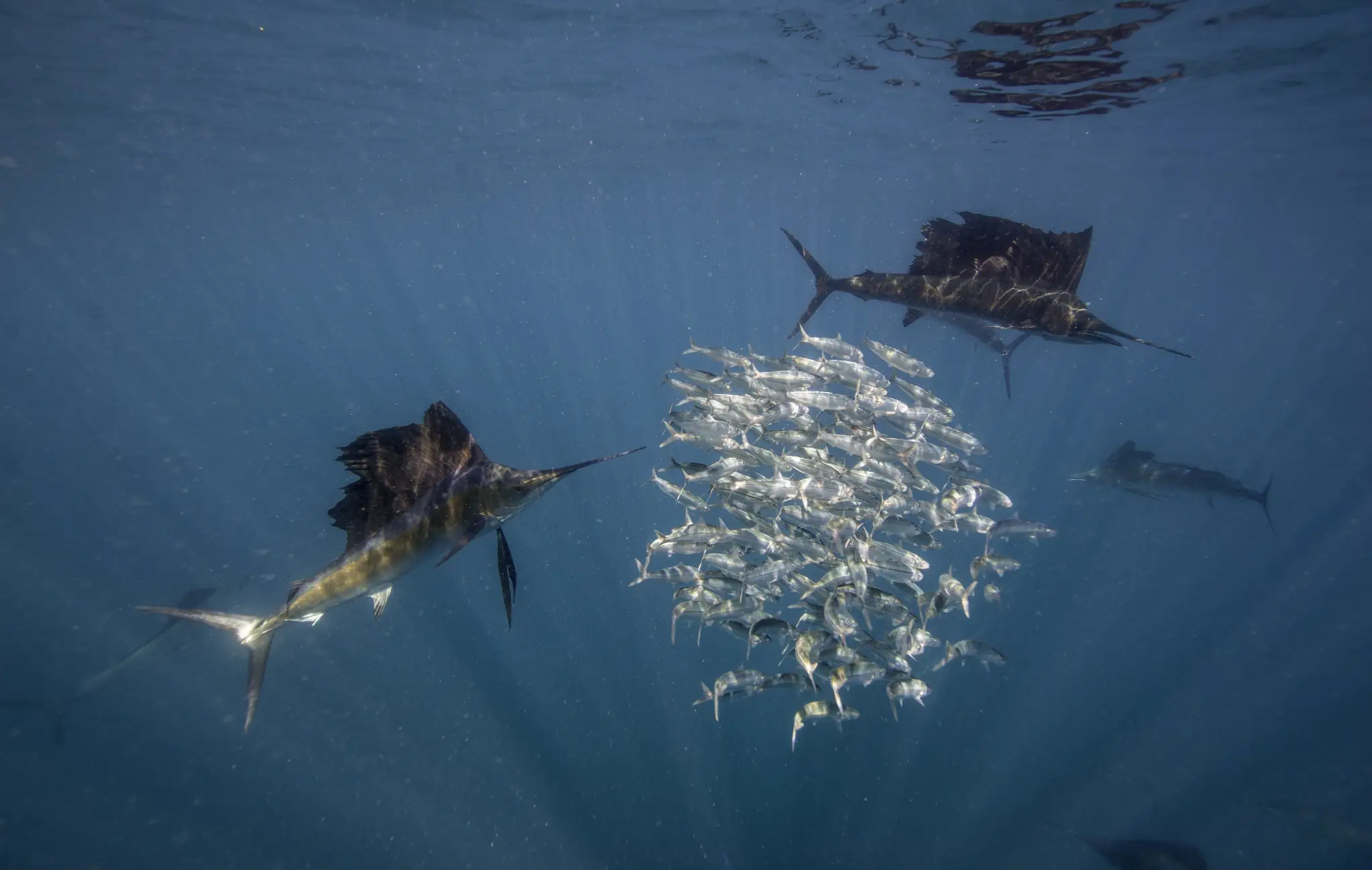
"Watching sailfish coordinate a hunt reveals intelligence beyond instinct. They take turns, signal with sail displays, and adjust tactics based on prey behavior—problem-solving in real-time at speeds where mistakes mean starvation."
— Dr. Ryan Logan, Pelagic Predator Ecologist
Sail Function
Multi-Purpose Adaptation
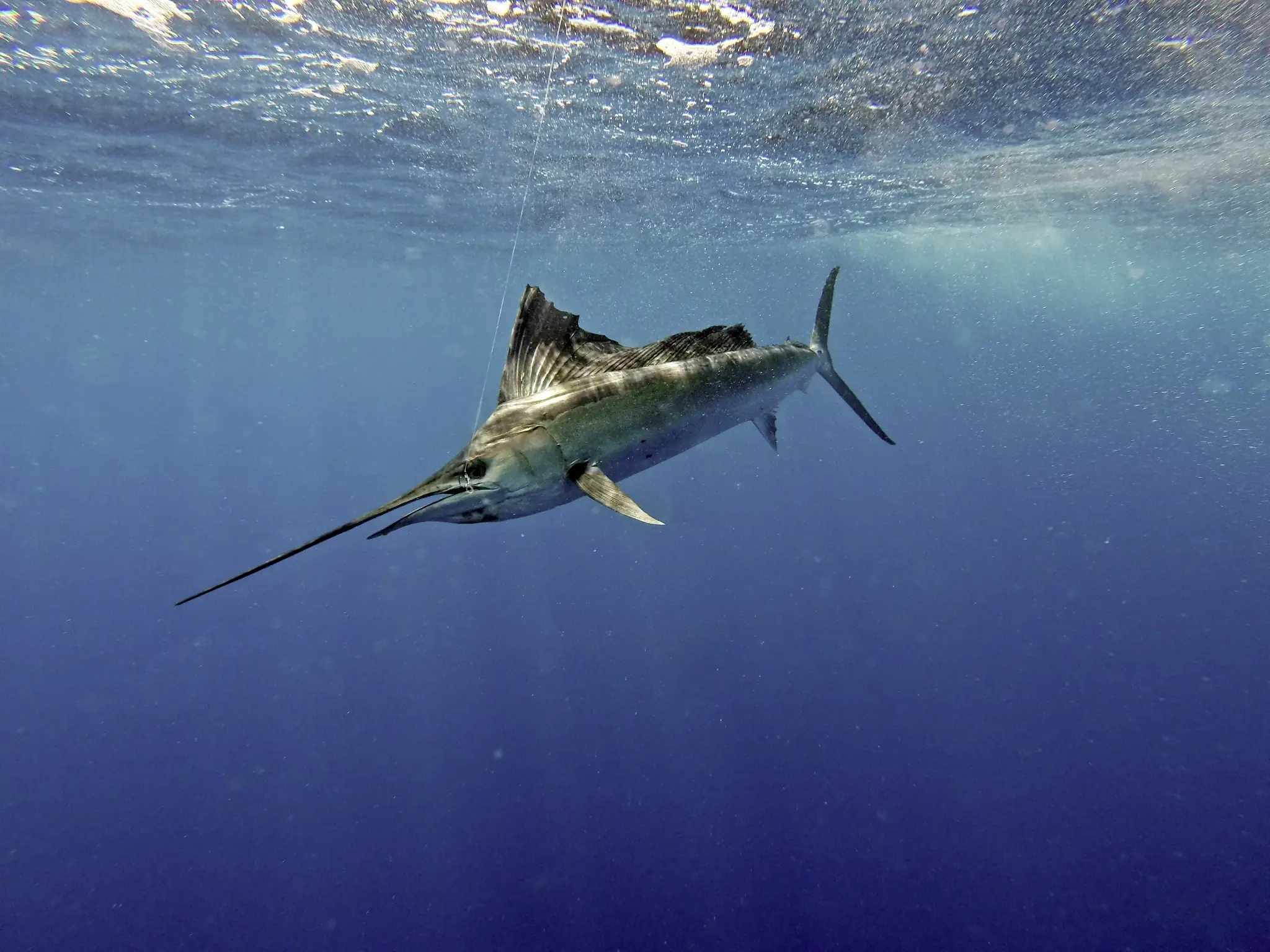
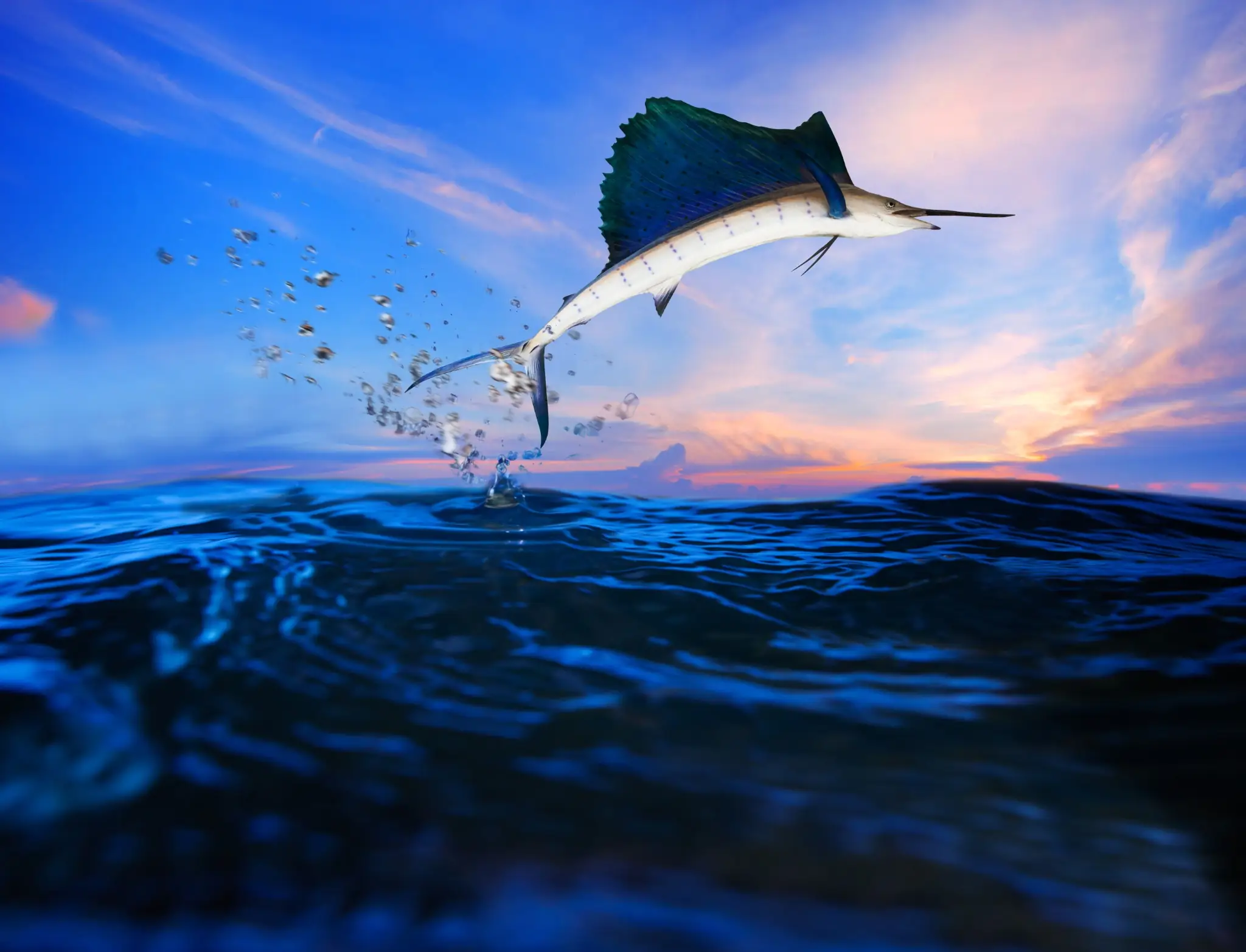
The sailfish's namesake dorsal fin serves multiple critical functions beyond visual impact. Extended during hunting, it acts as a cooling radiator—blood vessels within dissipate excess heat generated by superheated muscles.
The sail also functions as a herding tool, creating visual barriers that direct prey into tighter formations. Sailfish raise and lower their fins in various contexts, with color changes accompanying these displays. Photo: kelldallfall.
Sensory Precision
Detection Systems
Sailfish possess exceptional visual acuity optimized for high-speed predation. Large eyes track prey movements with precision, while specialized proteins in retinal cells enhance contrast detection in varying light conditions.
The lateral line system detects water displacement from swimming prey and nearby sailfish. Electroreceptors in their bills detect bioelectric fields generated by prey muscle contractions, enabling split-second decisions at maximum velocity. Photo: Matt Bogdan.
Conservation & Legacy
Balancing Sport and Sustainability
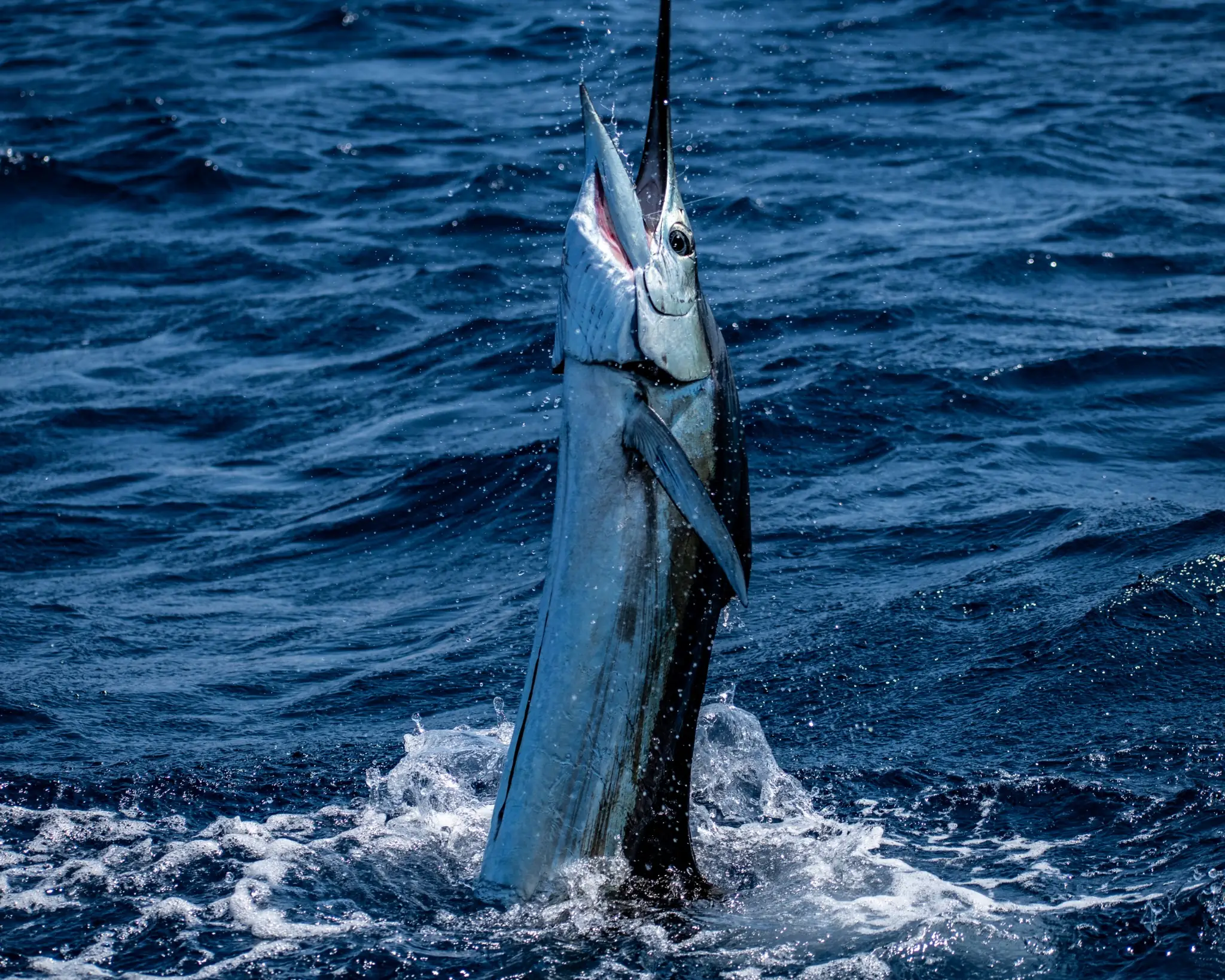
Sailfish populations remain relatively stable globally but face localized pressures from commercial fishing bycatch and sport fishing. Fortunately, catch-and-release practices have become standard, with most sport-caught sailfish surviving when handled properly.
Conservation focuses on reducing commercial bycatch through modified fishing gear and establishing marine protected areas in critical habitats. Sailfish serve as indicators of pelagic ecosystem health—their presence signals productive waters supporting entire food webs. Photo: Matt Bogdan.
Science & Discovery
High-speed videography analysis reveals sailfish can change direction within 0.1 seconds while traveling at maximum velocity demonstrating extraordinary neuromuscular coordination enabling sustained oxygen delivery during anaerobic sprints.
Behavioral studies document sophisticated hunting coordination including role specialization within packs where certain individuals consistently adopt driver positions herding prey while others take striker roles delivering killing blows.
Satellite tagging reveals sailfish undertake migrations exceeding 2,000 kilometers annually following seasonal prey concentrations demonstrating navigational precision and spatial memory requiring international cooperation for effective management.
In our delightful oceans, sailfish achieve 110 km/h through integrated systems spanning hydrodynamics, thermoregulation, and sensory precision. Cooperative hunting transforms individuals into coordinated units multiplying capture success 4-5 times. Catch-and-release practices and bycatch reduction now protect these velocity champions and their productive pelagic ecosystems.