Purple Sea Urchin
Ocean's Ecosystem Engineer
Strongylocentrotus purpuratus
Meet the ocean's ecosystem engineers—10-centimeter spiny spheres whose population dynamics create alternative stable states across Pacific coastlines. High densities transform thriving kelp forests supporting 1,000 species into barren seafloor wastelands persisting for decades. They share 7,077 genes with humans enabling advanced immunity research and medical discoveries.
Meet the Ecosystem EngineerWhat Makes Them Special
Ecosystem Control
Determine whether coastlines support kelp forests or barren seafloor across 350 kilometers through population-dependent grazing
Genetic Similarity
Share 7,077 genes with humans including immune components making them invaluable medical research models
Genomic Milestone
First sequenced echinoderm genome with 23,300 genes advancing developmental biology and regenerative medicine research
Predator Dynamics
Sea otter and sunflower star predation controls population balance preventing urchin barren formation
Advanced Immunity
Possess complex innate immunity through gene recombination rivaling vertebrate systems despite invertebrate classification
Alternative States
Create two distinct ecosystem states—kelp forests or urchin barrens—persisting for decades through population thresholds
Spiny Architecture
10-Centimeter Spheres with Defensive Engineering
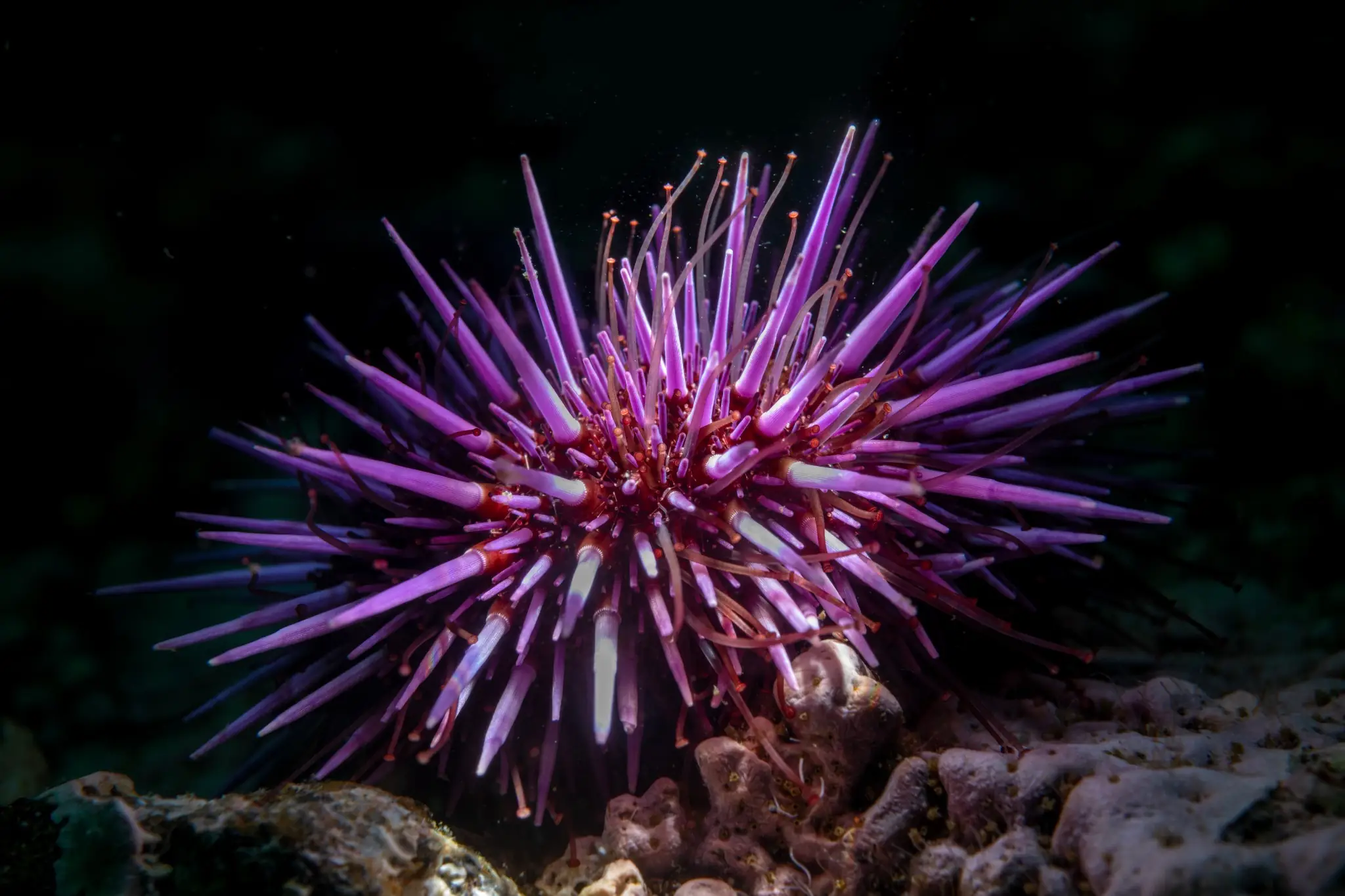
Purple sea urchins construct defensive spheres measuring 5-10 centimeters with hundreds of sharp purple spines across Northeast Pacific coastlines. Their calcium carbonate test enables precise locomotion through five-part radial symmetry coordinating tube feet movement.
Juvenile urchins display green spines that mature to deep purple signaling adult status. Their test architecture called "stereom" creates porous skeletal structure stronger than bone while remaining lightweight. Photo: Joe Belanger.
"Purple sea urchins single-handedly determine whether coastlines support thriving underwater forests or become barren seafloor wastelands—ecosystem engineers controlling habitats spanning thousands of kilometers."
— Dr. John Pearse, Marine Ecology Specialist
Kelp Forest Control
Two-State Ecosystem Switching Through Population Density
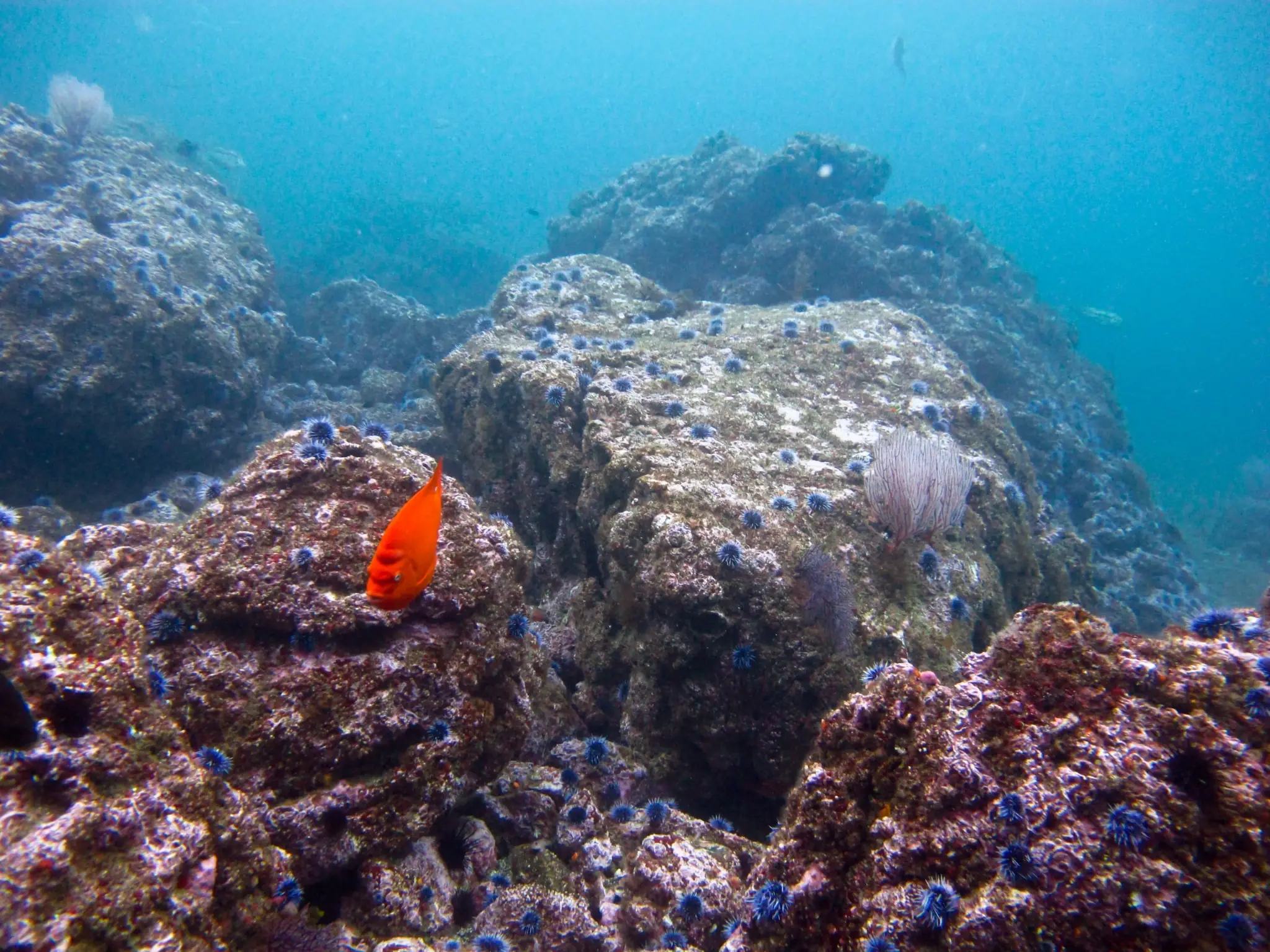
Purple sea urchins create two distinct ecosystem states through population-dependent grazing. High densities eliminate kelp entirely creating "urchin barrens"—barren seafloor wastelands persisting for decades across vast areas.
Low urchin populations enable kelp forest recovery supporting over 1,000 species. This alternative stable state demonstrates how single species control entire ecosystem structure and biodiversity patterns. Photo: Brandon B.
Advanced Immunity
Protein Recombination Systems Rivaling Vertebrates
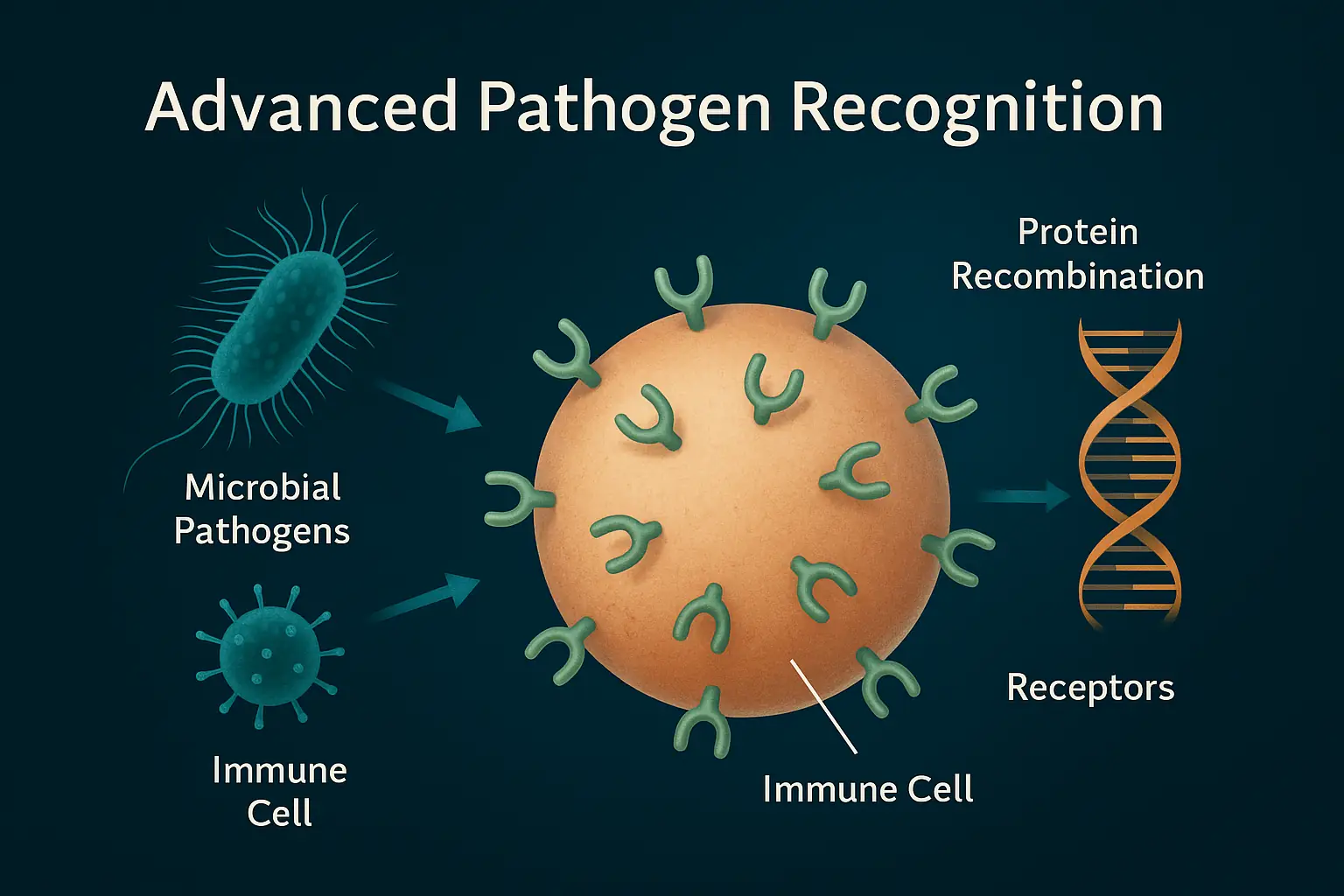
Purple sea urchins possess remarkably complex innate immune systems through sophisticated gene recombination. They modify immune proteins through diversification mechanisms recognizing novel pathogens while maintaining immunological memory protecting against repeated infections.
This immune complexity bridges invertebrate and vertebrate systems sharing 7,077 genes with humans including components controlling inflammatory responses. Their sophisticated immunity enables pathogen resistance while providing research models for human disease studies advancing immunology and medical treatment development. Photo: Illustration.
"Purple sea urchins share 7,077 genes with humans—making them invaluable research models bridging evolutionary gaps between invertebrate and vertebrate biology, immunity, and aging processes."
— Sea Urchin Genome Consortium Research Team
Predator Dynamics
Sea Otter and Sunflower Star Population Control
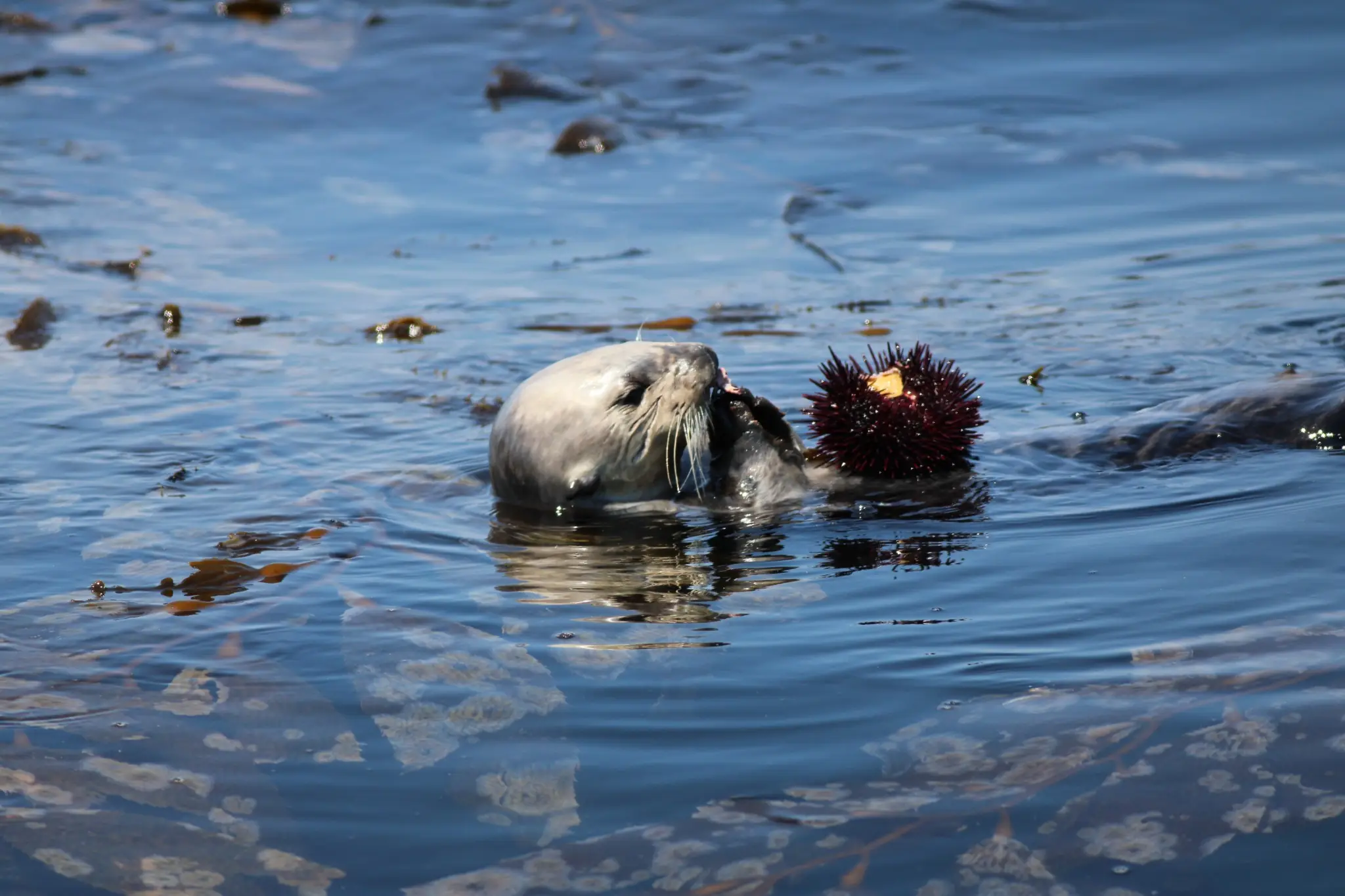
Sea otters and sunflower stars historically maintained purple sea urchin balance through intensive predation. Sea otter hunting eliminated Pacific populations by 1900 while sea star wasting syndrome plus marine heatwaves reduced sunflower stars by 90 percent since 2013.
Without predator control urchin populations explode eliminating kelp forests across 350 kilometers of Pacific coastline. Current restoration efforts focus on sea otter reintroduction and targeted commercial urchin harvesting rebuilding ecosystem balance. Photo: Geoff G. Wildlife Photos.
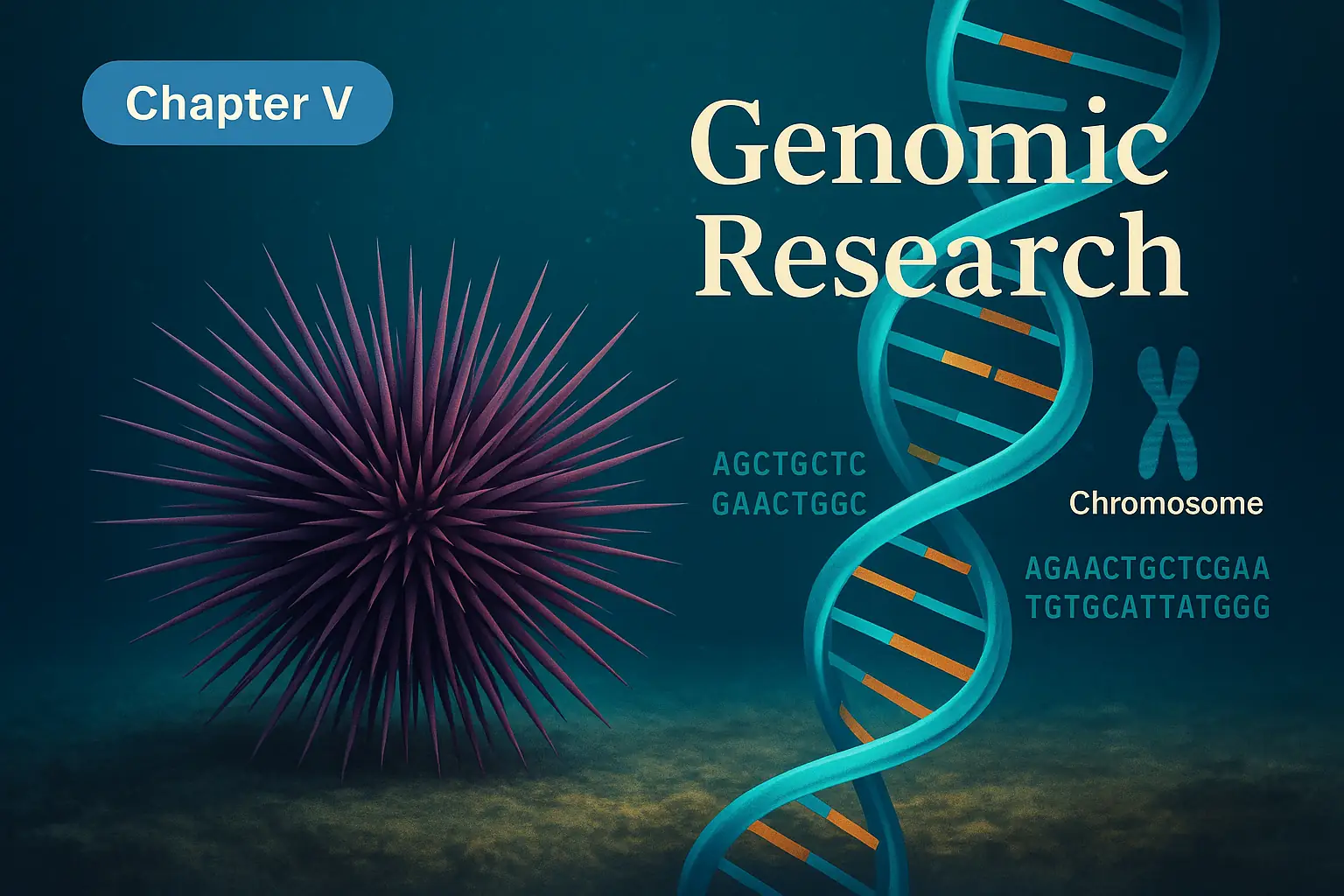
Genomic Research
First Sequenced Echinoderm Advancing Medical Science
Purple sea urchins provided the first sequenced echinoderm genome revealing 23,300 genes with 7,077 human orthologs (30%). This genetic similarity enables direct comparison with vertebrate systems without complex mammalian evolutionary backgrounds facilitating medical research applications.
Research applications include Alzheimer's disease studies through protein aggregation mechanisms cancer investigations and aging research utilizing exceptional longevity. Their regenerative capabilities and stem cell properties contribute to developmental biology understanding and potential human therapeutic advances through tissue repair pathways. Photo: Illustration.
Conservation Management
Kelp Forest Restoration Through Ecosystem Balance
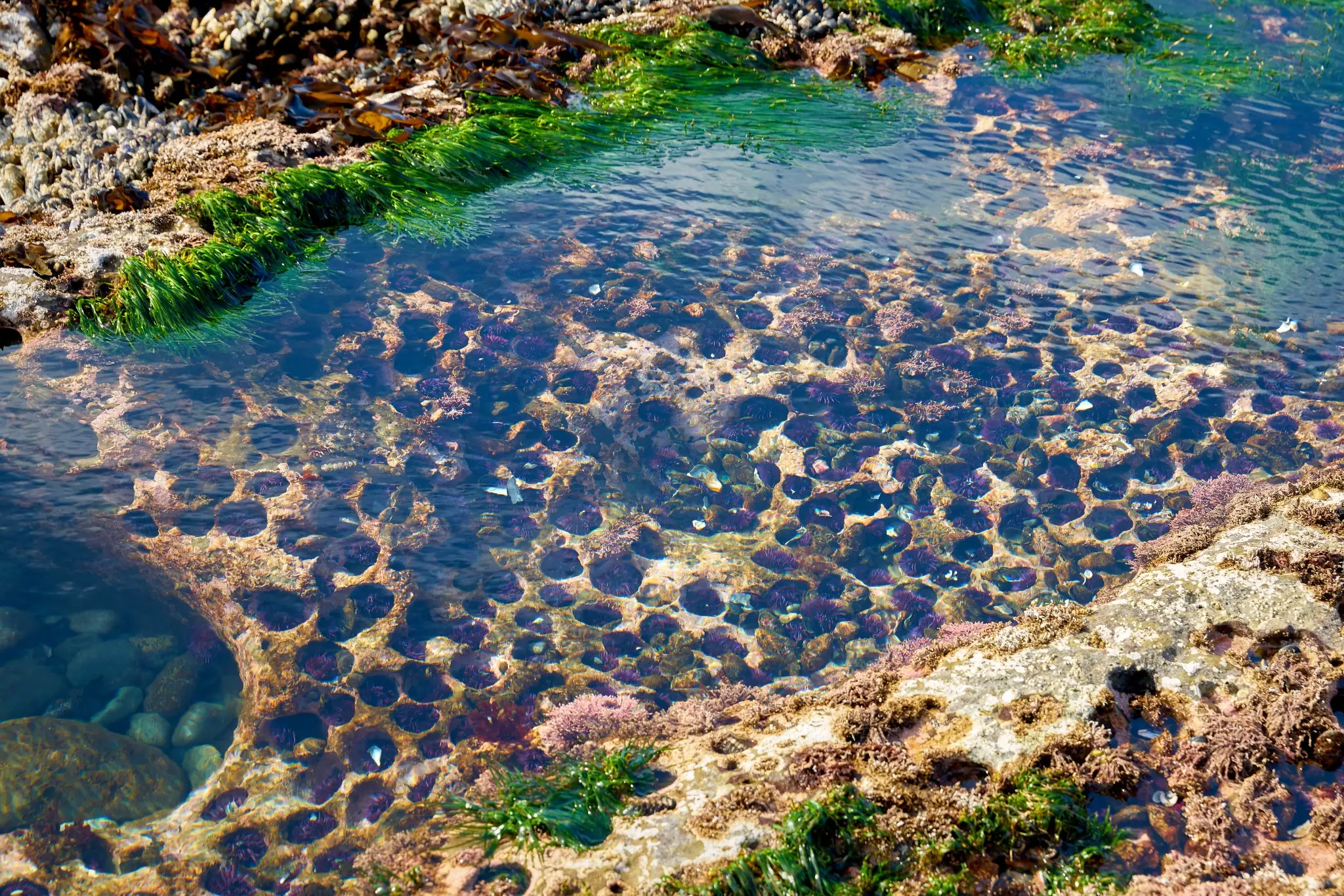
Marine conservation focuses on restoring kelp forests through purple sea urchin population control and predator recovery. California initiatives combine targeted urchin harvesting with kelp replanting supporting biodiversity restoration.
Success requires coordinated predator protection through marine protected areas and climate adaptation strategies. Ecosystem recovery occurs when urchin populations return to historical levels through natural predation restoring thriving kelp forests. Photo: Max Lindenthaler.
Science & Discovery
UC Santa Cruz 2021 ecosystem research documented 95% kelp forest collapse across 350 kilometers revealing alternative stable state thresholds informing restoration strategies combining predator protection with targeted urchin management.
Sea Urchin Genome Consortium 2006 sequencing revealed 7,077 shared human genes advancing Alzheimer's disease studies cancer investigations and aging research through regenerative capabilities.
UC Santa Barbara 2013 acidification research revealed purple sea urchin adaptive capacity to changing ocean chemistry affecting calcium carbonate skeletal formation informing marine protected area design for climate resilience.
In our delightful oceans, purple sea urchins control alternative stable states determining whether coastlines support thriving kelp forests with 1,000 species or persistent barren seafloor. They share 7,077 genes with humans advancing immunity and aging research. Sea otter reintroduction and targeted urchin harvesting restore ecosystem balance across 350 kilometers.