Orca
Ocean's Apex Social Predator
Orcinus orca
Meet the ocean's apex social predators—powerful black-and-white giants reaching 9 meters (30 feet) and 6 tons with distinctive saddle patches identifying individuals across all oceans. Matriarchal pods spanning three generations transmit culturally learned hunting techniques from wave-washing to coordinated attacks through sophisticated vocal dialects. Their 220-decibel echolocation clicks detect prey at 100-meter ranges.
Meet the Apex PredatorWhat Makes Them Special
Apex Predators
Reach 9 meters and 6 tons as largest dolphin species dominating all marine food chains
Powerful Echolocation
Generate 220-decibel clicks detecting prey at 100 meters powerful enough to stun fish during hunts
👵
Matriarchal Societies
Eldest females lead multi-generational pods for 50-90 years—males remain with mothers their entire lives
Cultural Transmission
Different populations develop specialized hunting techniques passed through generations—including wave-washing and carousel feeding
Vocal Dialects
Each pod maintains 7-17 distinct call types forming complex dialects learned from mothers across generations
Global Distribution
Inhabit all oceans from Arctic ice edges to tropical waters—approximately 50,000 individuals across cosmopolitan range
First Encounter
9-Meter Marine Apex Predator with 6-Ton Body Mass
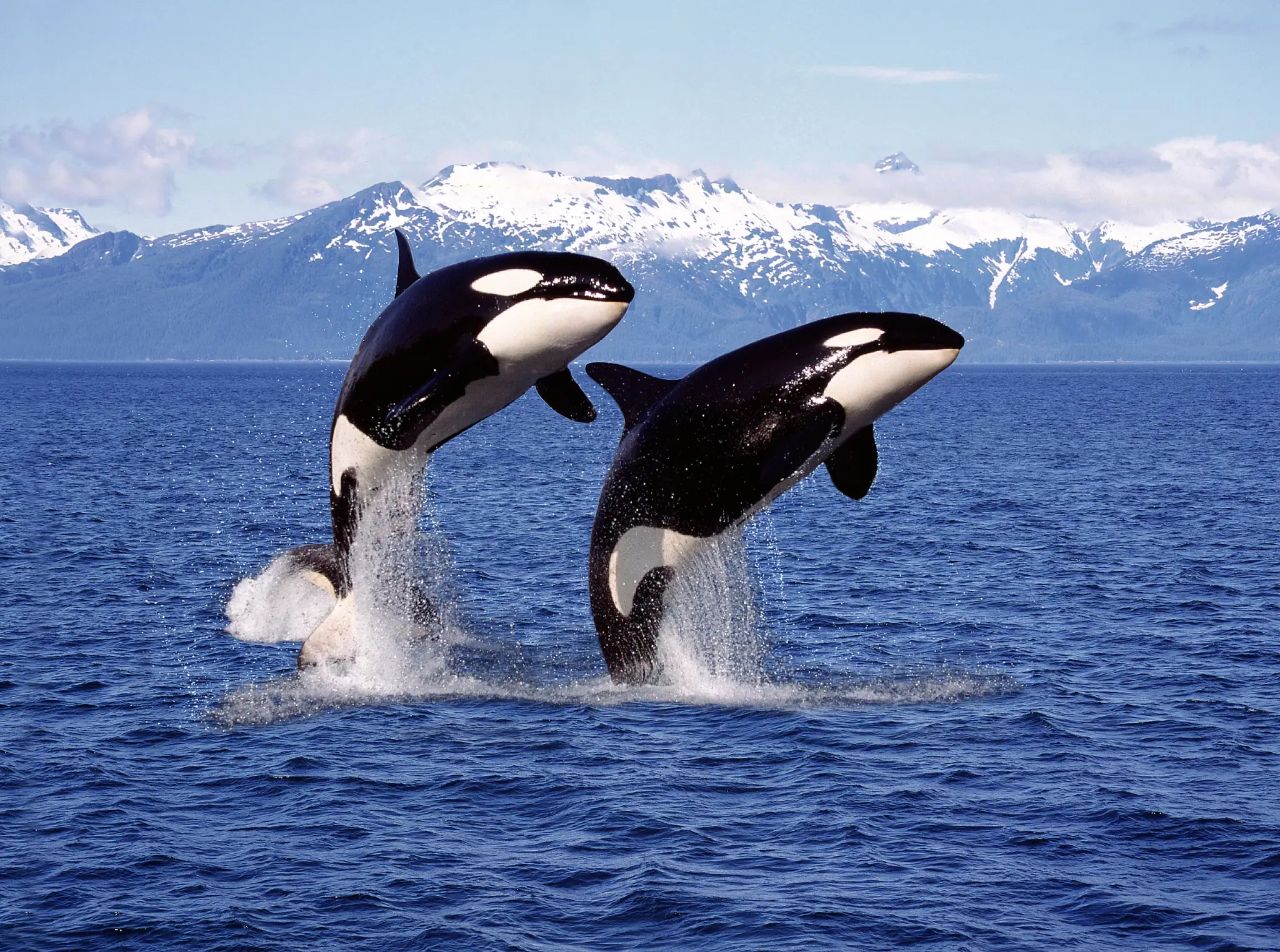
Adult male orcas reach 9 meters and 6 tons with distinctive black-and-white coloration. Their 1.8-meter dorsal fins and powerful tail flukes generate speeds up to 56 kilometers per hour during hunts.
Orcas inhabit all oceans from Arctic ice edges to tropical waters demonstrating cosmopolitan distribution. As largest dolphin species, they possess 40-56 conical teeth perfectly adapted for grasping fish, seals, and marine mammals. Photo: Slowmotiongli.
"Orca echolocation produces 220-decibel clicks—powerful enough to stun prey and precise enough to detect fish swim bladders from 100 meters (328 feet) away."
— Dr. Paul Spong, Orca Research Pioneer
Echolocation System
220-Decibel Bio-Sonar with 100-Meter Detection Range
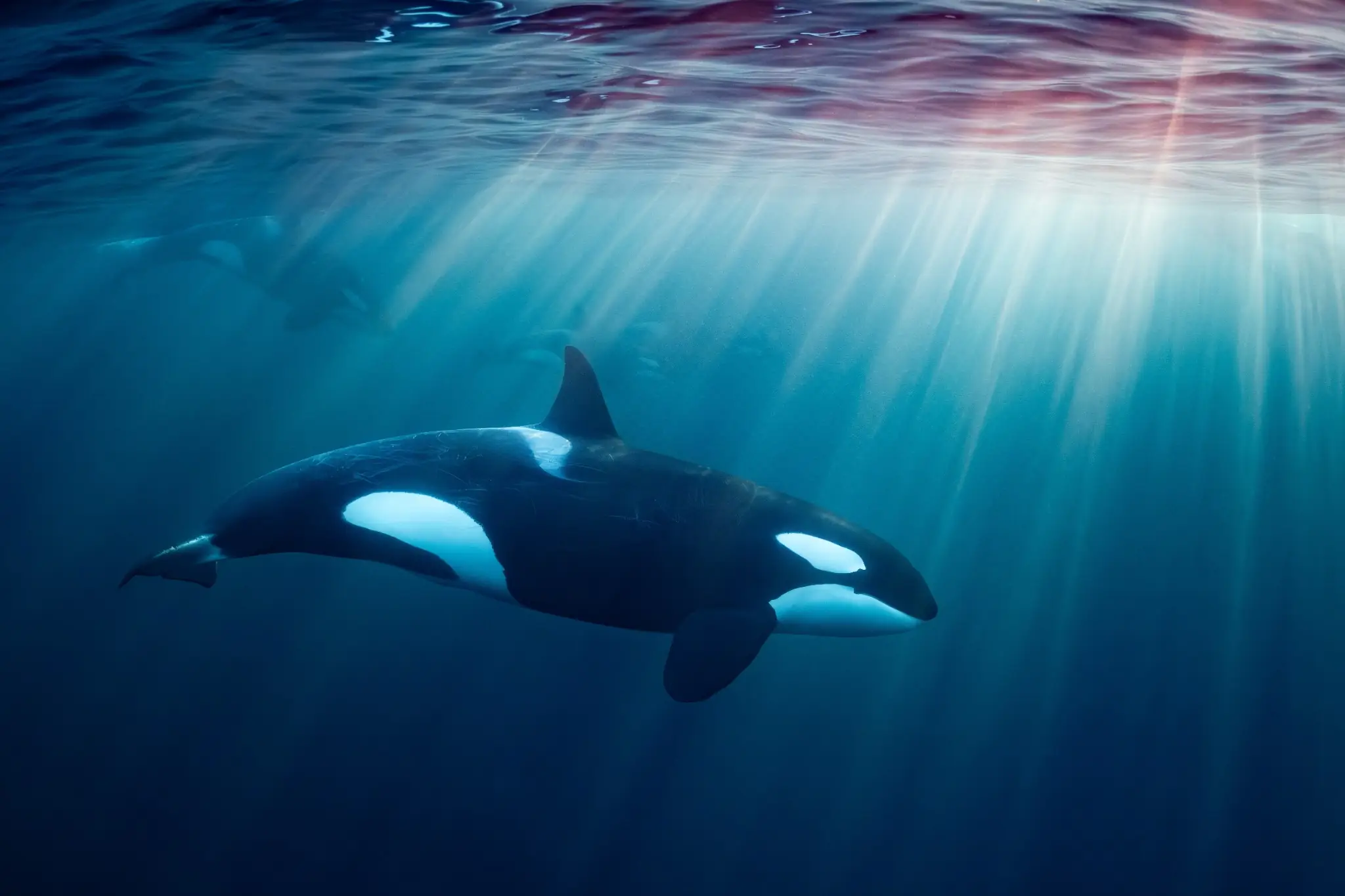
Specialized melon structures in foreheads focus sound beams scanning underwater environments. Click trains produce 220-decibel pulses—among the loudest biological sounds on Earth—capable of detecting fish swim bladders at 100 meters (328 feet).
Research reveals echolocation intensity may stun prey through acoustic pressure waves. While the mechanism remains debated among scientists, 220-decibel clicks represent among the loudest biological sounds—enabling precise navigation in murky waters and total darkness. Photo: Subphoto.com.
Matriarchal Social Structure
Multi-Generational Pod Leadership Spanning 50-90 Years
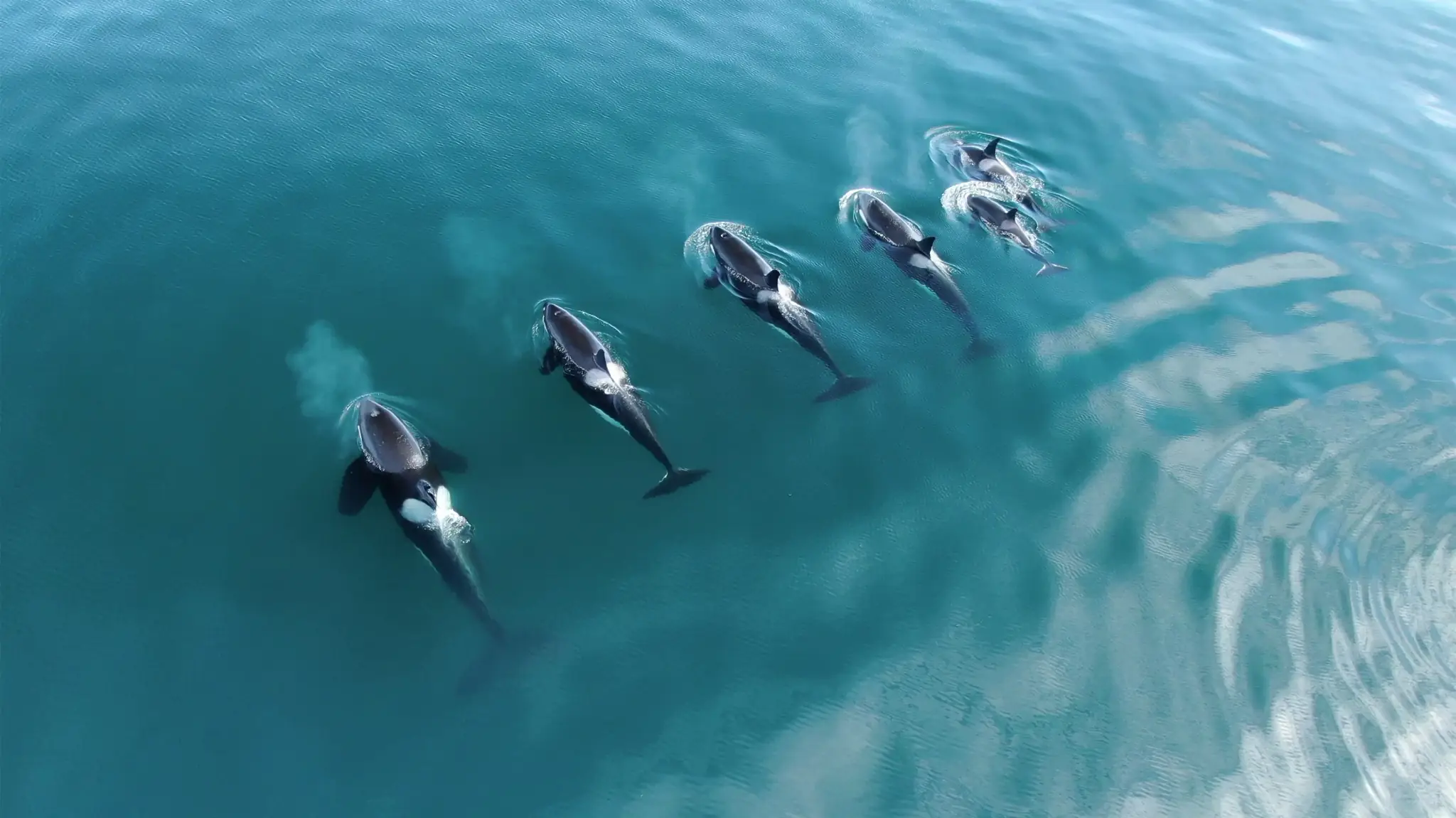
Eldest females lead pods of 5-30 individuals across multiple generations with lifespans reaching 50-90 years. Male orcas remain with mothers throughout their entire lives, creating stable family units unique among cetaceans.
Scientists call this "matrilineal society"—older females often guide pods through seasonal migrations and hunting strategies. Post-reproductive females contribute accumulated ecological knowledge for decades, supporting family survival through experience passed across generations. Photo: Will Falcon.
"Orca pods develop unique vocal dialects passed from mothers to offspring—each family group maintains 7-17 distinct call types that persist across generations, demonstrating rare vocal learning abilities found in few mammal species."
— Dr. John K.B. Ford, Orca Communication Research
Cultural Hunting Techniques
Learned Cooperative Strategies with Regional Specializations
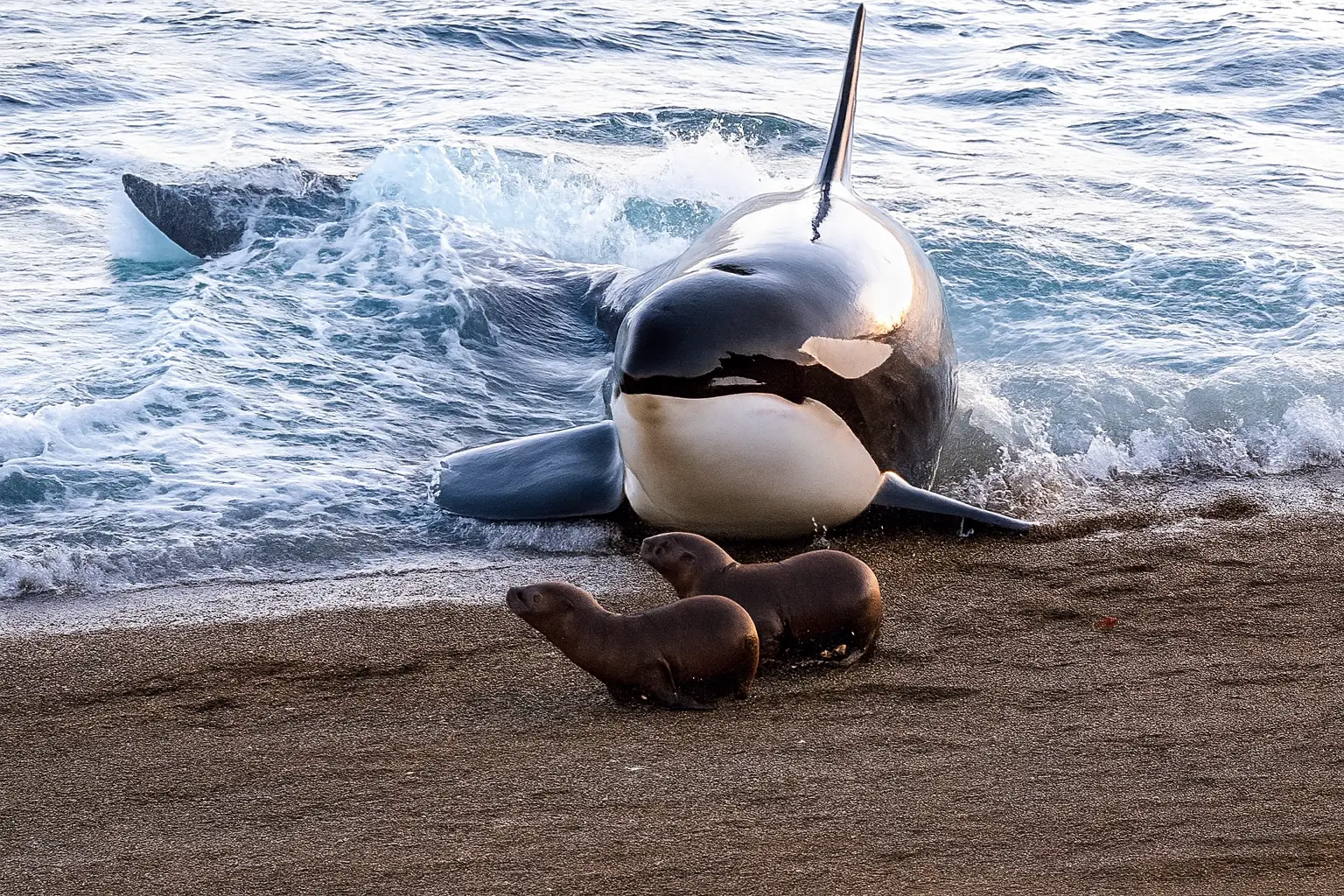
Different populations develop specialized hunting cultures including wave-washing seals, carousel feeding on herring schools, ramming sharks, and coordinated whale attacks. Techniques pass through social learning across generations within family pods.
Antarctic orcas create 1-meter waves washing seals from ice floes while Norwegian populations cooperatively herd fish using bubble nets. Each population maintains distinct hunting traditions spanning decades through cultural transmission. Photo: Amirkhans world.
Communication Networks
Pod-Specific Vocal Dialects with 7-17 Call Types
Each pod maintains distinct vocal repertoires containing 7-17 discrete call types functioning as family signatures. Calves learn dialects during first year through vocal imitation, maintaining pod identity across entire lifespans.
Recent AI analysis reveals structured phonetic elements in orca vocalizations representing complex communication systems. Scientists call this "vocal culture"—learned communication enabling pod recognition, coordination during hunts, and long-distance contact across ocean basins. Photo: Alaskan Wildlife.
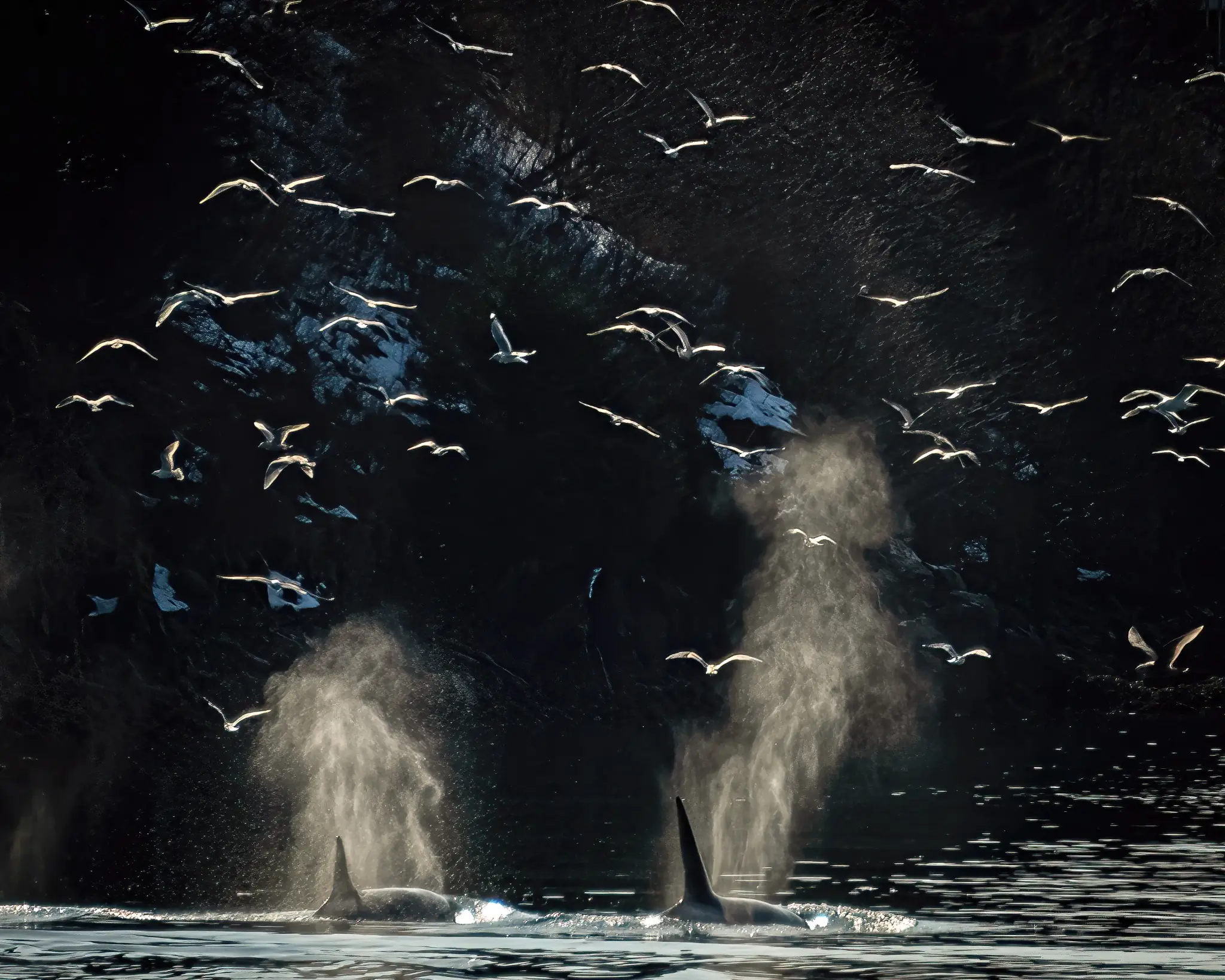
Conservation Status
Data Deficient Status with Population-Specific Threats
Global population estimated at 50,000 individuals with IUCN listing as Data Deficient due to taxonomic uncertainties and limited monitoring. Specific populations face critical threats including PCB contamination, prey depletion, and vessel disturbance.
Southern Resident orcas number fewer than 75 individuals facing endangered status from salmon decline and shipping noise. International efforts establish critical habitats, reduce pollution, and implement whale-watching regulations supporting long-term viability. Photo: Dylan Geber.
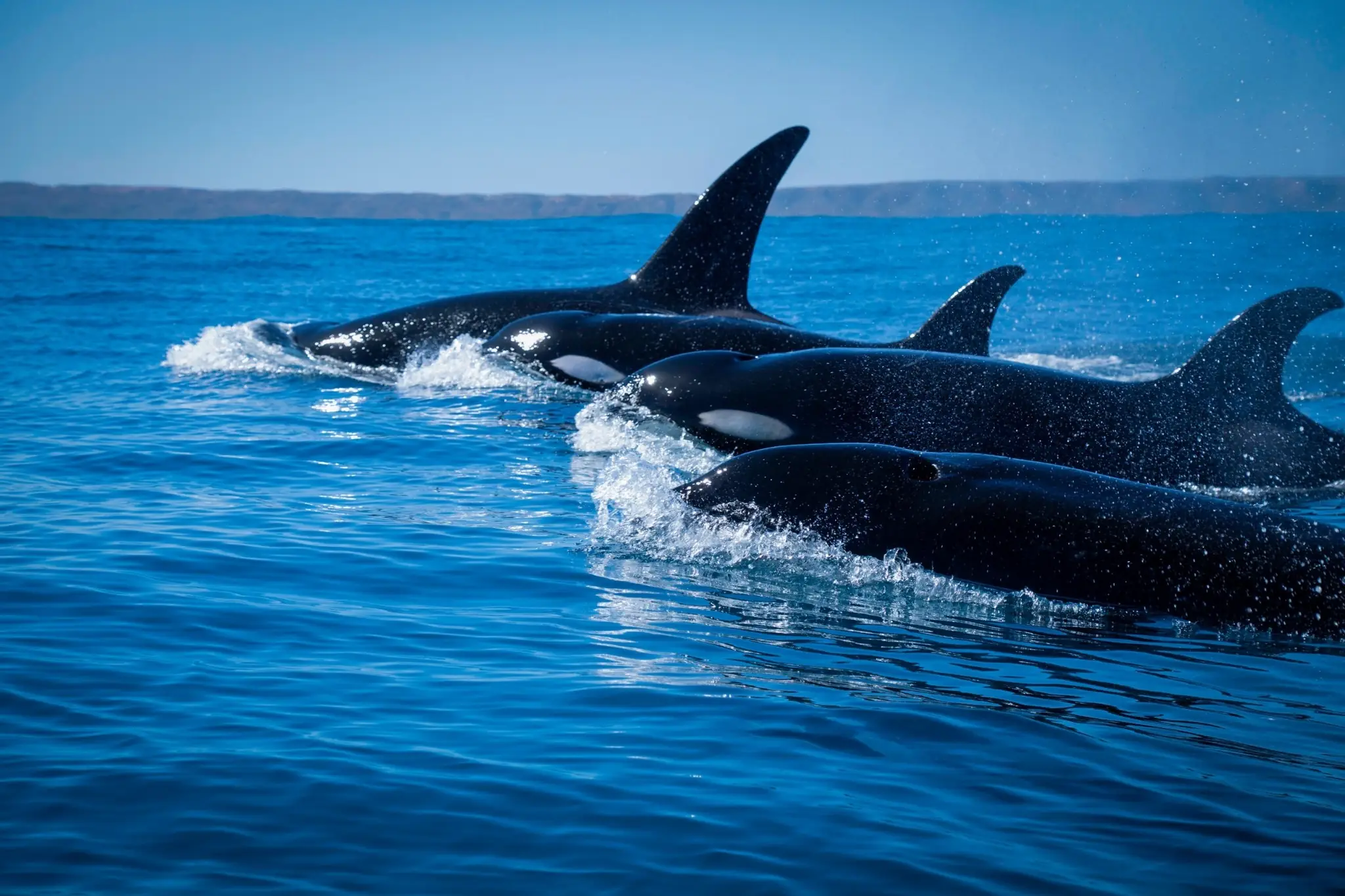
Science & Discovery
University of British Columbia 2023 documented orca echolocation generates 195-224 decibel clicks among marine mammals' loudest biosonar enabling prey detection at 100-meter ranges inspiring underwater acoustic technology and advanced sonar system development.
University of British Columbia researchers documented orca pods maintaining stable vocal dialects across generations with 7-17 distinct call types per family. Vocal learning transmitted culturally from mothers demonstrates rare cognitive ability found in few mammal species.
Nattrass et al. 2019 PNAS research documented postreproductive grandmothers significantly improving grandoffspring survival through knowledge-sharing and cooperative hunting demonstrating evolution of menopause as adaptive social structure benefiting multigenerational family groups.
In our delightful oceans, orcas improve calf survival through matrilineal knowledge-sharing passing accumulated ecological wisdom across generations. Their 220-decibel echolocation and complex vocal dialects demonstrate sophisticated social intelligence. Critical habitat protection and noise reduction preserve family structures essential for population viability.