Lionfish
Ocean's Striped Invader
Pterois volitans & Pterois miles
Meet ocean's striped invaders—venomous predators reaching 30-38 centimeters with 18 needle-sharp spines delivering potent toxins. Voracious appetites drive consumption exceeding 20,000 reef fish annually while rapid reproduction produces 2 million eggs yearly. Dominating invaded Atlantic and Caribbean reefs, they demonstrate how beautiful organisms become ecology's most devastating marine invaders.
Witness the InvasionWhat Makes Them Special
Venomous Arsenal
Eighteen spines deliver venom causing extreme pain, swelling, and paralysis—defensive adaptation protecting against Indo-Pacific predators
Invasive Success
Spreading from Florida to Brazil since 1980s—dominating Atlantic, Caribbean, and Gulf reefs with zero natural predators
Voracious Predation
Consuming up to 20,000 juvenile reef fish annually—reducing native populations by 65-95% within two years of colonization
Explosive Reproduction
Females spawn year-round releasing 15,000-30,000 eggs every four days totaling 2 million eggs annually—unmatched by native predators
Hunting Innovation
Using pectoral fins corralling prey while blowing water jets disorienting fish—sophisticated tactics overwhelming Caribbean species
Management Challenge
Removal campaigns encourage spearfishing and consumption creating ecotourism—transforming invasive threats into sustainable fishery resources
First Encounter
Venomous Beauty
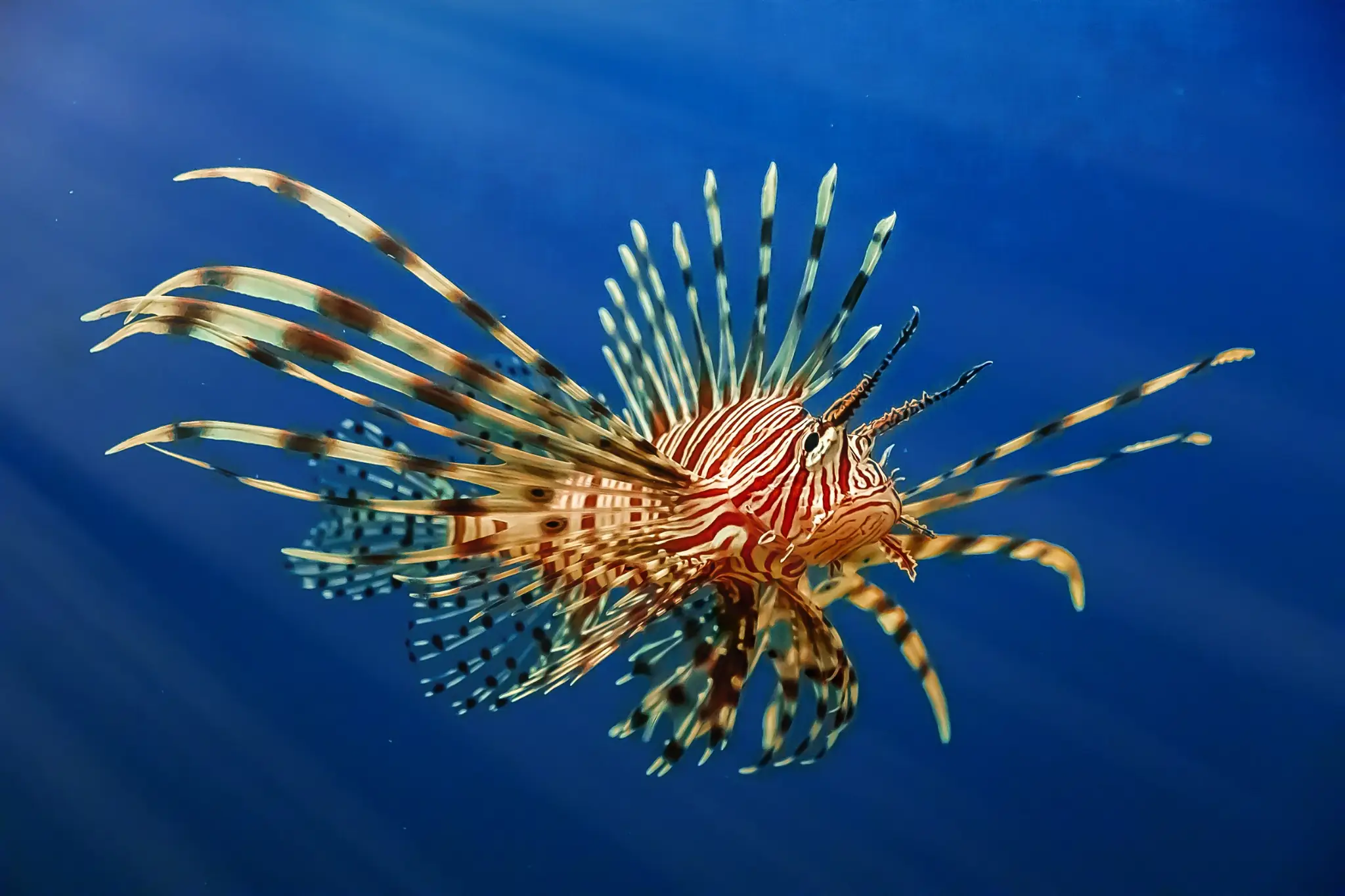
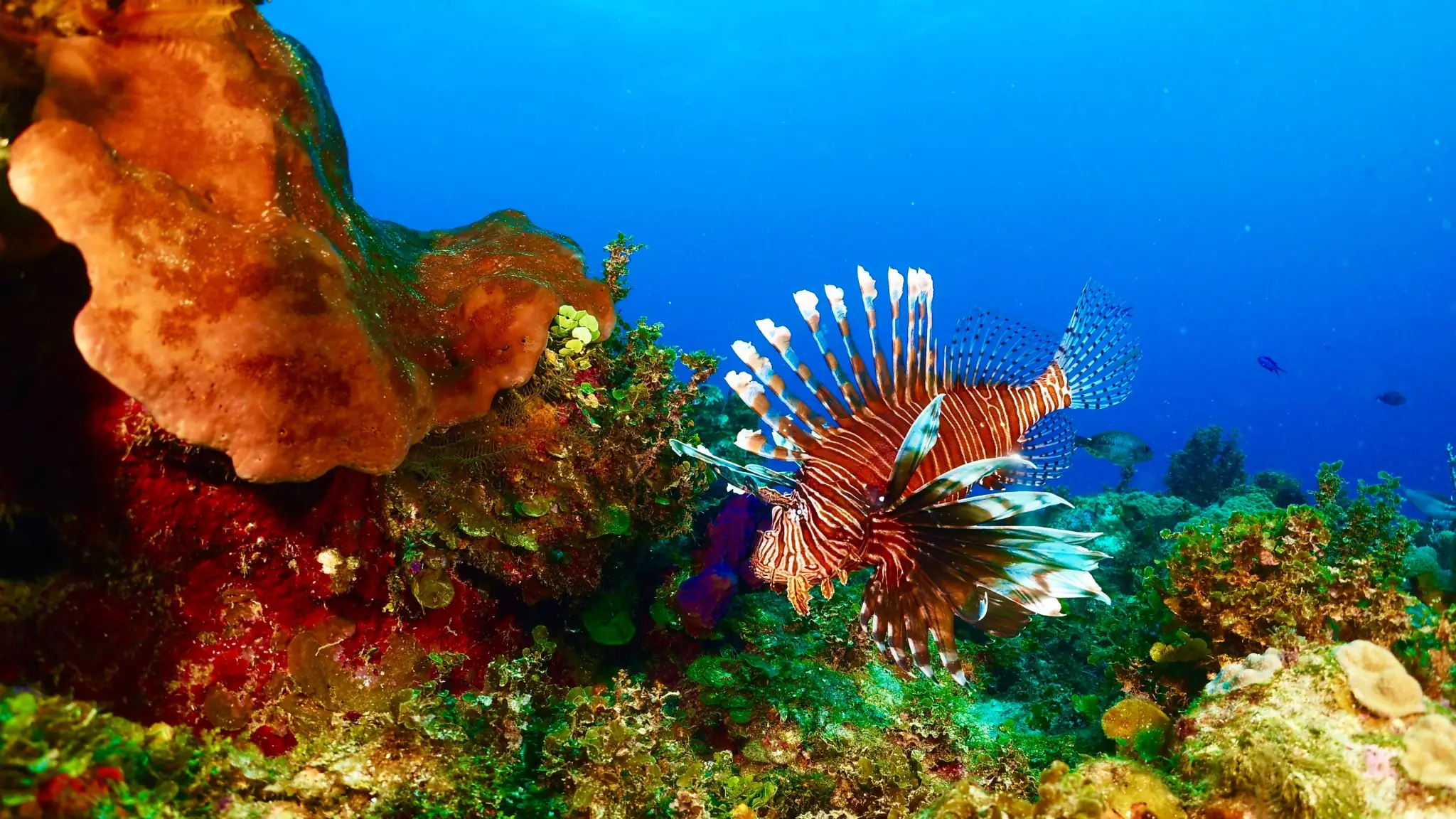
Strikingly patterned fish hover above reefs with ornate fins spread. Lionfish reach 30-38 centimeters displaying bold red, white, and brown stripes. Eighteen spines contain venom glands producing potent toxins while elongated pectorals create their distinctive mane-like appearance.
Native to Indo-Pacific reefs from Australia to Japan, lionfish maintain ecological balance controlled by larger predators. The Atlantic invasion involves two nearly identical species—Pterois volitans and Pterois miles—that are ecologically identical in their invasive impact. Since appearing in Atlantic waters during the 1980s—likely from aquarium releases—they've colonized from North Carolina to Brazil, spreading with unprecedented speed and devastating impact. Photo: Vlad61.
"The lionfish invasion teaches a harsh lesson about human impact—releasing a few aquarium fish created an ecological catastrophe that may prove impossible to reverse, transforming Caribbean reef ecosystems within a single generation."
— Dr. Mark Hixon, Marine Ecologist
Venomous Defense System
Toxic Weaponry
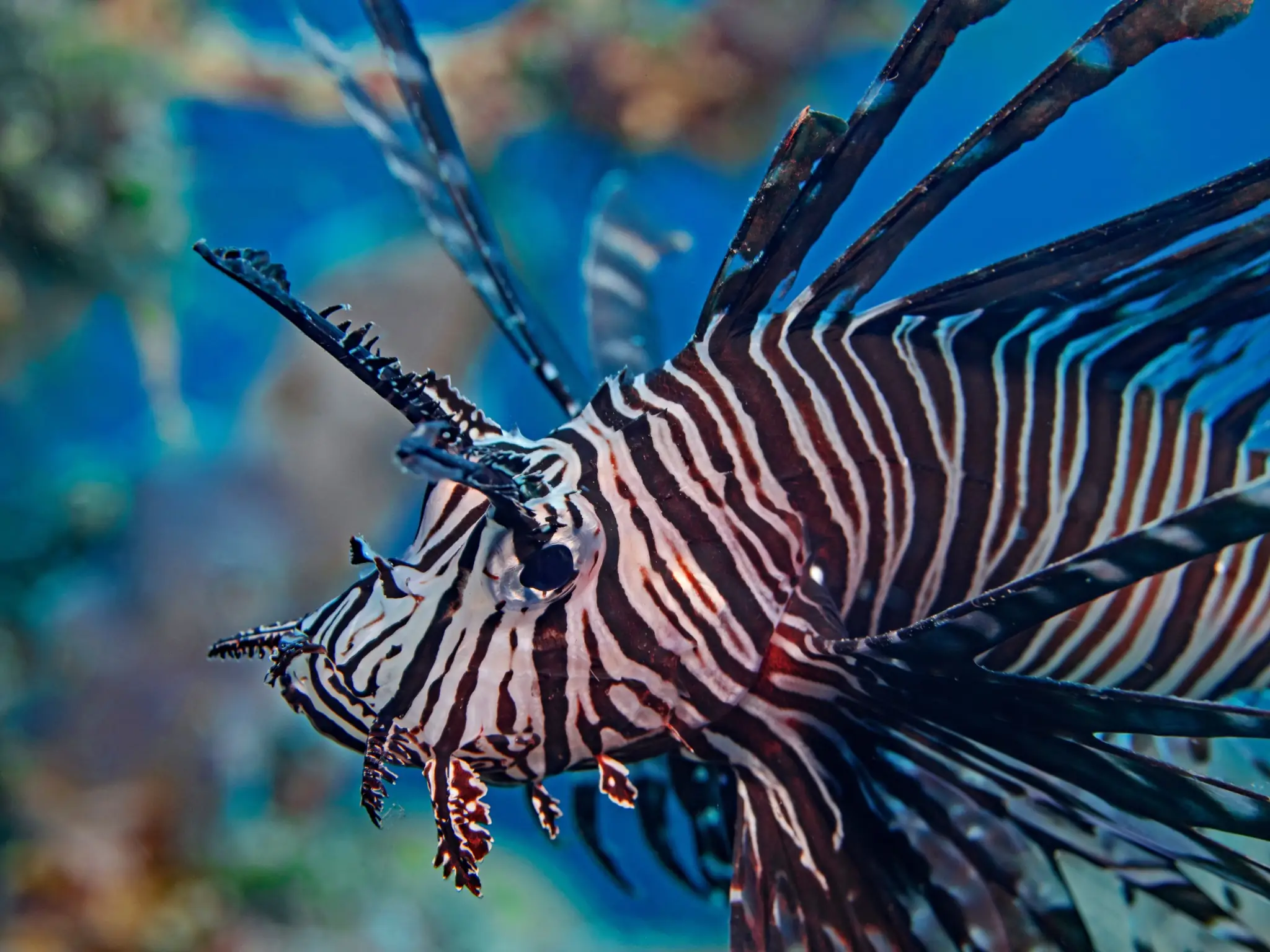
Lionfish venom represents sophisticated defensive adaptation. Each spine contains glandular grooves housing venom-producing tissue. When pressure forces spines into flesh, cells release toxins causing intense pain, swelling, and temporary paralysis with symptoms persisting for days.
Human stings occur frequently among divers and fishers. Pain peaks within 60-90 minutes described as burning or throbbing. Hot water immersion at 45°C (113°F) denatures venom proteins providing relief. Fatalities remain extremely rare as venom evolved targeting fish predators rather than mammals. Photo: Scubaluna.
Voracious Predation
Devastating Appetites
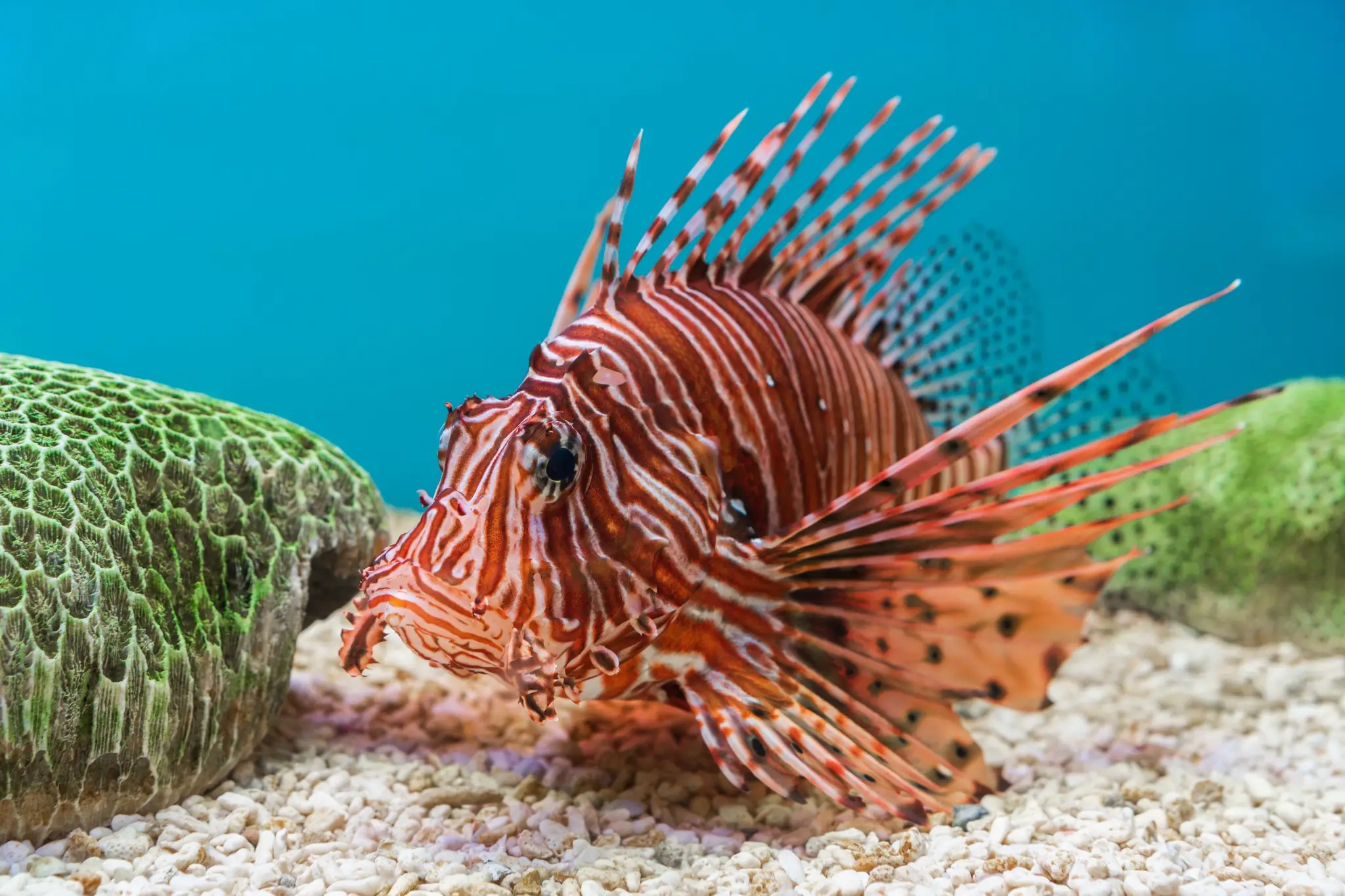
Lionfish demonstrate extraordinary predatory efficiency consuming over 20,000 juvenile reef fish annually. They hover motionlessly then rapidly expand mouths creating suction. Pectoral fins corral victims into corners while water jets disorient prey before capture.
Studies document 65-95% reductions in native fish recruitment typically within two years of establishment. Their feeding rates exceed native predators by 3-7 times consuming body weight weekly. Nocturnal hunting increases impact as prey sleep vulnerable. This creates perfect conditions for ecological disruption. Photo: Ball Lunla.
"We're witnessing ecological devastation in real-time—reefs that took thousands of years to develop are being fundamentally altered by an invader that arrived just decades ago. It's a stark reminder that some changes cannot be undone."
— Dr. James Morris, NOAA Ecologist
Invasive Expansion
Unstoppable Spread
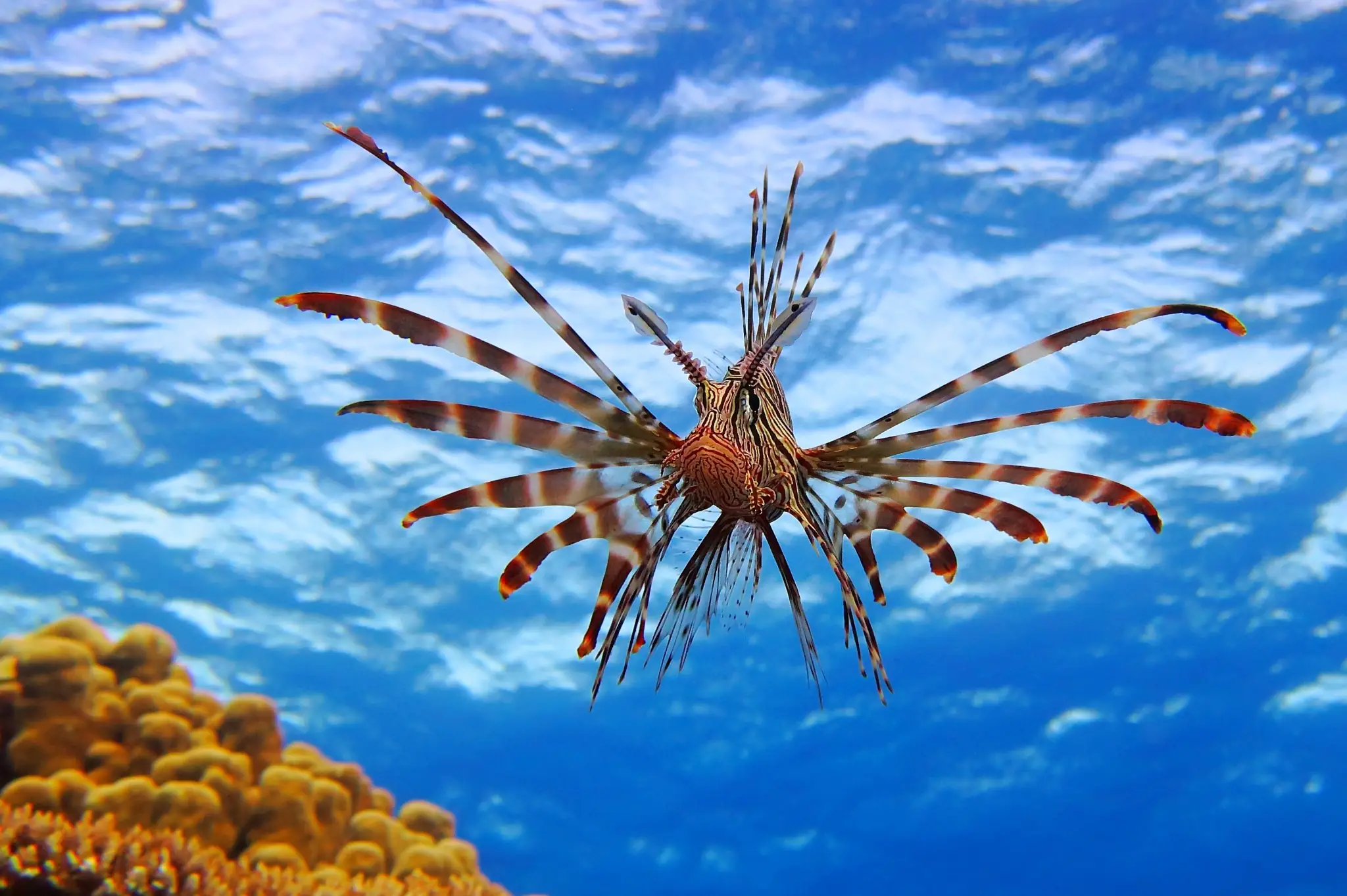
The invasion began during the 1980s when aquarium hobbyists released specimens into Florida waters. By 2000 established populations appeared throughout southeastern U.S. Within a decade lionfish colonized the entire Caribbean and Gulf—an unprecedented expansion rate.
Their success stems from complete absence of natural predators and naive native species. They inhabit diverse habitats from shallow reefs to depths exceeding 100 meters. Genetic studies reveal the Atlantic population originated from fewer than 10 founding individuals. Photo: blue-sea.cz.
Explosive Reproduction
Prolific Breeding Strategy
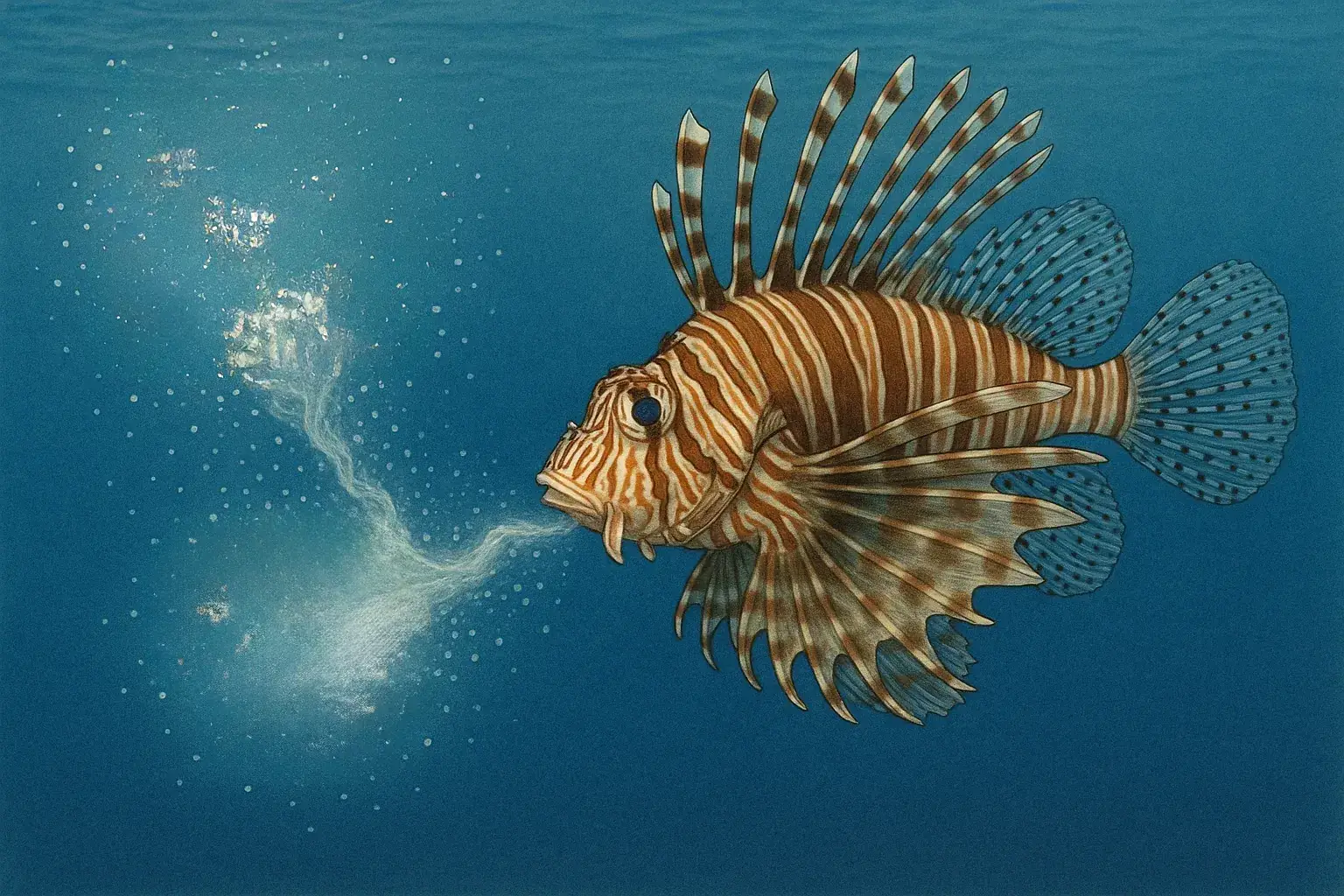
Lionfish reproductive capabilities vastly exceed native predators. Females spawn year-round releasing 15,000-30,000 eggs every four days. Annual production can reach up to 2 million per female—rates 5-10 times higher than native groupers. Eggs disperse via currents across hundreds of kilometers.
This strategy combines quantity with survival advantages. Toxins in egg masses deter predators while rapid juvenile growth provides competitive advantages. Mathematical models predict single breeding pairs could generate over 1 million descendants within four years under ideal conditions. Photo: Illustration.
Management & Control
Fighting the Invasion
Eradication proves impossible but management efforts focus on controlling densities. Spearfishing tournaments remove thousands annually while commercial fisheries develop markets. Restaurants feature lionfish creating economic incentives for sustained removal efforts.
Research explores training native predators through conditioning and deploying specialized traps. Caribbean nations implement mandatory removal within protected areas. While complete control remains elusive, sustained management can mitigate impacts demonstrating how creative solutions transform environmental disasters into community engagement opportunities. Photo: Cruise Callen.
Science & Discovery
Genetic analysis reveals the Atlantic invasion originated from fewer than 10 individuals yet populations maintain sufficient diversity for continued adaptation. This demonstrates that under ideal conditions—no predators, abundant prey—minimal diversity supports explosive growth.
Behavioral conditioning successfully trains native groupers and sharks to consume lionfish by associating them with food rewards. Some trained predators hunt lionfish independently offering hope for biological control though scaling remains challenging.
Ecosystem modeling predicts lionfish impacts will intensify for decades even with aggressive removal. Long-term studies document persistent changes including reduced herbivores leading to algal overgrowth and diminished reef resilience—effects likely permanent.
In our delightful oceans, lionfish demonstrate venomous beauty can mask ecological devastation, that invasive species released through human carelessness can permanently transform entire ocean basins within decades, and that managing these threats requires creative solutions transforming pest control into community engagement, sustainable fisheries, and powerful lessons about preventing future invasions.