Humphead Wrasse
Transforming Reef Guardian
Cheilinus undulatus
Meet the ocean's sex-changing giants—massive blue-green reef fish reaching 2 meters and 180 kilograms with prominent Napoleon-like forehead humps. They complete protogynous transformation from female to male around 9 years. Chameleon-like independent eye movement provides 360-degree surveillance while they control toxic crown-of-thorns starfish populations as reef guardians.
Meet the Transforming Reef GuardianWhat Makes Them Special
Reef Colossus
Reach 2 meters and 180 kilograms with distinctive Napoleon-like forehead humps and fleshy lips
Sex Change Masters
Complete protogynous transformation from female to male around 9 years through hormonal regulation
Independent Eyes
Rotate each eye independently providing 360-degree surveillance for simultaneous predator detection and prey tracking
Crown-of-Thorns Control
Among few predators consuming highly venomous crown-of-thorns starfish providing natural biocontrol during outbreaks
Tidal Synchronization
Form spawning aggregations of 100+ individuals precisely 2-2.5 hours after high tide for larval dispersal
Conservation Recovery
Endangered but showing promise—WWF-led buyback programs in Southeast Asia have released 860+ confiscated individuals, while facial recognition aids enforcement.
First Encounter
2-Meter Reef Colossus
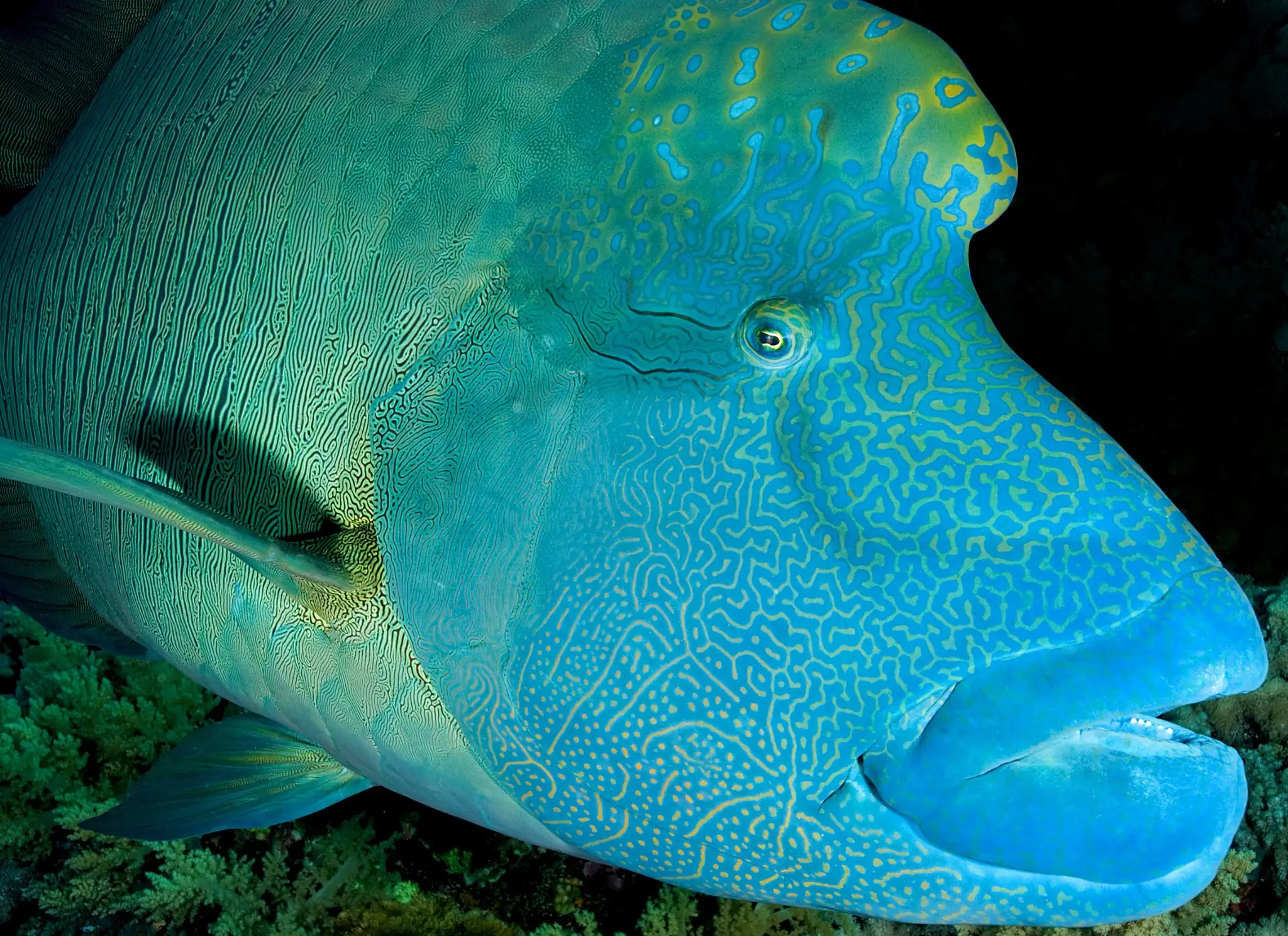
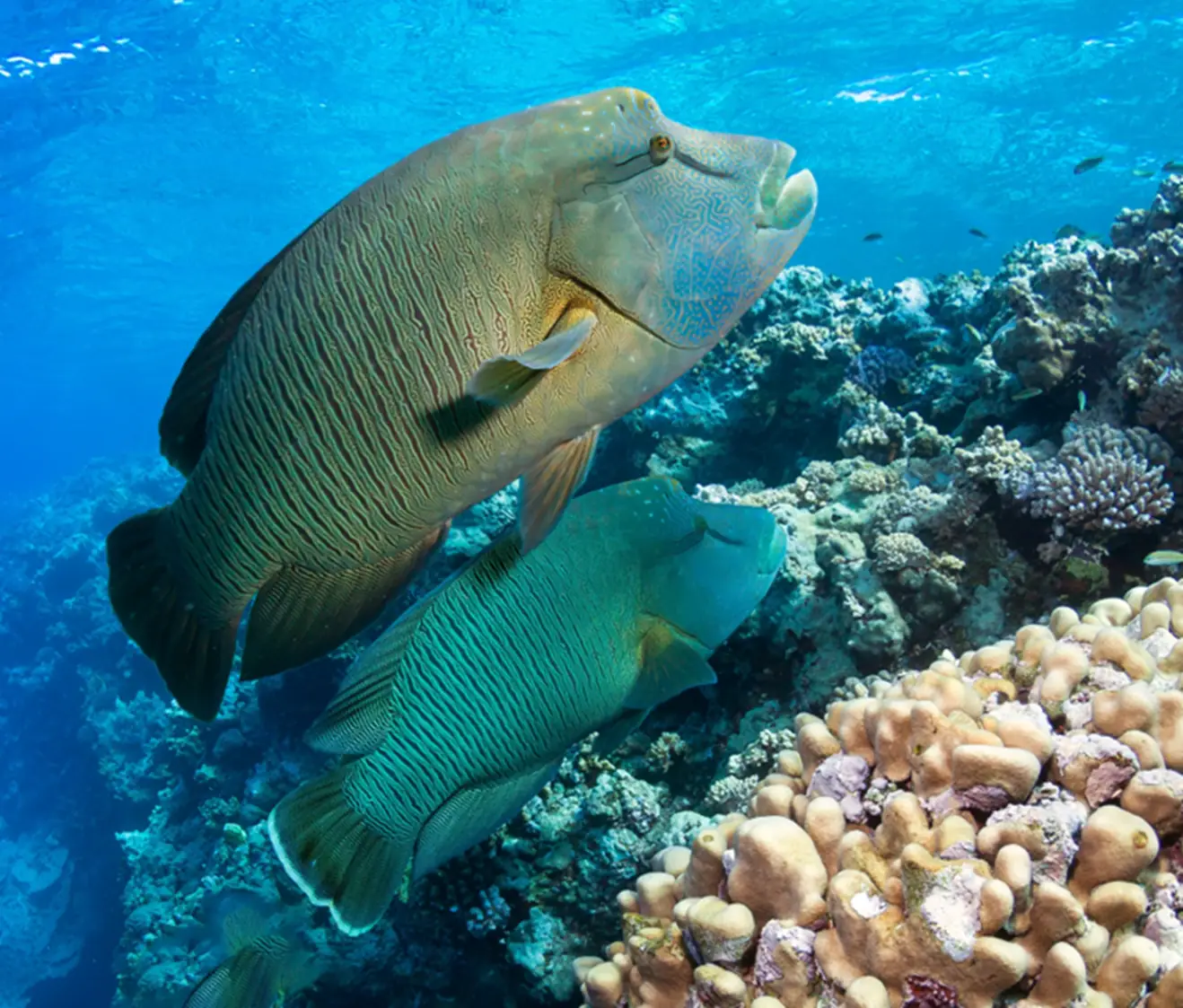
Massive blue-green giants glide through coral gardens displaying prominent forehead humps and thick fleshy lips. These 2-meter endangered reef fish reach 180 kilograms showcasing intricate diamond patterns and distinctive black "eyelash" lines behind each eye.
You're witnessing one of reef fish's ultimate giants. Their imposing size and Napoleon-like crown create commanding presences while remarkably gentle dispositions allow close encounters with curious divers across Indo-Pacific coral reefs. Photo: RCB Shooter.
"The humphead wrasse's protogynous sex change represents one of nature's most remarkable biological transformations—a complete gonadal restructuring governed by neuroendocrine pathways that can turn a breeding female into a dominant supermale within weeks."
— Dr. Helen Taylor, Marine Reproductive Biologist
Protogynous Sex Change
Female-to-Male Transformation
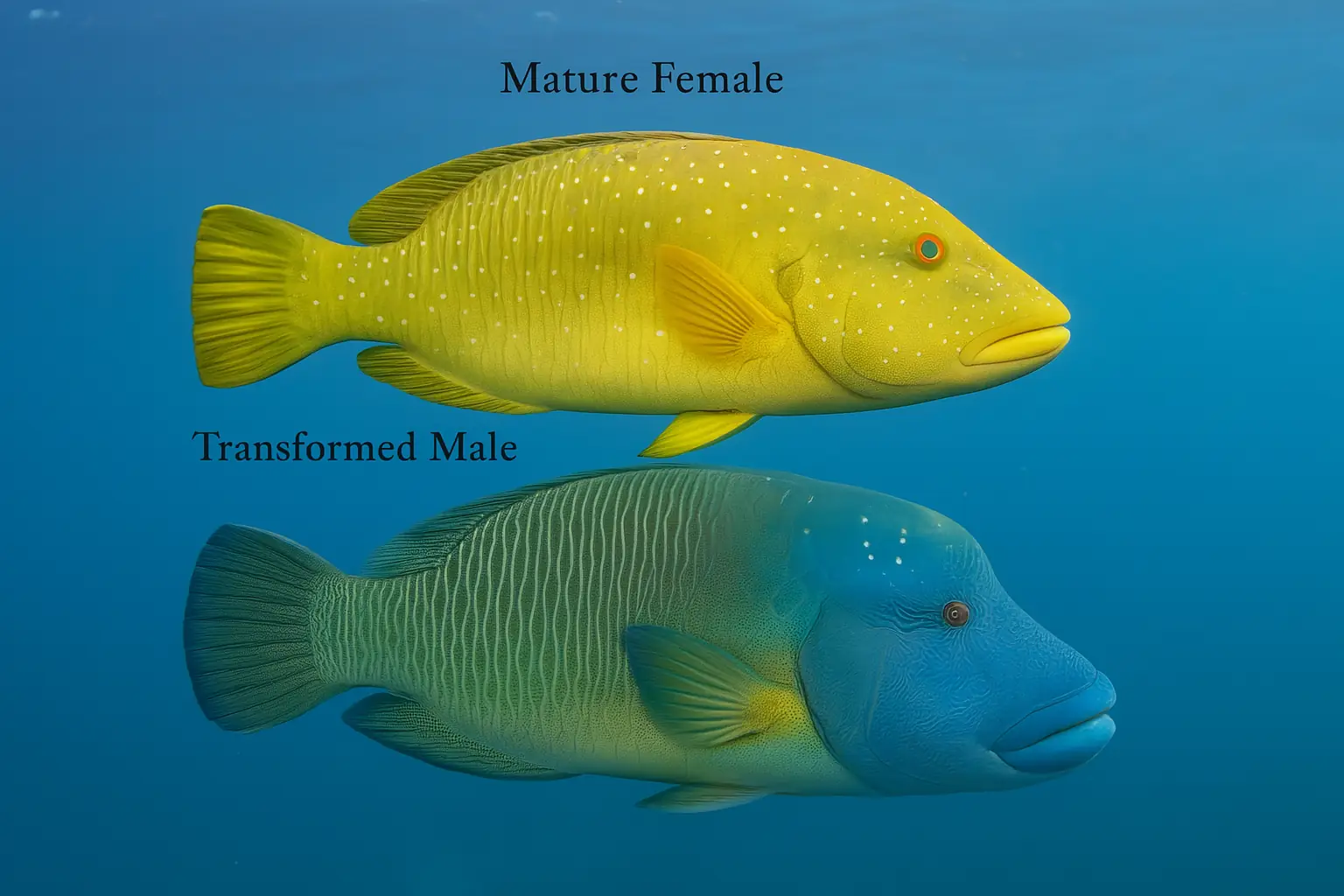
Complete gonadal transformation occurs around 9 years through hormonal regulation involving estrogen decrease and testicular tissue development. Females develop red-orange coloration while males display brilliant blue-green hues with enhanced forehead prominences.
Sex change is likely triggered by social cues, such as the disappearance of the dominant male within a group, which creates a reproductive opportunity. Only sex-changed individuals become territorial "supermales" capable of breeding with multiple females during spawning aggregations. Photo: Illustration.
Chameleon-Like Eyes
Independent Movement Vision
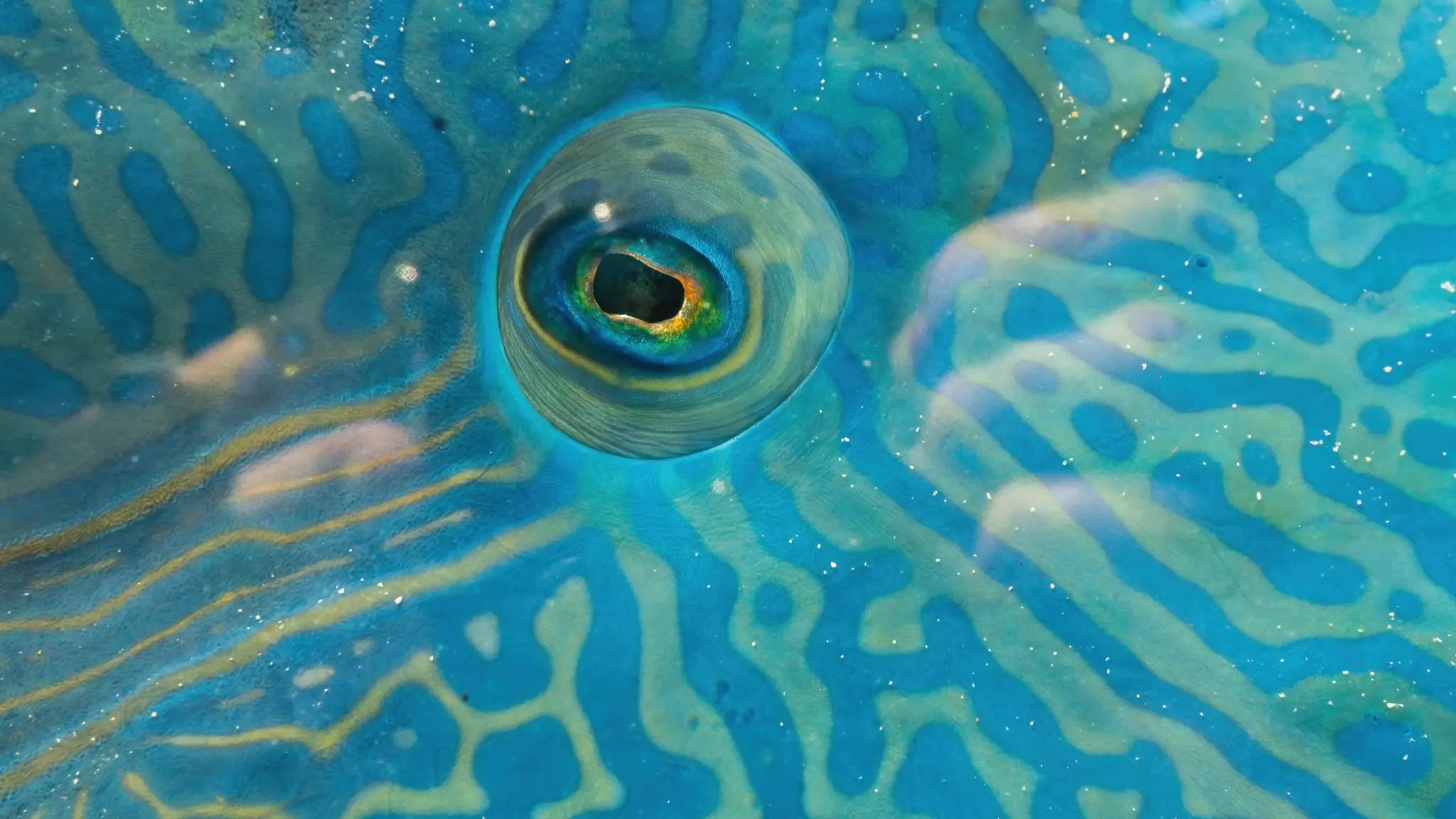
Each eye rotates independently providing 360-degree surveillance enabling simultaneous predator detection and prey tracking. Eyes move constantly in different directions scanning reef environments while maintaining spatial awareness.
This chameleon-like visual system allows monitoring of multiple threats and opportunities across complex coral reef territories. Independent eye movement coordinates with massive size creating formidable awareness systems for reef navigation. Photo: Taner MuhlisKaraguzel.
"Humphead wrasse form spawning aggregations of 100+ individuals at Palau barrier reef edges—timing reproduction precisely with tidal currents 2-2.5 hours after high tide for optimal larval dispersal."
— Dr. Patrick Colin, Palau Coral Reef Research Foundation
Crown-of-Thorns Control
Toxic Starfish Predation
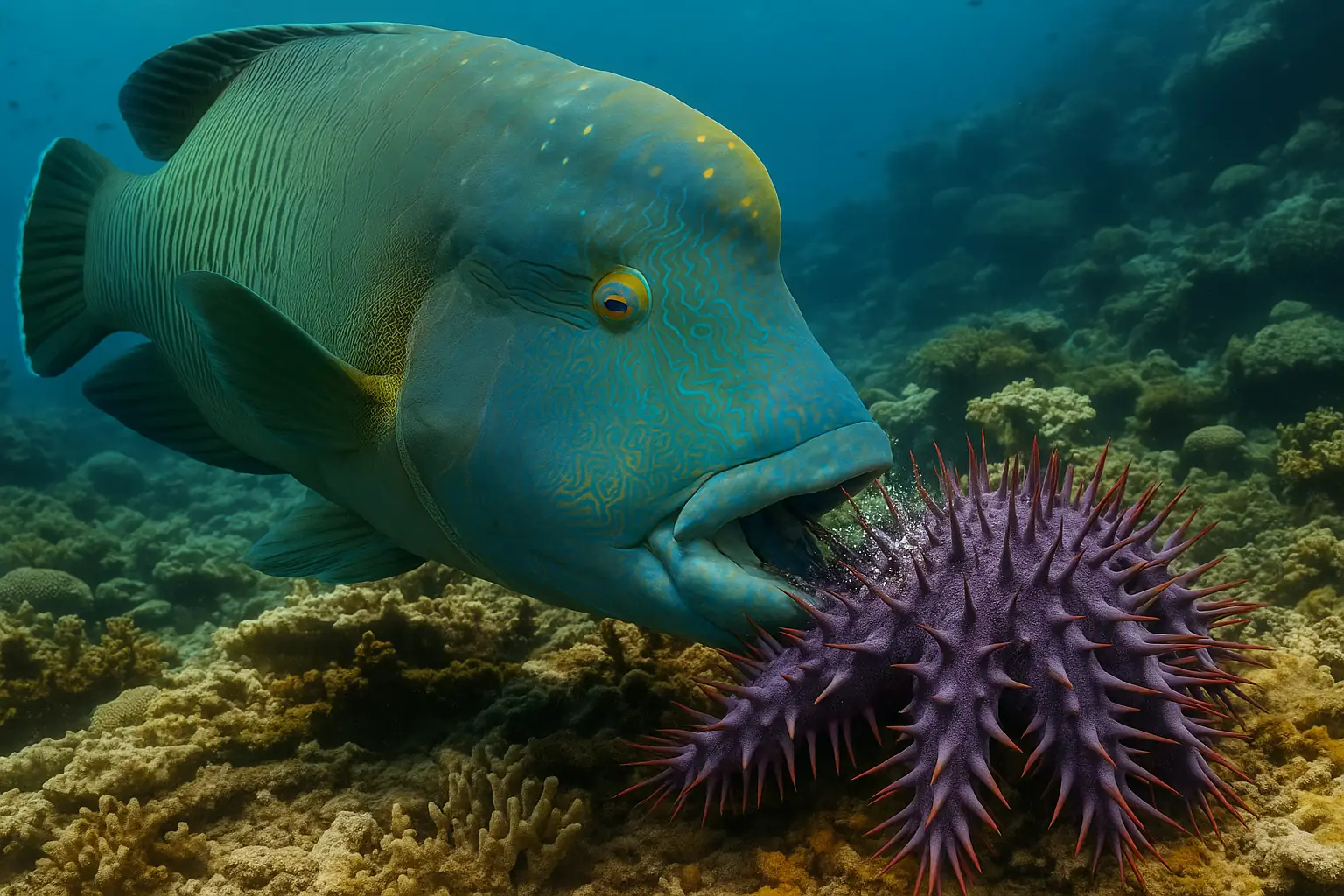
Among few reef predators capable of consuming highly venomous crown-of-thorns starfish that devastate coral reefs during outbreaks. Thick lips and powerful jaws enable handling of toxic prey including sea hares and boxfish.
Their predation helps control crown-of-thorns populations preventing coral reef destruction. This ecosystem service maintains coral diversity while providing natural biocontrol for one of reefs' most destructive predators. Photo: Illustration
Spawning Aggregation Behavior
Tidal Synchronization Events
Daily spawning aggregations form at barrier reef edges precisely timed 2-2.5 hours after high tide when lagoon-ocean currents peak. Males arrive first establishing territories while females approach in groups during optimal currents.
Spawning pairs release gametes near surface along shelf breaks ensuring larval dispersal through currents. These predictable aggregations make populations vulnerable to targeted fishing but enable reproductive success through coordinated timing. Photo: frantisekhojdysz.
Conservation Recovery
Endangered Species Protection
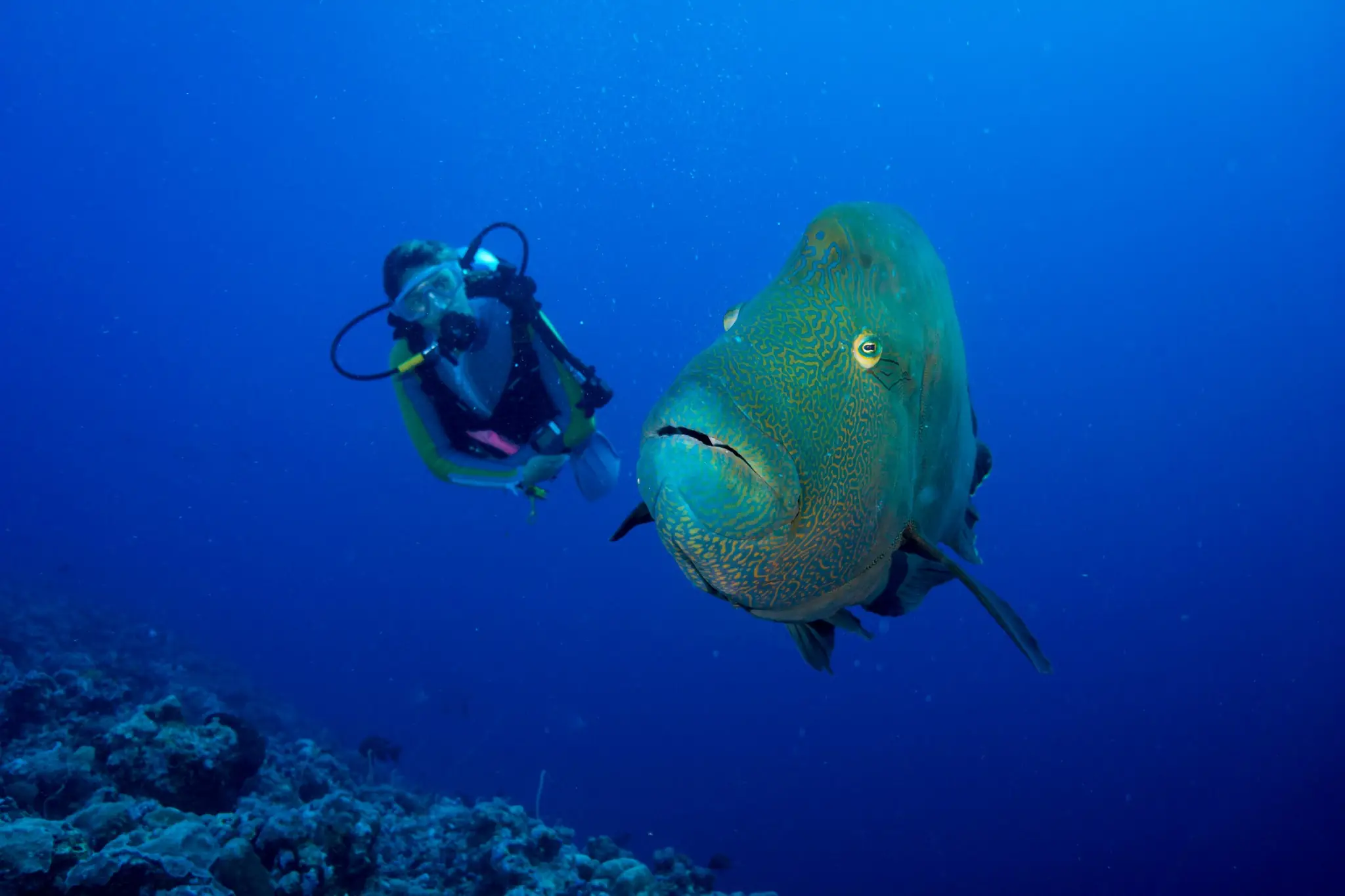
Listed as Endangered by IUCN since 2004 with an estimated 50% population decline over three generations (30-40 years) primarily due to overfishing for the live reef fish food trade. CITES Appendix II listing controls international trade while countries implement export bans.
WWF-led buyback programs have released 860+ confiscated individuals while marine protected areas provide spawning site protection. Facial recognition technology aids CITES enforcement against illegal trade worth $850 per kilogram. Photo: imageBROKER.com.
Science & Discovery
Nature Conservancy's 2023 "Saving Face" AI system uses facial recognition on humphead wrasse's unique markings achieving 95% identification accuracy for CITES enforcement and population tracking—technology now adapted for other endangered species.
University of Queensland's 2024 protogynous sex change research revealed neurohormonal mechanisms controlling gender transformation inspiring biomedical research on hormone regulation and potential applications in fertility treatments and endocrine therapies.
James Cook University demonstrated humphead wrasse presence reduces crown-of-thorns starfish densities by 60% quantifying their ecosystem service value at $2.4 million annually per protected reef through coral preservation.
In our delightful oceans, humphead wrasse protect reefs by consuming toxic crown-of-thorns starfish reducing their densities by 60%. Females transform into breeding supermales that control territories and multiple mates. Facial recognition technology and buyback programs now safeguard these endangered giants.