Hawksbill Sea Turtle
Ocean's Reef Gardener
Eretmochelys imbricata
Meet ocean's reef gardeners—marine reptiles reaching 1 meter (3.3 feet) and 80 kilograms with ornate tortoiseshell patterns and hawk-like beaks. They consume over 180 kilograms of toxic sponges annually processing glass spicules harmless to them but lethal to others. Magnetic navigation guides 1,860-kilometer migrations while selective feeding maintains coral biodiversity continuing an ancient lineage of ecosystem engineering that spans millennia.
Discover Their Reef MasteryWhat Makes Them Special
Hawk-Like Beak
Sharp curved beaks extract sponges from coral crevices as narrow as 2 centimetres
Toxic Immunity
Process over 180 kilograms of toxic sponges annually, safely passing glass spicules lethal to other species.
Ornate Shell
Display amber and brown tortoiseshell patterns with serrated overlapping scutes, creating unique markings
Epic Migrations
Navigate up to 1,860 kilometres between nesting and foraging grounds using the magnetic field
Ecosystem Engineers
Control fast-growing sponges, maintain reef biodiversity through selective consumption patterns, and prevent coral outcompetition
Conservation Success
Critically endangered showing recovery with protected beaches releasing 348,415 hatchlings over 15 years
First Encounter
Tortoiseshell Beauty Navigating Coral Gardens
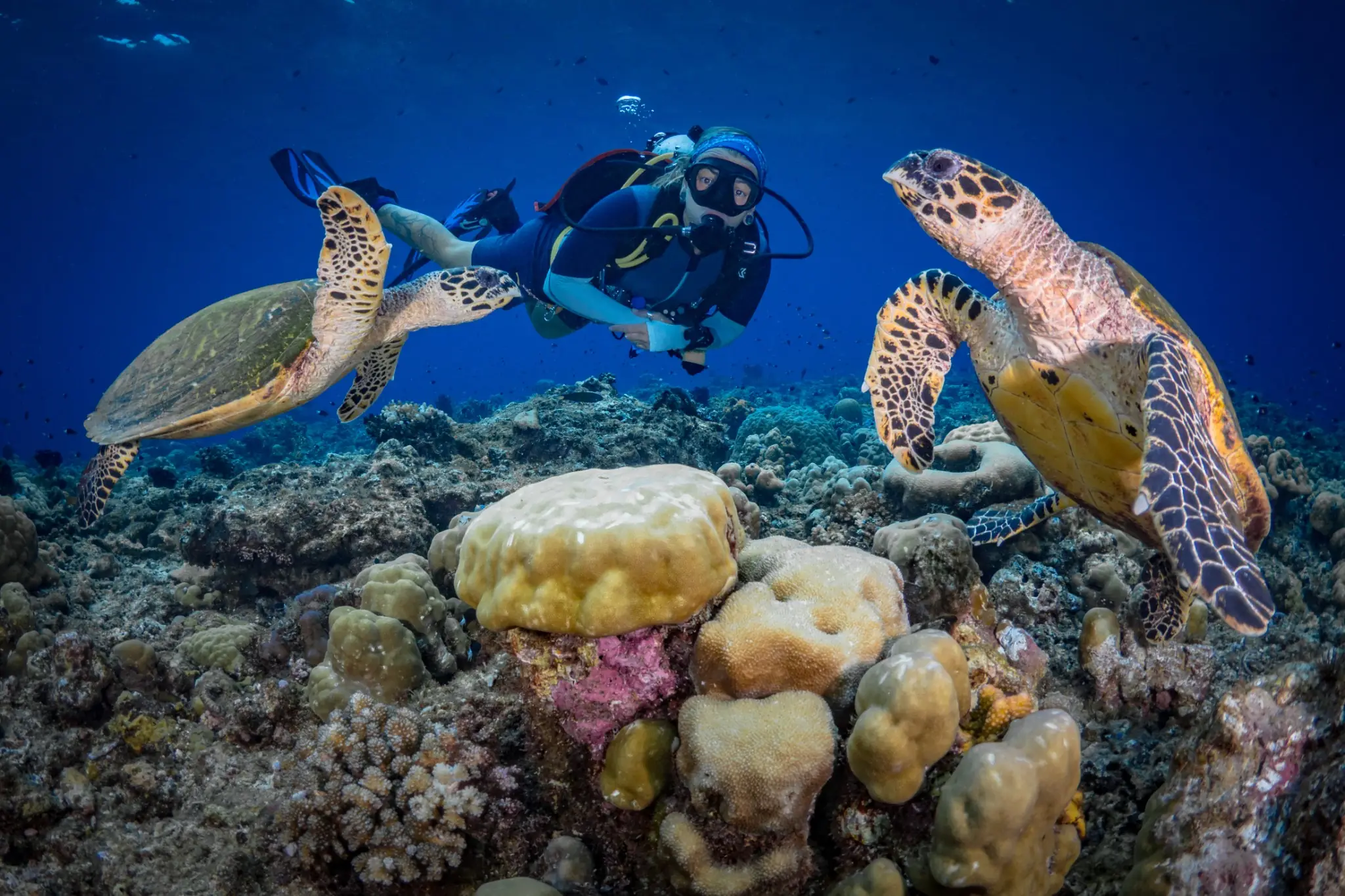
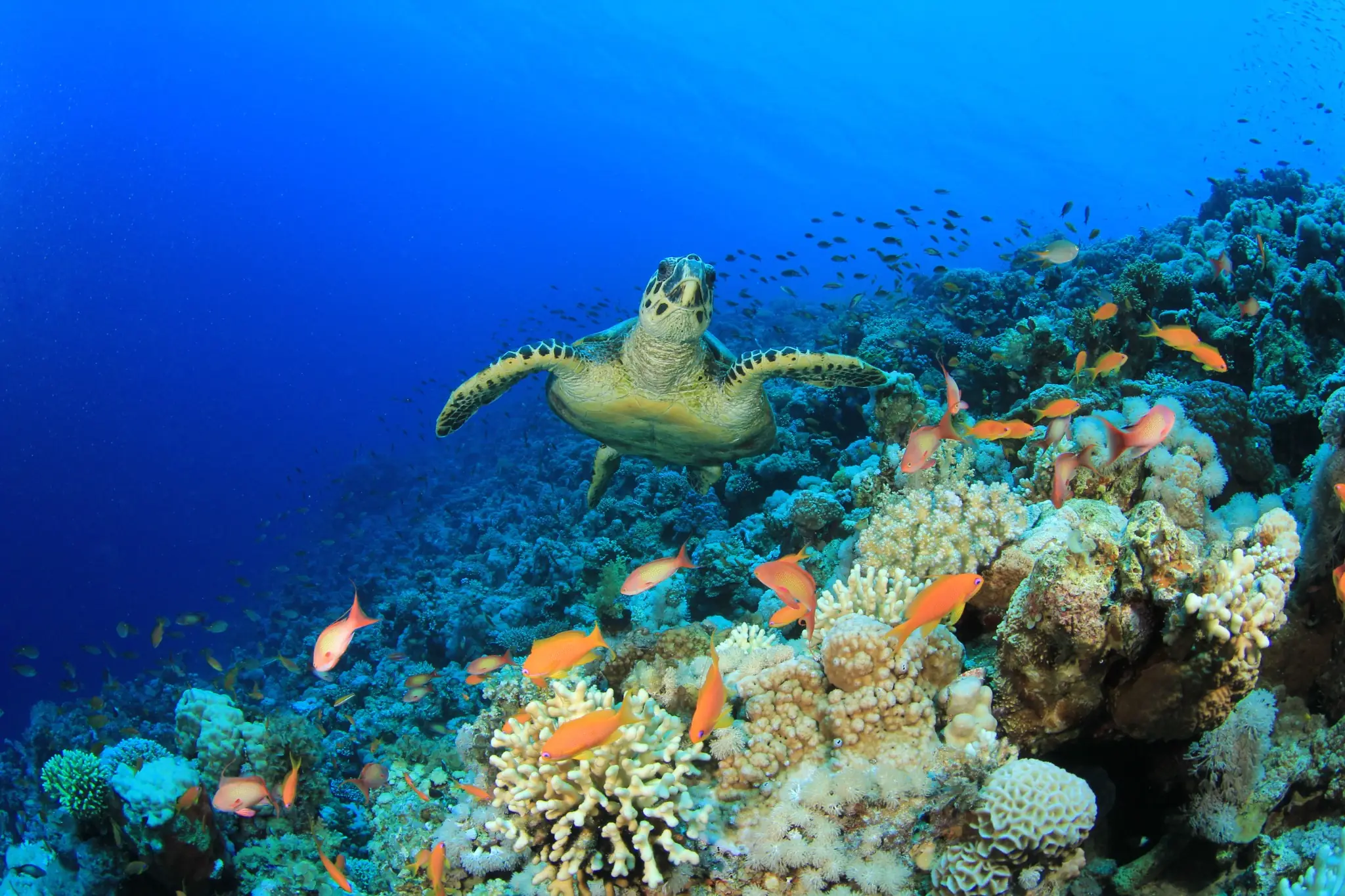
Hawksbill sea turtles display the ocean's most ornate shell design—amber, brown, and orange patterns with overlapping scutes creating distinctive serrated edges. These 1-meter (3.3-foot) marine reptiles reach 80 kilograms (175 pounds) while navigating coral reefs with remarkable precision.
Their narrow pointed beaks resembling birds of prey and streamlined shells enable access to tight coral crevices unavailable to other species. This specialized anatomy makes them ultimate reef specialists perfectly adapted for intricate coral garden navigation. Photo: Mike Workman.
"Hawksbills are the spongivores of the coral reef. Their feeding is critical; without them, sponges can overgrow and smother corals, fundamentally altering the reef ecosystem."
— Dr. Anne Meylan, Florida Fish and Wildlife Conservation Commission
Toxic Sponge Immunity
450 Kilograms of Glass Spicules Annually
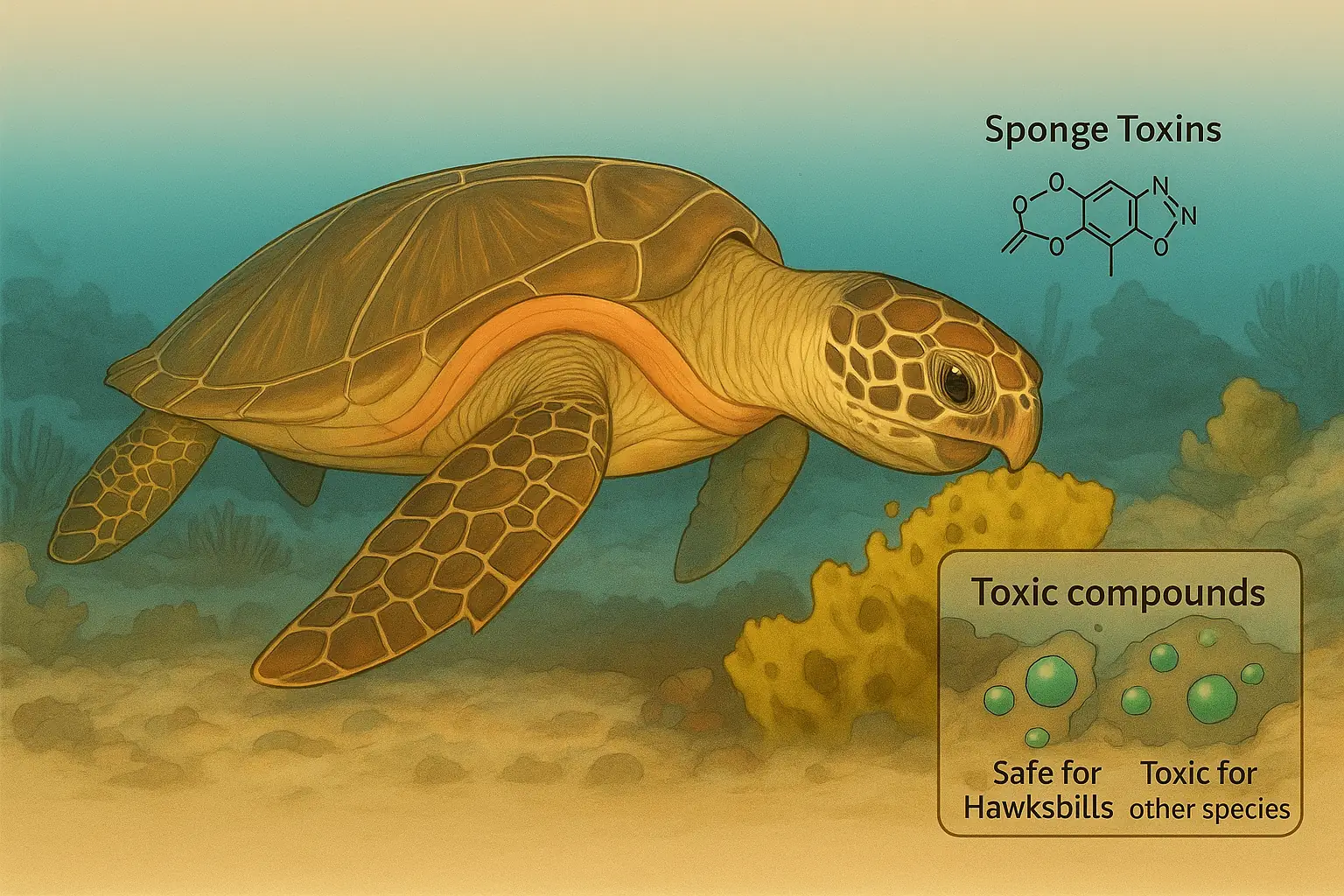
Hawksbill digestive systems process sponges containing sharp glass spicules—microscopic silica needles that would pierce other animals' internal organs. A specialized gut lining safely passes these structures without harm, while also tolerating the sponges' toxic chemicals.
Sponges comprise 70-95% of their diet making hawksbills the only large marine vertebrate consuming such high silica and toxic compound concentrations. Individual turtles eat approximately 180 kilograms of sponges annually storing cyanobacteria toxins without affecting health metabolism or reproduction. Photo: Illustration.
Hawk-Like Precision Beak
Surgical Tool for Coral Crevice Access
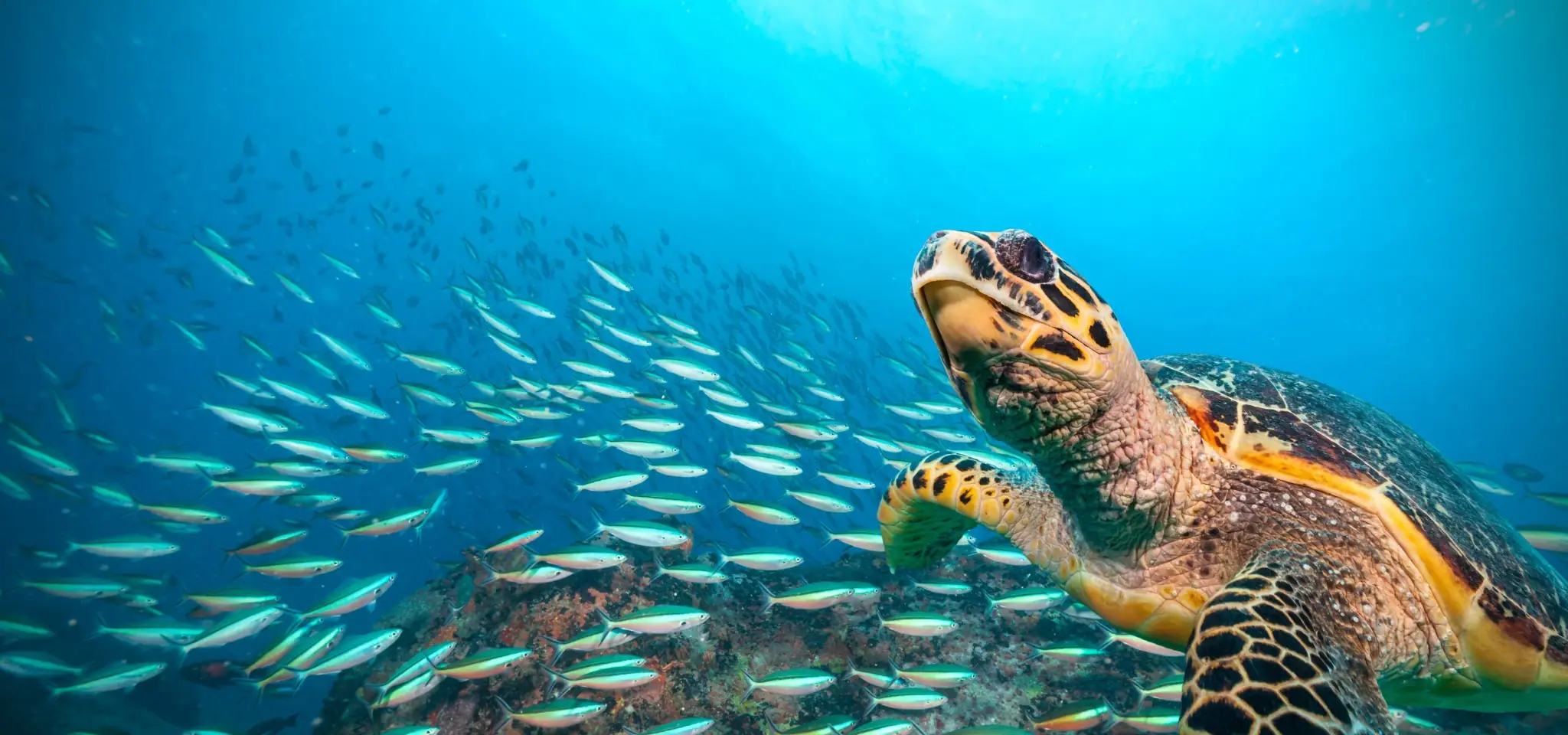
Sharp curved beaks enable precise extraction of sponges from coral crevices as narrow as 2 centimeters. The pointed jaw design provides surgical precision for targeting specific sponge species while avoiding damage to coral hosts maintaining reef integrity.
Serrated beak edges grip sponge tissue securely while the backward-curving shape prevents prey escape during feeding. This specialized tool allows access to food sources in complex three-dimensional reef structures where other herbivores cannot reach creating unique ecological niches. Photo: Jag_cz.
"Satellite tracking reveals hawksbills migrate up to 1,860 kilometers between nesting and foraging sites—navigating with remarkable precision using magnetic fields, returning to identical locations across decades."
— Dr. Stephen Dunbar, Loma Linda University Sea Turtle Research
Epic Migration Navigation
1,860-Kilometer Ocean Journeys Using Magnetic Maps
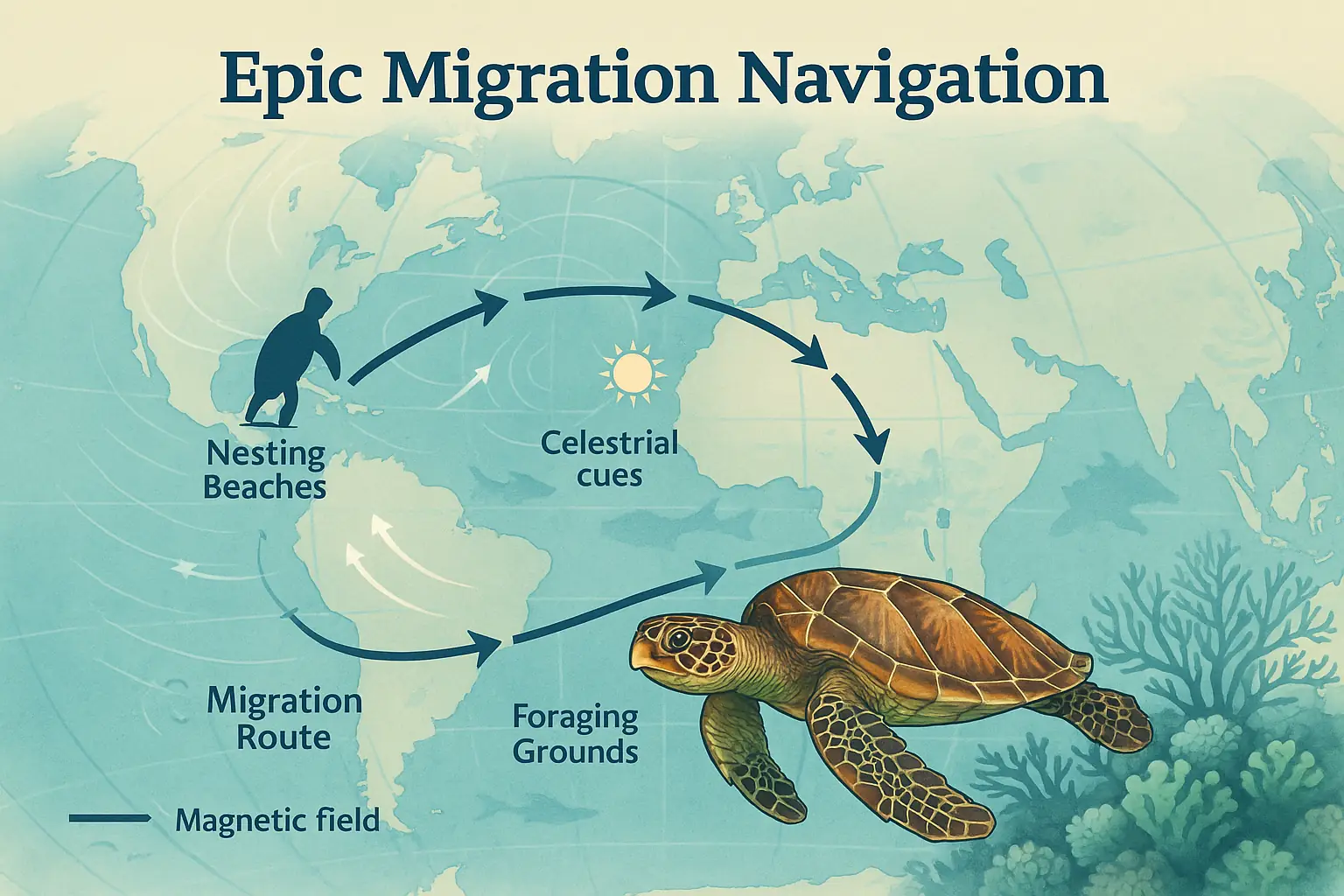
Individual hawksbills complete migrations spanning 73-1,860 kilometers between nesting beaches and foraging grounds with some journeys lasting 5-45 days. They navigate using Earth's magnetic field variations wave patterns and celestial cues for precise route finding.
Migration routes include dramatic zigzag patterns as turtles adjust direction daily while maintaining overall course accuracy. Remarkable site fidelity returns individuals to identical nesting beaches across decades often within meters of birthplace with satellite tracking revealing consistent multi-generational migration corridors. Photo: Illustration.
Coral Reef Gardening
Ecosystem Engineering Through Selective Feeding
Hawksbill feeding controls fast-growing sponge species that would otherwise outcompete corals for reef space. Their selective consumption maintains biodiversity by preventing any single sponge species from dominating reef surfaces allowing diverse coral communities to flourish.
Sponge removal exposes underlying coral surfaces and creates access routes for reef fish communities seeking shelter and foraging opportunities. Without hawksbills reefs experience sponge overgrowth reducing coral coverage by 30-40% demonstrating direct ecosystem engineering influence on reef structure and species composition. Photo: Richard Whitcombe.
Conservation Recovery
Protected Beaches Showing Remarkable Success
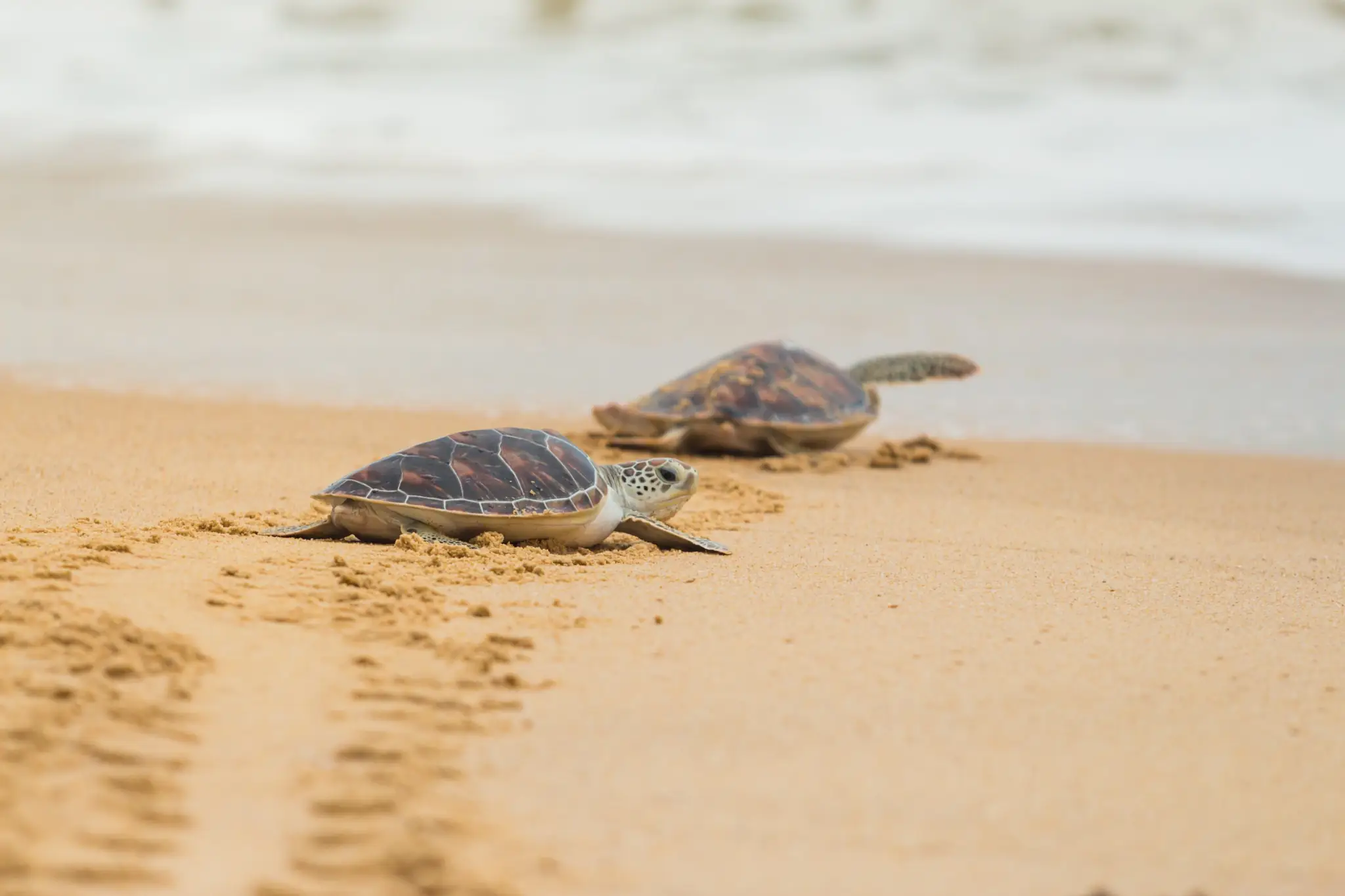
Despite Critically Endangered status from 80% population decline over the past century, targeted conservation demonstrates remarkable recovery potential. Protected nesting beaches combined with fishing gear modifications show significant increases in successful reproduction rates and juvenile survival.
El Salvador's ProCosta program protected 4,114 nests and released 348,415 hatchlings over 15 years while Hawaii Wildlife Fund protected over 10,300 hatchlings since 1996. Recent CITES protections ban international tortoiseshell trade and marine protected areas along migration corridors show population increases of 2-5% annually. Photo: KorradolYamsatthm.
Science & Discovery
University of Florida 2023 genetic analysis revealed hawksbills possess unique digestive enzymes breaking down toxic compounds inspiring development of industrial biofilters for processing hazardous chemical waste through biomimetic enzyme engineering.
Satellite telemetry studies identified critical migration corridors and foraging hotspots directly informing placement of 23 new marine protected areas across the Caribbean and Indo-Pacific protecting 40% of known nesting populations.
2024 reef ecology research demonstrated hawksbill presence correlates with 35% higher coral diversity and 28% greater fish abundance quantifying their ecosystem engineering value for coral conservation programs worldwide.
In our delightful oceans, hawksbills maintain 35% higher coral diversity and 28% greater fish abundance through selective sponge consumption. Their toxic immunity, processing over 180 kilograms annually, creates irreplaceable ecological niches. Protected beaches released 348,415 hatchlings demonstrating recovery potential when given refuge.