Giant Clam
Reef's Living Solar Power Plant
Tridacna gigas
Meet ocean's living solar power plants—massive bivalves reaching 1.2 meters (4 feet) and 225 kilograms whose vibrant mantles achieve 67% quantum photosynthetic efficiency through millions of symbiotic zooxanthellae. Their calcium carbonate shells create permanent reef architecture lasting over a century. These ecosystem engineers circulate viable algae to 33% of coral larvae establishing reef-wide symbiotic networks.
Meet the Living Solar CollectorsWhat Makes Them Special
Massive Bivalves
Reach 1.2 meters in length and 225 kilograms making them Earth's largest living shellfish
Quantum Efficiency
Achieve 67% quantum photon-to-electron conversion through iridocyte cells optimizing algal photosynthesis
Symbiotic Partnership
Harbor millions of zooxanthellae providing 65-70% of nutritional requirements through photosynthesis
Reef Architecture
Build permanent calcium carbonate structures recording climate data in daily growth bands
Algae Distribution
Circulate viable zooxanthellae through fecal pellets, helping to establish symbiosis in new coral and clam larvae across the reef.
Century Lifespans
Live over 100 years with juvenile growth rates of 12 centimeters annually
First Encounter
Ocean's Largest Living Shellfish
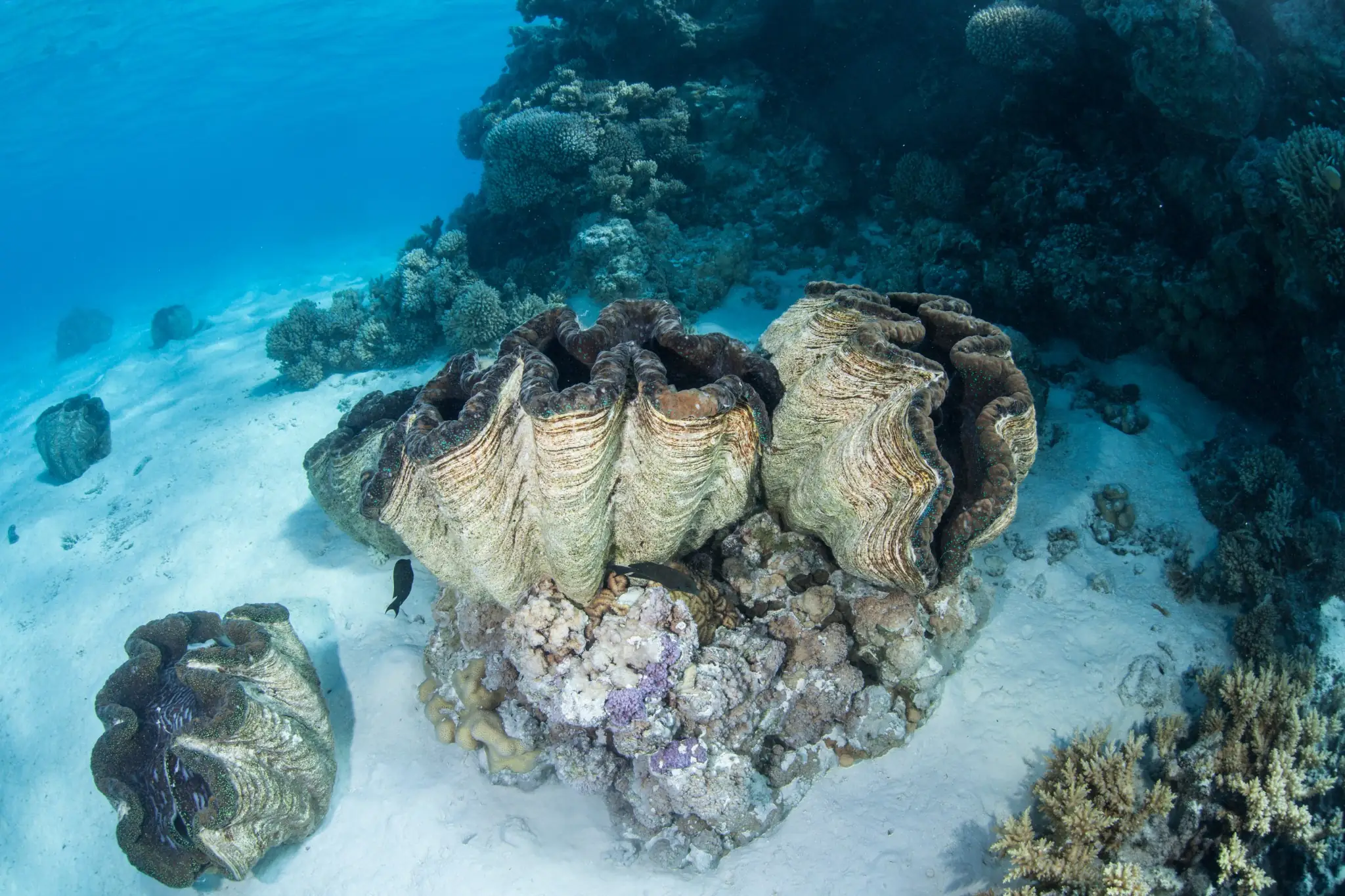
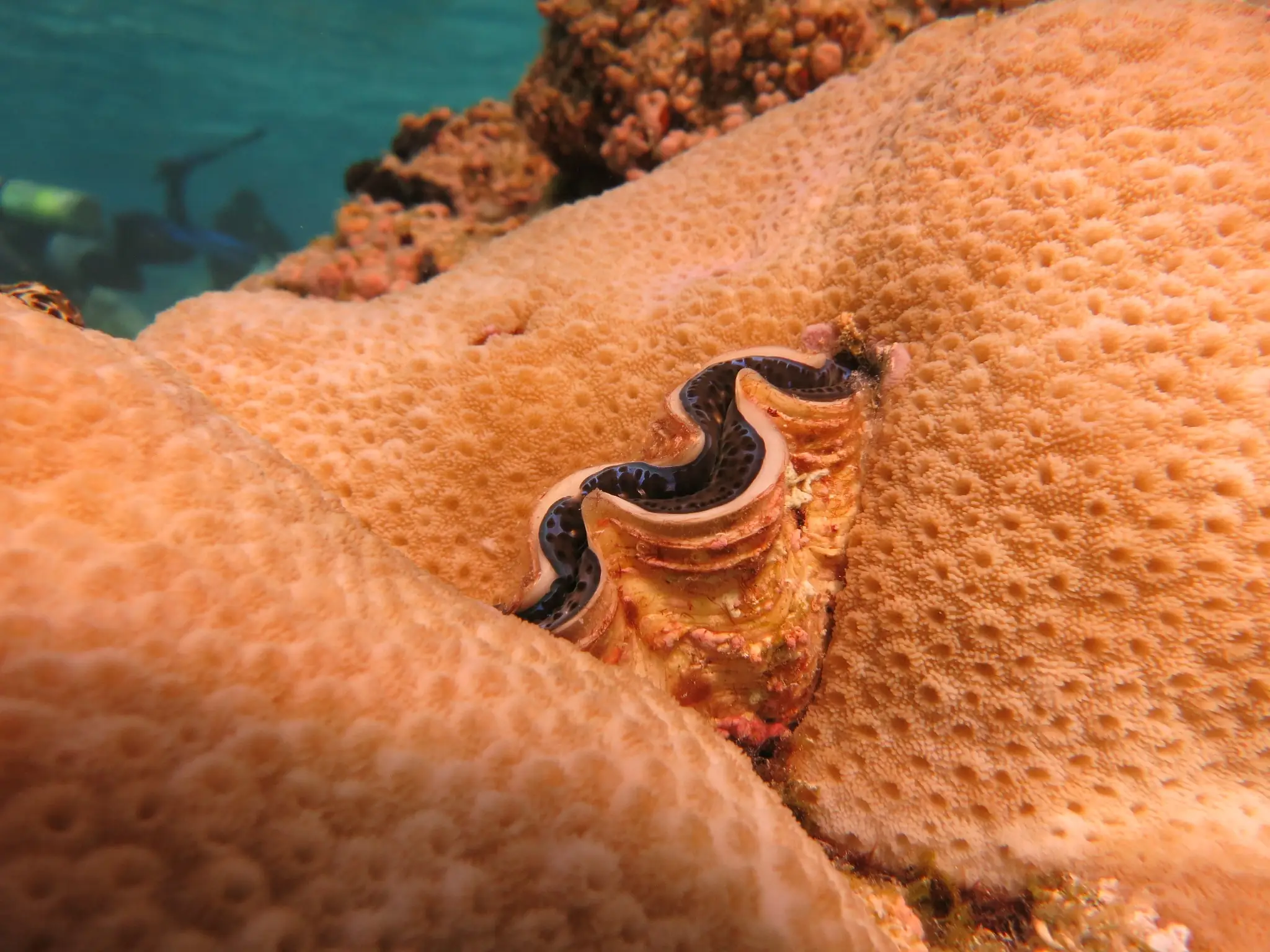
Giant clams reach 1.2 meters in length and weigh up to 225 kilograms. These massive bivalves display vibrant mantles in brilliant blues greens and yellows extending beyond shell edges.
Their colorful mantles function as underwater solar collectors powered by millions of symbiotic algae. Thick calcium carbonate shells provide permanent reef architecture while sophisticated photosynthetic systems transform sunlight into energy throughout century-long lifespans. Photo: Ethan Daniels.
"Giant clam iridocyte cells channel sunlight vertically through algal columns achieving 67% quantum photon-to-electron conversion efficiency—placing them among Earth's most efficient natural solar-energy harvesting systems."
— Dr. Alison Sweeney, University of Pennsylvania, 2024
Symbiotic Photosynthesis
Living Solar Collectors with 70% Energy Independence
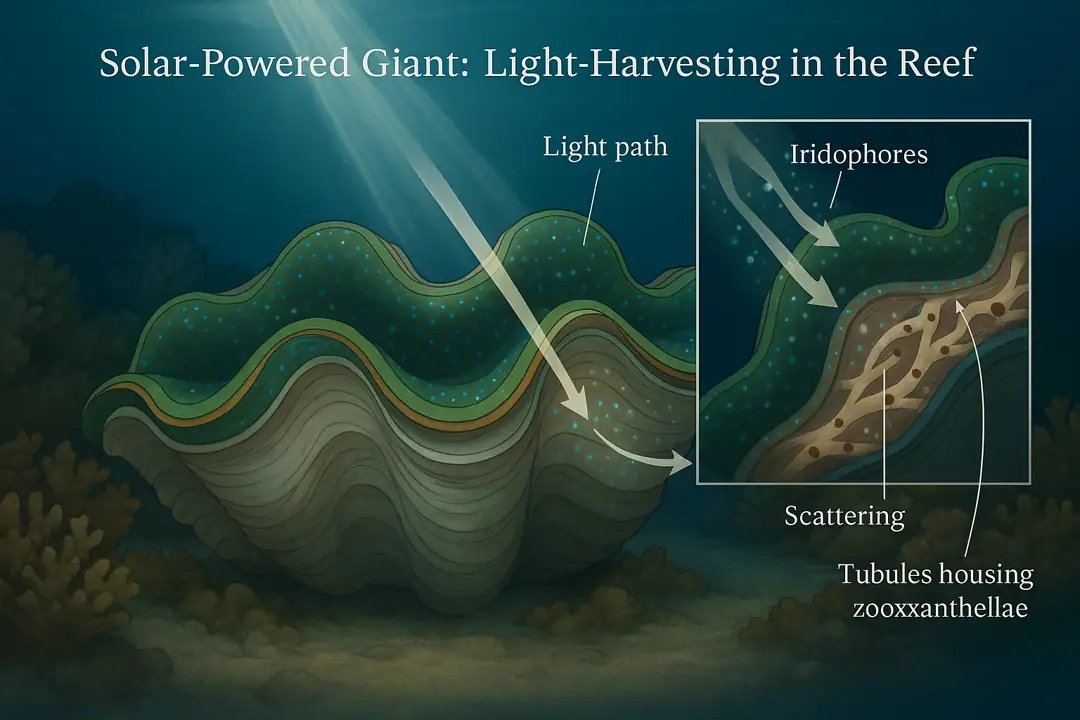
Mantle tissues harbor millions of zooxanthellae dinoflagellates organized into 100-micrometer pillars converting sunlight into sugars. These symbionts provide 65-70% of nutritional requirements through photosynthesis.
Specialized iridocyte cells scatter solar irradiance evenly across algal colonies achieving 67% quantum efficiency while protecting symbionts from photodamage. This biological solar collection demonstrates natural optimization surpassing many engineered systems. Photo: Illustration.
Biomineralization Process
Calcium Carbonate Architecture with Climate Records
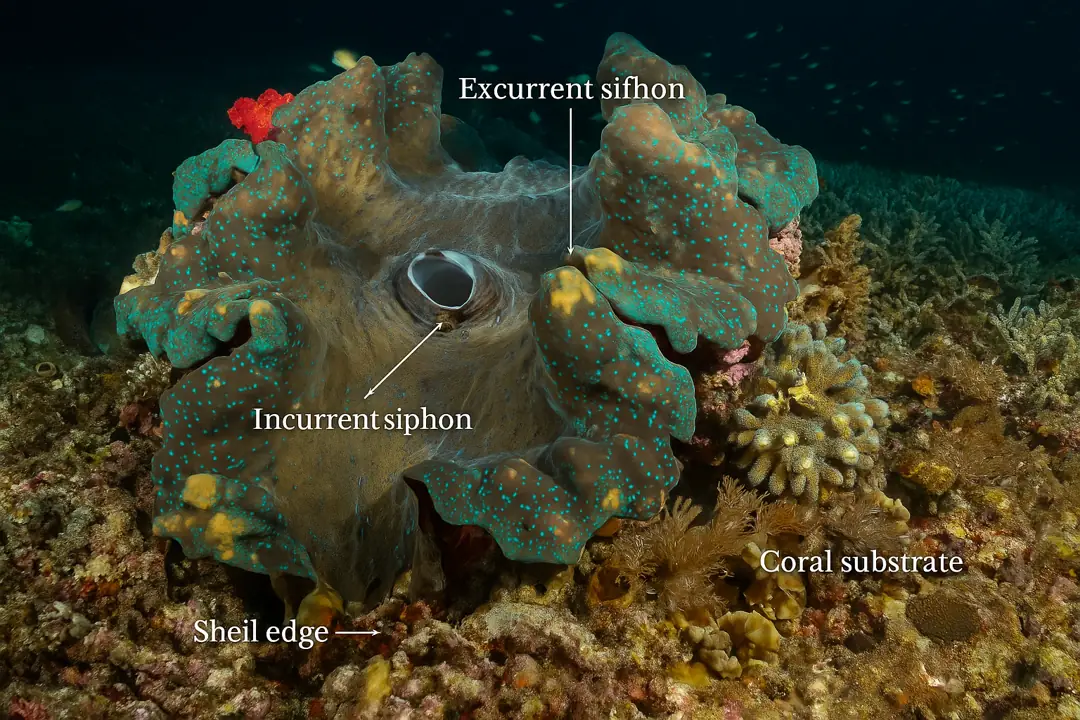
Shell construction occurs through aragonite crystal deposition creating daily growth increments visible as microscopic bands. These crossed-lamellar microstructures provide exceptional strength while incorporating environmental isotopes.
Amorphous calcium carbonate precursors crystallize into organized shell layers responding to temperature and pH changes. This biomineralization creates climate records spanning decades with daily precision enabling paleoclimate reconstruction. Photo: Illustration.
"Giant clam waste products contain live zooxanthellae establishing symbiosis in 33% of larval clams—making excretion a critical algal transmission vector across reefs."
— Dr. Kazuhiko Koike, Hiroshima University
Zooxanthellae Distribution
Symbiont Circulation Supporting Reef Resilience
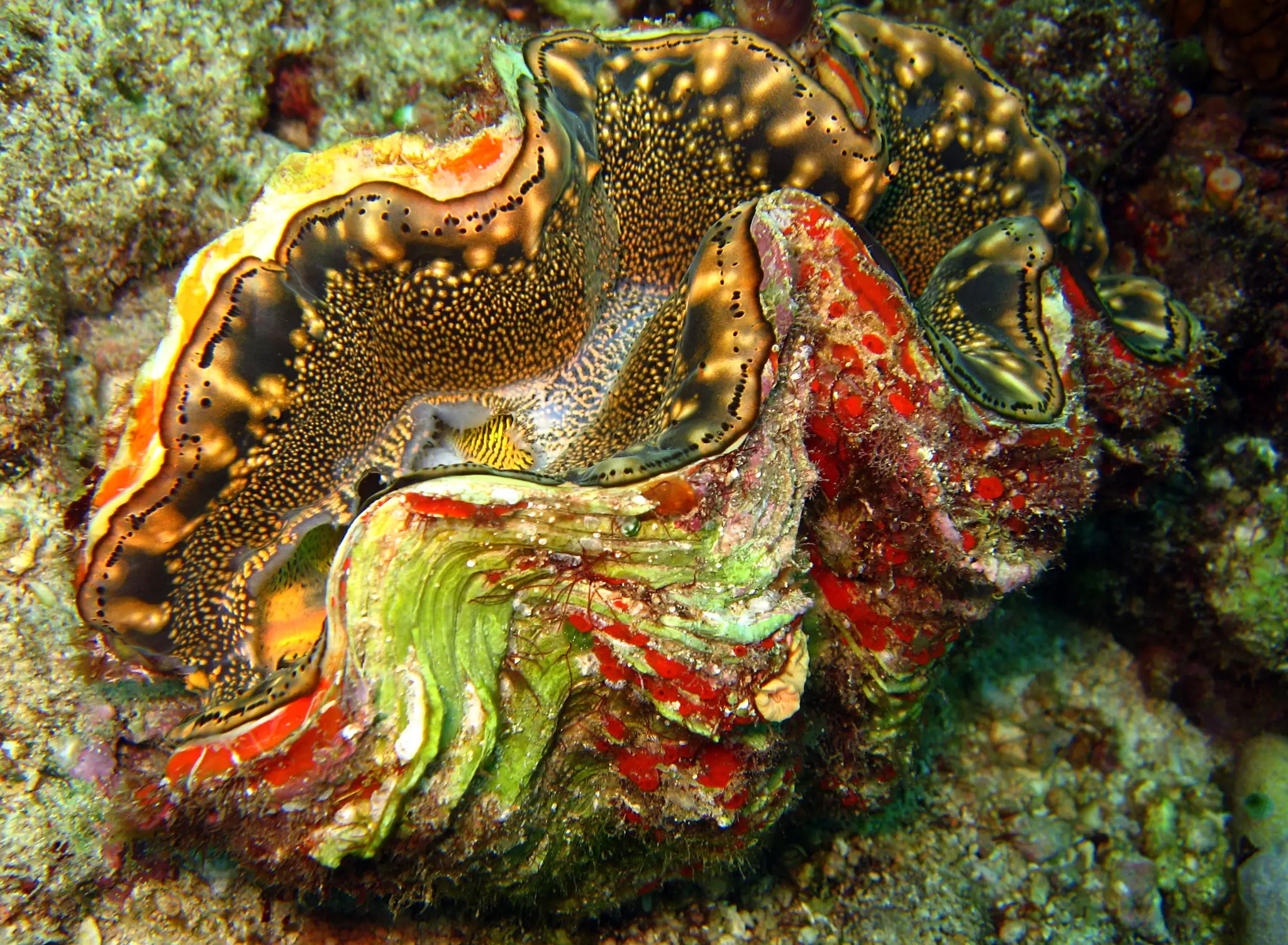
Fecal pellets contain viable zooxanthellae surviving digestion and establishing symbiosis in 33% of coral larvae and juvenile clams. These algal-packed waste products distribute symbionts throughout reef communities.
Heat-tolerant zooxanthellae strains circulated through excretion may provide climate-resilient symbionts to stressed corals during bleaching events. This symbiont sharing creates interconnected reef networks supporting ecosystem recovery. Photo: Daniel Lamborn.
Larval Settlement Strategy
Critical Development Phase with Symbiosis Acquisition
Planktonic larvae begin developing calcium carbonate shells within 12-24 hours, acquiring swimming capabilities during a several-day dispersal phase. Settlement occurs at one week when larvae acquire zooxanthellae through filter feeding establishing symbiosis essential for survival.
Juvenile clams relocate frequently during first weeks before permanent attachment around 20 centimeters. Muscle reorganization creates massive filtering apparatus enabling 12-centimeter annual growth rates in optimal conditions demonstrating rapid development. Photo: NOAA
Conservation Success
Aquaculture Programs Restoring Reef Populations
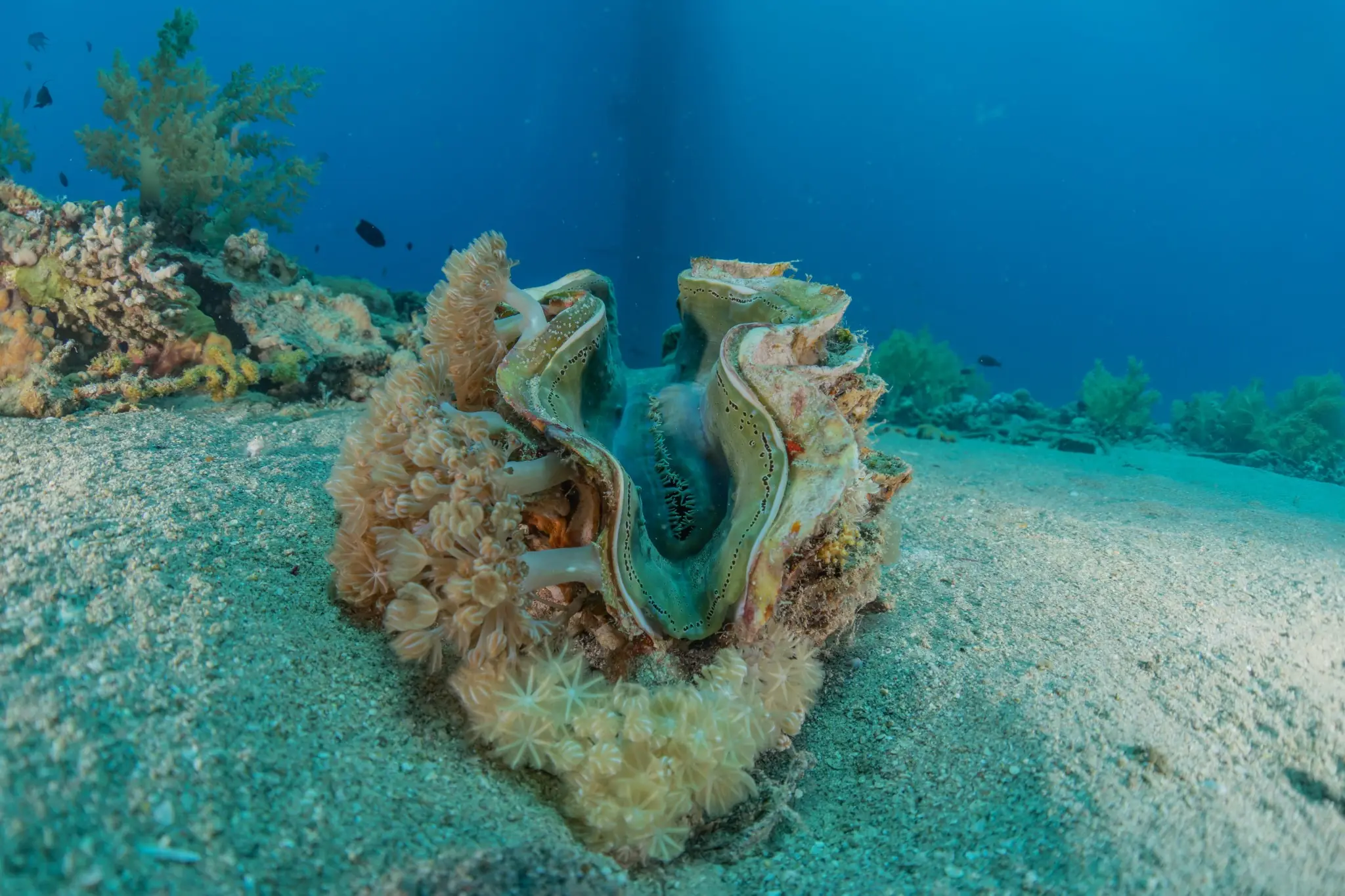
CITES Appendix II protection since 1985 regulates international trade while aquaculture programs restore reef populations. Philippines University Marine Science Institute restocked 70,000+ juveniles across 40+ sites over 20 years.
Guam aquaculture projects provide sustainable food sources and cultural materials for island communities. Samal sanctuary houses 3,700+ giant clams demonstrating successful transition from wild harvesting to sustainable ecotourism supporting coastal livelihoods. Photo: Yeshayadinerstein
Science & Discovery
University of Pennsylvania 2024 research quantified giant clam iridocyte light-scattering achieving 67% quantum efficiency inspiring biomimetic solar cells demonstrating 40% efficiency gains in photovoltaic energy capture revolutionizing renewable technology design.
Australian Institute of Marine Science discovered giant clam shells record ocean temperature and acidity changes with high-resolution, seasonal precision creating paleoclimate archives spanning 100+ years enabling historical reconstruction.
Hiroshima University identified heat-tolerant zooxanthellae strains in giant clam tissue offering climate adaptation strategies for bleached corals providing resilient symbionts supporting threatened reef ecosystem recovery.
In our delightful oceans, giant clams achieve 67% quantum photosynthetic efficiency through iridocyte cells creating biological solar systems rivaling engineered technology. They distribute viable zooxanthellae establishing symbiosis in 33% of coral larvae creating reef-wide networks. Philippines restoration programs released 70,000+ juveniles across 40+ sites while Samal sanctuary protects 3,700+ clams demonstrating successful aquaculture transitions.