Blue Whale
Earth's Gentle Giant
Balaenoptera musculus
Meet Earth's largest animal—blue whales reaching 30 meters (98 feet) and 190 tonnes with 188-decibel calls spanning ocean basins. Their revolutionary lunge feeding engulfs 60,000 liters in single gulps consuming 16 tonnes of krill daily. Remarkable recovery from 300 Antarctic survivors to 25,000 globally demonstrates conservation's greatest triumph across four decades of patient protection.
Discover the Gentle GiantWhat Makes Them Special
Earth's Largest Animal
Reach 30 meters and 190 tonnes with hearts weighing 180-200 kilograms and 4-tonne tongues
Ocean-Spanning Calls
Generate 188-decibel low-frequency calls traveling hundreds of miles creating acoustic highways across ocean basins
Lunge Feeding Mastery
Engulf 60,000 liters per gulp performing 200-1,200 lunges daily consuming 16 tonnes of krill
Energy Efficiency
Gain 90x energy expenditure per dive when targeting krill densities exceeding 100-200 individuals per cubic meter
Protected Births
Extremely rare birth documentation with only a handful observed; calves born 7 meters gaining 90 kilograms daily
Conservation Triumph
Recovery from 300 Antarctic survivors in 1970s to 10,000-25,000 globally through international protection since 1960s
First Encounter
Living Mountains Moving with Grace
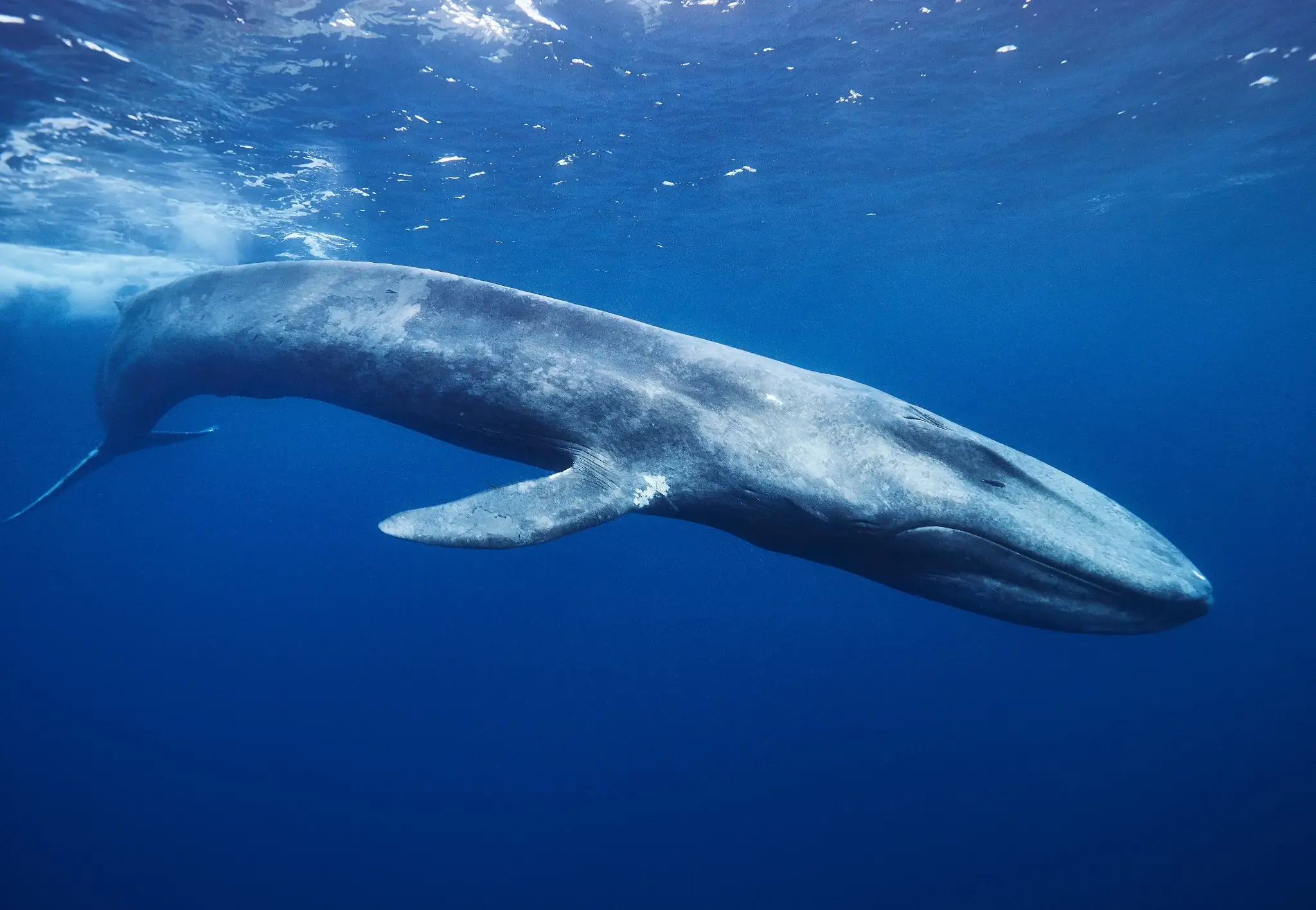
Blue whales reach 30 meters in length and 190 tonnes combining building-sized proportions with extraordinary gentleness. Their streamlined torpedo bodies display blue-gray mottling with silver-white undersides creating perfect countershading through massive crescent-shaped tails.
Despite being Earth's largest animal ever these magnificent giants demonstrate peaceful awareness of surroundings. True strength moves with infinite grace and environmental sensitivity proving size enables rather than constrains elegance. Photo: Ajit S N.
"Blue whales produce the loudest sounds of any animal on Earth - their calls can travel hundreds of miles underwater, creating acoustic highways that connect entire ocean basins in ways we're only beginning to understand."
— Dr. Kate Stafford, Marine Acoustics Researcher
Revolutionary Feeding System
Processing 60,000 Gallons in Single Gulps
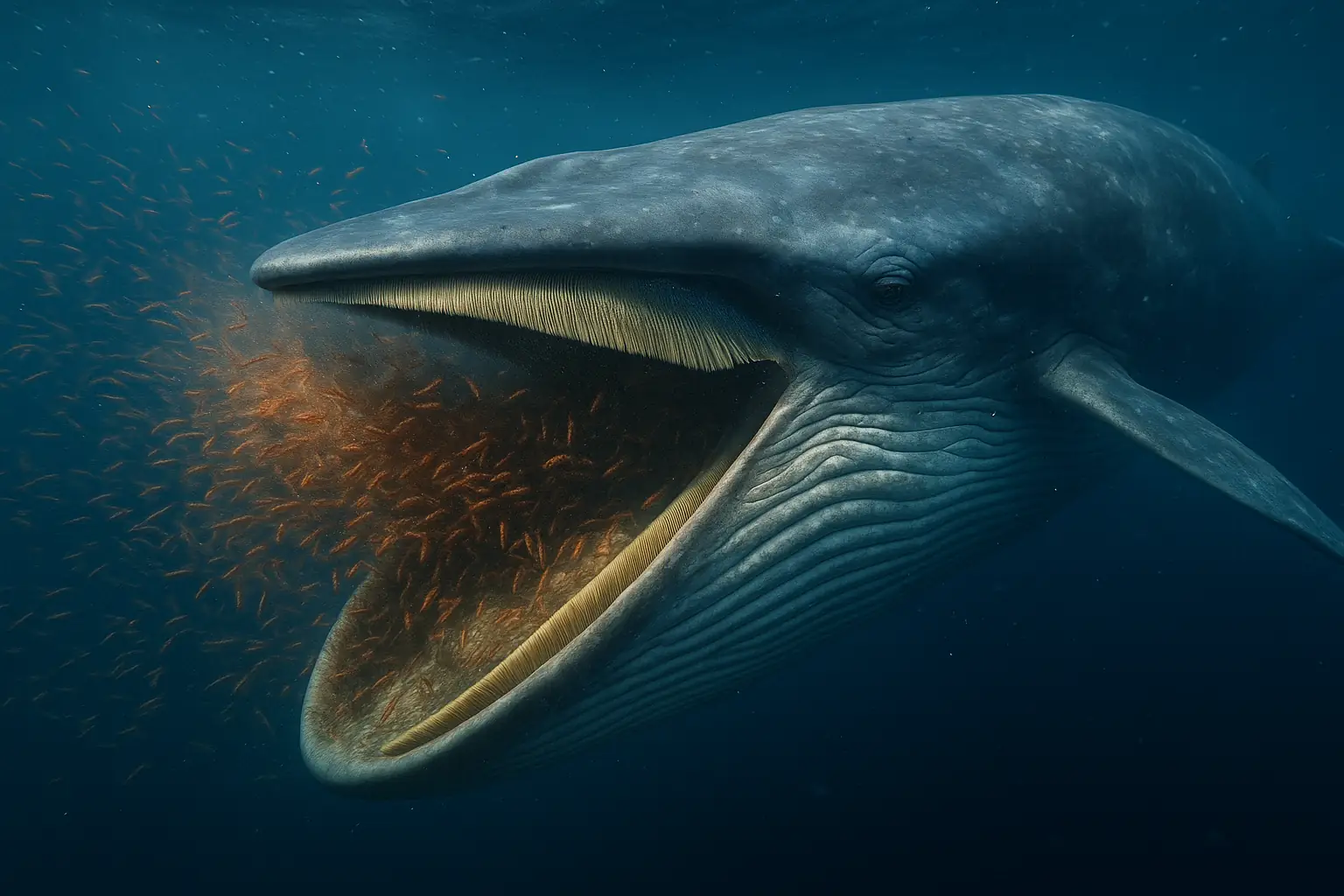
Blue whales perform lunge feeding where specialized throat pleats expand dramatically to accommodate 60,000 liters while bodies literally double in size. This technique enables engulfing enormous water and krill volumes in single gulps.
Hundreds of baleen plates act like massive filters trapping millions of tiny krill while 4-tonne tongues help process filtration. This revolutionary system enables consuming 16 tonnes of krill daily during peak feeding season through 200-1,200 daily lunges. Photo: Illustration.
Ocean-Spanning Communication
188-Decibel Songs Across Continents
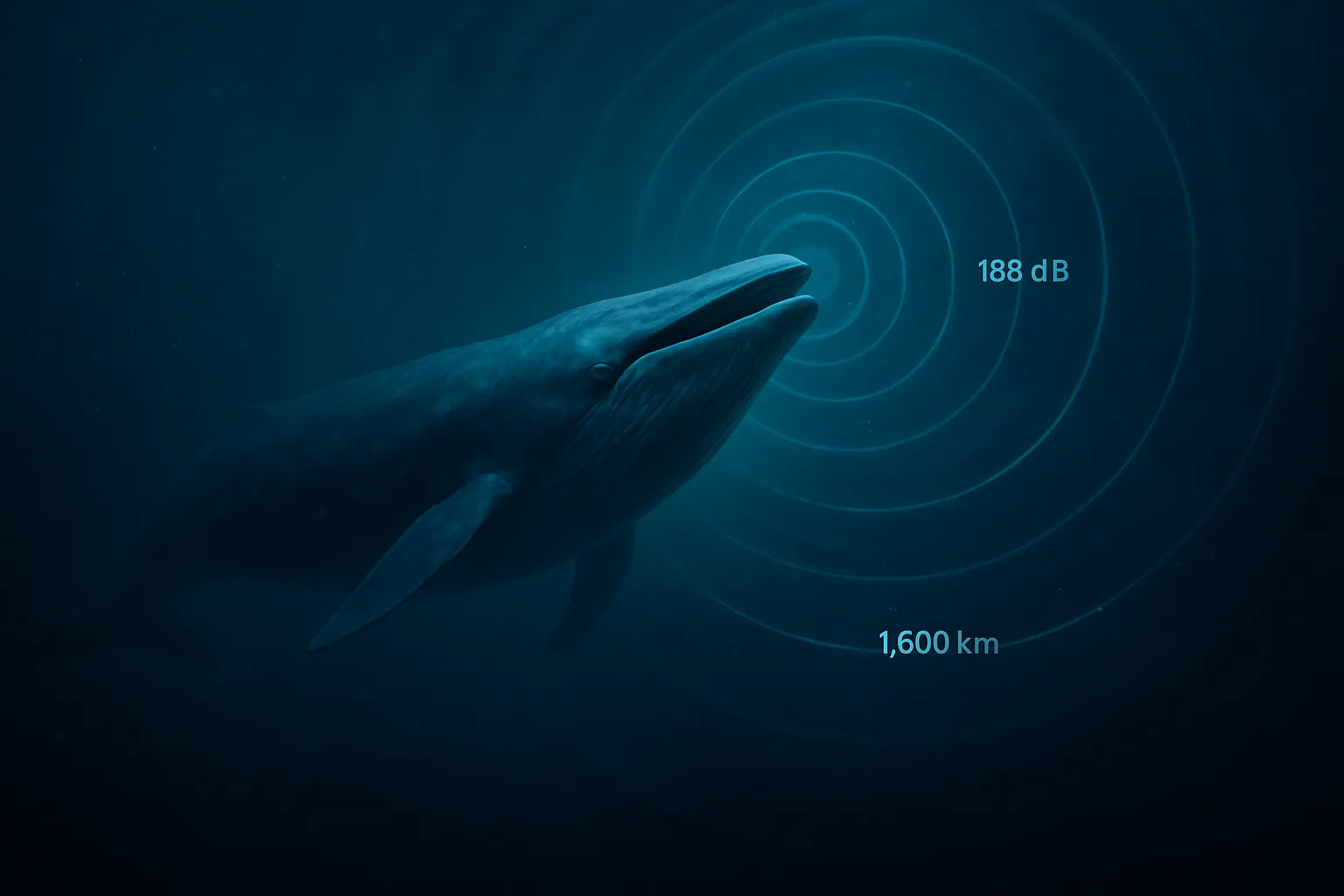
Blue whales produce Earth's loudest biological sounds at 188 decibels louder than jet engines yet these songs travel as low-frequency calls below human hearing range. These acoustic signals span hundreds of miles creating communication networks across entire ocean basins.
Their vocal system operates like underwater acoustic highways where whales maintain contact across vast distances. Long-distance communication enables coordination of feeding mating and migration behaviors demonstrating intelligence adapted to massive marine environments. Photo: Illustration.
"Despite decades of research and thousands of blue whale sightings worldwide, scientists have documented only two births in human history - revealing how these giants protect their most vulnerable moments in remote ocean sanctuaries."
— Dr. Jeremy Goldbogen, Marine Biologist
The Missing Calves Mystery
Hidden Births in Secret Sanctuaries
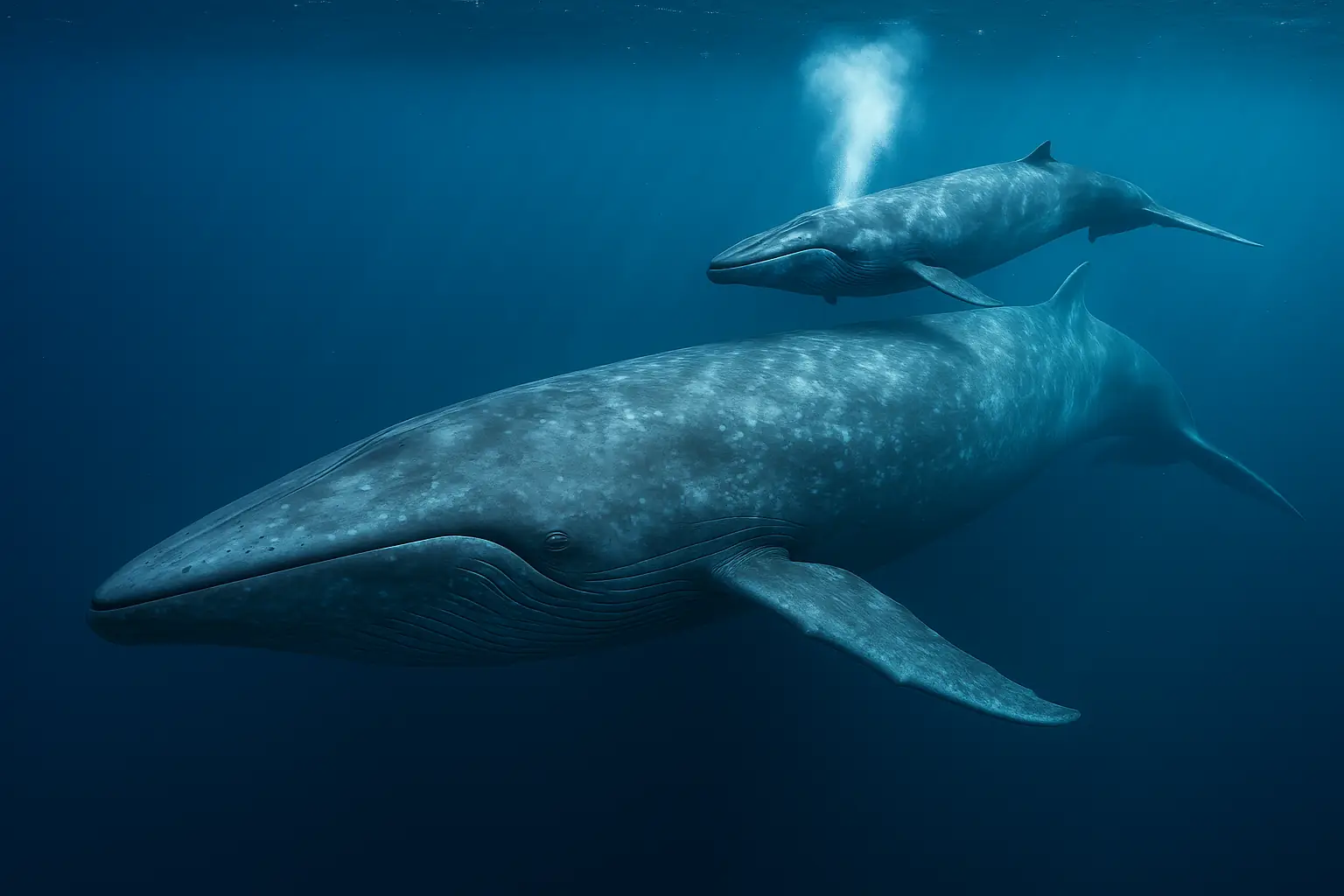
Blue whales guard their greatest secret with remarkable success despite global populations exceeding 10,000 individuals. Scientists recorded only two births in human history with mothers giving birth in warm tropical waters during winter months.
This missing calves mystery results from strategic seasonal separation where calves are weaned before families return to feeding grounds. Behavioral adaptation protects vulnerable young from predators and harsh polar conditions demonstrating sophisticated reproductive planning. Photo: Illustration.
Epic Migration Intelligence
16,000-Mile Journeys with Magnetic Precision
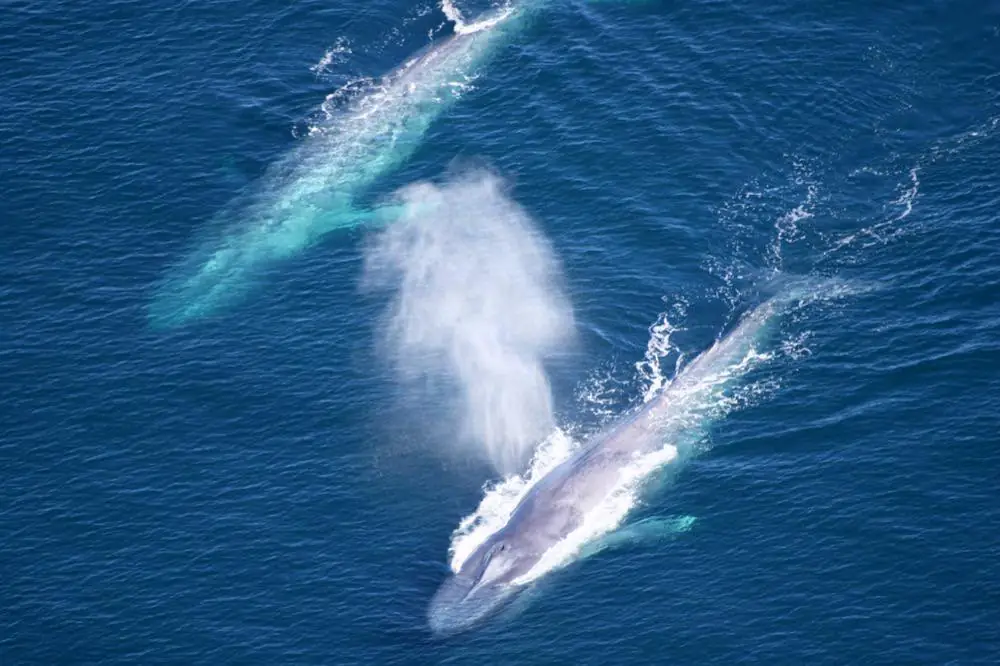
Blue whales undertake Earth's longest migrations, travelling up to 16,000 kilometres between polar feeding areas and tropical breeding waters. They navigate featureless ocean expanses using magnetic field detection, acoustic landmarks and remarkable spatial memory.
Navigation systems combine magnetic sensors detecting Earth's magnetic field variations, acoustic mapping using sound reflection patterns and memory-based route optimisation. Sophisticated navigation enables precise timing of seasonal movements and efficient energy use. Photo: NOAA
Conservation Triumph
From 300 Survivors to 25,000 Giants
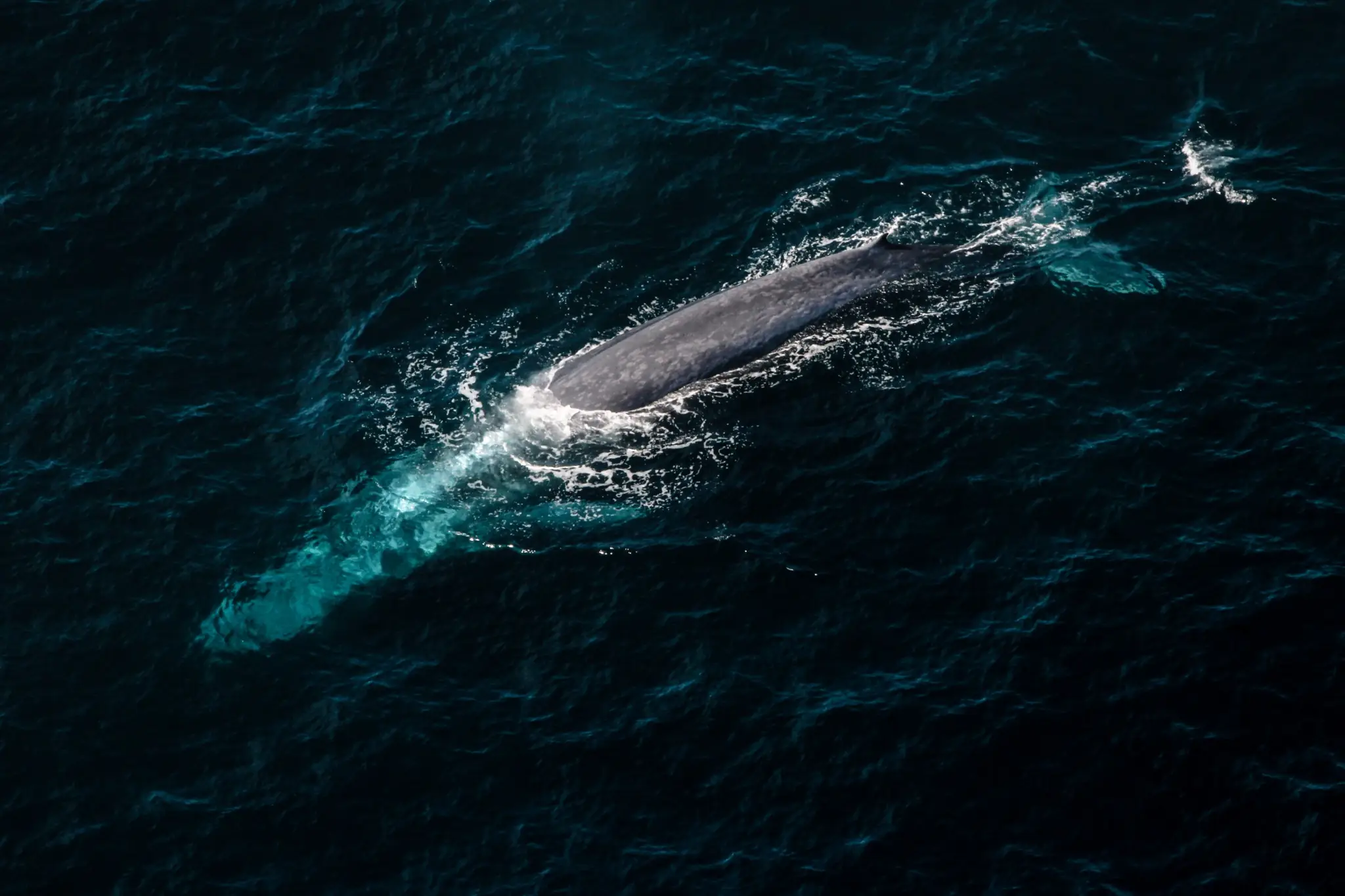
Commercial whaling devastated blue whale populations from estimated 200,000 individuals to critically low numbers, with Antarctic populations reaching approximately 300 survivors by 1970s. International whaling moratorium implemented in 1960s began slow recovery process requiring decades of patient protection across ocean basins.
Today represents conservation's greatest success with 10,000-25,000 blue whales singing across global oceans. Recent 2020 expeditions documented 55 Antarctic blue whales in single surveys, proving patient international protection brings magnificent giants back from extinction's edge. Photo: NOAA
Science & Discovery
Australian Antarctic Division 2024 acoustic monitoring analyzed two decades of recordings revealing stable or rising blue whale populations across Southern Ocean through growing regularity of 188-decibel calls demonstrating recovery success.
Flinders University 2024 genomic studies mapped global blue whale populations identifying greatest differences among eastern Pacific Antarctic and pygmy subspecies informing conservation strategies protecting biodiversity through population-level management approaches.
Stanford University 2024 lunge feeding research demonstrated blue whales target krill densities exceeding 100-200 individuals per cubic meter, gaining 90x energy expenditure through selective foraging. This efficiency inspires biomimetic engineering for autonomous underwater vehicles.
In our delightful oceans, blue whales recovered from 300 Antarctic survivors to 10,000-25,000 globally since 1960s international protection proving patient conservation brings giants back. Their 188-decibel calls span ocean basins connecting populations across hemispheric distances through sophisticated acoustic communication. Acoustic monitoring and genomic research now protect recovery across ocean basins ensuring Earth's largest animal thrives.